Spanish Wine Brands in China: Build an Importer-Ready Commercial Offer
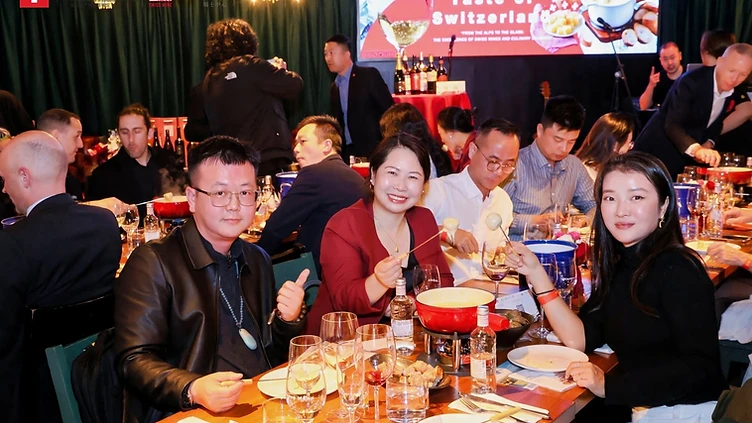
A commercial roadmap for Spanish wineries and regional associations to structure an importer-ready offer in China, covering regulatory compliance, channel margins, and pitch architecture.
To successfully sell wine in China today, Spanish wineries and export directors must shift from generic brand storytelling to an importer-ready commercial proposition. China’s imported wine landscape has matured: buyers no longer seek speculative volume. Instead, distributors and brand operators evaluate suppliers based on landed-cost economics, digital compliance, supply chain predictability, and disciplined retail price defense.
According to the USDA Foreign Agricultural Service (FAS) Wine Market Update, China's total wine imports in 2025 stood at approximately $1.4 billion. While total imported volumes saw contraction, the average import price rose by 22% year-on-year to roughly $6.86 per liter. This dynamic underscores a definitive flight to quality: importers are reducing speculative low-margin inventory and concentrating on wines with verified credentials, distinctive regional narratives, and realistic sell-through strategies.
Spanish bodegas possess structural advantages—indigenous grape varieties, exceptional price-to-quality ratios across DOCa Rioja, DO Ribera del Duero, DO Cava, and DO Rías Baixas, and culinary prestige. However, translating these merits into sustainable distribution across Mainland China requires a commercially rigorous offer.
Understanding the Modern Chinese Wine Importer Mindset
Chinese wine importers operate in an environment transformed by social commerce, tiered distribution, and changing alcohol consumption occasions. According to the USDA FAS Shanghai Report (2025), Chinese consumers increasingly rely on trusted offline retail outlets (such as Sam’s Club, Costco, Ole', and Freshippo/Hema) for branded wines, while younger consumers discover lifestyle wines via platforms like Xiaohongshu (RED) and Douyin.
Traditional multi-tiered wholesale models—where stock passes from a national importer to provincial wholesalers, then city sub-distributors, and finally regional restaurants—have largely flattened. Contemporary importers evaluate wineries against four non-negotiable questions:
- Price Protection: Can this wine maintain its recommended retail price (RRP) without being undermined by parallel imports on Taobao or Pinduoduo?
- Turnover Support: What turnkey marketing collateral, localized digital assets, and tasting budgets will the producer provide to activate tier-2 and tier-3 city distributor networks?
- Category Differentiation: Does the wine fill a clear portfolio niche (e.g., fresh Albariño for coastal seafood dining, old-vine Garnacha/Monastrell with high perceived concentration, or traditional-method Cava) rather than competing head-to-head with ubiquitous commercial generic reds?
- Operational Ease: Is the winery fully certified under Chinese customs regulations, minimizing clearance bottlenecks at major ports like Shanghai, Shenzhen, and Guangzhou?
Producers seeking market presence can explore direct distributor relationships via structured Interwine Business Matching or review established players in the Exhibitor Directory.
The Technical Backbone: GACC and CIQ Compliance
Before a single bottle leaves Valencia or Barcelona, your technical documentation must be watertight. The days of leaving customs clearance entirely to the Chinese counterparty without factory-level preparation are over.
[Spanish Winery / Bottling Facility]
         │
         ▼
1. GACC Enterprise Registration (Decree 248/249 via CIFER portal)
         │
         ▼
2. Mandatory Pre-Import Label Verification (GB 7718 / GB 15037 standards)
         │
         ▼
3. Consolidated Shipping Dossier:
   - Certificate of Origin
   - Official Health / Sanitary Certificate
   - Certificate of Free Sale / Authenticity
   - Comprehensive Lab Analysis (sugar, total acid, free/total SO2, abv)
         │
         ▼
[Entry Port CIQ Inspection (e.g., Shanghai / Guangzhou / Shenzhen)]
1. General Administration of Customs (GACC) Registration
All overseas manufacturing, processing, and storage facilities exporting food and beverages to China must hold an active registration number issued by China Customs under GACC Decrees 248 and 249. Wine production facilities must complete registration through China's official Single Window CIFER platform. Your GACC approval number must be provided to your importer before commercial documentation is lodged.
2. Labeling Standards (GB 7718 & GB 15037)
Imported wine labels must comply with China's National Food Safety Standards for Prepackaged Food Labeling (GB 7718) and the standard for wine (GB 15037). While back-labels can be affixed in bonded zones, designing your primary rear label to accommodate Chinese requirements eliminates costly delays. Key requirements include:
- Chinese Product Name: Accurate and non-misleading translation reflecting style and region.
- Ingredient Declaration: Mandatory inclusion of ingredients (e.g., grape juice, sulfur dioxide / preservatives).
- Net Content & Alcohol by Volume (ABV): Specified in metric units with mandatory minimum font height requirements based on package surface area.
- Importer of Record Details: Registered Chinese company name, address, and local contact telephone number.
- Mandatory Warning Statements: Such as warnings on alcohol consumption by minors and pregnant women.
Structuring an Importer-Ready Commercial Pitch: The Five Modules
An importer-ready pitch deck for the Chinese market differs fundamentally from a European or North American presentation. Chinese buyers do not prioritize long treatises on 18th-century family history; they prioritize commercial architecture. Your commercial sheet must feature five core modules:
Module 1: Clear Price Waterfall (Incoterms to Landed Cost)
Provide transparency by listing prices in EUR (€) under FOB (Spanish Port) and CIF/CFR (Major China Ports: Shanghai, Shenzhen, Nansha/Guangzhou). Chinese importers face three primary taxes upon arrival:
- Most-Favored-Nation (MFN) Tariff: Standard import duty (typically 14% on bottled still wine from the EU).
- Consumption Tax: An ad valorem excise tax calculated at 10%.
- Value-Added Tax (VAT): 13% applied to the cumulative import value.
Anticipating the importer's landed cost demonstrates that your cellar-door expectations match commercial realities on the ground.
Module 2: Channel-Specific Margin Architecture
Importers need to understand how retail margins cascade through different distribution tiers. The table below illustrates a typical healthy pricing waterfall for Spanish wine across modern on-trade and specialized boutique retail channels.
| Stage | Cost Basis | Target Gross Margin (%) | Notes / Cost Additions | Indicative Price per Bottle (€) | | :--- | :--- | :--- | :--- | :--- | | Ex-Cellar (Bodega) | Base Production + Margin | — | Cellar pickup in Spain | €3.50 | | FOB Spanish Port | Ex-Cellar + Inland Drayage | — | Port of Barcelona or Valencia | €3.80 | | CIF China Port | FOB + Maritime Freight & Insurance | — | Port of Guangzhou / Shenzhen | €4.30 | | Landed Port Cost | CIF + Customs Duties (MFN 14%, VAT 13%, Excise 10%) | — | Effective compounding tax ~43-48% | €6.25 | | Importer Sell-Out | Landed Cost + Storage + Domestic Drayage | 30% – 40% | Sale to Regional Wholesaler / Distributor | €9.50 – €10.50 | | Distributor Sell-Out | Wholesale Acquisition | 25% – 35% | Sale to Premium On-Trade or Specialized Retail | €13.50 – €15.50 | | End-Consumer RRP | Retail / Restaurant Acquisition | 45% – 60% | Final Price on List or Boutique Shelf | €28.00 – €35.00 (~RMB 215–270) |
Note: This is a structured commercial model for planning purposes; exact freight rates and port handling fees vary by region and season.
Module 3: Digital Asset Kit & KOL Localization
As emphasized by the USDA FAS 2025 Market Review, localized storytelling by Key Opinion Leaders (KOLs) and Key Opinion Consumers (KOCs) on platforms like Xiaohongshu (RED) is essential for brand appeal. Your pitch must include:
- High-resolution bottle packshots on neutral backgrounds and lifestyle settings.
- Chinese tasting notes focused on food pairings familiar to local palates (e.g., Cantonese roast goose, Sichuan spicy dishes, or coastal seafood).
- Verified Mandarin brand names registered in mainland trademark databases to protect brand equity.
Module 4: Realistic Volume Commitments and MOQ Flexibility
Demand realistic Initial Order Quantities (MOQs). Importers are cautious about ordering full 20-foot containers (FCL) of a single unfamiliar SKU. Offering consolidated mixed-pallet containers across your red, white, and sparkling lines significantly reduces an importer's inventory risk and accelerates trial orders.
Module 5: Brand Protection and Distribution Exclusivity Rules
Exclusivity should be granted based on performance, not promises. Tie geographic exclusivity (e.g., South China, Eastern Seaboard) or channel exclusivity (e.g., specialized on-trade vs. e-commerce) to quarterly depletion targets and minimum reorder commitments.
Labeling and Brand Positioning: Adapting Spanish Wine Profiles
Spanish producers should align their technical styles with specific growth pockets identified across the Asia Wine Market:
- White Wine Premiumization: DO Rías Baixas (Albariño) and DO Rueda (Verdejo) benefit from the nationwide boom in white wine consumption in Southern and coastal tier-1 cities (Guangzhou, Shenzhen, Shanghai), where younger professionals prefer crisp, aromatic, low-oak styles with Cantonese and Chaozhou gastronomy.
- Cava and Sparkling Dynamics: As noted by industry market data from USDA FAS (2026), imported sparkling wine recorded 15.3% year-on-year growth from January to May 2026. Highlighting Metodo Tradicional heritage, vintage Cava Guarda Superior, and lower dosage levels allows Spanish sparkling brands to position themselves as high-value alternatives to Champagne and Prosecco.
- Flagship Reds with Freshness: In DOCa Rioja, Ribera del Duero, Priorat, and Bierzo, emphasize balance, freshness, and fruit purity over heavy oak extraction. Importers are increasingly sensitive to consumer demand for approachable, food-friendly wines.
Hypothetical ROI Model: First-Year Market Entry via In-Person Trade Platforms
Evaluating the commercial feasibility of entering China requires calculating net contribution margin after deducting all market entry and compliance expenses. Below is a clearly labeled hypothetical example for an export-ready Spanish bodega.
Hypothetical Parameters
- Production / First-Year Target: One 20ft container (approx. 1,000 cases / 6,000 bottles) sold to an importer.
- FOB Sale Price per Bottle: €5.50
- Direct Winery Production Cost (COGS): €2.80 per bottle
- Gross Margin per Bottle: €2.70 (€16,200 total gross profit on 6,000 bottles)
Total Direct Market Access Costs
- GACC Registration & Label Verification Support: €1,200
- China Trademark Filings (Sub-classes 3301 & 3302): €800
- Physical Trade Exhibition & Travel (e.g., Guangzhou Exhibition): €6,500
- Marketing Co-op Sample & Collateral Budget: €2,500
- Total First-Year Market Investment: €11,000
Contribution Margin Analysis
$$\text{Net Contribution Margin} = \text{Total Gross Profit} - \text{Total Market Entry Investment}$$ $$\text{Net Contribution Margin} = €16,200 - €11,000 = +€5,200$$
In this scenario, a single initial container generates positive operational contribution in year one, establishing the foundation for higher-margin reorders in years two and three when setup costs (trademark, label registration, initial assets) do not recur.
Commercial Implementation Checklist for Bodegas
Use this step-by-step checklist to ensure your brand is commercial-ready prior to buyer meetings:
- [ ] Trademark Protection: Verify your trademark in China (both English name and official Mandarin pinyin transliteration/characters) under Class 33.
- [ ] Customs Filing: Confirm active GACC factory registration on the CIFER portal.
- [ ] Documentation Set: Secure standard templates for Certificate of Origin, Health/Free Sale, and full analysis sheets from your regional regulatory body (e.g., Consejo Regulador).
- [ ] Landed Cost Calculator: Prepare a live spreadsheet converting your FOB rates to landed CIF costs at major Chinese ports (Nansha/Guangzhou, Shanghai, Shenzhen).
- [ ] Mandarin Sales Deck: Format product sheets with Chinese technical notes, alcohol levels, bottle weights, and pairing recommendations.
- [ ] Sample Readiness: Ensure sample bottles are ready to ship via compliant international courier channels with correct commercial sample declarations.
Connecting with Qualified Importers across South China and Asia
Building an importer-ready offer is only half the journey; placing it in front of vetted commercial decision-makers is what converts preparation into revenue. As economic activity and wine consumption consolidate around South China and the Greater Bay Area, physical trade platforms provide direct access to verified regional distributors, hospitality buyers, and online retail aggregators.
Wineries, export consortia, and regional Spanish wine associations preparing for upcoming commercial campaigns should coordinate their roadmaps with verified trade platforms:
- Guangzhou 2026: 16–18 November 2026
- Hanoi 2026 Roadshow: 20 November 2026
- Spring Guangzhou 2027: 7–9 May 2027 at China Import and Export Fair Complex / Pazhou, Guangzhou
- Asia Roadshow 2027: Hanoi (11 May), Kuala Lumpur (13 May), Singapore (15 May), Bali (17 May)
- Vietnam 2027: 6–8 July 2027 at SECC, Ho Chi Minh City
- Autumn Guangzhou 2027: 31 October–2 November 2027 at China Import and Export Fair Complex / Pazhou, Guangzhou
To meet verified wine buyers and introduce your portfolio across the China and Southeast Asia market, Become an Exhibitor at upcoming Interwine trade exhibitions.
Sources
- USDA Foreign Agricultural Service (FAS): Wine Market Update China 2025 (Shanghai ATO, Report CH2025-0190), apps.fas.usda.gov
- American Vineyard Magazine: Chinese Wine Market a Potential Opportunity for U.S. Importers Despite Overall Decline (Reporting USDA FAS 2025/2026 Data), americanvineyardmagazine.com
- Beverage Trade Network: China Wine Label and Import Requirements: Quick Guide Compliance, beveragetradenetwork.com
- ICEX Spain Trade and Investment / Foods and Wines from Spain: Spain Food Nation Summit China - Wine and Foodservice Council Insights, foodswinesfromspain.com
Key Takeaways
- —China's imported wine sector is shifting toward premiumization, with average import prices rising by 22% year-on-year to $6.86/liter in 2025 (USDA FAS).
- —Importers require transparent landed-cost pricing (CIF/FOB), defensible channel margins (30-40% importer, 25-35% distributor), and strict online retail price protection.
- —Producers must secure GACC facility registration via CIFER under Decrees 248/249 and ensure GB 7718 and GB 15037 Chinese label compliance before shipping.
- —Category demand is pivoting toward fresh white wines (Albariño, Verdejo), traditional-method sparkling (Cava), and elegant regional reds over heavy bulk wines.
- —First-year entry models should prioritize flexible MOQs (consolidated mixed pallets) and proactive digital collateral for Chinese platforms like Xiaohongshu.
Frequently Asked Questions
What import taxes apply to Spanish bottled wine entering China?
Spanish bottled wine (HS Code 220421) entering Mainland China is subject to an MFN import duty (typically 14%), a Consumption/Excise Tax (10%), and Value-Added Tax (VAT, 13%). These compound into an effective tax burden of approximately 43% to 48% on top of the CIF value.
What is GACC registration and why is it mandatory for Spanish wineries?
Under Decrees 248 and 249 of China's General Administration of Customs (GACC), all overseas food and beverage manufacturing and storage facilities must be formally registered in the CIFER system. Without an active GACC registration code, customs will not process import clearance documents.
Can Spanish wineries export mixed pallets rather than full containers?
Yes. Due to cautious inventory management among Chinese importers, offering mixed-pallet consolidated containers (e.g., combining Rioja reds, Rías Baixas whites, and Cava sparkling in one 20ft container) is often the most effective way to secure initial trial orders.
Which Spanish wine categories are currently showing strongest growth in China?
While traditional reds from Rioja and Ribera del Duero remain core portfolio staples, crisp white wines (Albariño and Verdejo) and traditional-method Cava are experiencing rapid uptake, particularly in first-tier southern coastal cities and dynamic bistro/on-trade dining sectors.