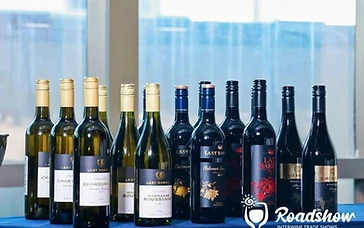
Can You Exhibit Wine in China Without a Local Importer?
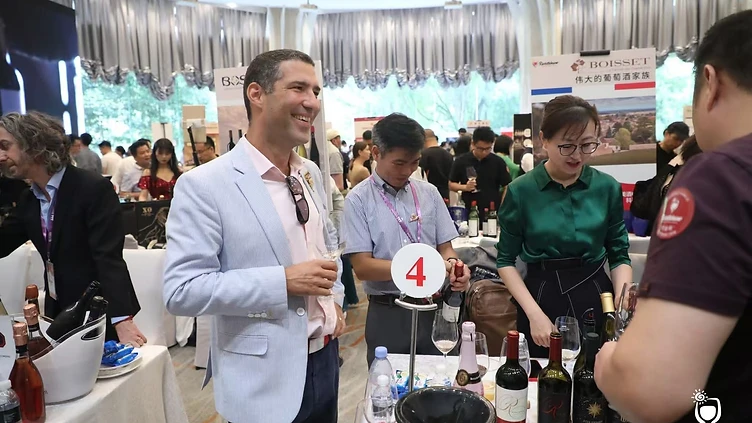
Yes, you can exhibit wine in China without a local importer. Learn how international wineries legally ship samples, meet GACC Decree 248 rules, and secure distributors.
Yes, an overseas winery or brand owner can exhibit wine in mainland China without an existing local importer or domestic distributor. In fact, seeking in-market commercial representation is one of the primary reasons international wine producers participate in Chinese trade fairs. However, entering China’s exhibition circuit without a pre-existing importer requires navigating strict regulatory pathways: while you do not need a commercial buyer signed before the fair, every physical bottle entering the country must be cleared through China Customs under compliant import declarations, food safety filings, and designated exhibition logistics.
Foreign wine producers often misunderstand the legal mechanics of wine exhibitions in China. Chinese customs and food safety authorities do not allow individual producers to hand-carry commercial sampling stock or mail undeclared cases to an exhibition hall. To present your portfolio legally, you must use established regulatory mechanisms—such as the General Administration of Customs of the People's Republic of China (GACC) exhibition logistics channels, national trade pavilions, or licensed exhibition forwarding agents who act as the temporary importer of record.
Understanding these compliance frameworks allows boutique wineries and large export groups to test their products, assess regional demand, and negotiate distribution agreements from a position of legal and operational readiness.
The Legal Framework: How Unrepresented Wineries Enter China
Under China's Food Safety Law and customs administrative rules, all alcoholic beverages entering the territory must be declared to customs. Commercial entry requires an in-market registered business entity holding an alcohol circulation and import license. When an overseas winery does not yet have an appointed distributor, two primary operational models make legal participation possible.
1. Appointed Exhibition Logistics Agents (Temporary Importer of Record)
Professional trade fairs partner with licensed customs brokers and freight forwarders who possess China customs clearance qualifications. Under this model, the exhibition freight forwarder acts as the consignee and temporary importer of record for customs declaration purposes.
- Exhibition Goods (Temporary Import): Under customs supervision, samples are designated for display or on-site professional tasting. Duties and taxes are bonded or settled according to exhibition status, and goods cannot be sold off the stand into retail channels.
- Consumption Clearance: For bottles opened and consumed exclusively during B2B tasting sessions, the agent clears customs, processes commodity inspection declarations, and arranges duty/consumption tax payment on your behalf.
2. Association and Government Pavilion Consolidations
National or regional export bodies—such as national wine promotion boards or regional commerce departments—frequently organize collective pavilions. These bodies contract accredited import agents to handle group consolidation, customs clearance, and local transit. For example, Wine Australia regularly structures centralized logistics for wineries seeking Chinese distribution, consolidating sample freight and managing associated exporter documentation across domestic and international legs.
Mandatory Compliance: GACC Decree 248 and Production Registration
Even when exhibiting through a forwarder without a local commercial buyer, producers must comply with overseas facility registration rules established by China's General Administration of Customs.
- Decree No. 248 Compliance: Implemented by the General Administration of Customs of China (GACC Decree No. 248), all overseas production, processing, and storage facilities of imported food and beverages must obtain an official overseas manufacturer registration number through the China Import Food Enterprise Registration (CIFER) platform.
- Wine Classification: Alcoholic beverages are classified under categories requiring overseas manufacturer registration. Wineries can register online or work with authorized agents prior to dispatch.
- On-Bottle Documentation: The approved 18-digit GACC registration number (or overseas authority-issued registration number recognized by GACC) must be printed or affixed to the packaging label as required by customs rules.
Export managers planning their event calendars—such as the upcoming Autumn Guangzhou (31 October–2 November 2027 at China Import and Export Fair Complex / Pazhou, Guangzhou) or regional tours across the Asia Roadshow 2027 (Hanoi 11 May, Kuala Lumpur 13 May, Singapore 15 May, Bali 17 May)—must initiate their GACC facility filings at least two to three months before consolidated sample shipping deadlines.
Wine Sample Shipping: Regulations and Labelling Rules
Sending tasting samples to a trade show differs fundamentally from standard commercial container shipping, but it remains subject to strict administrative supervision.
Required Shipping Documentation
To enable your forwarder to clear exhibition wine samples through customs, you must prepare:
- Certificate of Origin: Issued by your home country's designated competent authority or recognized chamber of commerce.
- Certificate of Analysis (CoA): Detailing alcohol by volume (ABV), total acidity, free and total sulfur dioxide ($SO_2$), dry extract, and sugar levels.
- Commercial/Pro Forma Invoice & Packing List: Explicitly specifying "Samples for wine exhibition tasting only; not for retail sale" along with vintage, grape variety, and volume.
- Bottling and Sanitary Documentation: Confirming compliance with food safety parameters.
Exhibition Label Requirements
Under Chinese import standards (GB 7718 and relevant beverage alcohol standards), commercial imports require fully compliant Chinese back labels before reaching domestic shelves. For exhibition tasting samples cleared under official event protocols:
- Samples cleared as temporary trade show stock generally require Chinese translation stickers indicating the brand name, product category, ingredients, ABV, net volume, origin, production date, shelf-life (if applicable), and manufacturer GACC registration number.
- Failing to label samples properly can result in customs detaining your freight at the port of entry, leaving your booth empty during show days.
+-------------------------------------------------------------------------+
|                        SAMPLE LABELLING WORKFLOW                        |
+-------------------------------------------------------------------------+
|  1. Verify GACC Overseas Manufacturer Registration on CIFER Platform   |
|                                    │                                    |
|  2. Draft Chinese Back Label Translation (Ingredients, ABV, GACC Reg)   |
|                                    │                                    |
|  3. Issue Lab Analysis (CoA) matching exact vintage & production lot   |
|                                    │                                    |
|  4. Consolidate via Official Exhibition Logistics Freight Agent         |
+-------------------------------------------------------------------------+
Comparison: Exhibiting Unrepresented vs. Partnering with a Local Importer
Choosing whether to exhibit alone to find an importer or wait until you secure one involves trade-offs in commercial control, cost, and logistics overhead:
| Assessment Factor | Exhibiting Without a Local Importer | Exhibiting With an Appointed Local Importer | | :--- | :--- | :--- | | Clearance Consignee | Official event freight forwarder or temporary trade agent | Importer's registered Chinese business entity | | Logistics Management | Winery pays air/sea sample freight, customs clearance, and event handling fees directly | Local importer often draws from existing domestic bonded inventory | | Commercial Flexibility | Complete freedom to negotiate with all distributors, regional wholesalers, and hotel groups | Restricted by exclusivity clauses and existing distributor pricing margins | | On-Site Staffing | Requires winery export staff, bilingual hostesses, or third-party translators | Supported by the distributor’s local commercial sales force | | Primary Goal | Market discovery, brand benchmarking, and appointing direct importers | Driving retail pull-through, secondary distribution, and direct sales | | Cost Profile | Higher upfront direct exhibition investment per bottle | Lower operational footprint for the winery; lower gross margin per case |
Actionable Pre-Exhibition Compliance Checklist
For export directors preparing for events like Guangzhou 2026 (16–18 November 2026) or the Spring Guangzhou 2027 (7–9 May 2027 at Pazhou Complex), follow this structured schedule:
12 to 16 Weeks Before the Exhibition
- [ ] Facility Registration: Check that your winery facility holds an active GACC registration number via CIFER.
- [ ] Intellectual Property Protection: Register your brand trademark (both Latin alphabet and Chinese phonetics/character equivalent) with the China National Intellectual Property Administration (CNIPA). China enforces a strict "first-to-file" trademark system.
- [ ] Select Exhibition Route: Coordinate your stand reservation through the Become an Exhibitor portal.
8 to 10 Weeks Before the Exhibition
- [ ] Forwarder Engagement: Contact the trade fair's designated logistics partner to request their customs shipping instructions, sample clearance deadlines, and tariff estimates.
- [ ] Laboratory Testing: Commission batch-specific Certificates of Analysis for every SKU you intend to display.
- [ ] Translation & Back Labels: Prepare back label proofs with your Chinese brand name, net contents, allergens (e.g., sulfites), and producer registration data.
4 to 6 Weeks Before the Exhibition
- [ ] Freight Dispatch: Dispatch consolidated sample air or sea freight according to the freight forwarder's cut-off dates.
- [ ] Customs Declarations: Review entry paperwork (pro forma invoices, airway bills) ensuring values are stated accurately for sample consumption taxes and customs tariffs.
- [ ] Matchmaking Preparation: Identify your target distributor profile (tier-1 general importer, regional sub-distributor, or on-premise specialist) using dedicated Business Matching services.
Commercial Strategy: Converting Leads Without an In-Market Partner
Exhibiting without an importer allows you to evaluate multiple prospective distribution models firsthand across mainland China's dynamic trade hubs.
1. Structure Transparent Export Pricing (Incoterms)
Chinese buyers will expect prompt pricing quotations on an EXW (Ex-Works) and FOB (Free on Board) basis, usually quoted in Euros or US Dollars. Seasoned importers with their own cold-chain supply routes often prefer FOB shipping to consolidate multi-region orders. Keep ready-to-share export price sheets showing MOQ (Minimum Order Quantities) by pallet and container tier.
2. Identify the Right Importer Tier
Mainland China does not possess a singular, monolithic distribution network:
- National First-Tier Importers: Handle state-level customs logistics, operate centralized bonded warehouses, and manage downstream wholesalers across multiple provinces.
- Regional Distributors: Specialize in localized strongholds such as Guangdong, the Yangtze River Delta, or western commercial hubs (e.g., Chengdu). They often offer focused promotional execution for boutique estates.
- Private Client & On-Trade Importers: Specialize in luxury hospitality, Michelin-starred restaurants, and high-net-worth direct sales, requiring smaller volumes with higher brand storytelling.
Review existing brand representations and competitor pricing by exploring the Exhibitor Directory to benchmark your shelf positioning against currently imported labels.
3. Labeling and Exclusivity Clauses
During discussions at your stand, prospective partners may demand immediate exclusivity for the entire Chinese market. Exercise caution: unless an importer commits to firm minimum annual purchase volumes (backed by financial guarantees), consider granting regional exclusivity (e.g., South China or specific provinces) or on-trade channel exclusivity instead of country-wide rights.
Hypothetical ROI Analysis: Direct Exhibition to Secure Distribution
To justify the export marketing expenditure of exhibiting unrepresented, consider this clearly labelled hypothetical financial model for an estate producing 50,000 cases annually seeking a Chinese importer.
Note: This calculation uses total estimated upfront costs versus projected first-year gross contribution margins and is purely illustrative.
HYPOTHETICAL EXHIBITION INVESTMENT MODEL
─────────────────────────────────────────────────────────────────────────────
Total Upfront Exhibition Costs:
- Stand Space & Basic Construction:                           $4,500
- Sample Logistics, Air Freight & Customs Duties (3 cases):   $1,600
- Staff Travel, Hotel Accommodation & Ground Transit:         $2,800
- On-site Professional Translation & Collateral Printing:       $700
─────────────────────────────────────────────────────────────────────────────
TOTAL DIRECT COST:                                            $9,600

Projected First-Year Commercial Outcome:
- Qualified Importer Contracts Signed:                            1
- Initial Trial Order Volume:                       1,200 cases (1 container)
- FOB Export Price per Case (12 bottles):                        $60
- Total Gross Revenue:                                       $72,000
- Direct Production & Bottling Cost (COGS @ $36/case):       $43,200
─────────────────────────────────────────────────────────────────────────────
GROSS CONTRIBUTION MARGIN (Revenue - COGS):                  $28,800

NET FIRST-YEAR ROI:
- Net Profit Contribution ($28,800 - $9,600 Investment):     $19,200
- First-Year Return on Marketing Investment (ROMI):             200%
─────────────────────────────────────────────────────────────────────────────
Even with modest initial container volumes, the direct-to-market model delivers strong returns while providing the producer complete transparency over their brand's pricing structure in Asia.
Southeast Asia and Mainland China Synergy
Producers examining Asian expansion often combine their mainland China strategy with emerging markets across Southeast Asia. International distribution networks increasingly mirror these integrated routes. Wineries preparing their commercial calendar can balance their mainland initiatives alongside events like the Hanoi 2026 roadshow (20 November 2026) or Vietnam 2027 (6–8 July 2027 at SECC, Ho Chi Minh City), building a cohesive Asia-Pacific distribution footprint.
For practical travel itineraries, venue profiles, and visa requirements across all seasonal sessions, review comprehensive resources in our Event Guides.
Conclusion: Turning Regulatory Compliance into Market Advantage
Exhibiting wine in China without a local importer is entirely viable, commercially advantageous, and common practice among international producers. By working with accredited trade fair forwarding partners, completing CIFER/GACC facility registration, and preparing compliant laboratory documentation, you retain full autonomy over your export destiny.
Ready to present your wines to accredited importers, regional distributors, and national buyers? Take the first step to claim your space in the world’s most dynamic imported wine market by visiting our Become an Exhibitor portal.
Sources
- General Administration of Customs of the People's Republic of China (GACC) - Food Safety and Overseas Manufacturer Registration Rules
- Wine Australia - China Roadshow Regulatory and Logistics Requirements
- EU SME Centre - Technical Requirements and Importing Wine into China
- Beverage Trade Network - China Wine Label and Import Requirements Guide
Key Takeaways
- —Overseas wineries do not need an existing Chinese commercial buyer or distributor to exhibit products at trade shows in mainland China.
- —Official exhibition freight forwarders serve as the licensed temporary importer of record, legally handling entry declarations, customs clearance, and duty administration for tasting samples.
- —Every foreign producer must complete mandatory overseas manufacturer facility registration under GACC Decree No. 248 via the CIFER platform prior to sample entry.
- —Wine samples require Certificates of Origin, detailed Certificates of Analysis (CoA), and compliant Chinese translation labels before clearance.
- —Exhibiting unrepresented protects your export pricing and allows you to interview multiple regional importers before negotiating exclusive contracts.
Frequently Asked Questions
Can I bring my wine samples into China in my personal luggage for an exhibition?
No. Hand-carrying commercial wine samples in personal passenger luggage violates Chinese customs import regulations. Alcoholic beverages brought via personal baggage are restricted by strict passenger duty-free personal-use allowances (typically up to 1,500 ml) and cannot be declared as commercial or exhibition tasting samples on-site. All trade show samples must be declared through official exhibition freight channels.
Do my wine exhibition samples need full Chinese back labels?
Yes. Even for sampling and professional tasting at an exhibition, bottles cleared through customs must bear Chinese translation stickers or approved back labels containing standard regulatory data, including product name, alcohol content, net volume, country of origin, producer name, and your GACC facility registration number.
What is GACC Decree 248, and does it apply to wineries sending samples?
GACC Decree 248 is a regulation enforced by the General Administration of Customs of China requiring all overseas food and beverage production facilities to be registered in the official CIFER database before products can enter China. Wineries must secure this registration number even if they are only dispatching samples for trade fairs.
How long does it take to ship wine samples and clear customs in China for a trade fair?
Producers should plan for a logistics window of 6 to 10 weeks. This timeframe accounts for air or consolidated ocean transit, port handling, laboratory testing review, customs entry declarations, and transfer to the Pazhou exhibition complex in Guangzhou.