
Distribution Strategy in China for Austrian Wine Producers
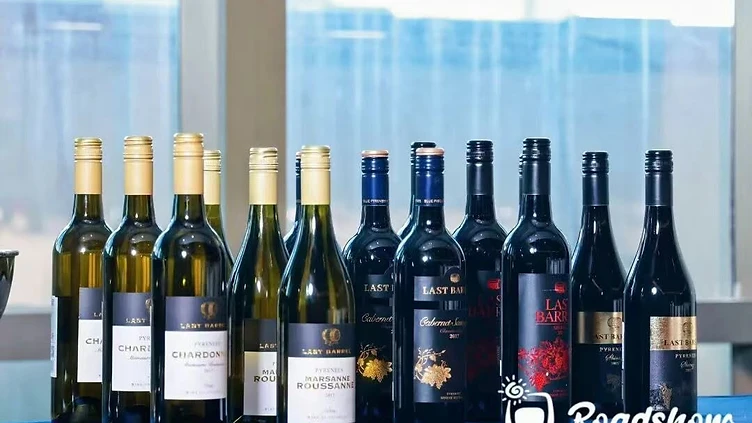
A commercial roadmap for Austrian wine producers and regional export bodies looking to establish, scale, and optimize distribution routes across China's evolving on-trade, boutique retail, and digital channels.
A successful distribution strategy in China for Austrian wine producers demands a sharp departure from mass-market volume plays. Instead, it requires an agile, value-driven market architecture focused on boutique on-trade venues, specialized fine wine merchants, regional second-tier economic hubs, and digital brand storytelling. While historic legacy exporters leaned heavily on generic red wine volume, Austria's export strength—anchored in crisp Grüner Veltliner, terroir-driven Riesling, cool-climate Blaufränkisch, and rare Trockenbeerenauslese dessert wines—aligns precisely with modern Chinese consumer shifts toward freshness, food pairing, and premium niche discoveries.
According to the International Organization of Vine and Wine (OIV), China's wine consumption recalibrated significantly following historic highs, registering a 24.7 percent contraction in 2023 to around 6.8 million hectoliters. However, the market remains the ninth-largest wine-consuming nation worldwide. Concurrently, data highlighted by China Briefing in 2024 underscores that Chinese alcohol e-commerce is projected by the International Wine and Spirits Research (IWSR) to expand at a 6 percent compound annual growth rate through 2027, accounting for nearly 40 percent of the world's online beverage alcohol market. For Austrian vintners navigating European market saturation, entering China today offers an unprecedented window: a market shifting away from ostentatious banqueting toward sophisticated lifestyle appreciation, authentic gastronomic pairing, and sommelier-led discovery.
The Commercial Landscape: Where Austrian Wine Fits
Historically, Austrian wine exports relied on European partners, particularly Germany and Switzerland, alongside expanding presence in North America. As documented by the Austrian Wine Marketing Board (AWMB), Austrian vintners maintained robust average export prices despite broader European retail volatility in 2024 and 2025. In China, Austria cannot—and should not—compete against bulk exporters from Chile or volume-heavy commodity brands. Instead, Austrian wine is fundamentally positioned as a premium, culinary-focused specialist category.
Three foundational consumer dynamics in China favor Austrian portfolios today:
- The Rise of White and Cool-Climate Varieties: While red wine historically dominated over 80 percent of Chinese import volume, high-acidity whites are experiencing strong growth across Tier-1 and New Tier-1 cities. Urban professionals and younger consumers increasingly prefer aromatic, lower-alcohol, crisp white wines that integrate seamlessly with regional Chinese culinary traditions, such as Cantonese seafood, Shanghainese delicate cuisine, and Sichuan spicy dishes.
- Sustainability and Organic Credentials: Austria leads Europe with over 20% of its vineyards farmed organically. Chinese younger affluent buyers and Michelin-starred bistros increasingly seek low-intervention, certified sustainable, and biodynamic labels.
- Sommelier and Fine-Dining Influence: The explosion of modern Western, neo-Chinese, and fusion dining across Shanghai, Shenzhen, Guangzhou, and Chengdu provides an ideal launchpad. Sommeliers in these venues prioritize distinctive storytelling and high food compatibility over mass-market prestige labels.
To capture these opportunities, Austrian producers must examine and master the multi-tiered distribution architecture that defines modern Chinese commerce.
Key Routes to Market: Multi-Tier Architecture
Foreign wine producers cannot export directly to end consumers; Chinese trade regulations require an accredited domestic entity holding an alcohol wholesale license, customs import registration, and compliance facilities.
[Austrian Winery / AWMB Consortia]
               │
     (Ocean Freight / Reefer)
               ▼
   [Licensed Chinese Importer]
               │
   ┌───────────┼───────────┐
   ▼           ▼           ▼
[Direct     [Regional   [Boutique
 On-Trade]  Sub-Dist.]   E-Com/O2O]
   │           │           │
   ▼           ▼           ▼
[Hotels/    [Tier-2/3   [WeChat Mini-Program/
 Bistros]   Retailers]   Specialty Apps]
1. National Mega-Importers vs. Boutique Fine Wine Specialists
Working with massive state-owned enterprises or legacy nationwide distributors often leads to portfolio neglect unless your brand commits substantial promotional budgets. For Austrian estates producing between 20,000 and 150,000 bottles annually, boutique regional fine wine importers represent the most commercially viable channel. These boutique operators maintain specialized temperature-controlled supply chains, direct relationships with Michelin-starred and Black Pearl dining establishments, and targeted private collector networks.
2. Regional Sub-Distributors across Emerging Hubs
Focusing exclusively on Shanghai and Beijing creates vulnerability to saturated competition. Dynamic New Tier-1 cities—including Hangzhou, Chengdu, Wuhan, and Changsha—exhibit strong GDP growth, expanding hospitality scenes, and receptive consumer bases. Austrian exporters should partner with importers who either maintain regional branch offices or deploy authorized sub-distributors in southern and central economic corridors.
3. Integrated On-Trade and Direct-to-Consumer Digital Channels
Academic research on imported wine distribution patterns in China (ResearchGate, 2010–2024) demonstrates that up to 80% of newly introduced boutique imported wines initially monetize through on-trade channels (hotels, fine dining, specialty bars) at higher margins before achieving sustainable off-trade velocity. Once brand recognition is sparked in dining rooms, forward-thinking importers convert guests into direct-to-consumer (D2C) repeat buyers through localized WeChat Mini-Programs, targeted Douyin livestreams, and specialized social commerce.
Regulatory and Compliance Realities
Navigating China’s customs clearance framework requires proactive administrative management. Failure to comply with registration protocols results in port delays, customs demurrage, and costly re-labeling or product rejection.
General Administration of Customs (GACC) Decree 248 and 249
Under GACC regulations effective since 2022, all foreign alcoholic beverage production and storage facilities must be formally registered in the CIFER (China Import Food Enterprises Registration) platform prior to shipment. Austrian wineries must ensure their registration codes are active, accurately categorized under wine production, and documented alongside the Federal Ministry of Agriculture, Forestry, Regions and Water Management.
Labeling Standards (GB 7718 and GB 2758)
All bottles cleared for commercial retail must bear Chinese back labels adhered prior to customs inspection or within authorized bonded warehouse facilities. Label elements must strictly comply with mandatory standards:
- Designation & Grape Variety: Accurate Chinese translations matching standard terminology (e.g., 绿维特利纳 for Grüner Veltliner).
- Alcohol by Volume & Volume: Clear metrics conforming to standard font height requirements.
- Ingredient List: Must explicitly declare sulfur dioxide/sulfites (二氧化硫) and any clearing or stabilizing agents exceeding statutory limits.
- Importer Information: Chinese name, address, and verified domestic emergency telephone contact of the registered Chinese distributor.
- Storage Conditions & Warnings: Statutory warnings covering minor consumption, pregnancy hazards, and recommended storage conditions.
Cold-Chain Logistics and Reefer Protection
Austrian shipments traveling by maritime container via Hamburg, Rotterdam, or Koper to eastern Chinese ports (Ningbo, Shanghai, or Shenzhen) traverse equatorial climates. The delicate acidity, aromatic purity, and subtle phenolic balance of Grüner Veltliner and Blaufränkisch are vulnerable to heat damage. Austrian producers must insist on temperature-controlled reefer containers (12°C–15°C) and data loggers. Premium importers in China treat verifiable unbroken cold-chain logistics as a non-negotiable proof of supplier quality.
Marketing and Commercial Positioning for Austrian Terroir
Establishing market share against established competitors from Bordeaux, Tuscany, or Barossa requires Austrian vintners to position their unique strengths clearly across Chinese trade networks.
| Austrian Asset | Market Opportunity in China | Commercial Execution Strategy | | :--- | :--- | :--- | | Grüner Veltliner (DAC Structure) | Perfect white wine pairing for diverse regional Chinese cuisines (Cantonese, Huaiyang, hotpot). | Target high-end seafood restaurants, sommelier pairings, and private dining clubs. | | Cool-Climate Reds (Blaufränkisch, Zweigelt) | Rising preference for elegant, lower-oak, lower-tannin, fruit-forward red wines. | Position against heavy, over-extracted styles; pitch as refined casual business dinner options. | | Prädikat & Sweet Wines (Trockenbeerenauslese, Eiswein) | Longstanding cultural appreciation for luxurious, sweet dessert wines during gifting seasons. | Target Mid-Autumn Festival and Chinese New Year gifting corporate programs. | | Organic & Biodynamic Leadership | Fast-growing natural wine bar culture across Shanghai, Shenzhen, and Chengdu. | Partner with independent natural/low-intervention wine importers and specialty bottle shops. |
For more research-led market perspectives and regional importer trade behaviors, review our ongoing Market Insights.
Overcoming Practical Commercial Hurdles
Expanding into China presents structural business risks that require proactive contractual and operational safeguards:
- Intellectual Property and Trademark Squatting: China operates under a strict "first-to-file" trademark regime. Austrian producers must register both their Latin alphabet brand name and an official, phonetically appealing Chinese character trademark with the China National Intellectual Property Administration (CNIPA) before shipping commercial samples. Unregistered brands risk extortionate buyout demands from third-party trademark squatters.
- Exclusivity Demands vs. Regional Realities: Prospective Chinese distributors often demand national exclusivity across all channels. Granting nationwide exclusivity to an unproven partner carries massive commercial risk. Austrian wineries should link exclusivity to verified annual volume thresholds or restrict exclusivity strictly by territory (e.g., Eastern China vs. Greater Bay Area) or by channel (on-trade hospitality vs. e-commerce).
- Payment Terms and Currency Controls: Given tight foreign exchange controls managed by China's State Administration of Foreign Exchange (SAFE), initial shipments should be backed by 100% advance wire transfer (T/T) or confirmed Irrevocable Letters of Credit (L/C) at sight before bill of lading release.
Building Trade Relationships with Interwine
Wine distribution partnerships in China are fundamentally rooted in personal trust, physical palate validation, and verifiable supply stability. Digital catalogs and remote pitching rarely convert tier-1 Chinese beverage buyers; distributors expect to meet vineyard principals, sample wines under professional conditions, and evaluate commercial commitments face-to-face.
Participating directly in specialized trade platforms bridges the distance between Austrian estates and active Asian buyers. Industry leaders regularly Visit Interwine to source authentic, estate-bottled global wines. By securing a dedicated presence to Become an Exhibitor, Austrian wineries, regional consortia, and export organizations gain immediate access to qualified, pre-screened importers, hospitality sommeliers, and purchasing directors from across mainland China.
In tandem with physical booth exhibits, producers can leverage bespoke Business Matching services. These curated sessions pair Austrian boutique producers directly with licensed regional distributors who actively seek organic, cool-climate, and premium European white wines. This targeted approach accelerates entry timelines, mitigates partner identification risks, and establishes enduring market traction across China's most commercially rewarding channels.
Sources
- Austrian Wine Marketing Board (AWMB): Austrian Wine Export Performance and Global Positioning (2024–2025). https://www.austrianwine.com
- International Organisation of Vine and Wine (OIV): State of the World Vine and Wine Sector (2024). https://www.oiv.int
- China Briefing (Dezan Shira & Associates): China’s Wine Market Outlook: Trends and Opportunities (2024). https://www.china-briefing.com/news/chinas-wine-market-outlook-trends-and-opportunities/
- ResearchGate / Journal of Wine Research: Wine distribution channel systems in mature and newly growing markets: Germany versus China (2024 citation updates). https://www.researchgate.net/publication/256078217_Wine_distribution_channel_systems_in_mature_and_newly_growing_markets_Germany_versus_China
- General Administration of Customs of the People's Republic of China (GACC): Decree 248 and 249 Import Food Enterprise Regulations (Official customs compliance guidance). http://english.customs.gov.cn
Key Takeaways
- —Austrian producers should prioritize premium cool-climate whites (Grüner Veltliner, Riesling) and elegant reds (Blaufränkisch) rather than attempting to compete in mass-market red wine commodity segments.
- —Boutique fine wine distributors and sommelier-driven on-trade channels deliver significantly higher conversion and brand building than monolithic legacy mega-importers.
- —Expansion beyond saturated Tier-1 cities into fast-growing New Tier-1 metropolitan areas (Hangzhou, Chengdu, Wuhan) offers receptive wine consumers and lower channel gatekeeping.
- —Compliance with GACC CIFER facility registration (Decree 248/249) and GB labeling regulations is essential to avoid customs delays and port impoundment.
- —Proactive CNIPA trademark registration in both Roman alphabet and Chinese characters is critical prior to initiating commercial market entry.
- —Direct face-to-face trade engagement and tailored B2B matchmaking are vital to establishing trust with qualified Chinese importers and retail buyers.
Frequently Asked Questions
Why is Austrian wine well-positioned in China despite overall import contraction?
While volume-driven red wine consumption has contracted, Chinese consumer taste has diversified toward aromatic, crisp white wines, certified organic farming, and food-friendly gastronomic pairings. Austrian staples like Grüner Veltliner and cool-climate Blaufränkisch align directly with this emerging urban preference.
What are the mandatory customs requirements for shipping Austrian wine to China?
Producers must obtain a CIFER registration number under GACC Decree 248/249 prior to export, comply with Chinese national food safety standards (GB 2758 and GB 7718), and ensure mandatory Chinese back labels correctly state all ingredients, sulfites, allergens, and local importer credentials.
Should Austrian wineries grant nationwide exclusivity to a Chinese distributor?
Generally, no. China is a continent-sized aggregate of regional markets. Austrian estates should divide territories by region (e.g., East China, South China, Southwest) or by channel (on-trade hospitality versus specialized e-commerce), conditioning any exclusivity on strict minimum sales milestones.
What is the best route to find qualified Chinese wine importers for boutique estates?
The most effective route combines physical trade exhibition at major wine fairs such as Interwine with curated B2B matchmaking services, enabling direct negotiation with pre-screened importers, regional wholesalers, and hotel beverage directors.
How important is temperature control when exporting Austrian wine to China?
Temperature control is critical. Ocean routes pass through tropical maritime zones where standard containers can exceed 40°C, damaging delicate white wines and balanced reds. Exporters should mandate thermal insulation blankets or refrigerated reefer containers (12°C–15°C) equipped with temperature data loggers.