China vs Japan: Where Should Wine Brands Expand?
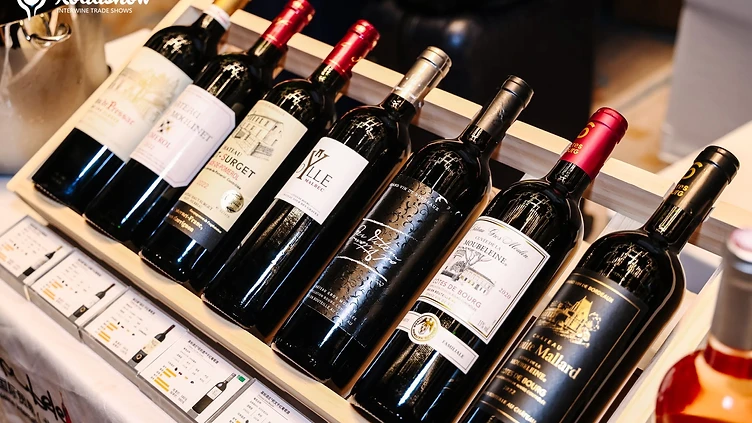
A commercial B2B evaluation comparing China and Japan for international wine brand expansion, assessing import regulations, margins, demographics, distribution dynamics, and route-to-market strategies.
For international wine producers plotting their next commercial expansion in Asia, the strategic choice frequently narrows down to two economic titans: China and Japan. Historically, brand owners approached these two destinations through simplistic stereotypes—viewing Japan as a mature, low-risk boutique market and China as an inexhaustible, high-volume growth engine. Today, macroeconomic structural shifts, evolving duty frameworks, and divergent consumer behaviors require a far more rigorous, data-driven entry strategy. Choosing whether to prioritize mainland China or Japan is not merely a question of geographic proximity; it defines your pricing architecture, compliance workload, and partner profile for the next decade.
Executive Takeaway: Where Should Wine Brands Expand?
If your winery seeks predictable cash flow, transparent distribution tiers, low regulatory volatility, and established consumer appreciation for mid-to-high tiers (especially organic, sparkling, and natural wines), Japan offers the most stable commercial beachhead. Conversely, if your operation requires scalable volume ceilings, higher risk-adjusted retail margins, responsive digital and direct-to-consumer infrastructure, and your portfolio can leverage regional powerhouses like the Greater Bay Area, China remains the primary engine for transformative brand scale. Many global wineries adopt a staged model: building steady cash flow and sommelier prestige in Japan while concurrently activating targeted regional distribution in China via verified Business Matching channels.
Market Scale, Per Capita Dynamics, and Economic Trajectories
When evaluating volume and value, both markets present contrasting macroeconomic portraits. According to industry consumption reporting cited by Vino Joy News (2026), Japan’s total wine imports surpassed China’s volume in 2025, reaching 2.3 million hectolitres. This reflects an established, entrenched baseline of daily and on-premise consumption. Statista trade figures documented by The Drinks Business (2024) highlighted that Japan’s per capita wine consumption stands at roughly three times that of mainland China, bolstered by younger demographic cohorts who actively pivot away from traditional beverages like sake toward imported wine.
However, Japan faces structural demographic limitations. The country's population has contracted consistently over recent years, accompanied by prolonged foreign exchange pressures on the Japanese Yen, which tests pricing thresholds on foreign imports.
Mainland China presents an entirely different risk-reward matrix. While the broader market experienced structural recalibration following the post-pandemic economic cooling, its sheer consumer baseline remains unmatched. Academic research in the Journal of Wine Economics (2025) underscores that mainland China's apparent per-capita wine consumption remains around one-tenth that of mature neighboring hubs like Hong Kong, revealing an extraordinary headroom for upward growth as middle-class income scales. China’s wine import market, which recorded 249 million liters in 2023 (Statista / The Drinks Business, 2024), demonstrates that even a mild percentage gain in Chinese per-capita consumption creates volume requirements that easily outstrip entire mid-sized international markets. Brands looking to calibrate their timing can cross-examine regional momentum against current Market Insights.
+-----------------------+---------------------------------------+---------------------------------------+
| Strategic Metric      | Japan                                 | Mainland China                        |
+-----------------------+---------------------------------------+---------------------------------------+
| Commercial Stability  | High (mature retail & on-premise)     | Medium (rapid channel evolutions)     |
| Long-Term Upside      | Moderate (demographic contraction)    | Exponential (low per capita base)     |
| Import Volume Baseline| ~2.3M hL (2025 import figures)        | Subject to structural restocking      |
| Channel Architecture  | Traditional tiered wholesale & retail | Hyper-digital, specialist & direct     |
| Customs & Tariffs     | Favorable bilateral EPAs (EU/CPTPP)   | High import duties/VAT (varies by FTA)|
+-----------------------+---------------------------------------+---------------------------------------+
Regulatory Frameworks, Duties, and Compliance Complexity
Securing entry into either market mandates navigation through distinctly different customs, labeling, and compliance regimes.
Japan: Oenological Additives and Strict Traceability
Japan is celebrated for transparent, predictable customs clearings, but its technical standards are exacting. According to Pelican Air Services (2025) and statutory export summaries from Wine Australia (2026), imports into Japan must strictly conform to the Japanese Food Sanitation Act and Liquor Tax Law. Japanese customs require:
- Detailed ingredient and processing-aid declarations, including laboratory validation of permitted preservative thresholds (e.g., total sulfur dioxide limits) and strict testing for pesticide residues.
- Specific Japanese-language label application, containing importer corporate details, product category, container capacity, and alcohol by volume.
- Preferential tariff schedules for major producers: regions operating under the EU–Japan Economic Partnership Agreement (EPA) or the Comprehensive and Progressive Agreement for Trans-Pacific Partnership (CPTPP) enjoy near-zero or reduced customs duties, making European and Oceanic entries highly price-competitive against secondary domestic costs.
China: Label Mandates and Evolving Bilateral Duties
Mainland China operates an extensive, highly centralized customs inspection mechanism managed by the General Administration of Customs of China (GACC):
- All overseas manufacturing facilities must be officially registered via the GACC import food tracking architecture before departure.
- Mandatory, fully compliant Chinese back labels must detail exact commercial ingredients, shelf-life declarations where applicable, geographic designations, and registered importer documentation.
- Tariffs fluctuate based on political and bilateral trade pacts. As cataloged in the Journal of Wine Economics (2025), punitive tariffs on Australian wine reaching up to 218% were fully dismantled in March 2024, reshaping market share balances among France, Chile, Australia, Spain, and Italy. Overall landed costs must factor in customs tariffs, the standard 13% Value Added Tax (VAT), and a 10% consumption tax.
Channel Architecture: Traditional Wholesale vs. Direct-to-Consumer Ecosystems
Your route-to-market structure differs radically across the East China Sea. Selecting the wrong distribution model can lock your inventory in unproductive warehouses.
Japan’s Tiered Wholesale and On-Premise Prestige
Japan's distribution architecture operates within a disciplined multi-tier model. Established distributors—ranging from conglomerates like Suntory and Kirin to fine-wine specialists like Enoteca Co., Ltd. (GTAIC, 2026)—command deep relationships with on-premise dining establishments (izakayas, Michelin-starred restaurants, French bistros) and premier department store basements (depachika).
- Pros: Unwavering payment discipline, long-term brand equity maintenance, minimal unauthorized inventory liquidation.
- Cons: Long sales cycles, low tolerance for vintage price volatility, compressed distributor operating margins that demand conservative producer pricing.
China’s Regionalized and Digitally Powered Channels
In contrast, China has bypassed legacy wholesale layers to construct the world’s most dynamic social-commerce and specialist retail ecosystem. As documented by consumer research from YouGov and The Drinks Business (2024), modern Chinese purchasing patterns diverge from historical conventions. In southern China's Greater Bay Area (GBA), consumers drink wine three times more frequently than counterparts in mature trade hubs like Hong Kong, purchasing predominantly through specialist wine retail boutiques (49%) rather than traditional hypermarkets (37%).
Key nuances within China's distribution landscape include:
- Regional Concentration: Guangdong Province accounts for roughly 25% of all mainland wine imports (The Drinks Business, 2024). Wineries achieve far better commercial success targeting specific economic zones—such as the Greater Bay Area, the Yangtze River Delta, or Chengdu-Chongqing—than trying to blanket the entire country.
- Digital and Social Commerce: Channels like WeChat Mini-Programs, Douyin live-tasting storefronts, and Xiaohongshu (RED) enable direct-to-consumer relationships and instant consumer validation, provided brand narratives are authentic and culturally resonant.
- Active Partnership Requirements: Importers in China demand active winery participation. Producers who physically attend regional exhibitions, host targeted tastings, and interface directly with trade buyers achieve sustained sales velocity, whereas absentee suppliers face inventory obsolescence. Exporters looking to verify qualified regional buyers can participate in specialized trade programs by visiting Become an Exhibitor.
Consumer Profiles, Categories, and Margin Realities
Understanding what sits in the glass is paramount to allocating inventory.
Japan: Gastronomy, Organic, and Bubbles
Japanese consumers boast sophisticated, nuanced palates. The market exhibits outstanding demand for sparkling wines, including Champagne, Cava, Prosecco, and Crémant (GTAIC, 2026). Furthermore, Japan represents Asia's leading market for low-intervention, natural, and certified organic wines, driven by their seamless integration with minimalist, seasonal Japanese cuisine. However, price points are fiercely contested; standard retail bottles between ¥1,200 and ¥2,500 (~$8 to $17) face rigorous price competition.
China: Gifting, Premiumization, and White Wine Emergence
While full-bodied red wines (Bordeaux blends, Cabernet Sauvignon, Shiraz) retain historical dominance for formal corporate banquets and gift-giving rituals, everyday consumer segments are diversifying rapidly. Millennial and Gen-Z demographics in tier-one and tier-two cities are actively embracing crisp white wines (such as New Zealand Sauvignon Blanc, German Riesling, and Chablis), aromatic varietals, and approachable sparkling options (Grand View Research, 2026).
Crucially, mainland China maintains a significantly higher ceiling for gross profit margins. Premium imported wines positioned between RMB 200 and RMB 600 (~$28 to $85) yield attractive margins for both producer and importer, provided the brand possesses distinctive provenance, visual elegance, and targeted trade visibility. Industry updates on emerging product categories are regularly reviewed in our dedicated News and Magazine.
Strategic Decision Matrix: Where Should You Allocate Capital?
To determine your operational path forward, benchmark your winery against these practical parameters:
Allocate First to Japan If:
- Your production output is small-to-medium, highly specialized, or holds bio-dynamic, organic, or low-intervention certifications.
- Your winery relies on European or CPTPP trade protections for favorable tariff positioning.
- You require immediate, predictable, and low-volatility ordering cycles with established distributors who manage storage and sommelier relations.
- Your portfolio excels in dry, food-friendly whites, subtle cool-climate pinots, or traditional-method sparkling wines.
Allocate First to China If:
- Your portfolio includes bold, expressive reds or emerging white varietals packaged with striking, premium aesthetic presentation.
- You possess marketing agility, budget, and commercial commitment to visit the market, execute direct importer tastings, and leverage digital storytelling.
- You intend to build an expansive, regionalized commercial presence, utilizing industrial clusters like the Greater Bay Area as an entry ramp.
- Your commercial model requires higher per-bottle price realization and direct interaction with specialized wine retailers.
The Dual-Track Asian Playbook
For ambitious mid-tier and large producers, the optimal solution is rarely an exclusive choice. A resilient Asian export model often leverages Japan for consistent baseline volumes and on-premise brand prestige across Tokyo, Osaka, and Kyoto, while channeling targeted allocations through southern China’s high-consumption retail networks. To de-risk this dual strategy, participating in structured trade venues and setting pre-arranged distributor meetings via our dedicated Business Matching service ensures direct access to vetted, licensed Asian importers.
Sources
- Vino Joy News (2026) – Global Wine Consumption Falls to Lowest Level Since 2000
- The Drinks Business (2024) – China Remains the Golden Ticket to Cracking Asia's Wine Market
- Pelican Air Services (2025) – Transporting Wine to Asia: Focus on Japan, Hong Kong and China
- Wine Australia (2026) – Export Market Guide: Japan
- Journal of Wine Economics / Cambridge University Press (2025) – China's Wine Market: Recent Shocks, Long-Term Prospects
- GTAIC AI Market Reports (2026) – Deep-Dive Wine; Sparkling Imports Research: Japan Trends
Key Takeaways
- —Japan provides a mature, reliable market with transparent wholesale distribution, high per capita wine consumption, and favorable trade agreements for EU and CPTPP producers.
- —China offers the highest long-term growth upside in Asia, driven by massive middle-class demographics, low per capita consumption baseline, and dynamic specialist retail channels.
- —Japan leads Asia in demand for organic, natural, and sparkling wines, while China commands higher retail price margins for premium red, emerging white, and gift-packaged wines.
- —Regulatory pathways diverge significantly: Japan emphasizes strict food sanitation and additive tolerances, whereas China requires mandatory GACC production registration and compliant Chinese back-labeling.
- —Regional entry is vital in China: targeting high-consumption areas like the Greater Bay Area (accounting for ~25% of wine imports) yields far superior commercial results than fragmented nationwide distribution.
- —A balanced Asian export strategy often pairs Japan for steady baseline cash flow and sommelier prestige with targeted Chinese regional markets for scalable margins.
Frequently Asked Questions
Which market has higher per capita wine consumption, China or Japan?
Japan has significantly higher per capita wine consumption—approximately three times higher than mainland China according to trade data cited by The Drinks Business (2024). However, China's total addressable middle-class population is vastly larger, giving it immense long-term volume expansion potential.
What are the key regulatory hurdles when exporting wine to China?
Producers exporting to mainland China must register their manufacturing and processing facilities with the General Administration of Customs of China (GACC), adhere to strict Mandarin Chinese back-labeling laws, and account for customs duties, 13% VAT, and a 10% consumption tax.
Why is Japan considered a lower-risk export destination for wine?
Japan features a highly developed wholesale and retail infrastructure, stable financial transaction records, predictable customs procedures, and strong bilateral trade agreements (such as the EU-Japan EPA and CPTPP) that reduce import duties for participating countries.
What wine styles perform best in Japan compared to China?
Japan exhibits strong demand for sparkling wines (Champagne, Cava, Prosecco), organic, and natural wines that pair with refined gastronomy. China traditionally favors full-bodied red wines for banqueting and gifts, though younger urban consumers are increasingly driving sales of fresh white varietals and sparkling styles.
How should a wine brand choose between China and Japan for market entry?
Wineries prioritizing stable cash flow, lower compliance volatility, and organic/sparkling styles should target Japan. Brands requiring scalable volume, higher profit margins, and dynamic direct-to-consumer retail channels should target regional hubs within China, such as the Greater Bay Area.