How to Meet Wine Buyers in Guangzhou and South China
A commercial roadmap for winery owners and export managers on how to meet wine buyers in Guangzhou and South China, covering regional buyer archetypes, customs compliance, and b2b trade matchmaking.
Meeting professional wine buyers across South China requires moving past broad national assumptions and targeting the specific commercial networks of Guangdong and the Greater Bay Area (GBA). As a premier economic engine of China, Guangdong—anchored by Guangzhou and Shenzhen—represents one of the most mature, liquid, and open distribution landscapes for imported wine. However, securing long-term distribution demands an operational understanding of regional buyer categories, regulatory requirements, landed cost modeling, and dedicated business matching channels.
International wine producers, brand owners, and export directors must approach South China with precision. Whether your objective is volume distribution or placement in boutique dining channels, this guide outlines the mechanisms required to establish direct, productive relationships with wine importers and regional distributors in Guangzhou and across the South China corridor.
Why Target Wine Buyers in Guangzhou and South China?
China's wine consumption landscape is distinctly regional. Rather than approaching the market as a monolithic territory, experienced export managers prioritize high-performing coastal provinces. According to the trade analysis in A Wine Exporter’s Guide to Finding Buyers in China and Working with Chinese Wine Importers - BestWineImporters (2026), dynamic provinces such as Guangdong, Zhejiang, and Hainan feature the country's most prosperous consumer bases, developed e-commerce ecosystems, and sophisticated wine cultures.
Guangzhou functions as the primary commercial and logistics crossroads of the Greater Bay Area. The city provides direct rail and highway links across southern inland provinces such as Guangxi, Hunan, and Jiangxi, while neighboring Shenzhen and Hong Kong provide advanced bonded logistics hubs. Importers based in South China frequently manage private distribution networks spanning multiple secondary and tertiary cities, giving exporters a strategic launchpad for regional multi-tier distribution.
Furthermore, buyer profiles in Guangzhou are evolving. While traditional corporate gifting and banquet entertaining remain key drivers, market observations from the ProWein World Business Report 2025 note rising domestic optimism and growing consumer interest in white and sparkling varietals. To capitalize on this development, foreign wineries must identify which buyer archetype aligns with their portfolio through targeted Wine Import & Distribution channels.
South China Wine Buyer Archetypes: Matching Portfolios to Channels
Navigating negotiations in Guangzhou requires understanding who holds commercial purchasing authority. Chinese wine importers generally fall into four operational profiles, each with distinct volume requirements, margin expectations, and channel strengths.
| Buyer Archetype | Primary Sales Channels | Volume Requirements | Target Portfolio Profile | Key Procurement Criteria | | :--- | :--- | :--- | :--- | :--- | | First-Tier Importer-Distributors | National wholesale, regional sub-distributors, regional corporate sales | High (multi-container programs per SKU) | High-volume commercial wines, established regions, strong entry-level price tiers | Low landed unit cost, marketing subventions, exclusive territorial rights | | Specialist On-Trade & Fine Wine Merchants | Michelin/Black Pearl dining, boutique wine bars, high-end hospitality in GBA | Low to Medium (pallet to partial container) | Single-vineyard, organic/biodynamic, minimal intervention, niche appellations | High critic scores (90+), unique brand story, winemaker visits, staff training support | | Cross-Border & E-Commerce Aggregators | Douyin live-commerce, Tmall, JD.com, WeChat mini-programs | Medium to High (rapid inventory turnover) | Visually distinctive packaging, fruit-forward profiles, sweet/sparkling wines | Agile logistics, brand assets for video, protected channel pricing to prevent showrooming | | Corporate Direct Procurement Groups | Private client allocations, GBA business associations, real estate & manufacturing gifting | Medium (seasonal spikes around Mid-Autumn and CNY) | Prestige packaging, heavy bottles, recognizable luxury appellations (e.g., Bordeaux, Barolo) | High perceived status, gift boxes, certificate of origin provenance verification | Save time and reduce risk by auditing buyer credentials before sharing pricing sheets. Reviewing the curated Exhibitor Directory can also provide benchmarks regarding which international categories are currently active in South China.
Regulatory Gateways: CIFER, Customs, and Import Mechanics
Before entering trade discussions with Chinese distributors, an exporter must confirm operational compliance. Commercial negotiations will stall if an overseas brand cannot satisfy baseline regulatory prerequisites.
[ Overseas Production Facility ]
               │
               ▼
   1. CIFER Production Registration (GACC Decree 248)
               │
               ▼
   2. Contract with Licensed Chinese Importer
               │
               ▼
   3. Chinese Back-Label Review & Compliance (GB Standards)
               │
               ▼
   4. Shipping & Port Customs Clearance (Guangzhou / Shenzhen / Nansha)
               │
               ▼
   5. CIQ Inspection & Issuance of Customs Inspection Certificate
1. Mandatory CIFER Registration
Under GACC Decrees 248 and 249, overseas manufacturers and vinification facilities must be registered through the China Import Food Enterprise Registration (CIFER) system before shipments depart for mainland ports. As highlighted by the EU SME Centre: China Market Research, Training, Advice, production establishment registration via the CIFER platform is the mandatory initial step for wine market access. Export managers should note that general administrative guidance does not replace professional customs broker verification for specific tariff codes (HS 220410, 220421, 220422, 220429).
2. Alcoholic Beverage Import Licensing
Overseas wineries cannot clear customs independently. Only entities holding a valid domestic alcohol import business license and food operation permit can file declarations. Exporters must partner with an authorized importer or designate a third-party customs clearance agent.
3. Chinese Back-Label Compliance
Bottles cleared for general commercial sale require a compliant Chinese back-label meeting national food safety standards (GB standards). Key label data points include simplified Chinese designations of product category, alcohol by volume (ABV), ingredients (including added sulfites), net volume, bottling/production date, country of origin, shelf life/storage conditions, mandatory health warnings, and the complete Chinese business details of the registered domestic importer.
Practical Landed Cost & Commercial Margin Architecture
When meeting prospective buyers in South China, presenting an uncalculated Ex-Works (EXW) or Free-on-Board (FOB) price creates friction. Importers calculate margins based on estimated landed, duty-paid costs. As documented by BestWineImporters (2026), the cumulative tax burden—comprising customs tariffs, value-added tax (VAT), and consumption tax—typically increases CIF costs by approximately 50% for standard bottled wine under standard Most Favored Nation (MFN) regimes, though specific origin exemptions apply (such as zero-tariff access for Australian wine re-established in 2024, as tracked by MSA Asia).
Hypothetical Landed Cost and Margin Model
Disclaimer: The following calculation is a hypothetical example for planning purposes, based on standard bottled still grape wine imported into Guangzhou under standard MFN duty conditions. Actual rates vary depending on country trade agreements, exchange rates, and freight tariffs.
- Assumed FOB Price: €4.00 per 750ml bottle
- International Ocean Freight & Marine Insurance: €0.50 per bottle
- CIF Guangzhou Port Value: €4.50
- Import Duty (Standard MFN ~14%): €0.63
- Consumption Tax (~10% effective compounding): €0.57
- Value-Added Tax (VAT ~13%): €0.74
- Total Landed Tax-Paid Cost: ~€6.44 per bottle
- Port Clearance, Handling & Domestic Logistics: €0.60 per bottle
- Net Delivered Cost to Importer Warehouse: €7.04
If the first-tier importer applies a 35% gross contribution margin (€7.04 / (1 - 0.35) = €10.83 wholesale), and the downstream retailer or on-trade venue applies a standard 40% margin, the final shelf price lands near €18.05 (approximately ¥140 RMB). Understanding that a €4.00 FOB bottle must retail at roughly three to four times that figure in mainland dining or retail venues allows producers to position their portfolio accurately against competitive Chilean, French, Spanish, and domestic Chinese alternatives.
Proven Channels to Meet South China Wine Buyers
Connecting with authentic buyers requires selecting marketing channels that offer pre-screened procurement authority.
                    [ Strategic B2B Sourcing Channels ]
                                    │
         ┌──────────────────────────┼──────────────────────────┐
         ▼                          ▼                          ▼
[ Professional Trade Shows ] [ Dedicated B2B Matching ] [ Regional Delegations ]
  Guangzhou Pazhou Complex     Pre-Qualified Meetings     Importer Showrooms &
  Scale & Broad Reach          Targeted Commercial ROI    Fine Dining Tastings
1. In-Person Business Matching Platforms
Cold messaging rarely succeeds in China's wine industry, where long-term commercial relationships (guanxi) rely heavily on face-to-face evaluation and trust. Leveraging dedicated Business Matching services enables wineries to screen distributors by sales channels, geographic coverage across Guangdong, and minimum purchase capacity prior to arrival. Pre-arranged 1-on-1 meetings streamline negotiations and eliminate mismatched margin expectations.
2. Major Trade Exhibitions in Guangzhou
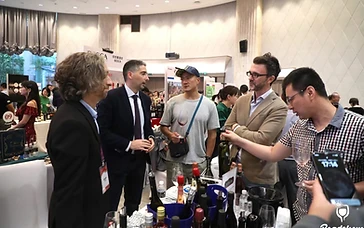
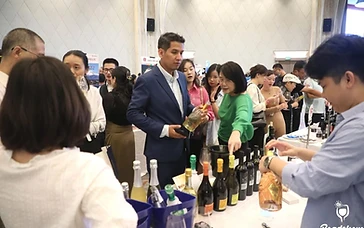
Physical presence at the China Import and Export Fair Complex (Pazhou) in Guangzhou remains the benchmark method for engaging the South China purchasing community. Regional wholesalers, hotel procurement officers, and e-commerce buyers congregate in Guangzhou during major trade windows. Brand owners evaluating their event calendar should prepare for established trade dates:
- Autumn Guangzhou 2026: 16–18 November 2026 (paired with the regional Hanoi roadshow on 20 November 2026).
- Spring Guangzhou 2027: 7–9 May 2027 at the China Import and Export Fair Complex / Pazhou, Guangzhou.
- Asia Roadshow 2027: Hanoi (11 May), Kuala Lumpur (13 May), Singapore (15 May), and Bali (17 May).
- Vietnam 2027: 6–8 July 2027 at SECC, Ho Chi Minh City.
- Autumn Guangzhou 2027: 31 October–2 November 2027 at the China Import and Export Fair Complex / Pazhou, Guangzhou.
Producers seeking direct market access can evaluate regional booth options and register via Become an Exhibitor.
3. Masterclasses, Importer Showroom Tastings, and Sommelier Dinners
Direct outreach into regional sub-hubs (such as Foshan, Dongguan, and Zhongshan) through focused masterclasses allows brand managers to educate key opinion leaders (KOLs) and sommeliers. Pairing masterclasses with clear tasting notes translated into simplified Chinese signals long-term commitment and market respect.
Actionable Pre-Trip Negotiation Checklist
Ensure commercial operations, sales collateral, and travel logistics are prepared before arriving in Guangzhou:
- [ ] CIFER Registration Verification: Confirm the winery’s registration status on the GACC CIFER portal is valid and covers your specific grape product categories.
- [ ] Technical Specification Sheets: Prepare localized Chinese one-pagers detailing varietal percentages, vinification details, closure types, packaging weights, and pallet configurations.
- [ ] Digital Communication Setup: Equip export teams with active WeChat accounts linked to international numbers, containing digital brand assets, introductory product videos, and direct contact cards.
- [ ] Sample Logistics Protocol: Ship samples at least six weeks in advance via experienced logistics freight forwarders with bonded temperature control, ensuring all bottles carry proper temporary sample customs declarations.
- [ ] Logistics and Hospitality Bookings: Coordinate flight, train, and hotel reservations near the Pazhou exhibition hub well in advance of key trade dates.
Navigating Cultural Nuance and B2B Negotiations
Securing commercial contracts in South China requires adapting to local negotiation practices:
- Protecting Commercial Dignity (Mianzi): Avoid aggressive, high-pressure closing tactics during initial meetings. Building consensus often requires multiple rounds of commercial discussions. Respectful interactions preserve mutual dignity and support long-term partnerships.
- WeChat as the Commercial Standard: Formal email plays a secondary role in everyday Chinese commerce. Contract reviews, price quotation sheets, logistical updates, and routine queries occur primarily via WeChat. Failing to maintain an active WeChat channel often creates the perception of poor commercial responsiveness.
- Exclusivity and Commitment Demands: Importers often request provincial exclusivity for Guangdong. Avoid granting blanket exclusivity unless the partner commits in writing to measurable, quarterly minimum order quantities (MOQs) supported by clear milestone clauses.
Conclusion and Next Steps
South China continues to present significant opportunities for foreign wine brands equipped with the proper compliance foundation, channel strategy, and professional local positioning. Rather than treating market entry as a single transactional sale, successful wineries build sustained distributor relationships through direct engagement in Guangzhou's trading ecosystem.
To begin scheduling meetings with vetted South China wine buyers and GBA distribution partners, explore the targeted procurement programs available through Business Matching or submit your portfolio via Become an Exhibitor.
Sources
- A Wine Exporter’s Guide to Finding Buyers in China and Working with Chinese Wine Importers - BestWineImporters
- EU SME Centre: How can I export wine to China?
- ProWein World Business Report 2025
- MSA Asia: Wine Market in China: Trends, Growth, and Consumer Preferences
Key Takeaways
- —Guangdong province, anchored by Guangzhou and Shenzhen, represents one of China's most liquid, economically resilient, and sophisticated distribution corridors for imported wine.
- —Overseas wineries must complete facility registration via the Chinese Customs CIFER platform (Decree 248) before attempting commercial wine exports to mainland China.
- —Landed duty-paid prices for standard bottled wine under MFN tariffs typically run ~50% above CIF costs due to the combined effect of customs duties, VAT, and consumption tax.
- —B2B negotiations require cultural adaptation, including proactive communication via WeChat, mutual respect for commercial face (mianzi), and structured milestone-based exclusivity contracts.
- —In-person trade platforms at Guangzhou's Pazhou Complex, combined with targeted business matching services, offer the most efficient commercial access to regional importers and distributors.
Frequently Asked Questions
What registration is legally required before exporting wine to Guangzhou?
Overseas wine production facilities must be registered through China's CIFER (China Import Food Enterprise Registration) platform under GACC Decree 248. In addition, exports must be handled by a licensed Chinese importer with alcoholic beverage distribution credentials, and every bottle must carry a compliant Chinese back-label meeting national GB standards.
How do import taxes affect wine pricing in China?
For countries under standard Most Favored Nation (MFN) trade status, the compounding effect of import tariff (~14%), consumption tax (~10%), and value-added tax (~13%) adds approximately 50% to the CIF value of the wine. With importer, wholesale, and retail margins factored in, a bottle typically retails at 3 to 4 times its original FOB cost.
Why is Guangzhou considered a premier hub for wine import and distribution?
Guangzhou acts as the commercial nexus of the Greater Bay Area and Guangdong province, one of China's most affluent coastal regions with a high concentration of licensed alcohol importers, efficient bonded port infrastructure, and deep distribution reach into secondary southern Chinese cities.
What is the most effective way to initiate contact with Chinese wine importers?
Direct personal interaction remains essential. Participating in structured 1-on-1 business matching sessions and exhibiting at established trade exhibitions in Guangzhou (such as events hosted at the Pazhou complex) provide pre-qualified commercial access and build the mutual trust necessary to finalize distribution agreements.