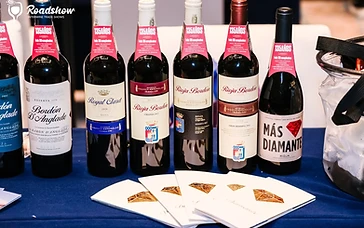
Chilean Wineries: Choosing China and Southeast Asian Distribution Partners

A commercial guide for Chilean wineries selecting distribution partners across Mainland China and Southeast Asia, covering customs compliance, partner vetting, and channel economics.
For Chilean wine producers, navigating Asian markets requires an evolution from chasing broad volume to executing disciplined channel segmentation. Historically favored by the China-Chile Free Trade Agreement (FTA) that removed tariffs on Chilean wine, producers enjoyed substantial growth across Mainland China. However, recent trade shifts—including the return of Australian wine to China, macroeconomic adjustments, and changing consumer habits—have reshaped the commercial landscape. According to export tracking by the Observatory of Economic Complexity (OEC), Chile exported approximately USD 1.52 billion of wine globally in 2025, with China representing USD 118 million, while adjacent markets across Southeast Asia expanded their share of premium and entry-level allocations alike.
Simultaneously, the broader Asia Wine Market presents divergent opportunities. Southeast Asia’s wine market reached USD 19.89 billion in 2025 and is projected to expand to USD 29.10 billion by 2034, registering a compound annual growth rate of 4.32%, according to IMARC Group. To capture this growth, Chilean export directors must rethink partner selection. The conventional approach of appointing a single national distributor without strict channel, digital, and regulatory criteria often leads to price erosion and dormant inventory. Choosing distribution partners across China and ASEAN requires evaluating regulatory readiness, route-to-market strength, and economic alignment.
China: Strategic Realities and Channel Realignment
Chilean wines in China have built a reputation for outstanding price-to-quality performance. However, relying purely on "value for money" is no longer a sustainable standalone strategy. The bulk wine sector faced contraction when Australian bulk wine re-entered the market at competitive price points, while bottled wines have experienced shifts in traditional corporate gifting channels.
The Shift from Generic Importers to Channel Specialists
Appointing an all-in-one general trader across China rarely yields consistent sales velocity. Today's commercial distribution in Mainland China has split into three distinct models:
- Regional Sub-Distributor Networks: Focus on specific economic clusters—such as the Greater Bay Area (Guangdong, Hong Kong, Macau), the Yangtze River Delta (Shanghai, Jiangsu, Zhejiang), or Southwest China (Chengdu, Chongqing). Regional distributors often hold genuine on-trade connections and private dining allocations that national trading firms cannot serve with equal attention.
- Digital & Social Commerce Operators: Live-stream retail on Douyin and Xiaohongshu (RED), combined with traditional e-commerce platforms like JD.com and Tmall, demand distributors equipped with digital brand operations, dynamic pricing governance, and bonded-warehouse logistics. According to Mordor Intelligence, online wine sales across Asia-Pacific expand rapidly on the back of integrated e-commerce.
- New Retail & Specialized On-Trade: Retail chains such as Hema Fresh, Sam's Club China, and regional boutique wine bistro chains require distinct packaging, storytelling, and rapid restocking capabilities.
Regulatory and Labeling Compliance (GACC and GB 7718)
Regulatory friction remains an immediate risk when onboarding new partners. Under General Administration of Customs of China (GACC) Decrees 248 and 249, all overseas food and beverage production facilities must maintain valid GACC registration, and the Chinese importer must be authorized and experienced in customs clearance documentation.
Furthermore, brands must track China’s revised food labeling regulations. The National Health Commission (NHC) and the State Administration for Market Regulation (SAMR) released GB 7718-2025 (General Principles for the Labeling of Prepackaged Foods), which carries an enforcement deadline of March 16, 2027, as noted by Mordor Intelligence. This introduces strict new mandates for multilingual labeling, ingredient declarations, and allergen formatting. Wineries must choose Chinese distributors capable of verifying Chinese-language back labels well in advance of shipments to prevent customs seizures and border clearance delays.
Southeast Asia: Route-to-Market Fragmentation
Southeast Asia is not a single market. Unlike the unified customs regime of Mainland China, the ASEAN bloc comprises distinct regulatory frameworks, religious demographics, import duties, and supply chain realities.
Market Profiles Across Key Territories
- Singapore: Operates as the regional fine-wine hub. With negligible import duties (subject to Goods and Services Tax and alcohol excise based on pure alcohol content), it possesses a mature on-trade landscape, prestigious private members' clubs, and active regional fine-wine merchants. Chilean fine wines, such as single-vineyard Cabernet Sauvignon and iconic Carmenère, find brand-building traction here.
- Vietnam: A high-growth market characterized by expanding urban incomes and European-influenced dining culture. As outlined by trade research from Source of Asia, foreign wine brands cannot sell directly to retail without a licensed local importer holding national alcohol distribution permits. Red wines dominate on-premise dining and gift-box seasons (notably Lunar New Year / Tet).
- Thailand: High complex excise taxes, municipal levies, and strict restrictions on alcohol advertising make local partner selection critical. Importers must have established on-trade distribution networks in Bangkok, Phuket, and Chiang Mai to reach luxury hotels and resort dining.
- Malaysia and Indonesia: Markets segmented by religion and heavy sin taxes. Distribution must focus specifically on non-Muslim consumer enclaves, international hotel chains, duty-free zones, and specialized premium grocery retailers.
Distributor Evaluation Matrix: China vs. Southeast Asia
When scoring potential partners, Chilean export teams should benchmark candidates against structural criteria rather than surface sales pitches:
| Evaluation Criteria | Mainland China Partner Requirements | Southeast Asian Partner Requirements | | :--- | :--- | :--- | | Licensing & Legal Status | Valid GACC import filing, food business license, capability to handle GB 7718-2025 compliance. | Valid national alcohol import/wholesale licenses (e.g., Vietnam, Thailand); direct bonded warehouse access. | | Channel Specialization | Clear split between corporate gifting, new retail, or digital/cross-border e-commerce. | Established footprint in 4-5 star HoReCa and regional travel retail/resort circuits. | | Cold-Chain Logistics | Temperature-controlled warehousing in bonded ports (Ningbo, Shenzhen, Shanghai, Guangzhou). | Dedicated cold storage to mitigate tropical climate spoilage during domestic transit. | | Marketing & Education | In-house WSET or equivalent educators fluent in local wine consumer culture; active social presence. | Sommelier relationships, wine-list placement capacity, and masterclass staging capability. | | Portfolio Exclusivity | Documented policy preventing price-war cannibalization against competing Chilean labels. | Balanced portfolio avoiding dominance by legacy European or Australian accounts. |
Commercial Economics: Hypothetical Margin and Landed Cost Template
To ensure commercial viability, Chilean wineries must calculate contribution margins and account for landed costs, local excises, and channel markups before finalizing contracts. The following model illustrates a hypothetical 750ml Chilean reserve wine shipped under FOB San Antonio/Valparaíso terms to China versus a high-tax ASEAN market (e.g., Thailand):
[Hypothetical Economic Model: 750ml Bottled Red Wine]

Parameter                      China Market (FTA: 0% Tariff)     ASEAN High-Tax Market (e.g., Thailand)
----------------------------------------------------------------------------------------------------
Winery FOB Unit Price:         $4.00 USD                         $4.00 USD
Freight, Insurance & Handling: $0.40 USD                         $0.45 USD
CIF Port of Entry:             $4.40 USD                         $4.45 USD

Import Tariff:                 0.0% ($0.00)                      Varies by trade pact (e.g., up to 40-54% baseline)
Consumption / Excise Tax:      10% applied at customs clearance  Volume/ad-valorem excise combination
Value Added Tax (VAT):         13% applied at entry              7% - 10% VAT/GST
Total Landed Importer Cost:    ~$5.60 USD                        ~$8.50 - $9.20 USD

Importer Margin (25-30%):      $7.50 - $8.00 USD                 $11.50 - $12.50 USD
Wholesale / Sub-distributor:   $9.50 - $10.50 USD                $14.50 - $16.00 USD
End-Channel / On-Trade Retail: $15.00 - $22.00 USD (RSP)         $25.00 - $35.00 USD (Restaurant/Hotel list)

Winery Production Cost (COGS): $2.20 USD                         $2.20 USD
Winery Contribution Margin:    $1.80 USD (45.0% margin)          $1.80 USD (45.0% margin)
Note: This is a clearly labelled hypothetical example. Actual taxes, shipping surcharges, customs valuation methods, and retail markups vary significantly by jurisdiction, port of entry, and shipment period.
Five-Stage Partner Vetting Framework
Export managers should implement a rigorous five-stage qualification workflow before signing distribution agreements:
- Preliminary Channel Audit: Demand an anonymized list of the distributor's active retail and on-trade accounts. Cross-reference whether their existing portfolio contains conflicting Chilean varietals or origins (e.g., Colchagua, Maipo, Casablanca).
- Compliance Verification: Request documentation verifying past customs clearances and their internal readiness roadmap for China’s GB 7718-2025 standard. In Southeast Asia, inspect their cold-chain capabilities from port to retail warehouse.
- Commercial Terms and Brand Investment: Avoid partners demanding open-ended geographic exclusivity without binding minimum sales volumes. Tie regional exclusivity to quarterly sales targets and shared marketing funds (A&P spend).
- Counterfeit and IP Protection: Confirm that the winery’s Chinese and Latin trademarks are legally registered in the winery’s name—never registered by the local distributor. Trademark registration in China, Vietnam, and other Madrid System signatories must precede commercial shipment.
- In-Person Portfolio Testing: Taste current commercial vintages alongside target portfolio wines in-market to evaluate handling and storage conditions. Meeting prospective partners face-to-face allows commercial teams to assess their operational seriousness.
Expanding Distribution via Professional Trade Platforms
Identifying qualified importers requires targeted engagement in the markets where regional distributors congregate. Rather than engaging in cold outreach, Chilean wineries benefit from structured business-matching environments.
Producers seeking to expand into Mainland China, Vietnam, and wider Asia can leverage upcoming editions of INTERWINE:
- Guangzhou 2026: 16–18 November 2026
- Hanoi 2026 Roadshow: 20 November 2026
- Spring Guangzhou 2027: 7–9 May 2027 at the China Import and Export Fair Complex (Pazhou, Guangzhou)
- Asia Roadshow 2027: Hanoi (11 May), Kuala Lumpur (13 May), Singapore (15 May), and Bali (17 May)
- Vietnam 2027: 6–8 July 2027 at SECC, Ho Chi Minh City
- Autumn Guangzhou 2027: 31 October–2 November 2027 at the China Import and Export Fair Complex (Pazhou, Guangzhou)
Connecting through targeted Business Matching programs enables export teams to engage with vetted importers representing specific on-trade, off-trade, and regional wholesale channels. Producers evaluating entry or portfolio restructuring can apply to Become an Exhibitor to secure strategic distribution partners across these dynamic territories.
Conclusion
Chilean wineries are positioned to capitalize on evolving wine consumption patterns in China and Southeast Asia. Success depends on moving away from passive national distribution toward active, channel-specific partnerships built on regulatory transparency, cold-chain integrity, and shared marketing alignment. By validating distribution partners against strict operational metrics, Chilean producers can protect brand value, ensure consistent margins, and build durable commercial networks across Asia.
Sources
- The Observatory of Economic Complexity (OEC), Wine in Chile Trade Profile (2025), https://oec.world/en/profile/bilateral-product/wine/reporter/chl
- IMARC Group, South East Asia Wine Market Report: Industry Trends and Forecast 2026-2034, https://www.imarcgroup.com/south-east-asia-wine-market
- Mordor Intelligence, Asia-Pacific Wine Market Size & Share Analysis (2025-2031), https://www.mordorintelligence.com/industry-reports/asia-pacific-wine-market
- Source of Asia, Southeast Asia Wine Market 2026 Entry Brief, https://www.sourceofasia.com/southeast-asia-wine-market
Key Takeaways
- —Chilean wineries must shift from generic national distribution agreements to channel- and region-specific partner appointments.
- —China's regulatory environment mandates strict compliance with GACC registration decrees and the upcoming GB 7718-2025 food labeling standard.
- —Southeast Asia presents fragmented markets requiring tailored strategies: Singapore for fine wine, Vietnam and Thailand for licensed on-trade and tourism retail.
- —Cold-chain infrastructure and documented brand anti-counterfeiting practices are non-negotiable partner qualification criteria in tropical climates.
- —Contractual exclusivity should always be conditional upon phased minimum purchase milestones and localized marketing co-investment.
Frequently Asked Questions
How does the China-Chile Free Trade Agreement affect wine import tariffs?
Under the China-Chile Free Trade Agreement, qualifying Chilean wines enter Mainland China with a 0% customs tariff. However, imports remain subject to standard statutory value-added tax (13%) and consumption tax (10%) applied at customs clearance.
What is the impact of China's GB 7718-2025 standard on wine exporters?
GB 7718-2025 sets updated standards for prepackaged food labels in China with an effective date of March 16, 2027. Chilean wineries must collaborate with importers to ensure Chinese back labels comply with mandates on ingredient listings, font sizing, and allergen declarations prior to border inspection.
Can Chilean wineries use the same distribution partner for China and Southeast Asia?
Rarely. Southeast Asian countries maintain separate regulatory jurisdictions, tax regimes, and retail networks distinct from Mainland China. While Singapore-based traders may manage regional allocations, effective market penetration typically requires dedicated local importers in each target market.
What cold-chain safeguards are necessary for wine distribution in Southeast Asia?
Due to high ambient temperatures and humidity in Southeast Asian markets such as Vietnam, Thailand, and Malaysia, Chilean exporters should require refrigerated reefer containers during ocean freight and audit distributors for temperature-controlled warehousing and local refrigerated delivery fleet capabilities.