Already Have a Chinese Importer? How Exhibitions Can Support Regional Growth

Securing an importer in China is only step one. Discover how wineries and spirits producers leverage regional exhibitions to expand tier-2 distribution, support distributor sales, and protect commercial control.
For wine and spirits producers, signing a national or regional import agreement in China feels like crossing the finish line. In reality, it marks the opening bell of a complex distribution journey. Many export managers fall into a predictable commercial trap: assuming that once containers clear customs, domestic penetration across China’s vast provinces will happen organically.
China is not a monolithic territory. It functions as a continent-sized patchwork of provincial markets, diverse consumer palates, localized dining cultures, and fragmented sub-distribution tiers. Relying solely on an existing primary importer often leads to regional bottlenecks, stagnant stock turnover, and missed revenue in high-growth secondary hubs.
Industry veterans understand that a trade show floor is not merely a tool for discovering a first-time importer; it is one of the most effective strategic platforms to drive domestic expansion alongside your current commercial partner. As export leaders observed in a SevenFifty Daily guide to trade show success (2023), once an initial importer is secured, international trade exhibitions function as indispensable regional hubs to align strategies, meet down-funnel distributors, and reinforce local sales efforts.
Here is how export managers and brand principals can strategically use B2B wine exhibitions to support their existing Chinese importer, expand provincial footprint, and protect their brand equity.
The "Sole Importer" Bottleneck: Why One Partner Cannot Cover All of China
When international wineries sign a commercial contract with a Chinese distributor, the partner often promises national coverage. However, true national distribution is exceptionally rare. Most domestic wine companies operate out of a specific regional stronghold—such as Shanghai, Guangzhou, Shenzhen, or Beijing—relying on loosely affiliated networks of regional sub-distributors, provincial wholesalers, or private dining (banquet) contacts in the interior.
The Risks of Commercial Complacency
Leaving domestic expansion entirely to your primary importer creates tangible risks:
- Regional Invisibility: An importer based in coastal Guangdong may have limited inroads into fast-growing tier-2 and tier-3 consumer markets in Sichuan, Hubei, or Henan, leaving massive commercial whitespace untapped.
- Passive Portfolio Syndrome: Importers frequently carry dozens of competitive labels. Without direct principal visibility and ongoing commercial momentum, your brand risks becoming an inactive catalog entry.
- Information Asymmetry: When the overseas winery has no direct contact with local wholesalers or hospitality buyers, you lose real-time visibility into channel pricing, retail inventory velocity, and authentic customer feedback.
Navigating these domestic supply-chain dynamics requires an active commercial posture. Understanding the mechanics of Wine Import & Distribution means recognizing that secondary wholesalers look for foreign principals who invest alongside their import partners.
4 Ways Exhibitions Accelerate Regional Market Expansion
Far from circumventing your existing commercial partner, participating in prominent wine and spirits fairs strengthens your joint enterprise. Trade shows create an open commercial theater that solves logistical, relational, and sales bottlenecks.
1. Activating and Vetting Provincial Sub-Distributors
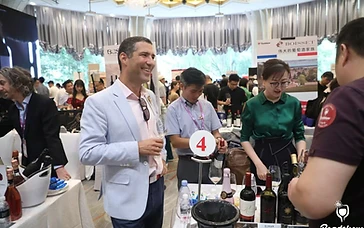
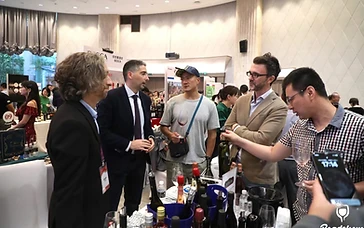
While your primary importer manages import documentation, customs clearance, and central warehousing, regional trade shows allow you to jointly recruit sub-distributors across unrepresented territories. Professional buyers from regional hospitality, supermarket chains, and private corporate clubs travel to major hubs to discover vetted products. Having the overseas winemaker or export manager physically standing at the booth beside the importer signals stability, legitimacy, and direct producer commitment.
2. Conducting Joint Account Meetings and Pricing Alignment
Trade fairs serve as centralized meeting grounds to conduct high-stakes business reviews with tier-2 partners who cannot travel abroad. Rather than sending your sales team across ten distinct provinces, you can schedule structured, consecutive meetings in a professional setting. You can review yearly minimum order quantities (MOQs), assess channel-specific margins, and resolve gray-market pricing frictions between competing provincial agents.
3. Co-Branded Sommelier Masterclasses and Trade Tastings
Consumer education is one of the single largest catalysts for imported wine consumption in Asia (INS Global, 2025). Hosting structured tastings or technical masterclasses at trade fairs allows you to train your importer’s regional sales reps, key accounts, and local sommeliers simultaneously. This institutional knowledge directly translates into confident, aggressive pitch efforts at the retail level.
4. Direct Feedback on Packaging and Palate Profiles
Meeting down-funnel buyers provides unvarnished intelligence regarding local market trends. Regional palates in northern China often contrast significantly with those in southern provinces. Trade conversations yield real-time feedback on back-label regulatory compliance, bottle weights, gift-box appeal, and whether your price-to-quality ratio matches domestic consumer expectations.
Working With—Not Against—Your Primary Importer: The Co-Exhibition Framework
A common fear among export managers is that exhibiting will trigger territorial defensiveness from their current partner. If mismanaged, an importer might assume you are searching for their replacement. Transparency and aligned incentives are critical to turning an exhibition into a collaborative win.
| Collaboration Area | Importer Responsibility | Winery Principal Responsibility | Joint Commercial Outcome | | :--- | :--- | :--- | :--- | :--- | | Booth & Space Investment | Coordinate local logistical setup, domestic freight, and bilingual booth staff. | Fund or co-share stand fees; provide authorized brand collateral and display samples. | Reduced overhead per party and cohesive, professional presentation. | | Lead Management | Screen regional buyers for creditworthiness, logistics feasibility, and channel fit. | Conduct technical tastings, articulate estate heritage, and validate allocations. | High-conversion B2B discussions combining domain pedigree with domestic operational capacity. | | Order Contracting | Contract regional fulfillment via domestic inventory (in RMB). | Support minimum volume thresholds and provide marketing allowances per container. | Faster cash conversion; regional sub-distributors buy directly from local stock without import hassles. | | Pre-Show Outreach | Invite existing provincial buyers, retail buyers, and regional distributor network. | Activate trade association channels, digital invitations, and targeted B2B matching. | Maximized booth foot traffic dominated by verified decision-makers. |
To ensure complete alignment, draft a written Pre-Fair Commercial Addendum specifying that all sales leads gathered during the exhibition will be funneled through the importer’s billing infrastructure, preserving their margin while expanding their provincial footprint.
Practical ROI Model: Supporting Regional Expansion via Exhibition
Evaluating trade fair participation when you already have domestic distribution requires looking beyond raw lead counts. The true return on investment rests on incremental case volume and provincial wholesale activation.
Hypothetical Commercial Expansion Scenario
Note: The following model is an illustrative, hypothetical calculation for an estate producing mid-tier DOC/AOC wines expanding into secondary provincial markets via a 3-day exhibition.
1. Investment (Total Direct & Indirect Costs)
- Shared 9 sqm booth space / registration: $4,500
- Travel, accommodation, and daily expenses (1 export manager): $2,800
- Marketing materials, local translation, and sample transport: $1,200
- Structured Business Matching services: $1,500
- Total Investment: $10,000
2. Commercial Economics
- Wholesale price per 9-liter case (FOB export): $60
- Principal direct production and supply cost per case: $35
- Principal Contribution Margin per Case: $25 (41.6% margin)
3. Fair Activation Assumptions
- Total qualified regional distributor meetings conducted: 22
- Regional sub-distributors contracted (via existing primary importer): 3
- Average initial annual commitment per sub-distributor: 300 cases (900 cases total)
4. Financial Calculation
- Incremental Gross Revenue: 900 cases × $60 = $54,000
- Incremental Contribution Margin: 900 cases × $25 = $22,500
- Net Commercial Return (Year 1): $22,500 − $10,000 (Fair Cost) = +$12,500
- Hypothetical Year 1 Direct ROI: ($12,500 / $10,000) × 100 = 125%
Beyond direct first-year financial returns, activating three new provincial wholesalers diversifies domestic market risk away from a single coastal city, creating multi-year recurring orders for the importer.
Step-by-Step Regional Activation Checklist for Brand Owners
Execute this operational timeline to extract maximum value from trade show participation:
Phase 1: 90 Days Before the Exhibition
- [ ] Review Provincial Gaps: Audit sales data with your primary importer to identify provinces with zero or underperforming sales.
- [ ] Formalize Collaboration Terms: Agree in writing on how booth inquiries, sub-distributor pricing tiers, and post-show orders will be routed.
- [ ] Book Exhibition Strategy & Matching: Reserve exhibition placement and initiate dedicated Business Matching platforms to pre-schedule targeted meetings with regional buyers.
Phase 2: 30 Days Before the Exhibition
- [ ] Verify On-Site Logistics: Ensure exhibition sample bottles have cleared customs or are drawn directly from the importer's domestic bonded stock.
- [ ] Train Bilingual Staff: Conduct virtual briefing sessions with the importer’s local sales representatives to align on key selling propositions, allocations, and storytelling.
- [ ] Schedule Anchor Meetings: Lock in calendar appointments with provincial wholesalers visiting from secondary target markets.
Phase 3: During the Exhibition
- [ ] Hold Daily Strategy Debriefs: Spend 15 minutes each evening with your importer reviewing lead sheets, identifying priority regional prospects, and clarifying follow-up tasks.
- [ ] Host an Exclusive Tier-2 Dinner: Organize a focused private tasting for key sub-distributor principals to foster commercial trust and relationship building (guanxi).
- [ ] Capture Digital Contact Details: Ensure all leads connect through WeChat business profiles alongside business card exchanges for immediate follow-up.
Phase 4: Post-Exhibition Follow-Up (Within 14 Days)
- [ ] Track Sample Despatch: Ensure your primary importer dispatches sample cartons to high-potential regional leads within 72 hours of fair completion.
- [ ] Audit Account Pipeline: Schedule bi-weekly calls with the importer's sales team to track commercial conversions and eliminate pipeline friction.
Strategic Planning: Positioning for Regional Growth
Regional distribution in China is an iterative, relationship-driven discipline. Wineries that succeed do not abandon their partners to handle vast territories alone; they position their brand leaders at the center of commercial conversations. Choosing targeted industry exhibitions gives your enterprise direct access to vetted buyers, protects distribution integrity, and turns passive distribution contracts into dynamic provincial sales engines.
If your brand is ready to partner with regional distributors and accelerate domestic sales, explore opportunities to Become an Exhibitor and connect directly with high-volume buyers through curated Business Matching.
Sources
- SevenFifty Daily, A Winery Guide to Trade Show Success, 2023: https://daily.sevenfifty.com/wine-trade-show-guide-wineries/
- INS Global, How Winemakers Can Enter High-Growth Wine Markets in Asia, 2025: https://ins-globalconsulting.com/wine-markets-in-asia
- Hellenic Republic Ministry of Foreign Affairs (Agora Portal), Guide to Start Exporting Wine to China, 2020: https://agora.mfa.gr/infofiles/NEW%20GUIDELINE_%20How%20to%20start%20exporting%20wine%20to%20China%20%28March%202017%29%20cn.pdf
Key Takeaways
- —Securing an initial Chinese importer rarely provides true national coverage due to vast provincial market fragmentation.
- —B2B wine exhibitions serve as strategic operational hubs to recruit, align, and support regional tier-2 sub-distributors.
- —Co-exhibiting with your existing importer eliminates partner distrust and presents a unified, authoritative brand front to trade buyers.
- —Exhibition ROI should be measured using contribution margin and multi-tier incremental case turnover rather than immediate booth sales alone.
- —Structured business matching ensures meetings are pre-scheduled with qualified regional wholesalers, minimizing downtime.
Frequently Asked Questions
Why should a winery exhibit if they already have an exclusive Chinese importer?
Exhibiting provides direct principal support to your importer. It allows you to jointly recruit regional sub-distributors, conduct educational masterclasses for trade buyers, maintain visibility over channel pricing, and activate provincial markets that your primary importer cannot adequately service alone.
Will participating in exhibitions upset an existing importer?
Not if handled transparently. By positioning the exhibition as a joint commercial initiative where all resulting sales leads are processed through your existing importer's logistical and billing infrastructure, you help them grow their turnover rather than competing with them.
How do tier-2 and tier-3 city wine markets differ from tier-1 cities in China?
Tier-1 cities (such as Shanghai, Beijing, and Guangzhou) are mature, competitive, and internationalized. Tier-2 and tier-3 cities often feature faster growth rates and strong corporate dining demand, but rely heavily on localized, relationship-driven distributor networks that require face-to-face trust building.
What is the best way to calculate trade show ROI when expanding domestic distribution?
Calculate ROI based on contribution margin per case multiplied by incremental case volumes secured through new regional sub-distributors over a 12-month period, minus all direct exhibition costs, sample freight, travel, and business matching fees.