How to Prepare Buyer Meetings at Interwine: A Winery Checklist
Master buyer negotiations across China and Southeast Asia with this rigorous checklist for Interwine events, covering pre-show targeting, bilingual collateral, unit economics, and pipeline follow-up.
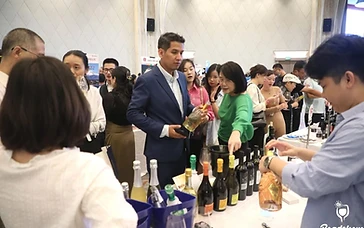
Landing long-term distribution across China and Southeast Asia requires far more than setting chilled bottles on a trade stand. Professional importers, regional sub-distributors, and off-trade retail chain procurement directors at Interwine Guangzhou assess commercial readiness within the first three minutes of an interaction. Wineries that approach trade exhibitions as unstructured pouring sessions routinely encounter stalled negotiations, unread emails, and low conversion rates.
Conversely, producers that apply a systematic meeting framework—grounded in rigorous pricing transparency, localized digital assets, and structured cross-cultural negotiation—turn structured exhibition meetings into recurring commercial purchase orders. Drawing on core methodologies from trade bodies such as Wine Australia's export recommendations and commercial best practices in Wine Import & Distribution, this operational guide provides winery owners, export directors, and spirits brand managers with an end-to-end checklist for preparing buyer meetings at Interwine.
Phase 1: Pre-Show Prospect Profiling & Schedule Construction
Preparation begins 60 to 90 days before the exhibition hall opens. Walk-up booth traffic provides serendipitous discoveries, but scheduled, pre-qualified appointments generate predictable commercial volume.
1. Identify and Segment Buyer Typologies
Not all Asian wine and spirits importers fulfill the same distribution role. Misaligning portfolio positioning with buyer channel capacity wastes limited meeting windows:
- Tier-1 National Importers: Require substantial continuous supply volumes, strict certificate of origin administration, direct winery marketing subventions, and long-term regional exclusivity contracts.
- Regional Distributors (e.g., Pearl River Delta / Greater Bay Area): Focus on city-level restaurant distribution, corporate gifting, and local private wholesale; require flexible Minimum Order Quantities (MOQs) and mixed-pallet options.
- Specialized On-Premise / HoReCa Suppliers: Prioritize distinct regional origin storytelling, sommelier ratings, by-the-glass wholesale margins, and protective allocations that do not compete with mass-market e-commerce discounting.
- E-Commerce & Live-Commerce Operators: Emphasize high-volume, rapid customs transit, distinctive packaging, and price integrity safeguards against grey-market parallel imports.
2. Lock Down Advance Sourcing Appointments
Exhibitors should utilize formal business-matching tools and industry databases months before stepping on the plane. Use dedicated Business Matching portals to filter registered trade visitors by verified sourcing category, price bracket, and sales footprint. As highlighted by Vinexposium's buyer meeting protocols, buyer lists populate and evolve continuously up to three weeks before an exhibition, making rolling pipeline reviews essential. Send concise introductory outreach via email or WeChat containing your stand coordinates, a preview one-sheet, and clear meeting availability blocks.
3. Review the Interwine Event Calendar
Ensure your logistics, regional travel agendas, and sample arrival windows coincide precisely with the official trade calendar:
- Guangzhou 2026: 16–18 November 2026
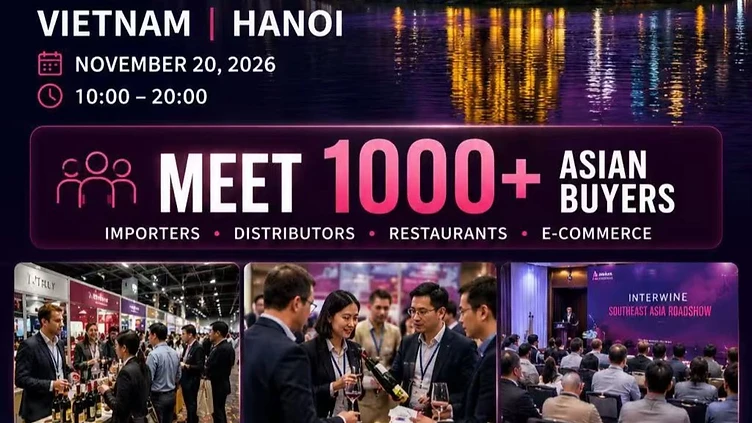
- Hanoi 2026 Roadshow: 20 November 2026
- Spring Guangzhou 2027: 7–9 May 2027 at China Import and Export Fair Complex / Pazhou, Guangzhou
- Asia Roadshow 2027: Hanoi (11 May), Kuala Lumpur (13 May), Singapore (15 May), Bali (17 May)
- Vietnam 2027: 6–8 July 2027 at Saigon Exhibition and Convention Center (SECC), Ho Chi Minh City
- Autumn Guangzhou 2027: 31 October–2 November 2027 at China Import and Export Fair Complex / Pazhou, Guangzhou
+-----------------------------------------------------------------------------------------+
|                    PRE-SHOW BUYER OUTREACH TIMELINE (T-10 WEEKS)                       |
+-----------------------------------------------------------------------------------------+
| T-10 Weeks: Audit price tiers (EXW/FOB), verify sample customs, localise digital spec.  |
| T-6 Weeks:  Engage Interwine matching portal; segment Tier-1 vs regional distributors.  |
| T-3 Weeks:  Confirm bilingual meeting confirmations; lock calendar time blocks.         |
| T-1 Week:   Pre-load mobile portfolios (WeChat Mini-Programs / bilingual PDFs / QR).    |
+-----------------------------------------------------------------------------------------+
Phase 2: Commercial Collateral, Pricing Architecture & Localization
According to guidance from Beverage Trade Network, professional beverage buyers expect immediate answers on price structure, packaging dimensions, and logistical boundaries. Verbal improvisation during a trade meeting erodes commercial credibility.
1. Dual-Currency, Dual-Incoterm Price Architecture
Never attend an Asian wine trade event with domestic cellar-door or domestic retail price sheets. Prepare a laminated commercial price grid containing:
- EXW (Ex Works): Quoted in origin currency (e.g., EUR, AUD, USD) with winery collection point specified.
- FOB (Free On Board): Quoted at the nominated departure port (e.g., FOB Bordeaux, FOB Adelaide, FOB Oakland) calculating local haulage, origin documentation, and export terminal clearing costs.
- Tiered Volume Thresholds: Minimum order quantity (MOQ) specified in cases and pallets, detailing pallet tier discounts (1–2 pallets, full 20ft container / ~10–14 pallets, 40ft container).
- Case & Pallet Packing Specifications: Bottle weight (g), dimensions (mm), case dimensions, gross case weight (kg), cases per pallet tier (TI/HI), total bottles per pallet.
2. Localization: Collateral and Digital Ecosystems
Standard Western brochures and English-only materials restrict commercial conversations in mainland China and broad Asian markets:
- Dual-Language Collateral: Translate wine technical sheets into Simplified Chinese and Vietnamese depending on the destination event. Include phonetic transliterations of winery and grape varietal names.
- QR-Driven Mobile Ecosystem: Many Chinese trade professionals rarely use paper business cards or external web links. Embed QR codes leading to WeChat Mini-Programs, official corporate accounts, or mobile-optimized bilingual downloadable PDFs.
- Regulatory Clarity: Ensure wine back-labels adhere to target market customs standards. Note general statutory parameters (such as China's National Food Safety Standard GB 7718 requirements for Mandarin back-labels detailing energy, ingredients, and allergen declarations) while consulting licensed customs brokers for case-specific compliance.
Phase 3: The 30-Minute Meeting Playbook: Structure & Etiquette
Wine Australia's trade show methodology underscores an essential operational discipline: listen for 80% of the meeting and pitch for 20%. Trade show buyer meetings generally run 20 to 30 minutes. Structuring this block ensures you qualify the commercial fit before exhaustively pouring inventory.
+-----------------------------------------------------------------------------------------+
|                          THE 30-MINUTE BUYER MEETING BLUEPRINT                          |
+-----------------------------------------------------------------------------------------+
| Minutes 00–05 | Protocol: Dual-handed card exchange, seating, objective qualification.  |
| Minutes 05–12 | Sourcing Audit: Assess buyer's existing channels, price gaps, volume.    |
| Minutes 12–22 | Targeted Pour: Showcase 2–3 SKUs addressing their identified gaps.      |
| Minutes 22–27 | Commercial Scope: Review FOB minimums, label exclusivity, lead times.   |
| Minutes 27–30 | Clear Action Close: Agree on sample follow-up, log notes, photo badge.  |
+-----------------------------------------------------------------------------------------+
Minutes 00–05: Professional Protocol and Context
- Exchange business cards using both hands, taking a moment to read the contact's title and regional office base before placing the card respectfully on the table.
- Confirm the buyer’s immediate operational role: Are they holding an active import license, acting as a sub-distributor purchasing from bonded warehousing, or sourcing for private corporate supply?
Minutes 05–12: Channel Gap Analysis
- Rather than reciting winery history, ask diagnostic questions: "Which price tiers or regional styles in your portfolio are currently underperforming or undersupplied?" "What are your margins across retail versus on-premise channels?"
- Determine whether they are seeking entry-level, commercial volume (e.g., sub-€3.00/bottle FOB) or estate-bottled boutique allocations (e.g., €12.00+ FOB).
Minutes 12–22: Calibrated Tasting of 2–3 SKUs
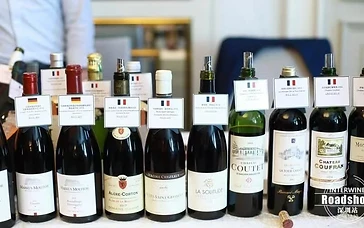
- Never pour the entire portfolio. Present maximum two or three SKUs that address the buyer's stated channel requirement.
- Serve wines at proper tasting temperatures. Red wines exposed to Guangzhou or Southeast Asian summer ambient heat (>26°C) present flattened acidity and heightened alcohol, undermining buyer impressions.
- Highlight objective accolades (e.g., Decanter, Gilbert & Gaillard, Wine Spectator points) rather than subjective romantic descriptions.
Minutes 22–30: Commercial Terms & Defined Next Steps
- Present the commercial spec sheet, review FOB departure timelines, verify vintage availability, and confirm shelf-life stability.
- Explicitly agree on next actions: "We will send our bilingual technical specifications and customs registration details via WeChat/email by Friday. Once reviewed, we can dispatch trial samples to your bonded facility."
- Take a photograph of their badge and business card alongside the exact tasted bottles with custom written notes.
Phase 4: Meeting Readiness Checklist
Use this consolidated operational checklist before entering your scheduled buyer sessions at Interwine:
| Operational Category | Item / Requirement | Verification Status | | :--- | :--- | :--- | | Commercial Pricing | EXW and FOB pricing calculated per tier (1 pallet, 5 pallets, 1 FCL) | [ ] Ready | | Commercial Logistics | Bottle/case dimensions, pallet TI/HI, gross pallet weights documented | [ ] Ready | | Digital Assets | Mobile-ready bilingual (English/Chinese/Vietnamese) digital tech sheets | [ ] Ready | | Connectivity | WeChat corporate accounts or QR business cards printed and functional | [ ] Ready | | Tasting Setup | Professional spittoons, ice buckets, clean branded glassware, opening tools | [ ] Ready | | Temperature Control | Chilling infrastructure in place (whites 8–10°C, reds 16–18°C) | [ ] Ready | | Customs Documentation | GACC registration details (China) and food health certificates accessible | [ ] Ready | | Lead Capture | Pre-printed buyer meeting audit sheets or synchronized CRM application | [ ] Ready |
Phase 5: Financial Realism & Post-Show ROI Calculation
Trade show success is evaluated by actual shipments and contribution margins over time, not purely booth footfall or business cards collected. In export deal evaluation, commercial directors should isolate variable margins against the fully loaded fixed cost of exhibiting.
Hypothetical ROI Model
Note: The following financial model is a hypothetical illustrative framework demonstrating contribution margin assessment against total exhibition costs. Individual winery costs and margins will vary by production origin, shipping lanes, and contractual structure.
$$\text{Net Trade Show Return} = (\text{Annual Sales Volume} \times \text{Unit Contribution Margin}) - \text{Total Landed Exhibition Cost}$$
1. Baseline Assumptions
- Total Landed Exhibition Cost: €14,000 (includes floor space, stand setup, sample freight/clearance, travel, bilingual interpreter, localized collateral).
- Product Category: Mid-tier Estate Red Blend.
- FOB Sale Price per 9-Liter Case (12 bottles): €60.00.
- Unit Cost of Goods Sold (COGS) & Direct Shipping to Port: €38.00 per case.
- Unit Contribution Margin: €22.00 per case ($36.7%$ margin).
2. Financial Scenarios
| Scenario Metric | Conservative (1 Small Importer) | Moderate (2 Regional Importers) | Target (1 Direct Container Importer) | | :--- | :--- | :--- | :--- | | Annual Case Orders | 300 cases (mixed pallet) | 800 cases (regional rotation) | 1,400 cases (full container load) | | Gross Export Revenue | €18,000 | €48,000 | €84,000 | | Total Contribution Margin | €6,600 | €17,600 | €30,800 | | Less Total Exhibition Cost | (€14,000) | (€14,000) | (€14,000) | | Net Year 1 Operating Contribution | (€7,400) | +€3,600 | +€16,800 | | 1st Year Capital Return (ROI) | Negative (investment phase) | +25.7% net return | +120% net return |
Strategic Takeaway: In international wine distribution, initial trial orders rarely recover full exhibition overhead in year one. However, securing an importer who establishes repeat container orders over three to five years yields compounding margins. Evaluating leads based on contribution margin and pipeline viability prevents premature conclusions about market viability.
Phase 6: Post-Show Execution and Pipeline Conversion
According to trade show analysis in SevenFifty Daily, closing international wine contracts takes sustained rapport, frequently requiring several months before final purchase orders materialize. A rapid, professional follow-up protocol is essential:
- The 48-Hour Recap: Within 48 hours of meeting conclusion, message your prioritized buyers on WeChat or email. Attach a photograph of the meeting, reiterate the specific SKUs they tasted, and supply the requested bilingual FOB pricing sheets.
- Dispatch Production Samples: Serious buyers require confirmation bottles for technical teams or commercial sampling before issuing deposits. Use dedicated air couriers with customs brokerage clearance to avoid sample spoilage or customs confiscation.
- Regulatory Clearance Support: Provide proactive assistance regarding target market documentation: analytical certificates, Certificate of Origin, free sale documentation, and mandatory back-label verification.
For wine brands and export bodies preparing their next commercial expansion cycle, explore the Exhibitor Directory to evaluate category representation, or submit participation details directly via Become an Exhibitor to secure dedicated matching slots.
Sources
- Wine Australia: Export Ready Hub – Trade Show Preparation & Etiquette Guide. https://www.wineaustralia.com/selling/export-ready-hub/top-tips-for-trade-shows
- SevenFifty Daily: A Winery Guide to Trade Show Success (by Ted Loos). https://daily.sevenfifty.com/wine-trade-show-guide-wineries/
- Beverage Trade Network: The First Meeting With a Wine Buyer (Best Practice & Pitch Protocols). https://beveragetradenetwork.com/en/btn-academy/articles/the-first-meeting-with-a-buyer--515.htm
- Best Wine Importers: The Ultimate Wine Export Guide – Strategic Planning & Importer Alignment. https://www.bestwineimporters.com/blog/resources/the-ultimate-wine-export-guide-essential-tips-for-successful-wine-exporting-in-2025/
- Vinexposium: Tutorial – Sourcing Tools & Buyer Meeting Structuring. https://www.vinexposium.com/wp-content/uploads/2025/08/Tuto-Meeting-with-buyer.pdf
Key Takeaways
- —Advance commercial matching via structured B2B tools before trade events outperforms unstructured booth foot traffic.
- —Wineries must prepare dual-currency, dual-Incoterm (EXW/FOB) pricing sheets detailing pallet configurations and carton dimensions.
- —Bilingual tech sheets and WeChat QR connectivity are mandatory for productive buyer engagement across Greater China and Asia.
- —A structured 30-minute meeting framework allocates 80% of diagnostic time to understanding buyer channel gaps and 20% to pouring targeted SKUs.
- —Post-show financial returns must be evaluated on multi-year contribution margins against total landed exhibition costs rather than immediate single-order margin.
Frequently Asked Questions
What pricing formats are expected by wine buyers during Interwine meetings?
Buyers expect pre-calculated EXW and FOB pricing per case with explicitly stated volume thresholds and pallet packing details. Prices should be quoted in origin currency or USD/EUR, with clear minimum order quantities (MOQs).
Why is WeChat connectivity critical for meetings in Guangzhou?
In mainland China, WeChat is the primary business communication platform. Importers frequently decline traditional paper materials in favor of scanning QR codes linked to bilingual digital sheets or WeChat mini-programs to instantly review portfolio specs.
How many wine samples should be presented during a single 30-minute buyer meeting?
Limit presentations to two or three targeted SKUs that directly address the buyer's specified channel requirements (such as on-premise, retail, or gifting) rather than pouring the full estate portfolio.
What is the key metric for calculating wine trade show ROI?
Trade show financial return should be calculated by multiplying projected annual case volume by the unit contribution margin (FOB price minus direct production and shipping costs), then subtracting total exhibition overhead.