How Wineries Can Reach Hotel and Restaurant Wine Buyers in China

A commercial B2B guide for wineries on penetrating China's hotel and restaurant (HoReCa) channel, covering import structures, sommelier outreach, and on-trade pitching.
China's on-trade channel—comprising luxury international hotel groups, independent fine dining, and dynamic Western-style bistro concepts—represents one of the most resilient and margin-defensible routes to market for foreign wineries. While overall import volumes across mainland China faced headwinds in recent cycles, reaching approximately $1.4 billion in 2025 according to the USDA Foreign Agricultural Service (FAS) 2026 report, the market exhibits clear structural premiumization. The average import price rose by 22% year-on-year to $6.86 per liter, and sparkling wine imports under HS code 220410 grew 15.3% year-on-year during January–May 2026.
For export directors, commercial managers, and brand ambassadors, reaching beverage managers, hotel head sommeliers, and hospitality purchasing directors requires bypassing mass retail playbooks. Selling to China's hospitality sector requires an understanding of tiered distribution, the mechanics of on-premise wine lists, sommelier incentives, and specialized regulatory compliance. Exploring specialized channels via the Wine Import & Distribution topic hub provides a foundational framework for structuring these commercial routes.
Understanding the HoReCa Procurement Chain in China
Direct sales from overseas producers to a Chinese restaurant or five-star hotel are practically impossible due to customs licensing, labeling, and tax regulations. Understanding the intermediate steps in the distribution system is essential to establish viable commercial relationships.
[ Overseas Winery ]
         │ (Incoterms: EXW / FOB / CIF)
         ▼
[ Licensed Chinese Importer (GACC / CIFER Registered) ]
         │ (Customs Clearance, Chinese Back Labels, Duty/VAT)
         ▼
[ Regional Distributor / On-Trade Wholesaler ]
         │ (Local Warehousing, Credit Terms, Split-Case Delivery)
         ▼
[ Hotel / Restaurant Beverage Department ]
         │ (Wine Director, Purchasing Dept., F&B General Manager)
         ▼
[ End Consumer / Dining Guest ]
1. The Role of Licensed Importers
Under General Administration of Customs of China (GACC) regulations, only entities holding specialized alcohol import licenses and registered on the CIFER system can clear foreign wine through customs, as outlined by the EU SME Centre (2023). International hotel chains (e.g., Marriott, Hyatt, Shangri-La) and independent fine-dining groups do not hold direct import quotas or clear customs containers themselves; they buy exclusively from domestic stock cleared by national or regional distributors.
2. Tier-1 Importers vs. Specialized Boutique Distributors
Historically, national mega-distributors managed hotel portfolio listings. Today, modern dining spaces, boutique steakhouses, and Michelin-starred venues across Tier-1 (Shanghai, Beijing, Guangzhou, Shenzhen) and Tier-2 hubs (Chengdu, Hangzhou, Wuhan) increasingly source their wine lists through agile, boutique on-trade distributors. These specialized intermediaries offer temperature-controlled split-case logistics, just-in-time delivery, and personalized sommelier training.
3. Corporate Chains vs. Independent Venues
- International Hotel Chains: Procurement is heavily governed by strict vendor management systems, seasonal corporate tenders, and corporate approved supplier lists (ASLs). Payment terms often range from 60 to 90 days.
- Independent Bistro & Dining Groups: Procurement decisions are dominated by the head sommelier or operating partner. Decision cycles are shorter, portfolios rotate faster, and demand focuses on narrative-driven, authentic labels that provide distinct pour-by-the-glass margins.
What Chinese Sommeliers and Beverage Directors Look For
Pitching to hospitality decision-makers in China requires positioning your portfolio around operational viability rather than generic awards. Wine directors balance dining trends, cellar inventory turnover, and pairing versatility.
1. Margin Protection and Direct Pour Pricing
In the dining sector, wine list markups generally range between 2.5x and 4x landed cost. Sommeliers look for wholesale pricing tiers that allow a sustainable "By the Glass" (BTG) program. If a bottle retails heavily across public e-commerce platforms like Taobao or JD.com at deep consumer discounts, restaurants will reject it immediately to avoid margin comparison by discerning diners.
2. Food-Pairing Adaptability Across Regional Cuisines
China's dining landscape extends far beyond Western restaurants. High-end Cantonese dining, spicy Sichuan cuisine, and modern Huaiyang gastronomy require specific structural wine styles:
- Aromatic Whites & High-Acid Styles: Riesling, Sauvignon Blanc, and dry Chenin Blanc pair exceptionally well with seafood and rich, umami Cantonese broths.
- Sparkling Wines: Given that sparkling wine imports grew 15.3% in early 2026 (USDA FAS / American Vineyard Magazine), sommeliers prioritize affordable traditional-method sparklers and Crémants for banquet receptions and meal-long dining.
- Balanced, Fresh Reds: Tannic, high-oak reds face resistance in casual dining. Beverage directors favor medium-bodied, fresh reds (such as Pinot Noir, Grenache, or cool-climate Syrah) that do not clash with spicy or sweet sauces.
3. Storytelling, Provenance, and Staff Education
Sommelier teams encounter high staff turnover. Proving that your winery provides bilingual tasting notes, short video vineyard tours, and localized staff training modules ensures service staff can confidently explain your bottle tableside.
Comparison of Pitch Channels: Reaching On-Trade Decision Makers
Choosing the right path to connect with hospitality buyers depends on budget, regional presence, and import partnerships.
| Engagement Channel | Typical Audience Reached | Lead Time & Cost | Strengths | Operational Risks & Limitations | | :--- | :--- | :--- | :--- | :--- | | Professional B2B Trade Fairs | Importers, regional on-trade wholesalers, hotel procurement heads | Medium investment; 2–4 months prep | High volume of verified decision-makers; live tasting feedback; instant commercial matching via services like Business Matching | High sample volume required; requires prompt commercial follow-up | | Targeted Masterclasses & Wine Dinners | Top-tier sommeliers, wine media, F&B managers | High cost per contact; localized execution | Intimate sensory experience; allows in-depth brand storytelling; immediate menu testing | Limited scale; dependent on local brand ambassador reputation | | Third-Party On-Trade Importers | Broad hotel lists, regional distributors | Low upfront cash; shared commission | Established domestic supply chain; existing corporate hotel vendor accounts | Loss of list control; your brand competes within an expansive catalog | | Direct Cold Outreach (WeChat / LinkedIn) | Independent restaurant owners, head sommeliers | Low direct cost; heavy time investment | Direct personal rapport; zero middleman pitch friction | Low conversion; foreign producers cannot ship cleared stock locally without an import partner |
Step-by-Step Strategic Checklist for Wineries
Executing a market entry strategy for China's on-trade requires disciplined preparation before sampling stock:
- [ ] Step 1: Secure Regulatory Compliance and GACC Registration
Ensure the production facility is properly registered under CIFER/GACC Decree 248. Confirm that sample consignments meet Chinese mandatory labeling standards (GB 7718 and GB 2758), as highlighted by the EU SME Centre (2023). - [ ] Step 2: Define Channel-Specific Pricing Tiers
Establish clear EXW, FOB, and CIF price lists alongside estimated domestic distribution models to guarantee that on-trade accounts maintain a minimum 65% gross pouring margin. - [ ] Step 3: Develop Localized B2B Digital Assets
Create Chinese-language tech sheets formatted for mobile sharing. Include QR-accessible producer videos and a verified corporate WeChat account for rapid communication. - [ ] Step 4: Align with an Established Distribution Partner
Partner with an importer that maintains active accounts with Tier-1 and Tier-2 hospitality venues. Review existing portfolios via the Exhibitor Directory to evaluate distributor channel specializations. - [ ] Step 5: Execute In-Market Sommelier Masterclasses
Conduct structured tastings focusing on culinary versatility, vintage characteristics, and service temperature recommendations tailored to local dining trends.
Hypothetical Commercial ROI Model: On-Trade List Listing
Disclaimer: The following calculation is a clearly labelled hypothetical financial model designed to illustrate unit economics and contribution margins for an overseas winery partnering with a Chinese regional distributor.
Assumptions
- Portfolio Allocation: 1 Mid-Tier Red (FOB €6.00/bottle) and 1 Cool-Climate White (FOB €4.50/bottle).
- Initial Order Volume: 300 cases (1,800 bottles total; 900 bottles per SKU).
- Target Placement: 15 boutique bistro accounts and 5 hotel dining venues across South China (20 accounts total, averaging 7.5 bottles/month per venue over a 12-month program).
Cost & Revenue Breakdown
-
Gross Revenue to Winery (FOB):
- Red: 900 bottles × €6.00 = €5,400
- White: 900 bottles × €4.50 = €4,050
- Total Gross Winery Revenue: €9,450
-
Direct Production & Packaging Cost (COGS at €2.20/bottle):
- 1,800 bottles × €2.20 = €3,960
-
Channel-Specific Marketing & Trade Support Expenses:
- Local Masterclass & Tasting Sample Allocation (48 bottles at cost): €105.60
- Bilingual Sales Sheets, Tech Deck Localization & WeChat Collateral: €600
- In-Market B2B Event Representation & Travel Allocation: €1,800
- Distributor Staff Incentive Program (SPIFF / Kickback allowance): €500
- Total Channel Marketing & Commercial Overhead: €3,005.60
-
Net Contribution Margin Calculation:
$$\text{Total Costs} = \text{COGS (€3,960)} + \text{Marketing & Commercial Overhead (€3,005.60)} = €6,965.60$$ $$\text{Net Contribution Profit} = €9,450 - €6,965.60 = €2,484.40$$ $$\text{Contribution Margin Ratio} = \frac{€2,484.40}{€9,450} \approx 26.3%$$
This hypothetical model illustrates that even after funding localized marketing collateral, tasting samples, and on-the-ground support, an on-trade program delivers positive operating margins while establishing brand prestige that reinforces retail and direct channels.
Overcoming Common On-Trade Channel Pitfalls
Foreign wine producers often encounter avoidable obstacles when entering the Chinese hospitality sector. Mitigating these risks requires operational foresight.
1. Gray Market Inconsistencies and Price Erosion
Uncontrolled cross-border e-commerce listings can undermine restaurant partnerships. A beverage manager will immediately delist a vintage if dining guests can locate identical bottles online below the restaurant's wholesale acquisition cost. Enforce geographic and channel exclusivity clauses in your distributor contracts.
2. Overestimating Banquet Volume vs. Glass Pouring
Luxury banqueting accounts can yield sizable one-off orders, but payment cycles are lengthy and repeat business often shifts based on seasonal client budgets. Sustainable volume comes from secure "By the Glass" placements in high-turnover bistros and steady dining rooms.
3. Disregarding Temperature-Controlled Domestic Logistics
China experiences severe climate extremes, from freezing winters in the north to high summer humidity across the southern provinces. If your domestic distributor uses standard freight without temperature control, heat damage will quickly spoil delicate wines, damaging your relationship with top sommeliers.
Expanding Your On-Trade Footprint in China
Securing consistent listings on China’s competitive wine lists demands patience, clear pricing architecture, and close relationships with specialized on-trade distributors. Wineries must treat hospitality buyers as strategic culinary partners rather than passive retail accounts.
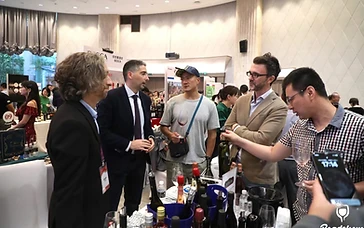
To meet qualified Chinese importers, sommelier teams, and hotel procurement leaders face-to-face, consider exhibiting at upcoming industry gatherings. INTERWINE organizes premier trade platforms across the region, including the Spring Guangzhou exhibition (7–9 May 2027 at the China Import and Export Fair Complex / Pazhou, Guangzhou) and the Autumn Guangzhou edition (31 October–2 November 2027). Global producers expanding across Greater Asia can also participate in the Asia Roadshow 2027 (Hanoi on 11 May, Kuala Lumpur on 13 May, Singapore on 15 May, and Bali on 17 May), or target fast-growing Southeast Asian markets at INTERWINE Vietnam (6–8 July 2027 at SECC, Ho Chi Minh City). Producers looking to expand in late 2026 can prepare for Guangzhou 2026 (16–18 November 2026) alongside the Hanoi 2026 roadshow (20 November 2026).
Explore personalized business connections and pre-schedule commercial meetings through Business Matching, or initiate your regional trade participation directly by visiting Become an Exhibitor.
Sources
- USDA Foreign Agricultural Service (2025/2026). Wine Market Update 2025 & Chinese Wine Market Trade Trends. apps.fas.usda.gov
- American Vineyard Magazine / USDA FAS (2026). Chinese Wine Market a Potential Opportunity for U.S. Importers Despite Overall Decline. americanvineyardmagazine.com
- EU SME Centre (2023). China's Wine Market(s): Drivers, Technical Requirements and Opportunities for EU Producers. eusmecentre.org.cn
- ResearchGate / Bouzdine-Chameeva et al. (2026). Wine distribution channel systems in mature and newly growing markets: Germany versus China. researchgate.net
Key Takeaways
- —Direct sales to Chinese hotels and restaurants are prevented by regulatory barriers; overseas wineries must partner with licensed importers holding valid CIFER/GACC documentation.
- —China's wine imports reflect strong premiumization, with the average import price rising 22% year-on-year to $6.86 per liter in 2025/2026, creating opportunities for high-margin on-trade listings.
- —Beverage directors and sommeliers demand strict margin protection, requiring wineries to keep wholesale pricing separate from discounted consumer e-commerce channels.
- —Sparkling wines and versatile high-acid aromatic whites represent high-growth on-trade categories suited to Chinese regional culinary pairings.
- —Wineries can build sustainable brand value by supporting local distributors with localized digital assets, sommelier masterclasses, and dedicated B2B matchmaking.
Frequently Asked Questions
Can foreign wineries sell directly to restaurants and hotels in China?
No. Under Chinese customs law and food safety standards, alcoholic beverages can only be imported and distributed by licensed commercial entities registered in the GACC/CIFER system. Wineries must partner with a qualified Chinese importer or regional on-trade distributor who handles customs clearance, mandatory Chinese back labels, taxes, and domestic invoicing.
Why do Chinese sommeliers avoid wines that are widely available online?
High-end dining establishments depend on healthy pouring margins, typically marking up bottles 2.5x to 4x over wholesale cost. If a wine is heavily discounted on consumer e-commerce apps like Taobao or JD.com, diners can instantly check the retail price at the table, eroding the restaurant's perceived value and margin.
What wine styles are currently gaining traction in China's dining sector?
According to USDA FAS trade data, sparkling wines (HS 220410) posted strong growth of 15.3% year-on-year in early 2026. Furthermore, fresh, high-acid whites (such as dry Riesling and Chenin Blanc) and balanced, lower-tannin reds are increasingly favored for their versatility in pairing with authentic Chinese regional cuisines like Cantonese and Sichuan.
How can wineries verify if a prospective distributor has genuine on-trade reach?
Wineries should request a verified current customer list, review wine lists of target hotel and restaurant partners in Tier-1 and Tier-2 cities, check whether the distributor maintains temperature-controlled warehousing, and meet them in person at industry events such as INTERWINE to assess their existing portfolio depth.