Italian Wineries in China: How to Match Regional Wines with the Right Sales Channels
A commercial B2B guide for Italian wineries navigating China's wine market, detailing how to route regional DOC/DOCG wines into e-commerce, on-trade, and membership retail channels.
To succeed in China’s evolving wine landscape, Italian wine producers must abandon generic national marketing and instead execute surgical channel-matching based on regional origin, price point, and consumption occasion. General Administration of Customs China (GACC) data reported by the USDA FAS Shanghai Wine Market Update 2026 indicates that while overall import volumes contracted, total wine import value stood at approximately $1.4 billion in 2025, with average import prices jumping 22% year-on-year to $6.86 per liter. Furthermore, sparkling wine recorded a 15.3% year-on-year volume expansion between January and May 2026. This dynamic demonstrates a clear premiumization trajectory: Chinese consumers are purchasing fewer entry-level commercial bottles and investing in higher-value, distinctive regional profiles.
For export directors, regional consorzi, and brand managers, the primary commercial hurdle is no longer securing port clearance; it is pairing specific Italian appellations with the right domestic sales vertical. A Tuscan IGT red designed for casual social dining fails when pushed through institutional corporate gifting pipelines, just as high-end Barolo collapses when subjected to low-margin live-stream discounting. Navigating the Asia Wine Market requires aligning regional Italian product tiers with the exact distribution ecosystems driving volume and margin today.
China's Structural Shift: Premiumization and Channel Fragmentation
The Chinese imported wine landscape has fragmented into distinct consumer silos. While overall volumes face pressure, premium tiers are carving out sustainable market share. Italian wineries that position their portfolios correctly across retail, on-trade, and digital commerce can capture reliable demand.
According to the USDA Foreign Agricultural Service (FAS) Shanghai 2026 report, lower- and mid-tier unbranded commercial wines face fierce competition from localized bottling operations and low-tariff bulk imports. Conversely, brand-conscious consumers gravitate toward trusted high-end retail venues—such as Sam’s Club, Costco, Hema Fresh, and Ole’—or pursue specialized appellations via niche digital storefronts and independent bistros.
Italian exporters must recognize that China is not a monolithic market. A tier-one metropolis such as Shanghai, Beijing, Guangzhou, or Shenzhen demands educated sommelier engagement and organic/biodynamic certifications. In contrast, emerging tier-two and tier-three regional hubs require accessible price-to-quality ratios, clear Chinese-language visual cues, and alignment with corporate hospitality or banquet culture.
Channel Matching by Italian Region and Style
To optimize commercial margins, Italian producers must match regional styles to the domestic channel whose consumer demographics match the wine’s flavor profile and price band.
1. Veneto: Prosecco and Valpolicella/Amarone
- Prosecco DOC/DOCG: China's younger consumers, especially urban female professionals, are gravitating toward low-alcohol, refreshing, and sparkling options. Prosecco serves as a versatile pour for casual dining, modern cocktail bars (Aperol Spritz culture), and lifestyle-oriented social commerce (Douyin, Xiaohongshu/RED). Volume lines fit contemporary membership warehouse clubs.
- Amarone della Valpolicella DOCG: With its rich dried-fruit complexity, robust ABV, and prestige reputation, Amarone is ideally positioned for private corporate gifting, high-end Cantonese and Northern Chinese banquet pairings, and premium specialized wine shops. It requires distribution through traditional regional importers possessing direct enterprise (B2B) client networks.
2. Piedmont: Barolo, Barbaresco, and Moscato d’Asti
- Barolo & Barbaresco DOCG: Nebbiolo’s structured tannins and high acidity demand educated palates. Target the fine-dining on-trade channel—specifically Michelin-starred and Black Pearl-rated restaurants in Shanghai, Shenzhen, and Guangzhou—alongside fine-wine merchant collectors. Placing allocation-tier Piedmontese reds on mass e-commerce platforms risks brand equity erosion through arbitrary algorithmic discounting.
- Moscato d’Asti DOCG: A phenomenal performer across Chinese social commerce. Its low alcohol, natural aromatic sweetness, and approachable effervescence make it a staple for digital gifting, livestream sales channels, and casual gatherings.
3. Tuscany: Chianti Classico, Brunello di Montalcino, and Super Tuscans
- Chianti Classico DOCG: While Chianti has encountered market headwinds—evidenced by Istat figures cited by Vinetur (2026) indicating an overall drop in Italian shipments to China—its gastronomic versatility makes it a resilient staple for Italian trattorias, contemporary Western bistros, and mid-tier boutique retail.
- Brunello di Montalcino & Super Tuscans: These full-bodied, age-worthy wines align directly with high-end private client lists, luxury retail chains (e.g., Ole’), and corporate hospitality programs.
4. Southern Italy & Islands: Puglia (Primitivo), Sicily (Etna, Nero d’Avola), Campania
- Puglia & Sicily (Primitivo, Nero d'Avola): Fruit-forward, round, low-tannin profiles perform exceptionally well across Chinese e-commerce (JD.com, Tmall) and high-volume offline retail chains. The flavor profile pairs seamlessly with spicy regional cuisines like Sichuan and Hunan fare.
- Etna DOC & Campania Whites (Greco di Tufo, Fiano): Modern, mineral-driven profiles tailored for boutique wine bars, natural wine bistros, and educated Tier-1 millennial sommeliers seeking alternatives to conventional French benchmarks.
+-----------------------+-----------------------------+------------------------------+---------------------------+
| Italian Region / Type | Core Channel                | Secondary Channel            | Target Consumer Segment   |
+-----------------------+-----------------------------+------------------------------+---------------------------+
| Prosecco DOC / DOCG   | Social Commerce / Douyin    | Modern On-Trade / Cafés      | Urban Gen-Z & Millennials |
| Amarone DOCG          | Corporate B2B Gifting       | Traditional Importers        | HNWIs / Business Banquets |
| Barolo / Barbaresco   | Fine Dining (Michelin/Black)| Private Client Merchants     | Connoisseurs / Collectors |
| Moscato d'Asti DOCG   | Livestreaming / E-Commerce  | Casual Dining Chains         | Young Female Demographic  |
| Chianti Classico DOCG | Western Casual On-Trade     | Premium Supermarkets (Ole')  | Urban Wine Drinkers       |
| Puglia (Primitivo)    | Mainstream E-Commerce / JD  | Membership Clubs (Costco)    | General Mass Consumer     |
| Etna / Southern Whites| Boutique Natural Wine Bars  | Independent Bottle Shops     | Sommelier Community / RED |
+-----------------------+-----------------------------+------------------------------+---------------------------+
Practical Channel Economics: A Hypothetical Importer Model
Before entering commercial negotiations, Italian brand owners must understand the local landed-cost waterfall. Too often, wineries negotiate cellar-door (EXW) rates without modeling downstream channel margins, leading to retail stagnation.
Note: The following financial simulation is a clearly labelled hypothetical example designed for commercial modeling; specific rates and outcomes will vary based on current freight indexes, logistics contracts, and customs classifications.
Hypothetical Landed Cost and Margin Structure (750ml Premium DOC Wine)
- Cellar-Door Price (EXW Italy): €5.00 ($5.40 USD)
- Freight & Marine Insurance to Chinese Port: €0.80 ($0.86 USD)
- CIF Value (China Port of Entry): €5.80 ($6.26 USD)
- Customs Tariff, Excise Tax, & VAT (Compounded Effective Rate ~43%): €2.50 ($2.70 USD)
- Landed Cost to Importer Warehouse: €8.30 ($8.96 USD / ~¥64.50 RMB)
- Importer Operational Mark-up & Logistics (35% Margin): ¥34.73 RMB
- Wholesale Price to Distributor / Retail Buyer: ¥99.23 RMB
- Channel Mark-up:
- Modern Membership Retail (20–25% margin): Final Shelf Price ~¥125–135 RMB
- Independent On-Trade Dining (2.5x–3x mark-up): Final Wine List Price ~¥250–300 RMB
- Traditional Livestreaming / E-Commerce Channel: Demands high promotional discounting; if sold at ¥99 RMB flash-sale rates, producer and importer margins vanish without pre-negotiated subsidy frameworks.
Understanding this cascade prevents wineries from demanding unrealistic retail pricing or partnering with distributors whose business model conflicts with the wine's cost structure.
Overcoming Italian Wine's Structural Bottlenecks in China
While Italian wines possess unmatched diversity, this asset often manifests as a liability in the Chinese marketplace. Exporters must navigate three distinct structural challenges:
1. Fragmentation vs. Brand Clarity
China's market rewards simplicity. While French Bordeaux succeeded historically by marketing a clear regional hierarchy (AOC classifications and numbered Growths), Italy’s hundreds of indigenous grapes and complex DOC/DOCG naming rules confuse non-specialist buyers. Successful Italian exporters distill their narrative down to memorable, culturally localized anchors. As highlighted in China Briefing’s market outlook (2025), registering a trademarked Chinese brand name that resonates authentically with local consumers is a mandatory operational baseline.
2. Digital Infrastructure and Education
Physical distribution without digital amplification rarely yields secondary depletion. Brand awareness in China is driven via WeChat Official Accounts, Xiaohongshu (RED) community building, and Key Opinion Leader (KOL) tasting notes. Consorzio campaigns that combine structured sommelier masterclasses with localized digital assets yield superior channel engagement compared to passive product catalogs.
3. Verification and Channel Conflict
When entering multi-channel distribution, wineries must enforce strict SKU demarcation. Selling the identical Chianti Classico label across Taobao discount shops and high-end restaurant wine lists immediately alienates on-trade sommeliers. Producers should designate specific labels, vintages, or exclusive packaging variations to separate offline on-trade relationships from direct-to-consumer e-commerce channels.
Actionable Pre-Market Readiness Checklist
Before executing commercial agreements with Chinese distributors, winery management should verify compliance against this operational framework:
- [ ] GACC Producer Registration: Confirm active registration on the official China Import Food Enterprise Registration system (Decree 248/249) prior to shipping samples or commercial pallets.
- [ ] Chinese Trademark Registration: Ensure brand names (both original Latin alphabet and Chinese phonetic/semantic transliteration) are legally registered with the China National Intellectual Property Administration (CNIPA) under Class 33 to prevent trademark squatting.
- [ ] Back-Label Compliance: Prepare Chinese mandatory back-labels adhering strictly to GB 7718 standards, displaying legal importer credentials, net volume, alcohol percentage, ingredients (including allergen/sulfite notices), and storage criteria.
- [ ] Channel-Specific SKU Allocation: Segregate specific lines (e.g., reserve estate wines for on-trade fine dining; fresh single-varietals for lifestyle retail or e-commerce) to eliminate price cannibalization.
- [ ] In-Market Digital Presence: Establish an official brand WeChat Mini-Program or localized digital landing page linked via QR codes on Chinese back-labels, detailing regional provenance and food-pairing recommendations.
Meeting the Right Partners Face-to-Face
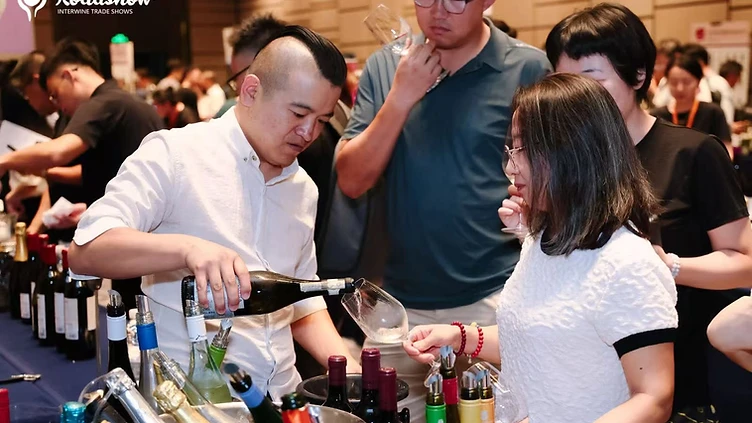
Channel matching cannot occur through remote correspondence alone. Real commercial partnerships in China are forged through personal relationship building, reciprocal due diligence, and sensory tasting with qualified category buyers. Wine producers seeking to secure reliable distribution should anchor their annual export strategy around established industry trade events.
Exporters looking to connect with nationwide retail chains, tier-one hospitality buyers, and dedicated regional distributors can Become an Exhibitor at upcoming physical industry gatherings. Winery owners and export directors can align their commercial schedules with verified milestones on the Asian wine calendar:
- Guangzhou 2026: 16–18 November 2026
- Hanoi 2026 Roadshow: 20 November 2026
- Spring Guangzhou 2027: 7–9 May 2027 at the China Import and Export Fair Complex / Pazhou, Guangzhou
- Asia Roadshow 2027: Hanoi 11 May, Kuala Lumpur 13 May, Singapore 15 May, Bali 17 May
- Vietnam 2027: 6–8 July 2027 at SECC, Ho Chi Minh City
- Autumn Guangzhou 2027: 31 October–2 November 2027 at the China Import and Export Fair Complex / Pazhou, Guangzhou
By engaging with pre-screened importers through structured Business Matching services, Italian wineries can bypass intermediary speculation and establish productive agreements with verified commercial partners.
Conclusion
Matching regional Italian wines to China's multi-layered sales channels requires disciplined product positioning, rigorous channel protection, and continuous in-market education. Whether marketing Piedmont's structured crus to urban fine dining, positioning refreshing Veneto Prosecco in high-growth social commerce circles, or moving fruit-forward Puglian reds through membership warehouse chains, profitability depends on aligning regional wine characteristics with the commercial realities of each sales channel. Producers that combine localized brand identities with direct trade engagement will secure enduring distribution across the expanding Chinese market.
Sources
- USDA Foreign Agricultural Service (FAS) Shanghai (2026): Wine Market Update 2026 (Report CH2026-0097). https://fas-prod.azureedge.us/data/gain-report/2026/07/Wine%20Market%20Update%202026_Shanghai%20ATO_China%20-%20People%27s%20Republic%20of_CH2026-0097.pdf
- China Briefing (2025): China's Wine Market Outlook: Trends and Opportunities. https://www.china-briefing.com/news/chinas-wine-market-outlook-trends-and-opportunities/
- Vinetur (2026): Chianti Producers Showcase Wines in Chengdu as Italian Exports to China Fall 25.1%. https://www.vinetur.com/en/2026032498057/chianti-producers-showcase-wines-in-chengdu-as-italian-exports-to-china-fall-251.html
- Italian Food News (2025): Italian Wine Exports to China Shows Signs of Recovery. https://news.italianfood.net/2025/06/04/italian-wine-exports-to-china-shows-signs-of-recovery/
Key Takeaways
- —China's wine market is experiencing an increase in average import values, demanding focused regional wine positioning rather than bulk commercial push.
- —Prosecco DOC and Moscato d'Asti match expanding social commerce, Douyin livestreaming, and casual dining preferences among younger demographics.
- —Structured, high-tannin reds like Barolo, Barbaresco, and Amarone should be restricted to Michelin/Black Pearl on-trade and private corporate gifting to prevent price erosion.
- —Fruit-driven Southern Italian reds (Puglia, Sicily) align smoothly with high-volume membership warehouse clubs and major e-commerce platforms.
- —Enforcing strict SKU demarcation between digital commerce and offline restaurant channels is critical to safeguarding distributor and sommelier relationships.
- —Participation in recognized Asian trade platforms and physical roadshows is necessary for direct, verified business matching with qualified Chinese importers.
Frequently Asked Questions
Why is average wine import value rising in China while total volume drops?
According to GACC data reported in the USDA FAS Shanghai Wine Market Update 2026, Chinese wine import value reached $1.4 billion in 2025 with average prices per liter increasing by 22% to $6.86. Consumers are purchasing fewer generic commercial wines and shifting spend toward branded, high-quality, and specialized regional bottlings.
Which Italian wine styles perform best on Chinese social commerce platforms?
Aromatic, approachable, and effervescent styles such as Moscato d'Asti DOCG and Prosecco DOC perform best on platforms like Douyin and Xiaohongshu (RED). Their accessible sweetness, lower alcohol levels, and social media appeal align directly with younger urban consumers.
How should high-end wines like Barolo or Brunello di Montalcino be distributed in China?
Premium, highly structured reds should be channeled into high-end gastronomy (Michelin and Black Pearl-rated on-trade venues), boutique merchant collections, and private corporate hospitality networks. Mass e-commerce platforms should be avoided to prevent channel conflict and brand dilution.
What mandatory regulatory steps must Italian wineries take before shipping to China?
Producers must secure GACC facility registration under Decrees 248/249, register Chinese brand trademarks with CNIPA under Class 33, and ensure bottle back-labels comply fully with China's GB 7718 food safety and labeling standards.