How to Source Wine Directly from Producers at Interwine
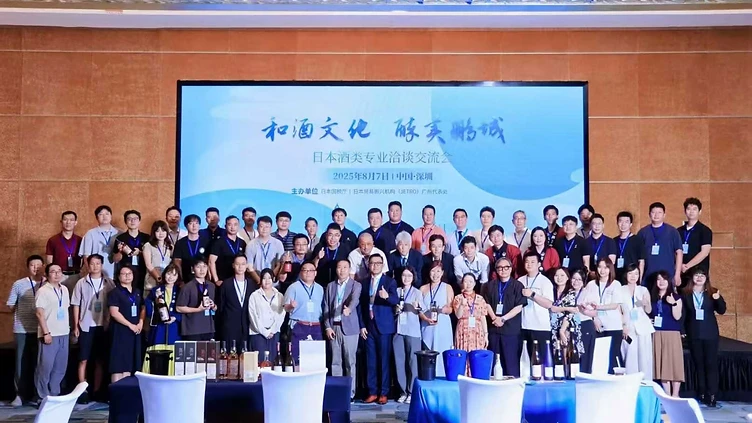
A commercial B2B guide for professional wine buyers, importers, and hospitality procurement teams detailing how to source wine directly from international producers at Interwine exhibitions.
Sourcing wine directly from wineries rather than navigating multi-tiered third-party brokerage delivers demonstrable margin improvements, authentic brand storytelling, and territorial exclusivity. For wine importers, regional distributors, and hospitality purchasing directors, Interwine serves as the premier gateway in the Asia-Pacific trade corridor. Successfully executing a direct-sourcing mandate requires structured technical preparation, methodical on-site appraisal, and a firm grasp of landed-cost calculations.
Direct winery procurement requires shifting commercial due diligence upstream. Importers must independently evaluate bottling consistency, export logistics capacity, and compliance requirements under regional authorities—such as China’s General Administration of Customs (GACC Decree 248/249) or regional Southeast Asian food import standards. This guide provides an operational roadmap for evaluating producers, negotiating sustainable Incoterms, and finalizing supply agreements across the Interwine exhibition circuit.
Strategic Preparation: Pre-Fair Due Diligence
Successful direct sourcing starts well before walking the trade fair floor. Without rigorous advance screening, buyers risk losing time on boutique cellars lacking export certification or high-volume producers unaligned with target price bands.
1. Curate Targets via the Official Directory
Begin your pre-fair screening using the verified Exhibitor Directory. Categorize prospects by geographical region (e.g., Old World estate appellations vs. New World high-yield estates), production scale, and registered export capabilities. Filter suppliers who maintain active international registrations to avoid compliance delays at customs entry ports.
2. Schedule Structured Bilateral Meetings
Ad-hoc walk-ins rarely afford the quiet environment required for commercial contract negotiations. Importers should coordinate structured sessions in advance through official Business Matching services. Setting meetings early ensures you meet export directors or estate principals authorized to negotiate container pricing, allocation volumes, and brand exclusivity.
3. Establish Portfolio Gap Criteria
Avoid generalized tasting sessions. Prior to attending, define explicit portfolio requirements:
- Target retail or on-premise shelf price points.
- Benchmark grape varieties and styles currently underrepresented in your catalog.
- Target packaging specifications (e.g., lightweight glass, screwcap vs. natural cork, gift-box capabilities).
- Minimum and maximum vintage volume needs.
Evaluating Producers on the Exhibition Floor
Once on-site at flagship events such as Interwine Guangzhou at the China Import and Export Fair Complex / Pazhou, buyers should combine sensory assessment with disciplined commercial auditing.
Sensory Evaluation vs. Commercial Viability
Tasting at trade events differs from consumer appreciation. Assess not only immediate sensory quality but also how a wine will perform over 30 to 60 days of ocean freight transit, varying warehouse conditions, and shelf turnover cycles. Query the producer on sulfur management, cold stabilization protocols, and bulk filtration standards.
Producer Capacity and Export Readiness
Not all wineries present on the floor have mature international operations. Key commercial indicators include:
- Annual Production Volume: Can the winery maintain stock continuity if a regional retail client scales up?
- Export Documentation Fluency: Can their logistics desk provide Certificates of Origin, Certificate of Free Sale, and accredited laboratory analysis reports without friction?
- Registration Status: In China, have they registered with the GACC Single Window system under Decree 248? In Southeast Asian markets like Vietnam, do they possess the necessary product declaration dossiers?
| Assessment Category | Red Flag (High Risk) | Ideal Benchmark (Direct Partnership) | | :--- | :--- | :--- | | Export Experience | First-time exporter with no overseas freight experience | Active distribution in multiple international markets | | Compliance Registration | Unregistered on GACC/local food safety authority portals | Valid GACC registration code and compliant label approval | | Supply Continuity | Micro-estate with irregular vintage-to-vintage supply | Dedicated export allocations with vintage reserve buffers | | Pricing Transparency | Only offers retail cellar-door quotes without Incoterms | Detailed FOB/EXW price sheets with volume tiering | | Marketing Commitment | Refuses brand collateral, digital assets, or sample support | Shared marketing budgets and local tasting allowances |
Commercial Structuring and Landed Cost Economics
Sourcing direct shifts logistics, clearance, and inventory carrying risks onto the buyer. Understanding your complete cost waterfall from cellar door to domestic distribution is essential to protect operating margins.
Decoding Incoterms: EXW vs. FOB vs. CIF
- EXW (Ex Works): The buyer assumes all transit costs and clearance risks from the producer’s cellar door. This offers maximum freight control for large consolidators but requires an experienced forwarder in the country of origin.
- FOB (Free on Board): The winery delivers goods cleared for export onto the buyer's nominated vessel. This is generally the most balanced Incoterm for full container load (FCL) direct sourcing.
- CIF/CFR (Cost, Insurance, and Freight): The seller arranges ocean shipping to your destination port. While convenient, it limits your control over transit conditions—such as temperature-controlled reefer routing—and often carries inflated freight margins.
Hypothetical Landed Cost Model (Full Container Load)
Disclaimer: The following calculation is a clearly labelled hypothetical example for illustrative purposes. It assumes a 20ft container of 14,000 bottles (750ml, 13.5% ABV) imported under standard non-preferential duty tariffs into a primary Asian trading hub. Total costs and margin contributions should be adjusted for specific HS codes, preferential free trade agreements (FTAs), and local warehouse tariffs.
- Hypothetical FOB Purchase Cost: €2.80 per bottle (€39,200 total)
- Reefer Ocean Freight & Insurance: €4,200 (€0.30 per bottle)
- Port Clearance, Inspections & Domestic Drayage: €1,400 (€0.10 per bottle)
- Hypothetical Customs Tariff & Consumption/Excise Taxes (Estimated combined 30%): €12,250 (€0.875 per bottle)
- Total Landed Unit Cost: €4.075 per bottle
- Hypothetical Distributor Wholesale Price: €7.50 per bottle
- Contribution Margin per Bottle: €3.425 (€7.50 - €4.075)
- Gross Contribution Margin Ratio: 45.67%
By procuring directly at €2.80 FOB rather than buying from a domestic secondary importer at €5.50 landed, the direct-sourcing model substantially increases gross margin flexibility to invest in market development and downstream sales incentives.
Navigating Compliance, Labelling, and Regulatory Clearance
Direct sourcing requires strict adherence to international trade law and import regulations. Missteps in product specifications can result in container rejection or destruction at destination ports.
+-------------------------------------------------------------+
|               DIRECT SOURCING WORKFLOW                       |
+-------------------------------------------------------------+
  [Interwine Fair Floor] ---> Evaluate samples & factory profiles
            |
            v
  [Commercial Review]    ---> Request laboratory analysis & FOB sheets
            |
            v
  [Regulatory Clearance] ---> Verify GACC / food safety declarations
            |
            v
  [Label Pre-Approval]   ---> Submit domestic-language back labels
            |
            v
  [Shipment & Warehousing]--> Cold-chain reefer booking & bonded release
Regulatory Checkpoints
- Analytical Testing: Standard import authorities mandate certified laboratory certificates validating actual alcohol percentage, residual sugar, total acidity, and maximum limits of free and total sulfur dioxide ($SO_2$).
- Back-Label Compliance: Chinese and Asian import laws require designated local-language back labels attached prior to or in bonded warehousing before final border inspection. Mandated disclosures typically include importer details, net contents, ingredients (e.g., grapes, sulfur dioxide), allergens, and health warnings.
- Intellectual Property and Brand Protection: Secure trademark distribution rights within your target territory before shipping commercial volumes. An exclusive supply contract does not prevent bad-faith trademark squatters from seizing unregistered winery brand names in local jurisdictions.
The Interwine Event Calendar & Direct Sourcing Opportunities
Planning your sourcing pipeline requires alignment with major trade dates across the region. Interwine hosts events throughout the year that connect verified international cellars with trade professionals:
- Interwine Guangzhou 2026: 16–18 November 2026.
- Interwine Hanoi Roadshow 2026: 20 November 2026.
- Spring Interwine Guangzhou 2027: 7–9 May 2027 at the China Import and Export Fair Complex / Pazhou, Guangzhou.
- Interwine Asia Roadshow 2027: Hanoi (11 May), Kuala Lumpur (13 May), Singapore (15 May), and Bali (17 May).
- Interwine Vietnam 2027: 6–8 July 2027 at SECC, Ho Chi Minh City.
- Autumn Interwine Guangzhou 2027: 31 October–2 November 2027 at the China Import and Export Fair Complex / Pazhou, Guangzhou.
To discover broader commercial trends and logistics best practices, explore our dedicated Wine Import & Distribution hub.
Operational Checklist for Direct Wine Sourcing
- [ ] Pre-Register Credentials: Secure professional buyer passes early via Book Your Visit.
- [ ] Screen Producers: Review the official Exhibitor Directory and identify target estates.
- [ ] Book Business Matching: Schedule qualified supplier interviews via Business Matching.
- [ ] Request Technical Data: Obtain vintage reports, physical analyses, and export packaging specifications.
- [ ] Audit International Certifications: Verify winery registrations on required national customs portals.
- [ ] Calculate Landed Unit Cost: Complete total-cost models across EXW, FOB, and CIF alternatives.
- [ ] Review Contracts: Ensure formal supply agreements include clear territorial distribution rights and quality guarantee clauses.
Direct winery sourcing delivers unmatched commercial autonomy and sustainable margin profiles. By adopting a systematic approach before, during, and after the fair, professional buyers can establish enduring, highly profitable direct relationships across the Interwine circuit.
Sources
- General Administration of Customs of the People's Republic of China (GACC)
- International Organisation of Vine and Wine (OIV)
- International Chamber of Commerce - Incoterms 2020
Key Takeaways
- —Direct sourcing eliminates intermediary margins, providing buyers with better contribution margins and direct territorial exclusivity.
- —Advance research using the official Exhibitor Directory and Business Matching services is essential for effective trade fair negotiations.
- —Technical due diligence must evaluate laboratory specifications, sulfur levels, cold stabilization, and transit resilience alongside tasting notes.
- —Accurate landed-cost models require evaluating ocean reefer freight, customs duties, excise taxes, and port handling rather than relying solely on FOB prices.
- —Regulatory compliance—including national customs registration, pre-approved local back-labelling, and trademark verification—must be resolved before placing commercial orders.
Frequently Asked Questions
Why should wine buyers source directly from producers instead of using local importers?
Direct sourcing allows distributors and purchasing teams to capture higher contribution margins, secure exclusive geographic distribution rights, customize localized branding, and establish direct relationships with winemakers for technical and marketing support.
What documentation is required to clear directly sourced wine through customs?
Buyers generally require a commercial invoice, packing list, bill of lading, Certificate of Origin, Certificate of Analysis (evaluating alcohol, acidity, and sulfur dioxide levels), health or free-sale certificates, and compliant regional-language back labels aligned with local food safety regulations.
How can buyers prepare for supplier meetings at Interwine?
Review the official Exhibitor Directory in advance, identify portfolio gaps, book formal meetings through the Interwine Business Matching portal, and prepare target FOB price thresholds alongside logistics specifications.
What is the recommended Incoterm for direct container shipments?
FOB (Free on Board) is widely preferred for full container load (FCL) orders. It ensures the producer handles export clearance in the country of origin while giving the buyer full oversight of temperature-controlled shipping, maritime insurance, and carrier selection.