Hotel Wine Procurement Checklist: Compare Price, Supply and Service
Streamline hotel beverage sourcing with an operational checklist. Compare landed costs, supply chain reliability, and supplier service standards to protect pour margins.
For hotel beverage directors, food and beverage (F&B) procurement heads, and hospitality purchasing managers, beverage list curation is fundamentally an exercise in risk management and margin defense. Selecting a wine for a luxury banquet or fine-dining restaurant requires balancing wholesale bottle prices with operational performance. A low invoice quote can quickly erode profitability if an importer fails to deliver before a 400-cover gala dinner, delivers vintages with fluctuating flavor profiles, or ships heat-damaged inventory lacking cold-chain documentation.
Building a resilient hotel beverage program requires a balanced evaluation across three pillars: commercial pricing structure, supply chain continuity, and supplier service level agreements (SLAs). According to PwC’s 2024 Digital Procurement Survey (cited by NetSuite), purchasing departments are on track to achieve a 70% rate of digitized processes by 2027, underscoring the shift toward data-driven, auditable vendor selection.
This guide outlines an actionable framework and procurement checklist to evaluate wine suppliers across cost, volume reliability, and commercial support.
Pillar 1: Evaluating Total Landed Price and Profitability
Hotel procurement frequently encounters the pitfall of purchasing based purely on the nominal case price (Ex-Works or Free on Board) without calculating the true Total Landed Cost (TLC). Landed price encompasses cross-border logistics, excise taxes, customs brokerage, local distribution warehousing, and internal storage shrinkage.
Net-Net Margin vs. Headline Case Discounts
Suppliers often offer tier discounts (e.g., a 12% discount on 50-case orders). However, if your hotel’s cellar space is limited, bulk storage incurs off-site holding costs or ties up working capital. Evaluate contracts based on net-net delivered costs per bottle, accounting for payment terms (e.g., Net 30 vs. Net 60 days) and breakage allowances.
Hypothetical ROI Model: Direct Sourcing vs. Multi-Tier Distributor
To evaluate supply contracts, procurement directors examine the contribution margin across annual volume. Consider this hypothetical scenario for a high-volume banquet Chardonnay across an annual consumption of 12,000 bottles (1,000 cases):
All figures below are hypothetical and for comparative illustration only.
-
Option A: Local Secondary Wholesaler
- Nominal Unit Price: $14.00 / bottle
- Delivery & Storage Fees: Included in unit price
- Annual Purchase Cost: $168,000
- Menu Banquet Price: $48.00 / bottle
- Gross Revenue: $576,000
- Total Variable Direct Costs: $168,000
- Total Contribution Margin: $408,000 (Contribution Margin Ratio: 70.83%)
-
Option B: Consolidated Direct Import via Verified Principal
- Landed Unit Cost (FOB + Freight + Duty + Clearance): $9.20 / bottle
- Buffer Warehousing & Pallet Handling: $0.80 / bottle
- Annual Direct Landed Cost: $120,000 ($10.00 / bottle)
- Menu Banquet Price: $48.00 / bottle
- Gross Revenue: $576,000
- Total Variable Direct Costs: $120,000
- Total Contribution Margin: $456,000 (Contribution Margin Ratio: 79.17%)
In this scenario, direct engagement creates a hypothetical net gain of $48,000 in contribution margin, provided the hotel has access to structured international sourcing channels and dependable freight handling.
Pillar 2: Supply Chain Security and Inventory Continuity
A wine program cannot survive frequent out-of-stock notices. Reprinting beverage menus, re-training sommeliers, and dealing with guest complaints degrade operations. Wine procurement requires strict monitoring of agricultural supply variability, shipping routes, and inventory buffers.
Hotel Demand Forecasting (PMS / POS Integration)
       │
       ▼
Tier 1: High-Volume House & Banquet Lines (Direct Contract / 60-Day Central Buffer)
       │
       ▼
Tier 2: Fine-Dining Cellar Program (Allocated Labels / Dual-Sourced Distributors)
       │
       ▼
Cold-Chain Logistics Verification (Reefer In-Transit / Temperature Data Logging)
Dual-Sourcing and Lead-Time Safeguards
As outlined in industry procurement best practices from Procurement Tactics (2026), leading hospitality enterprises mitigate supply chain risk by adopting dual-sourcing for primary categories and maintaining safety stock for critical lines.
- Core House Pour / Banquet Operations: Never rely on a single distributor without guaranteed safety stock (at least 30–60 days in a local bonded or domestic warehouse). Ensure your contract specifies fallback vintage replacement rights of equal or superior standard without price adjustments.
- Fine Dining & By-the-Glass (BTG): BTG listings require guaranteed vintage continuity for 6 to 12 months. Ensure contracts stipulate advance notice (minimum 60 days) before vintage transitions.
Temperature-Controlled Logistics and Storage Verification
Wine is a perishable asset. Heat spikes above 25°C (77°F) in standard dry shipping containers quickly degrade wine quality. Standardize your supplier contracts to require refrigerated containers (reefers) and auditable data logger access from international winery gates to hotel cellars.
Pillar 3: Supplier Service Level Agreements (SLAs) and Operational Value
Evaluating price and inventory availability is insufficient; operational service performance directly impacts your front-of-house labor efficiency and inventory turnover.
| Evaluation Category | Critical KPI / Metric | Minimum Hospitality Standard | Preferred Strategic Partner Standard | | :--- | :--- | :--- | :--- | | Order & Delivery | Lead Time & Accuracy | 48-hour order-to-delivery; >95% fill rate | Same-day/24-hour emergency delivery; 99% order accuracy | | Logistics Handling | Temperature Control | Standard domestic trucking | End-to-end refrigerated transport (<18°C) with data loggers | | Staff Support | Training & Education | Quarterly product fact sheets | Monthly on-site certified masterclasses & tasting workshops | | Commercial Terms | Credit & Payment Terms | Net 15 to Net 30 days | Net 60 days; volume rebate; consignment for banquets | | Listing Support | Menu Engineering | Digital bottle neck tags | Menu printing allowances, stemware sponsorship, POS integration | | Sustainability Compliance | ESG Certifications | Basic business licensing | Certified organic/biodynamic labels; sustainable packaging auditing |
Sustainability is no longer optional. The Booking.com 2025 Sustainable Travel Report (cited by Hotel Dive) notes that more than half of global travelers keep environmental impact in mind when booking, with 73% wanting their spending directed back into sustainable practices. Hotel purchasing managers must demand certified chain-of-custody documentation (such as ISO 14001, organic, or biodynamic certifications) directly from winery representatives.
The Hotel Wine Procurement Matrix: A 10-Point RFP Checklist
When issuing a Request for Proposal (RFP) or auditing current wine suppliers, apply this 10-point checklist to screen prospective partners:
- Audited Landed Cost Transparency: Does the quotation separate FOB, shipping, customs duties, insurance, and local transport?
- Minimum Order Quantity (MOQ) Flexibility: Can the vendor deliver split-case allocations across boutique SKUs without excessive surcharge penalties?
- Guaranteed Vintage Protection: Is there an agreement that vintage rollovers must be submitted for sensory approval 60 days before distribution?
- Delivery Window Reliability: Does the distributor support scheduled delivery windows that avoid peak guest check-in and F&B prep hours?
- Consignment and Return Policies: Will the vendor accept buy-backs or consignment reconciliations on unopened cases following major banquet events?
- Cold-Chain Audit Rights: Can the hotel review temperature logging data for shipments imported during peak summer transit months?
- Sommelier and Service Staff Enablement: Does the supplier provide dedicated brand ambassadors for front-of-house staff training and food-pairing development?
- Credit Facility Stability: Are working capital terms (such as credit limits and Net 30/60 facilities) clear, with automated digital invoicing compatibility?
- Traceability and Counterfeit Defense: Are imported premium bottles tagged with tamper-evident, verifiable provenance seals?
- ESG Documentation: Does the supplier provide verified producer certifications reflecting eco-friendly farming and low-carbon logistics?
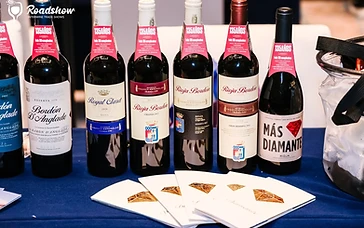
To discover leading international producers, compare wholesale parameters, and evaluate regional distributors firsthand, explore our Exhibitor Directory or Book Your Visit to upcoming procurement exhibitions.
Navigating Sourcing Channels: Direct Import vs. Regional Distribution
Hospitality groups frequently debate whether to buy exclusively through local wholesalers or pursue direct-import models.
Direct importing through strategic trade platforms offers substantial margin gains and portfolio exclusivity. However, it requires internal capabilities for import customs compliance, label registration, and buffer storage. Conversely, working with established domestic distributors transfers logistics and storage risks to the vendor, albeit at a higher unit cost.
Many luxury operators resolve this by adopting a hybrid strategy:
- High-Volume House Pours & Banquets: Sourced directly from established international producers via business matching platforms to maximize contribution margins.
- Dynamic Fine-Dining Allocations: Sourced through agile domestic distributors who maintain inventory flexibility and provide rapid restocking.
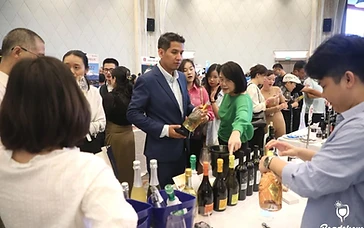
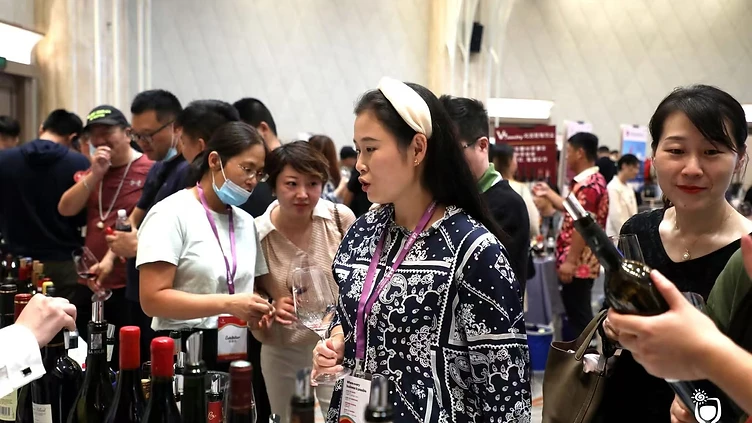
For enterprise buyers refining their supplier network, structured trade events provide an efficient environment to evaluate producers, benchmark prices, and inspect portfolio quality. Buyers can review upcoming opportunities across Asia:
- Guangzhou 2026: 16–18 November 2026
- Hanoi 2026 Roadshow: 20 November 2026
- Spring Guangzhou 2027: 7–9 May 2027 at China Import and Export Fair Complex / Pazhou, Guangzhou
- Asia Roadshow 2027: Hanoi (11 May), Kuala Lumpur (13 May), Singapore (15 May), Bali (17 May)
- Vietnam 2027: 6–8 July 2027 at SECC, Ho Chi Minh City
- Autumn Guangzhou 2027: 31 October–2 November 2027 at China Import and Export Fair Complex / Pazhou, Guangzhou
Hospitality purchasing teams can plan their sourcing schedules and initiate supplier reviews by exploring our Exhibitor Guides and scheduling pre-screened supplier meetings via Business Matching.
Sources
- NetSuite (2025): A Guide to Improved Hospitality Procurement (citing PwC 2024 Digital Procurement Survey). https://www.netsuite.com/portal/resource/articles/accounting/hospitality-procurement.shtml
- Hotel Dive / Amazon Business (2026): How to build a more resilient hospitality procurement strategy (citing Booking.com 2025 Sustainable Travel Report). https://www.hoteldive.com/spons/how-to-build-a-more-resilient-hospitality-procurement-strategy/819131/
- Procurement Tactics (2026): Hotel Procurement — Definition, Process + Examples. https://procurementtactics.com/hotel-procurement
- Order.co (2025): Better Hospitality Procurement: Best Practices & Processes. https://www.order.co/blog/procurement/hospitality-procurement/
Key Takeaways
- —Base wine procurement evaluations on true Total Landed Cost (TLC) and contribution margin rather than baseline case discounts.
- —Mitigate menu disruption by instituting dual-sourcing strategies and 30-to-60-day local safety stock buffers for high-volume lines.
- —Require documented cold-chain logistics to prevent heat degradation during transit.
- —Audit vendor performance across staff training support, emergency order delivery windows, and ESG sustainability compliance.
- —Use structured trade matchmaking to connect directly with producers and balance direct imports with local distributor flexibility.
Frequently Asked Questions
How do hotel buyers balance direct importing against domestic distributors?
Hotels frequently use a hybrid strategy. Direct importing is applied to predictable, high-volume banquet and house wines to maximize contribution margin. Domestic distributors are used for specialized, allocated, or fast-changing fine-dining lists where rapid fulfillment and smaller order sizes outweigh margin premiums.
What is the most common hidden cost in hotel wine procurement?
The most common hidden cost is unmanaged landed freight and terminal fees, paired with temperature damage from unmonitored non-refrigerated transit. Storage constraints that incur secondary local warehousing fees also erode headline case discounts.
How can hotels protect themselves against vintage stockouts?
Hotels should integrate vintage rollover clauses into their procurement agreements. These clauses require suppliers to provide at least 60 days advance notice before exhausting a vintage, along with sample submissions and rights to substitute equivalent or higher quality stock at the contracted price.