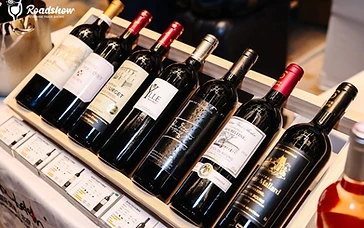
China vs Indonesia: Where Should Wine Brands Expand?

Evaluating China vs Indonesia for wine expansion? Compare market scale, import quotas, excise duties, tourist on-trade channels, and B2B routes to market.
For international wine producers evaluating Asian expansion, choosing between China and Indonesia is not a contest between identical opportunities. It is a strategic tradeoff between a massive, maturing market undergoing a commercial reset and a tightly regulated, tourism-driven niche with steady value compounding.
International wineries seeking volume scale, established e-commerce infrastructure, and mature regional distribution networks find their primary opportunity in mainland China. Conversely, producers targeting high-margin on-premise placements insulated by high entry barriers look toward Indonesia. Deciding where to allocate capital requires analyzing trade regulations, consumer demographics, import barriers, and commercial routes to market across both jurisdictions.
Market Scale, Consumption Trends, and Macro Dynamics
The fundamental divide between China and Indonesia lies in aggregate scale, domestic purchasing patterns, and per-capita exposure.
China: The Structural Reset Toward Intentional Drinking
Mainland China remains the commercial center of gravity in Asia-Pacific. As reported by the Wine Australia Market Bulletin (Issue 359, 2026), China's nominal GDP reached US$19.4 trillion in 2025, accounting for approximately 20% of global GDP on a purchasing power parity basis. Although economic growth has moderated to around 5% annually, China represents an established ecosystem for imported wine.
China's imported wine sector is undergoing a qualitative shift rather than a pure volume expansion. Following the removal of punitive import tariffs on Australian wines in 2024, import volumes rebounded, yet overall drinking patterns transformed. The historical era of ostentatious banquet gifting and opaque official procurement has evolved into casual, solo, and lifestyle consumption. Young urban professionals—particularly female consumers—are driving demand toward refreshing white varietals (such as New Zealand Sauvignon Blanc and German Riesling), light aperitifs, and accessible sparkling wines like Prosecco and Cava, while traditional full-bodied reds navigate a realignment in on-trade pricing.
Indonesia: Tourism Corridors and Extreme Margin Concentration
Indonesia presents a contrasting demographic and regulatory reality. As the world's most populous Muslim-majority country, per-capita wine consumption is modest, recorded at approximately 0.023 liters according to Ken Research's Indonesia Wine Market Report (2026). However, measuring Indonesia by broad demographic aggregates overlooks its concentrated commercial value.
Ken Research valued the Indonesia wine market at USD 185 million in 2025, projecting it to expand at a compound annual growth rate (CAGR) of 7.22% to USD 281 million by 2031. Demand is geographically focused: Bali and Greater Jakarta account for an estimated 80% of total market value. In 2025, Indonesia recorded 15.39 million international visitor arrivals, with direct arrivals to Bali reaching 6.95 million—representing roughly 45% of the national foreign tourist intake. This tourist influx creates an insulated, commercially resilient on-premise market centered around luxury resorts, beach clubs, and five-star dining venues.
Regulatory Frameworks, Tariffs, and Import Barriers
Market access rules dictate commercial viability long before a bottle reaches a consumer shelf.
| Dimension | Mainland China | Indonesia | | :--- | :--- | :--- | | Market Valuation (2025) | Multibillion-dollar mature market | USD 185 Million (Ken Research, 2026) | | Primary Drivers | Urban middle class, casual social drinking, female professionals | International tourism (Bali), expatriates, affluent urban elite | | Tariff / Tax Regime | MFN import tariff (~14%), standard VAT (13%), consumption tax (10%) | High custom tariffs, heavy alcohol excise duties, luxury tax | | Import Mechanism | Decentralized licensed commercial importers across Tier 1–3 cities | Centralized quota system, registered IT-MB importers, BPOM product registration | | Distribution Focus | Tiered distributors, boutique retail, Douyin / Tmall, modern on-trade | Luxury on-premise (hotels, resorts, bars), specialist licensed retail | | Regulatory Bottlenecks | GACC Decree 248/249 manufacturer registration, standard CIQ clearance | Restrictive annual quotas, strict under-21 labeling, local processing advantages |
China: Bureaucratic Clarity with Market Competition
China's regulatory landscape is standardized. Foreign facilities must secure registration under General Administration of Customs of China (GACC) Decrees 248 and 249. Customs clearance involves labeling verification, food safety documentation, and declaration of value. While competitive intensity is high, market entry operates under standard commercial mechanisms: once goods clear customs, they move through bonded warehouses, digital fulfillment networks, or regional wholesalers without arbitrary import quotas.
Indonesia: Complex Quotas and Layered Fiscal Friction
Importing into Indonesia is governed by specialized regulatory hurdles outlined in Wine Australia's Export Market Guide - Indonesia (2026). Alcoholic beverages fall under strict state surveillance, requiring an Import License for Alcoholic Beverages (IT-MB). The Ministry of Trade manages import volume through annual quotas allocated to a small cohort of state-approved importers.
Beyond quota constraints, imported wines endure cumulative fiscal burdens, including high specific or ad valorem customs duties, standard value-added taxes, luxury goods sales taxes (PPnBM), and internal excise duties. Products require registration with the National Agency of Drug and Food Control (BPOM), a multi-month compliance process requiring technical laboratory analysis and strict Indonesian-language labeling (including mandatory under-21 prohibition notices). Consequently, retail shelf prices in Jakarta or Seminyak can be three to four times the international FOB price. Additionally, local Indonesian producers producing wine from imported bulk grape must benefit from lower tariff liabilities, creating price competition at entry-level tiers.
Distribution Infrastructure and On-Trade Commercial Channels
Expanding successfully into Asia requires selecting distribution channels matched to product positioning.
Modern Retailing and Digital Distribution in China
China features advanced omnichannel logistics. Brands do not enter "China" as a monolithic market; they target specific metropolitan clusters, such as the Greater Bay Area, the Yangtze River Delta, and Chengdu-Chongqing. Distribution spans specialized private wine retailers, regional supermarket chains (such as Ole' and Sam's Club), high-end gastronomy, and direct-to-consumer digital channels on platforms like WeChat Mini-Programs, Tmall, and Douyin. While setting up brand flagships requires investment, wineries can leverage targeted Market Insights to identify regional commercial partners.
Tourism and On-Premise Dependency in Indonesia
In Indonesia, off-trade distribution is legally restricted. Supermarket alcohol sales are restricted in several municipalities, and conventional digital commerce platforms cannot openly distribute alcoholic beverages. The route to market is concentrated around the on-premise channel (Hotels, Restaurants, and Cafes/Bars—Horeca).
Because international tourism in Bali and the business hospitality sector in Greater Jakarta absorb the vast majority of volume, brand survival depends entirely on relationships with licensed distributors holding established hotel and resort supply contracts. Selling wine in Indonesia is essentially a hospitality-partnering strategy; brand awareness is maintained via poolside listings, Michelin-starred resort wine dinners, and curated cellar-door distribution rather than broad mass-market advertising.
Strategic Evaluation: China vs Indonesia
To determine where to expand, evaluate your commercial assets, production volumes, and export strategies.
Choose Mainland China If:
- Your brand requires commercial scale: You produce sufficient volume to supply multi-city distributor networks across Tier 1 and Tier 2 cities.
- You offer refreshing whites, sparkling, or value-driven styles: The Chinese market is diversifying away from exclusive red wine portfolios toward lighter, food-friendly profiles.
- You possess digital-native collateral: Your marketing teams can execute social selling, localized Chinese brand narratives, and e-commerce campaigns.
- You seek predictable logistics: You prefer clear, standardized GACC regulatory rules over restricted annual import quotas.
Choose Indonesia If:
- You occupy a super-premium or iconic tier: The steep tax regime means lower-tier wines lose margin competitiveness; ultra-premium brands maintain purchasing interest among international resort guests and high-net-worth domestic collectors.
- Your focus is luxury hospitality: Your commercial team specializes in sommelier relationships, hotel chain partnerships, and resort group procurement.
- You have secured an allocation-holding partner: You have access to a licensed Indonesian distributor with granted import quotas and active cold-chain warehousing in Jakarta and Bali.
- You can support slow, defensive brand building: You are willing to navigate multi-month BPOM registrations to secure an insulated market position protected by high barriers to entry.
Strategic Route to Execution
Choosing between China and Indonesia does not have to be an exclusive decision; many global producers approach them sequentially. China serves as the regional engine for volume, regional brand prestige, and diversified multi-channel placement. Indonesia operates as a targeted, high-margin, tourism-supported secondary destination.
Regardless of which market aligns with your vintage profiles and margin expectations, success in Asia requires direct access to verified commercial buyers. Entering foreign territories without vetted local representation leads to dead inventory, compliance delays, and administrative expense.
International wine producers preparing their Asian export roadmap should utilize verified Business Matching services. Engaging directly with established regional importers, certified customs handlers, and licensed Horeca distributors enables brands to validate pricing structures, comply with local regulations, and build dependable Asian trade distribution.
Sources
- Wine Australia: China Market Insight Report & Market Bulletin Issue 359 (2026)
- Wine Australia: Export Market Guide - Indonesia (2026)
- Ken Research: Indonesia Wine Market Size, Share & Forecast 2026–2031 (2026)
- Source of Asia: Southeast Asia Wine Market Practical Entry Brief (2026)
Key Takeaways
- —China offers volume scale and maturing e-commerce channels, driven by an emerging urban consumer base shifting toward white, sparkling, and accessible wine styles.
- —Indonesia operates as a concentrated, high-margin market valued at USD 185 million in 2025, with Bali and Jakarta accounting for approximately 80% of consumption.
- —Regulatory environments contrast sharply: China follows standardized GACC customs frameworks, whereas Indonesia imposes strict import quotas, IT-MB licenses, and steep excise taxes.
- —Route-to-market strategies differ: China thrives on omnichannel regional distribution, while Indonesia relies almost exclusively on luxury hospitality and tourism on-premise accounts.
- —Brands targeting commercial expansion must select markets based on portfolio pricing power, scale capability, and access to verified import partners.
Frequently Asked Questions
What is the primary difference in wine consumer behavior between China and Indonesia?
In mainland China, domestic urban professionals and female consumers drive market growth, pivoting toward white wines, sparkling aperitifs, and casual dining. In Indonesia, local per-capita consumption remains modest (approximately 0.023 liters per year), with the vast majority of volume consumed by international tourists and expatriates in Bali and Jakarta luxury hospitality venues.
What are the main regulatory barriers to importing wine into Indonesia?
Indonesia mandates an Import License for Alcoholic Beverages (IT-MB) that operates under strict annual volume quotas set by the Ministry of Trade. In addition, wines must secure BPOM product registration and face substantial composite taxes, including customs tariffs, VAT, luxury goods sales taxes, and internal excise duties.
How have wine import conditions in China changed recently?
Following the lifting of anti-dumping tariffs on Australian wine in 2024, import flows stabilized. Importers and producers must adhere to GACC Decrees 248 and 249 for foreign manufacturing registration and customs declarations, with distribution shifting away from state banquets toward modern dining, boutique specialist retailers, and digital platforms.
Which market offers better margins for premium and luxury wine labels?
Both markets can support premium pricing, but in distinct ways. China provides broad scale for premium brands through corporate networks and tier-one urban collectors. Indonesia yields high per-bottle on-premise margins within luxury resorts and international hotels in Bali, where consumers absorb high hospitality markups despite hefty import excise duties.
How can wine brands identify reliable importers in China and Indonesia?
International wine brands should bypass unvetted intermediaries by utilizing professional B2B trade networks and dedicated business matching services, ensuring direct engagement with licensed importers that possess active quota allocations and cold-chain logistics.