How Whisky Brands Can Find Importers in China and Southeast Asia

A commercial B2B guide for whisky distilleries and brand owners on sourcing, vetting, and negotiating with licensed importers across China and Southeast Asia.
To successfully find and secure whisky importers across China and Southeast Asia, brand owners must bypass broad cold emailing and instead deploy a multi-channel commercial pipeline: qualified B2B matching, regional trade roadshows, targeted on-trade sampling, and compliance-driven distributor vetting. Importers in key hubs such as Guangzhou, Shanghai, Singapore, Hanoi, and Bangkok are selective; they look for defined commercial margins, flexible minimum order quantities (MOQs), marketing co-investment, and strict adherence to local customs protocols.
While traditional western markets face slowing volume growth, Asian markets demonstrate robust long-term demand for imported spirits. In China, imported brown spirits are carving out market share among urban consumers, with UK whisky shipments to China reaching £237 million in 2023 according to trade figures cited by Whisky Magazine (2025). Concurrently, according to Source of Asia (2026), the broader ASEAN alcohol beverage sector is projected to hit $19.05 billion USD by 2034, with premium spirits driving growth across dynamic urban centres in Vietnam, Singapore, and Thailand. Navigating this opportunity requires moving beyond generic outreach and understanding how distribution channels actually operate across the Asia Wine Market.
Understanding the Importer Landscape: China vs. Southeast Asia
Whisky distribution in Asia is not uniform. Commercial structures, regulatory friction, and retail landscapes vary drastically between Mainland China and member states of the Association of Southeast Asian Nations (ASEAN).
1. Mainland China (Tier-1 Hubs vs. Emerging Tier-2/3 Regions)
In China, the import structure is split between national tier-1 operators and specialized regional fine spirit distributors:
- First-Tier Mega Importers & National Platforms: Centred in coastal gateways like Shanghai, Guangzhou, and Shenzhen, national distributors and major cross-border e-commerce operators handle large container volumes. According to China-Britain Business Council (CBBC, 2026), major digital retail channels like JD Worldwide actively maintain direct procurement pipelines for authentic imported spirits.
- Boutique On-Trade Distributors: Emerging single malts, independent bottlers, and niche craft distilleries often find better commercial alignment with mid-sized regional importers. These distributors specialize in high-end whisky bars, private client networks, corporate gifting, and tier-2 provincial club channels.
2. Southeast Asia: The Three Strategic Models
According to market entry research by Source of Asia (2026), ASEAN spirits distribution broadly follows three distinct operational environments:
- Singapore (Regional Trading & Benchmark Hub): Offers streamlined customs procedures and low regulatory complexity. It functions primarily as a regional showcase, corporate procurement centre, and re-export hub for Southeast Asia.
- Vietnam (Rapid Volume & Demographics): Driven by an urbanizing population in Ho Chi Minh City and Hanoi. Importers must hold specialized domestic liquor distribution licences. Vietnam levies a Special Consumption Tax (SCT) on alcoholic beverages (65%, with phased increases legislated to reach 90% by 2031, as documented by Source of Asia, 2026). Brands entering early establish pricing architectures before tax ceilings expand.
- Thailand (On-Premise & Hospitality Focus): Represents roughly 24% of the Southeast Asia spirits market in 2025, driven by hospitality and tourism according to Persistence Market Research (2025). However, strict advertising bans and import licensing require working with well-connected local partners.
4 Proven Methods to Connect with Qualified Whisky Importers
Establishing distribution agreements requires meeting commercial decision-makers where they actively source product.
1. Pre-Screened B2B Matchmaking and Targeted Fairs
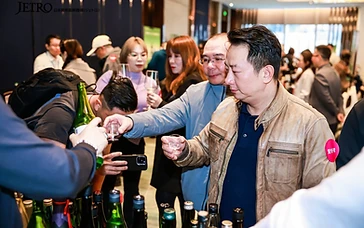
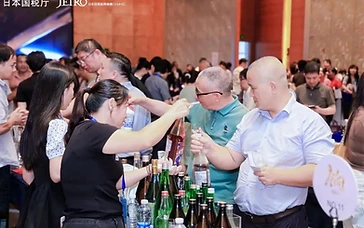
Cold email outreach to international beverage buyers historically yields response rates below 2%. By contrast, participating in structured Business Matching meetings links distilleries directly with verified importers seeking specific spirit profiles. Comprehensive events allow export managers to evaluate prospective buyers across consecutive hubs. Interwine organizes major exhibition and trade platforms, including:
- Guangzhou 2026: 16–18 November 2026
- Hanoi 2026 Roadshow: 20 November 2026
- Spring Guangzhou 2027: 7–9 May 2027 at China Import and Export Fair Complex / Pazhou, Guangzhou
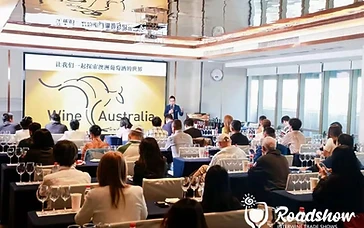
- Asia Roadshow 2027: Hanoi (11 May), Kuala Lumpur (13 May), Singapore (15 May), and Bali (17 May)
- Vietnam 2027: 6–8 July 2027 at SECC, Ho Chi Minh City
- Autumn Guangzhou 2027: 31 October–2 November 2027 at Pazhou, Guangzhou
Distilleries planning their annual export calendar can Become an Exhibitor to secure access to these scheduled buyer delegations.
2. In-Country Trade Missions and Consular Support
National and regional trade bodies (such as the UK CBBC, Scottish Development International, Business France, or Bord Bia) frequently coordinate commercial spirits missions. These missions include bilateral introductions, retail audits, and institutional briefings with organizations such as the China Alcoholic Drinks Association (CBBC, 2026).
3. Masterclass Activations and Regional Roadshows
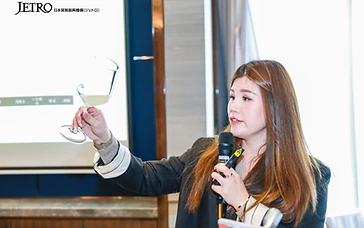
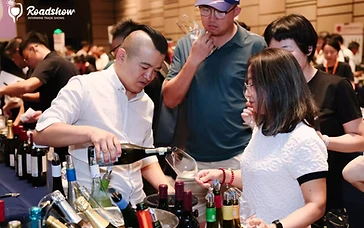
Importers in dynamic cities like Hanoi, Chengdu, or Kuala Lumpur rarely buy stock from static spec sheets. Hosting a localized masterclass or partnering on targeted multi-city tasting roadshows allows export directors to present liquid credentials, barrel maturation stories, and brand authenticity directly to on-trade managers and commercial distributors.
4. Cross-Border E-Commerce Direct Inroads (China)
For distilleries seeking initial volume proof without immediate general-trade registration delays, Chinese Cross-Border E-Commerce (CBEC) platforms provide bonded warehouse distribution. Securing a distribution partner with dedicated CBEC operations allows brands to test price elasticity and consumer response before committing to full container general-trade customs clearances.
Distributor Evaluation Checklist: How to Vet Prospects
Not every importer with an import licence is suitable for your whisky brand. Before granting distribution rights or signing commercial contracts, audit candidate partners against this checklist:
| Evaluation Area | What to Look For | Critical Warning Signs | | :--- | :--- | :--- | | Licensing & Compliance | Valid alcoholic beverage import & distribution licences in target territory. Proven track record clearing General Administration of Customs China (GACC) or ASEAN food safety documentation. | Vague customs explanations; asking the producer to undervalue commercial invoices. | | Channel Alignment | Active accounts in your brand's target tier (e.g., luxury on-trade, specialist whisky retail, private clients, corporate B2B). | Portfolios dominated solely by mass commercial beer or unaligned FMCG commodities. | | Brand Conflict | Portfolio space to nurture a new entrant without direct cannibalization of an existing primary single malt or blend agency. | Distributor already holds five direct competitors in the exact same price-tier and origin. | | Logistics Infrastructure | Temperature-controlled bonded warehousing, reliable nationwide cold-chain or insured domestic freight. | Ambient storage in high-humidity tropical zones without temperature monitoring. | | Marketing Commitment | Willingness to co-fund launch activations, masterclasses, on-trade incentives, and localized collateral. | Demanding high listing fees with zero sales commitments or brand-building investment. |
Note: This checklist serves as practical commercial guidance. It does not replace case-specific legal or customs counsel.
Structuring Commercial Proposals for Asian Whisky Buyers
When presenting commercial terms to Asian distributors, clarity around landed costs, operational margins, and trade marketing is mandatory. Importers frequently decline international brand proposals due to inflexible pricing architectures.
The Pricing Architecture Template
Asian importers typically target gross margins between 30% and 50% depending on channel risk and inventory turn. Ex-Works (EXW) or Free on Board (FOB) price calculations must account for the local tariff and consumption tax ladder:
[FOB Origin Cost]
  + Freight & Marine Insurance (CIF)
  + Import Duty (0% to 10% depending on applicable FTA/country of origin)
  + Country-Specific Excise / Special Consumption Tax (e.g., Vietnam SCT 65%)
  + Value Added Tax (VAT / GST)
  = Landed Distributor Cost (LDC)
  + Importer Gross Margin (30% - 45%)
  = Wholesale Price to On-Trade / Retail
  + Venue / Retailer Margin (35% - 50%)
  = Final Consumer Price (RSP)
Commercial Terms That Attract Serious Partners
- Pragmatic Initial MOQs: Start with multi-SKU pallet allocations (mixed pallets) rather than demanding full 20-foot container orders on order one.
- A&P Co-Investment: Offer a structured Advertising & Promotion (A&P) budget—typically 5% to 15% of invoice value—tied strictly to confirmed marketing milestones (e.g., launch tastings, menu placements, staff training).
- Sample Support & Assets: Guarantee a standard ratio of free-of-charge (FOC) sampling stock dedicated to trade education, cocktail development, and masterclasses.
Hypothetical ROI Model: Participating in a Regional Matching Campaign
To evaluate the commercial viability of attending an Asia trade exhibition or business matchmaking roadshow, export managers must evaluate net contribution margin against total acquisition costs.
Disclaimer: The following calculation is a clearly labelled hypothetical example designed for internal planning purposes. Actual costs, order sizes, and margins vary by company.
Hypothetical Parameters:
- Export Footprint: 700ml Single Malt Whisky ($28.00 USD FOB per bottle).
- Distillery Gross Contribution Margin: 40% ($11.20 USD contribution per bottle).
- Total Campaign Outlay: $14,000 USD (Includes booth space, freight/duty for display samples, travel, lodging, and collateral translation).
Hypothetical Commercial Conversion:
- The distillery attends pre-arranged Business Matching meetings across a 3-city roadshow, engaging 22 vetted spirit distributors.
- Conversion: 2 distributors sign regional distribution agreements (e.g., one in Southern China, one in Vietnam).
- Initial Year-One Volume: Combined initial orders total 2,500 6-bottle cases (15,000 bottles).
Financial Calculation:
- Year-One Gross Contribution Generated: 15,000 bottles × $11.20 USD = $168,000 USD.
- Net Commercial Contribution (Year One): $168,000 USD (Contribution) − $14,000 USD (Total Campaign Outlay) = $154,000 USD.
- Hypothetical Campaign ROI: $$\frac{$154,000}{$14,000} \times 100 = 1,100%$$
Even if conservative scenarios assume half that volume (7,500 bottles), the generated contribution ($84,000 USD) comfortably amortizes the upfront market entry costs while securing regional brand presence.
Action Plan: 5 Steps to Secure Your First Asian Importer
- Standardize Export Documentation: Ensure your distillery's GACC producer registration (for China), sanitary certificates, certificate of origin, and laboratory analysis reports are up to date.
- Identify Target Markets by Profile: Align your pricing with consumer demographics. Accessible-premium brands ($20–$45 shelf) can expand rapidly in Vietnam and urban China, whereas ultra-premium single casks ($150+) are best suited for Singapore, Shanghai, and Tokyo.
- Prepare Market-Ready Sales Decks: Translate tasting notes, distillery history, and technical specifications into Simplified Chinese and regional commercial English. Emphasize provenance, wood policy, and awards rather than generic brand statements.
- Engage Structured Buyer Matching: Instead of unstructured travel, register for dedicated B2B trade platforms like Interwine's Business Matching services or schedule roadshow stops during the Asia Roadshow 2027.
- Follow Up with Ground Support: Close the loop within 5 business days after initial buyer meetings. Ship evaluation samples swiftly via bonded air couriers and propose a clear timeline for test-order fulfillment.
By matching the right product profile with compliant, well-capitalized distribution partners, international whisky brands can establish sustainable, profitable market positions across China and Southeast Asia.
Sources
- Source of Asia (2026): Wine & Spirits in ASEAN 2026: Vietnam vs Singapore vs Thailand
- Whisky Magazine (2025): How China is Emerging as a Whisky-Producing Powerhouse
- China-Britain Business Council (2026): UK Whisky and Spirits Mission to China
- Persistence Market Research (2025): Southeast Asia Spirits Market Size & Share Report
Key Takeaways
- —Whisky brands require localized commercial models: Singapore acts as a regional hub, China demands tier-specific distribution, and Vietnam offers rapid volume growth amid changing consumption taxes.
- —Relying on generic cold emails yields poor results; pre-screened B2B matchmaking and roadshows provide direct access to verified importers.
- —Importers require healthy commercial margins (30% to 50%) and co-invested A&P support rather than rigid initial full-container MOQs.
- —Regulatory preparation—including China's GACC registration, ASEAN label compliance, and tax calculation—must precede distribution negotiations.
- —A structured business-matching campaign can generate strong positive contribution margins even when factoring in travel, logistics, and exhibition overheads.
Frequently Asked Questions
What licences must a Chinese importer have to legally clear imported whisky?
A Chinese spirits importer must hold a business licence with an approved scope for food and alcoholic beverage distribution, an import/export enterprise customs registration code, and a record filing with the General Administration of Customs China (GACC). Distilleries must also ensure their manufacturing facilities are GACC-registered prior to shipping.
How do import taxes on whisky differ between China and Vietnam?
China applies customs tariffs (depending on country of origin and applicable FTAs), a 13% Value Added Tax (VAT), and a two-tier consumption tax on spirits (typically 20% ad valorem plus a small volume-based volumetric tax). In Vietnam, imported spirits face import duty (often reduced under free trade agreements), 10% VAT, and a Special Consumption Tax (SCT) of 65%, with legislation phasing this up toward 90% by 2031 according to trade analyses by Source of Asia (2026).
What is the best way for a boutique craft whisky brand to test the Asian market?
Boutique distilleries should target mixed-pallet test shipments through specialized boutique on-trade distributors, participate in targeted multi-city B2B matchmaking roadshows, or use China's Cross-Border E-Commerce (CBEC) bonded warehouse model to test consumer pricing before committing to full container general-trade registrations.
What minimum order quantity (MOQ) should spirits producers propose to new regional importers?
Rather than demanding a full 20-foot container (around 6,000 to 9,000 bottles) on first orders, successful export managers frequently propose trial allocations of 1 to 3 mixed pallets (600 to 1,800 bottles). This lowers initial inventory risk for the distributor while allowing both parties to establish velocity and pricing stability.