How to Find Wine Importers in Vietnam Before the Hanoi Roadshow
Discover how wine producers and export managers can identify, qualify, and pre-book meetings with licensed wine importers in Vietnam before attending the Hanoi Roadshow.
To secure commercial traction in Vietnam's fast-growing beverage market, wine exporters cannot rely on passive walk-up foot traffic alone. Knowing how to find wine importers in vietnam before the hanoi roadshow transforms a short trip into a concrete pipeline of distribution agreements. By pre-screening licensed Vietnamese importers, understanding local regulatory compliance, and locking in pre-scheduled buyer meetings, wineries ensure their market entry yields measurable returns.
Vietnam's imported wine sector has grown consistently, fueled by an expanding urban middle class, premiumization in the on-premise hospitality segment, and the diplomatic dining culture centered in Hanoi. According to IMARC Group (2025), the Vietnam wine market reached a value of approximately USD 2.1 billion in 2025 and is projected to expand toward USD 2.9 billion by 2034. However, converting this market potential into shipped cases demands disciplined preparation months ahead of your arrival in the capital.
Understanding the Northern Vietnam Wine Landscape
When planning an export campaign for Vietnam, brand managers must distinguish between the commercial hubs of Ho Chi Minh City in the South and Hanoi in the North. While Ho Chi Minh City represents high-volume commercial dining, international nightlife, and modern off-premise retail, Hanoi is defined by government hospitality, institutional gift-giving culture, state banquets, and high-end boutique wine boutiques.
According to market analysis by Agriculture and Agri-Food Canada (2024/2025), modern off-premise grocery channels—led by hypermarkets (around 31% retail share) and supermarkets (around 26% share)—dominate off-premise packaged distribution across Vietnam, alongside independent specialists and hotel/restaurant dining. In Hanoi specifically, imported wines are heavily influenced by traditional European allocations (France and Italy), followed closely by Chile and Australia. Understanding this regional nuance ensures your sales collateral addresses the specific commercial channels Northern Vietnamese buyers manage.
Step 1: Filter Importers by Legal Licensing and Import Mandates
Vietnam maintains stringent legal and administrative frameworks governing alcoholic beverages. Direct outreach to prospective partners must start with verifying whether a company holds the formal authority to clear and distribute foreign alcohol.
As outlined by InCorp Vietnam (2025) and regulatory guidelines compiled by the U.S. Alcohol and Tobacco Tax and Trade Bureau (TTB, 2024), foreign wineries must understand several fundamental requirements:
- Liquor Distribution License: Importers must hold a direct distribution and import license issued by Vietnam's Ministry of Industry and Trade (MOIT). Without this sub-license, a local trading firm cannot clear imported wine through customs.
- Manufacturer Authorization / Power of Attorney: Under Vietnamese law, an importer must present an official Power of Attorney or appointment contract from the winery to register the portfolio and import products through international customs border gates.
- Food Safety Declarations & Conformity: Each imported SKU must possess a product declaration of conformity approved through the Food Safety Department (Ministry of Health) prior to market release.
- Customs Tax Stamps & Labeling: Vietnam requires compliance with Decree No. 111/2021/ND-CP and Decree No. 43/2017/ND-CP on goods labeling. Bottles must show mandatory Vietnamese secondary labels displaying product name, importer details, country of origin, volume, and storage instructions, alongside physical customs stamps issued by the Ministry of Finance before being released into general distribution.
Note: This information provides general commercial guidance. For contractual agreements and binding customs filings, wineries should consult licensed Vietnamese trade legal counsel or customs clearance specialists.
Step 2: Proactive Sourcing Channels for Vietnamese Importer Lists
Rather than purchasing generic lead directories, successful export managers cross-reference targeted trade databases 8 to 12 weeks before boarding a flight:
- Commercial Trade Chambers & Diplomatic Missions: Foreign trade promotion bodies (e.g., Business France, Austrade, ITA, Trade Commissioner Service) frequently publish vetted directories of established beverage distributors in Hanoi.
- National Customs & Shipment Aggregators: Public customs intelligence databases reveal active importers filing declarations under HS Code 2204 (grape wine), indicating current container volumes and shipping frequency.
- Exhibitor and Sourcing Platforms: Review existing trade participant profiles on the Interwine /exhibitors directory to observe regional buyer ecosystems and identify peers already operating in the wider Asia Wine Market.
- Dedicated Curated Matching: Coordinate with professional organizers who pre-screen buyers before roadshows. You can align targeted introductions through specialized Business Matching teams that pair your grape varietals and FOB pricing tiers with buying requirements from licensed Hanoi trade houses.
Step 3: Importer Profiling Checklist
Before initiating contact, evaluate prospective partners using this operational qualification checklist:
| Assessment Parameter | Critical Qualification Criteria | Warning Signs / Red Flags | | :--- | :--- | :--- | | License Verification | Valid MOIT distribution license covering imported wine. | Inability to provide an official import license number or trading via third-party shell entities. | | Hanoi Cold-Chain Logistics | Temperature-controlled warehousing in Hanoi or nearby port transit (e.g., Hai Phong). | Storing wines in ambient, non-air-conditioned warehouses during high-humidity summer months. | | Portfolio Complementarity | Carries complementary regions without a direct competitive clash at your targeted retail tier. | Already represents three direct competitors in your exact appellation and price band. | | Channel Distribution | Active supply routes into local five-star hotels, high-end Hanoi bistros, and gift retail networks. | Vague claims of "nationwide distribution" without verifiable off-premise or HoReCa placement. | | Commercial Viability | Clear understanding of Vietnamese Special Consumption Tax (SCT) and customs duties. | Expecting unrealistic payment credit terms or producer-funded consignments upfront. |
Step 4: Outreach Strategy and Pitch Template
Wine buyers in Northern Vietnam receive countless speculative inquiries from European and New World producers. Your outreach email must be concise, commercial, and focused on unit economics rather than poetic terroir descriptions.
Practical Email Outreach Template
Subject: Meeting Request: [Winery Name] Portfolio Tasting in Hanoi (Roadshow Preview)

Dear [Importer/Director Name],

I am contacting you regarding your premium wine distribution network across Hanoi and Northern Vietnam.

[Winery Name] is an established producer based in [Region, Country], specializing in [Key Varietals, e.g., Cabernet Sauvignon, Organic Prosecco]. Our wines currently perform strongly across key Asian markets due to their balanced structure and food-friendly profiles.

Key Commercial Metrics:
- Price Tier: €[X] - €[Y] FOB [Port]
- Target Placement: Premium HoReCa, Corporate Gifting, Independent Fine Wine Boutiques
- Logistics Readiness: Full export documentation, export-compliant labels, and MOIT Power of Attorney support ready.

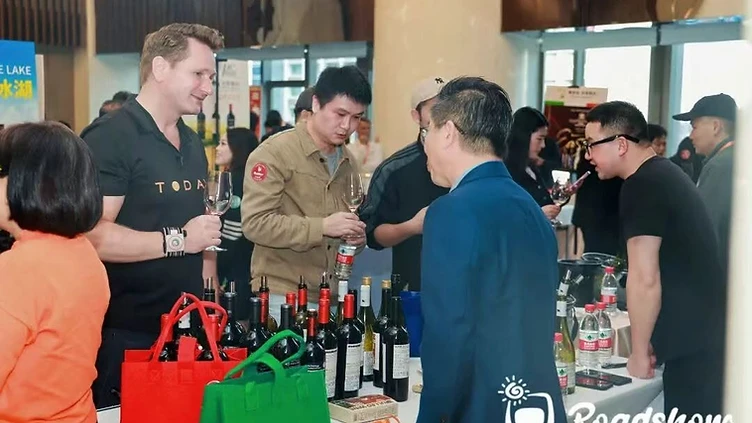
We will be in Hanoi for the Interwine Roadshow and would welcome 20 minutes to present 4 curated samples that complement your existing catalog.

Are you available for a brief meeting at your office or at our tasting table during the roadshow on [Target Date]?

Kind regards,

[Your Name]
[Export Director Title], [Winery Name]
[WhatsApp / WeChat / Direct Phone]
Step 5: Calculating Your Export Economics & ROI
Evaluating the viability of an in-person roadshow requires measuring total commercial costs against realistic gross contribution margins. Roadshow participation must not be judged merely on attendance, but on bottom-line contribution over an initial 12-month re-order cycle.
Hypothetical ROI Model for an Asian Roadshow Campaign
(All financial calculations below are hypothetical examples designed for strategic budgeting and planning purposes.)
- Hypothetical Producer Context: A boutique producer participating in an Asian promotional tour, targeting initial trial orders with a licensed Hanoi distributor.
- Assumed Parameters:
- Total Campaign Cost: $5,500 USD (Includes travel, lodging, roadshow registration, sample freight, and local logistics).
- Targeted Initial Order: 1 consolidated pallet (600 bottles / 50 cases of 12).
- Average Winery Export Price (FOB): $15.00 USD per bottle.
- Winery Unit Cost of Goods Sold (COGS, including production and dry goods): $7.00 USD per bottle.
- Gross Contribution Margin per bottle: $8.00 USD ($15.00 FOB - $7.00 COGS), or 53.3%.
- Break-Even Analysis:
- Total Contribution needed to offset Campaign Cost: $5,500 / $8.00 = 688 bottles.
- Commercial Target: A 2-pallet initial order (1,200 bottles) delivers $9,600 USD in gross contribution margin.
- Net First-Year ROI:
($9,600 Gross Contribution - $5,500 Total Costs) / $5,500 Total Costs = 74.5% Net Return.
By establishing pre-qualified buyer meetings prior to departure, wine producers dramatically reduce customer acquisition uncertainty and protect their initial marketing investment.
Key Dates for Your Asia Export Calendar
When scheduling roadshows, wine brand ambassadors must align their regional logistics across Interwine’s international event calendar:
- Guangzhou 2026: 16–18 November 2026.
- Hanoi 2026 Roadshow: 20 November 2026.
- Spring Guangzhou 2027: 7–9 May 2027 at China Import and Export Fair Complex / Pazhou, Guangzhou.
- Asia Roadshow 2027: Hanoi 11 May, Kuala Lumpur 13 May, Singapore 15 May, Bali 17 May.
- Vietnam 2027: 6–8 July 2027 at SECC, Ho Chi Minh City.
- Autumn Guangzhou 2027: 31 October–2 November 2027 at China Import and Export Fair Complex / Pazhou, Guangzhou.
Synchronizing your pre-show outreach with these milestone dates allows export teams to build targeted sales pipelines across multiple Southeast Asian cities on a single logistics itinerary.
Conclusion: Secure Your Meetings Early
Finding wine importers in Vietnam before landing in Hanoi is not a matter of luck—it is a systematic process of legal verification, channel qualification, and persistent B2B scheduling. Importers in Hanoi prioritize reliable suppliers who understand Vietnamese import licensing, price realistically, and present well-organized commercial proposals.
Wineries planning their regional expansion can accelerate their buyer pipeline through targeted trade matchmaking. Explore professional sourcing resources and schedule B2B meetings with verified regional beverage buyers by registering your portfolio through Business Matching.
Sources
- IMARC Group – Vietnam Wine Market Size, Share, Growth, Forecast 2026–2034
- Agriculture and Agri-Food Canada – Sector Trend Analysis: Wine, beer, and spirits in Vietnam (2025)
- InCorp Vietnam – The Market of Wine in Vietnam: Trends, Import Regulations, and Consumer Insights (2025)
- U.S. Alcohol and Tobacco Tax and Trade Bureau (TTB) – International Affairs Resources: Vietnam Import Requirements (2024)
Key Takeaways
- —Hanoi's wine trade centers heavily on institutional dining, corporate gift-giving, and high-end gastronomy, distinguishing it from southern commercial volume channels.
- —Importers in Vietnam must hold a valid liquor distribution license issued by the Ministry of Industry and Trade (MOIT) to clear foreign wine directly.
- —Mandatory labeling under Decree No. 111/2021/ND-CP and physical customs stamps are legally required before imported wine enters commercial retail channels.
- —Proactive outreach 8 to 12 weeks before a roadshow transforms passive event attendance into pre-booked commercial buyer meetings.
- —Hypothetical campaign ROI should be budgeted using unit contribution margin against total roadshow expenses to confirm commercial feasibility.
Frequently Asked Questions
Can any trading company in Vietnam import wine directly?
No. Under Vietnamese alcohol regulations, an enterprise must hold a specific liquor distribution and import license granted by the Ministry of Industry and Trade (MOIT). Additionally, the importer must possess an official authorization or Power of Attorney from the producer.
What mandatory information is required on wine labels in Vietnam?
In accordance with Decree No. 111/2021/ND-CP and Decree No. 43/2017/ND-CP, imported wine must carry a Vietnamese auxiliary label displaying the brand name, importer/distributor details, country of origin, net volume, alcohol percentage, and specific storage instructions.
How far in advance should wineries reach out to Vietnamese buyers before the roadshow?
Export managers should begin screening candidates and initiating email or messaging outreach 8 to 12 weeks prior to the event date to secure dedicated tasting times before buyers' schedules fill up.
How do consumer wine preferences in Hanoi differ from Ho Chi Minh City?
Hanoi features a strong corporate gifting and administrative dining market that leans heavily toward recognized Old World classics (notably France and Italy) and high-end presentation, whereas Ho Chi Minh City exhibits broader retail experimentation and youthful on-premise dining trends.