
How Import Costs Affect Wine Pricing in China
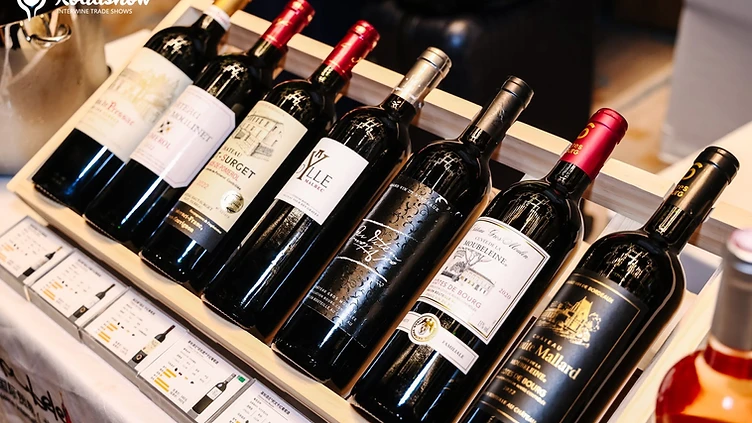
Discover how import costs affect wine pricing in China, from the compound 43% tax formula and CIF logistics to tier-city distributor margins and retail markups.
Import costs dictate shelf pricing in mainland China through a compounding multi-tiered cascade: customs tariffs, excise taxes, and value-added tax (VAT) interact with international logistics, cold-chain compliance, and multi-layered domestic margins to elevate the final retail price to 2.5 to 4 times the original Cost, Insurance, and Freight (CIF) value. For international wineries entering or expanding in China, mastering this pricing structure is not merely an accounting exercise—it determines whether a portfolio can achieve sustainable wholesale velocity or languish on distributor price sheets.
Understanding how import costs affect wine pricing in China requires deconstructing the compounding tax formula, accounting for China Inspection and Quarantine (CIQ) and General Administration of Customs of China (GACC) regulatory overhead, and mapping out the gross margin expectations across first-, second-, and third-tier distribution networks.
The Compounding Tax Matrix: Calculating Landed Costs
Mainland China does not assess import taxes on wine sequentially from the base invoice; rather, it applies a composite assessable price formula established by China's State Administration of Taxation and customs regulations (Dezan Shira & Associates / China Briefing).
Under Most Favored Nation (MFN) rates applicable to regions such as the European Union and the United States, bottled still grape wine (HS Code 2204.21) faces three fiscal levies as detailed by Vino Joy News (2024):
- Customs Import Duty: 14% on the CIF value.
- Consumption (Excise) Tax: 10% applied against the composite assessable value.
- Value-Added Tax (VAT): 13% applied against the composite assessable value.
Because the Consumption Tax is built into its own tax base, the composite formula is calculated as:
$$\text{Composite Assessable Price} = \frac{\text{CIF} + \text{Import Duty}}{1 - \text{Consumption Tax Rate}} = \frac{\text{CIF} \times 1.14}{1 - 0.10} = \text{CIF} \times 1.2667$$
When applying the 10% Consumption Tax and 13% VAT on this assessable figure, the effective total tax burden reaches approximately 43% of the CIF value. A winery shipping a premium cuvée at an invoice CIF rate of €10 per bottle immediately faces €4.30 in tax liabilities at port clearance before handling, storage, or transport fees.
The Bilateral Free Trade Advantage
Countries operating under active Free Trade Agreements (FTAs) with China—such as Chile, New Zealand, Georgia, and Australia—benefit from a 0% baseline customs duty, as noted by Vino Joy News (2024). For these producers, the total tax burden drops to approximately 24.3% (consisting solely of the 10% consumption tax and 13% VAT calculated on the revised composite base). This 18.7-percentage-point fiscal advantage enables FTA producers to deliver aggressive wholesale pricing or allocate greater margin room to channel partners.
Freight, Compliance, and Clearance Overheads
Beyond statutory duties, direct import costs encompass maritime logistics, port administration, and compliance protocols enforced by Chinese authorities. Neglecting these variable operational fees leads directly to distributor margin erosion.
- Reefer Logistics and Seasonal Freight: Shipping wine into China requires temperature-controlled reefer containers to protect wine stability across equatorial routes and mitigate northern China’s winter freezes or southern summers. Reefer surcharges add roughly €0.25 to €0.60 per bottle depending on ocean lane volatility.
- GACC Decree 248 Registration & Labelling: In accordance with GACC regulations analyzed by the EU SME Centre, foreign wine production establishments must hold an active 18-digit registration code via the CIFER platform. Chinese back-labels must strictly conform to national standard GB 7718 and GB 2758 (covering mandatory declarations of net content, ingredients, sulfur dioxide allergens, and origin). Reworking non-compliant labels at bonded warehouses incurs customs bonded-labelling fees ranging from RMB 1.50 to RMB 3.50 per bottle.
- Port Clearance and Testing: Upon docking at major maritime gateways like Shanghai, Guangzhou, Shenzhen, or Ningbo, customs clearance fees, pallet unloading, and CIQ sampling protocols generate fixed port overheads of RMB 3,000 to RMB 6,000 per 20ft container.
To access practical evaluations of port dynamics and category trends, producers frequently consult Market Insights before locking in container allocations.
From Port to Shelf: The Distribution Markup Structure
Once cleared, imported wine traverses a structured distribution hierarchy before reaching consumer touchpoints. According to trade benchmarks outlined in the EU SME Centre China Wine Report, the final consumer price in China regularly sits between 2.5 and 4 times the CIF cost.
| Channel Step | Added Costs & Margin Objectives | Cumulative Multiplier (Base CIF = 1.0) | | :--- | :--- | :--- | | Landed Port Price | CIF + 43% taxes (MFN) + port handling & labeling | 1.45x – 1.55x | | National First-Tier Importer | Storage, domestic haulage, 25%–35% gross profit margin | 1.85x – 2.10x | | Regional / City Wholesaler | In-market storage, trade marketing, 20%–30% gross profit margin | 2.30x – 2.75x | | On-Premise (HoReCa) / Off-Premise Retail | Venue listing fees, retail markups, service overhead (35%–60%) | 3.20x – 4.00x+ |
Tier-City Realities
Operating costs vary significantly across Chinese administrative tiers. In Tier-1 hubs (Shanghai, Beijing, Shenzhen, Guangzhou), prime restaurant venues and premium boutique wine shops incur extreme commercial real estate rents, driving on-premise markups to 300% above wholesale. Conversely, emerging Tier-2 and Tier-3 urban centres (such as Chengdu, Wuhan, Hangzhou, or Changsha) present lower real estate overheads but require additional secondary logistics channels, offsetting retail margin variances.
Structuring Profitable Export Strategies for International Wineries
Given this multiplier effect, international brand owners cannot simply convert domestic ex-cellar prices into RMB. Establishing commercial viability requires intentional pricing and channel strategies:
- Establish a Transparent Landed-Cost Model: Standardize an open-book pricing sheet detailing Ex-Works, FOB, CIF, and anticipated landed costs. Providing Chinese buyers with clear landed margin simulations prevents pricing disputes during contract negotiation.
- Manage Exclusivity vs. Parallel Fragmentation: As highlighted by the EU SME Centre, working with an exclusive master importer protects price discipline across provinces. Distributing to fragmented regional buyers without territorial boundaries often ignites digital price-undercutting across e-commerce platforms like Taobao or JD.com, destroying off-premise and on-premise margins.
- Tailor Packaging for Efficient Handling: Reducing bottle weight trims ocean freight expenses per case. Ensuring dual-language label designs reduce back-label re-stickering costs at customs ports of entry.
- Audit Cross-Border E-Commerce (CBEC) Routes: Under current CBEC pilot policies outlined by China Briefing, qualified online consumer purchases enjoy tariff-free entry alongside a 30% reduction on import VAT and Consumption Tax, offering a focused direct-to-consumer testing mechanism.
Partnering with Qualified Importers via Interwine
To bridge the gap between landed calculations and real-world sales volume, wineries require direct access to established, licensed importers who understand local price elasticity and possess established wholesale accounts.
Producers seeking vetted commercial partners can leverage dedicated Business Matching services to connect with verified Chinese beverage distributors. For wineries ready to showcase their estates directly to thousands of regional buyers, commercial teams can Become an Exhibitor to secure dedicated exhibition space across Interwine's trade events. Wine estates evaluating market entry models can also review Interwine's editorial features in the News and Magazine section for timely market intelligence.
Sources
- China Briefing / Dezan Shira & Associates: Customs Duties and Import-Export Taxes in China
URL: https://www.china-briefing.com/doing-business-guide/china/taxation-and-accounting/customs-duties-and-import-export-taxes-in-china - Vino Joy News (2024): How Much Are Wine Taxes in Asia? A Country-by-Country Breakdown (Author: Olivia Wang)
URL: https://vino-joy.com/2024/10/11/how-much-are-wine-taxes-in-asia-a-country-by-country-breakdown/ - EU SME Centre: Report: China's Wine Markets (EU SME Centre & Greek MFA Trade Publication)
URL: https://agora.mfa.gr/infofiles/2023-Report-Chinas-Wine-Markets-EU-SME-Centre%20cn.pdf - US Alcohol and Tobacco Tax and Trade Bureau (TTB, 2025): People's Republic of China (PRC) Import and Export Guidance
URL: https://www.ttb.gov/import-export/itd/people-s-republic-of-china
Key Takeaways
- —Bottled imported wine from MFN countries (e.g., EU, USA) is subject to an effective cumulative tax rate of approximately 43% on CIF, derived from a 14% customs tariff, 10% consumption tax, and 13% VAT calculated on a composite assessable price.
- —Bilateral Free Trade Agreement (FTA) partners, such as Chile, New Zealand, Georgia, and Australia, enter duty-free (0% tariff), lowering their effective tax burden to approximately 24.3%.
- —Final shelf or restaurant wine prices in China typically reach 2.5 to 4 times the initial CIF value once port handling, labeling, logistics, and multi-tier margins are accounted for.
- —GACC Decree 248 compliance, CIFER facility registration, and mandatory Chinese back-labeling under national standard GB 7718 represent non-negotiable overheads that must be factored into landed cost equations.
- —Preventing cross-channel price cannibalization between traditional regional wholesalers and online retail platforms is critical for preserving importer and distributor gross margins.
Frequently Asked Questions
What is the exact tax formula applied to imported bottled wine in China?
Imported bottled wine from countries without an FTA is taxed using a composite assessable price formula: Composite Assessable Price = (CIF + Import Tariff) / (1 - Consumption Tax Rate). Standard rates are 14% import tariff, 10% consumption tax, and 13% VAT. Because the taxes compound, the effective total tax rate equals approximately 43% of the CIF price.
Which countries enjoy preferential import duty rates for wine in China?
Countries with bilateral Free Trade Agreements with China—including Australia, Chile, New Zealand, and Georgia—enjoy a 0% customs import tariff. They remain subject to the standard 10% consumption tax and 13% VAT, resulting in an effective tax burden of roughly 24.3%.
Why is the retail price in China often 3 to 4 times the CIF price?
After paying roughly 43% in customs duties and taxes (for MFN origin), the wine incurs cold-chain shipping, port handling, bonded warehousing, and labeling compliance fees. National importers typically require a 25% to 35% margin, regional wholesalers add 20% to 30%, and on-premise venues or retailers apply 35% to 60% markups to cover high operational and real estate overheads.
What regulatory hurdles directly impact wine import overhead costs?
Foreign producers must be registered under GACC Decree 248 on the CIFER platform to receive an 18-digit exporter code. Shipments must also feature compliant Chinese back-labels that align with national standards GB 7718 and GB 2758. Rectifying incorrect labels inside bonded customs zones adds substantial relabeling and storage fees.
How can international wineries maintain pricing consistency across China?
Wineries should establish a structured landed pricing model with clear MSRP benchmarks, partner with reputable master distributors or verified regional wholesalers through structured channels like Interwine Business Matching, and set strict territorial policies to prevent e-commerce discounters from undermining offline trade channels.