Importer vs Distributor in China

Demystify the critical commercial differences between wine importers and distributors in China. Discover their distinct regulatory roles, pricing margins, regional coverage models, and how to structure your brand's route-to-market strategy.
For foreign wineries entering mainland China, conflating an importer with a distributor is one of the most expensive commercial mistakes an export team can make. While Western routes-to-market often consolidate import clearance, warehousing, and commercial distribution under large national wholesalers, the wine ecosystem in mainland China operates under distinctly segregated operational, legal, and regional tiers.
At its simplest: an importer manages the border, compliance, and legal title of foreign goods, whereas a distributor penetrates the local territory, driving depletions across sub-dealers, on-trade venues, and retail networks. Confusing these functions leads wineries to expect retail listings from an import agent who has no local sales team, or to sign exclusive distribution agreements with domestic wholesalers who lack an alcohol import license.
Navigating this distinction is fundamental to structuring contracts, allocating margins, safeguarding brand equity, and building sustainable distribution across China's diverse commercial regions.
Core Definitions: Legal Capabilities and Commercial Roles
To build an effective commercial route, winery export directors must examine the specific legal responsibilities and commercial remits that differentiate importers from distributors.
What an Importer Does in China
An importer of record in mainland China is a legally registered Chinese business entity possessing domestic commercial registration, foreign trade rights, and an active alcohol import/distribution license.
Under General Administration of Customs of China (GACC) regulations, foreign wine producers must complete manufacturing registration on the official GACC CIFER platform to receive an 18-digit facility code before shipments arrive. The Chinese importer serves as the domestic consignee, taking legal possession of the cargo at customs clearance.
Key responsibilities of the importer include:
- Customs & Regulatory Clearance: Processing customs declarations, filing import inspection forms, handling tax assessments (customs tariff, value-added tax, and consumption tax), and securing official sanitary certificates from customs.
- Labeling Compliance: Verifying that back labels comply with national food safety standards (such as GB 15037 for wine and GB 7718 for pre-packaged food labeling), ensuring mandatory Chinese text displays net volume, alcohol percentage, origin, and the CIFER facility registration number.
- Fiscal & Forex Management: Executing foreign currency transfers (remitting EUR, USD, or AUD outward to the winery) and issuing official domestic VAT invoices (fapiao) upon selling the goods domestically.
- Bonded & Primary Warehousing: Maintaining temperature-controlled storage at coastal ports or free trade zones (FTZs) before release into internal commerce.
Crucially, many pure importers function strictly as logistical and compliance conduits. They do not operate active sales teams in provincial cities, nor do they guarantee brand-building initiatives.
What a Distributor Does in China
A distributor operates downstream from the port of entry. Once products clear customs, distributors purchase duty-paid stock from the importer and manage domestic logistics, relationship-driven sales (guanxi), and channel placement.
China's vast geographic scale means national distribution is rare; most distributors specialize by geography (e.g., Tier-1 metropolitan hubs like Shanghai, Beijing, Guangzhou, and Shenzhen vs. Tier-2 or Tier-3 regional cities such as Chengdu, Wuhan, or Hangzhou) or by sales channel.
Key responsibilities of the distributor include:
- Channel Depletion: Pitching bottles into high-end hotels, restaurants, and bars (HoReCa), corporate gifting accounts, traditional retail, independent wine boutiques, or regional supermarkets.
- Sub-Distribution Networks: Managing local sub-wholesalers and tier-two dealers across prefecture-level cities.
- Point-of-Sale Marketing: Organizing winemaker dinners, staff training, in-store activations, and direct sales through private client networks and regional enterprise procurement.
- Localized Cash Flow: Extending payment terms and commercial credit lines to restaurants and retailers, carrying the local accounts-receivable risk.
Comparison Matrix: Importer vs. Distributor in China
| Operational Dimension | Wine Importer (Port / Consignee) | Wine Distributor (Downstream Channel) | | :--- | :--- | :--- | | Primary Function | Regulatory clearance, trade compliance, customs liaison | Sales execution, channel penetration, brand depletion | | Licensing Requirements | Import/Export customs code, GACC consignee filing, food business license | Domestic food/alcohol business license, local commercial permits | | Geographic Scope | Port-centric (e.g., Shanghai, Shenzhen, Ningbo, Tianjin) | Territory-specific (Provincial, municipal, or sub-regional) | | Commercial Margin | 10% – 20% (logistical, compliance, and financing markup) | 25% – 45%+ (channel margin, credit financing, sales overhead) | | Inventory Risk | Holds port/bonded stock or transfers immediately to buyers | Holds domestic duty-paid inventory; exposed to market demand | | Brand Stewardship | Passive compliance management (unless integrated) | Active execution: tastings, menu listings, staff education | | Customer Base | Tier-1 wholesalers, regional distributors, large corporate accounts | On-trade venues, wine bars, retail stores, corporate clients |
The Three Route-to-Market Models in China
International wineries rarely follow a single, rigid path. Depending on commercial maturity, budget, and volume targets, brands generally select one of three operational frameworks.
Model 1: Integrated Importer-Distributor
Winery  --->  Integrated Player (Clears & Distributes Nationally)  --->  Direct Accounts

Model 2: Tiered Route-to-Market
Winery  --->  Primary Importer  --->  Regional Distributors (East/South/West)  --->  Venues/Retail

Model 3: Winery-Owned Entity (WFOE)
Winery  --->  Wholly Foreign-Owned Enterprise  --->  Appointed Regional Distributors
1. The Integrated National Importer-Distributor
Some of China’s most prominent wine merchants combine both licenses. They handle customs clearance directly and deploy internal sales teams across major national economic zones.
- Advantages: Single point of contact, consolidated shipments, cohesive national pricing policy, and direct marketing coordination.
- Disadvantages: High competition within sprawling multi-brand portfolios; smaller boutique wineries risk being neglected if larger institutional brands take priority.
2. The Tiered Model: Clearing Importer + Regional Distributors
Under this framework, a brand partners with an importing trading house that manages logistics, import clearance, and warehousing at a major port. The importer or winery then signs regional commercial contracts with independent distributors across East China (Shanghai/Jiangsu/Zhejiang), South China (Guangdong/Shenzhen), North China (Beijing/Tianjin), and West China (Sichuan/Chongqing).
- Advantages: Granular market penetration. Regional distributors have deeper on-the-ground ties with municipal restaurants and local private buyers than national firms.
- Disadvantages: Complex supply chain coordination; requires rigorous oversight by the winery export manager to prevent parallel grey imports and cross-territory price cannibalization.
3. The Direct Exporter Model via Wholly Foreign-Owned Enterprise (WFOE)
Large wine estates and corporate groups often establish their own Wholly Foreign-Owned Enterprise (WFOE) inside mainland China. The winery’s subsidiary acts as the official importer, taking title to the wine and holding inventory in bonded or domestic warehouses, and sells directly to local distributors in Chinese Yuan (RMB).
- Advantages: Total pricing transparency, complete intellectual property control, and unrestricted ability to switch regional distributors without re-registering import paperwork.
- Disadvantages: Substantial capital expenditure, ongoing corporate overhead, and domestic tax filing obligations.
Structural Risks and Commercial Safeguards
Selecting the wrong partner or signing misaligned contracts can stall market momentum for years. Export directors should address three structural vulnerabilities during commercial negotiations.
1. Avoiding the "Paper Importer" Trap
A frequent hazard for foreign wineries is signing an exclusive contract with an entity that positions itself as an aggressive distributor, only to discover it is merely a paper importer. This entity registers your labels, clears a minimal test pallet, and makes no investments in downstream sales. If you grant nationwide exclusivity to a partner lacking field personnel, your distribution will stall while your brand remains legally bound to that partner.
2. Trademark and Label IP Protection
Chinese trademark law operates on a strict "first-to-file" system. Before presenting commercial catalogs to potential importers or distributors, wineries must register both their Latin-character brand name and their tailored Chinese phonetic or semantic equivalent with the China National Intellectual Property Administration (CNIPA). Never allow an importer or commercial agent to register your Chinese trademark in their corporate name; the producer should always own the underlying brand equity.
3. Clear Demarcation of Minimum Depletions and Territory Clauses
Agreements must separate import rights from channel exclusivity. Limit exclusive distribution covenants to defined municipal or provincial borders (e.g., exclusively for on-trade sales within Guangdong province) and attach strict quarterly depletion performance benchmarks. Contracts should stipulate that failing to meet rolling order thresholds revokes exclusivity, allowing the winery to appoint additional channel distributors.
Evaluating Potential Partners: A Due Diligence Checklist
Before executing commercial supply contracts, run candidate firms through a practical vetting process:
- Licensing Authenticity: Request their Unified Social Credit Code. Verify whether their official business scope explicitly permits food and alcohol wholesale and foreign trade registration.
- Physical Storage Infrastructure: Inspect warehouse facilities. Do they maintain genuine constant-temperature (14°C–18°C) storage, or do containers sit in ambient heat during coastal summer months?
- Current Portfolio Composition: Review the competing labels they represent. Do complementary origins balance your profile, or will your estate compete directly against established estate partners?
- Sales Team Footprint: Differentiate dedicated corporate sales staff from freelance commission agents. In which specific cities and channels (on-premise dining vs. private corporate banquets) do their accounts produce consistent reorders?
- Financial Reliability: Scrutinize payment capabilities and foreign currency liquidity to guarantee reliable international bank remittances under standard international trade terms (e.g., LC, CAD, or T/T).
Meeting Qualified Partners Face-to-Face
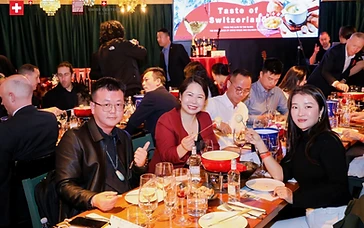
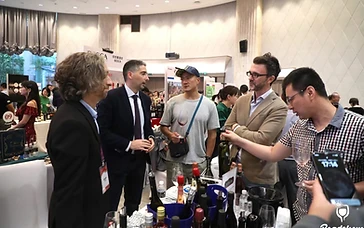
While market intelligence, customs trade databases, and digital directories offer valuable initial leads, long-term commercial relationships in China are established through face-to-face negotiations. Personal interaction (guanxi) remains the primary medium through which local distributors evaluate a producer's commitment, credibility, and brand value.
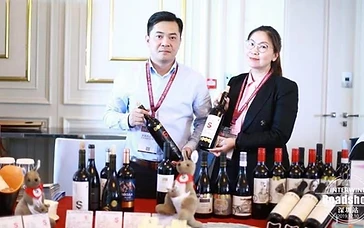
Participating directly in industry-focused professional trade exhibitions provides wine exporters with concentrated access to verified commercial buyers. By engaging with vetted stakeholders at major business events, wineries can meet both coastal customs clearance specialists and regional provincial distributors in a single venue.
Wineries preparing their Asian expansion can become an exhibitor at upcoming trade showcases to introduce their portfolio directly to active domestic buyers. Exporters exploring localized strategies can review professional market insights and utilize dedicated business matching services to schedule structured B2B meetings with vetted importers and channel distributors before shipping export stock.
Sources
- General Administration of Customs of the People's Republic of China (GACC): Food Safety and CIFER Facility Registration Regulations (2021/2026),
http://customs.gov.cn - EU SME Centre: China's Wine Market Guidelines and Import Clearance Procedures (2023/2026),
https://www.eusmecentre.org.cn - Alcohol and Tobacco Tax and Trade Bureau (TTB): Exporting Wine to China and Certificate Requirements (2026),
https://www.ttb.gov/import-export/itd/wine-export-china - Observatory of Economic Complexity (OEC): China Bilateral Wine Import Trade Flows (2024/2026),
https://oec.world/en/profile/bilateral-product/wine/reporter/chn
Key Takeaways
- —Wine importers in China manage customs clearance, GACC CIFER compliance, Chinese back labeling, and foreign currency transfers.
- —Distributors operate downstream, purchasing cleared stock to sell into regional on-trade, corporate gifting, and sub-wholesaler channels.
- —China's market rarely allows for true nationwide distribution by a single middleman; regional and channel segmentation is standard practice.
- —Wineries must register their Latin and Chinese-character trademarks independently prior to signing trade agreements to prevent IP theft.
- —Clear separation between regulatory import rights and provincial sales exclusivity protects producers from commercial stagnation.
Frequently Asked Questions
Can a single company act as both an importer and a distributor in China?
Yes. Integrated wine merchants hold both import-export qualifications and regional distribution licenses. However, many specialized companies focus purely on customs clearance and logistics, while others act exclusively as local wholesalers.
What mandatory licenses are required to import wine into China?
A Chinese importer must possess a domestic business license with an authorized food/beverage scope, a Customs Declaration Registration Certificate, a foreign trade operator filing, and an active GACC consignee registration.
What profit margins do Chinese wine importers and distributors expect?
Pure logistics importers typically apply a 10% to 20% margin to cover clearance, financing, and storage. Downstream distributors typically require margins between 25% and 45%+ to support channel listings, marketing, sales teams, and credit terms.
Should a winery give nationwide exclusivity to a single partner in China?
Generally, no. Mainland China is equivalent in size and commercial diversity to the entire European continent. Granting national exclusivity is only advisable if the partner operates verified, active sales branches across multiple economic zones.
What is the CIFER registration requirement for foreign wineries?
Administered by the General Administration of Customs of China (GACC), the CIFER system requires all foreign alcoholic beverage manufacturing facilities to register and obtain an 18-digit facility code before shipping goods to mainland China.