French Wineries Entering China: Prepare Your Portfolio for Importer Meetings
A commercial roadmap for French wineries entering China. Learn how to curate your portfolio, master CIFER/GB standards, protect IP, and negotiate margin architectures with Chinese wine importers.
To succeed in commercial negotiations with Chinese wine importers, French wineries must move past broad regional catalogues. In China's nuanced post-pandemic market, volume pitching of standard Bordeaux Supérieur or generic Languedoc red fails because distributors operate on tighter balance sheets, channel specialization, and stringent risk assessments. Securing an import partner demands a tailored, retail-ready portfolio, proof of China customs readiness under General Administration of Customs of China (GACC) Decree 248, and clear commercial margin architectures.
Meeting an importer in Tier 1 or Tier 2 hubs like Guangzhou, Chengdu, or Shanghai is not an introduction to French terroir; it is a margin and inventory velocity discussion. French estates, negotiants, and cooperatives must structure their meeting strategy around channel-specific SKUs, complete regulatory documentation, and commercial risk mitigation.
Understanding the Post-2024 Chinese Importer Mindset
Chinese wine imports have seen market consolidation. Importers face selective consumer spending, competition from emerging regional white wines, and domestic wine quality improvements in Ningxia and Xinjiang. According to the EU SME Centre's comprehensive report on China's Wine Markets, imported wine through general trade remains well-regulated but requires strict compliance with registration and national food safety standards.
Chinese importers evaluate potential French wine partners across four operational pillars:
- Portfolio Focus vs. Redundancy: Importers reject 20-bottle ranges. They seek an agile three-tier architecture: an entry-level volume driver, a mid-tier margin generator (often AOP/AOC level), and a flagship "brand-builder" vintage.
- Customs & CIFER Compliance: Importers do not act as regulatory guinea pigs. If an estate lacks GACC facility registration via China's Single Window platform, deals stall.
- Price Protection & Channel Exclusivity: Importers demand strict pricing discipline to prevent their SKU from being undercut on domestic e-commerce channels such as Taobao, JD.com, or Douyin.
- Turnkey Digital Support: Marketing collateral must be localized. Importers expect WeChat-compatible brand assets, Chinese-language technical sheets, and clear bottle imagery.
To align your brand with buyer networks across regional commercial hubs, evaluate the broader landscape in our Asia Wine Market overview.
Curating the Meeting Portfolio: The "Three-Tier, Six-Bottle" Rule
When packing sample cases for business meetings, avoid bringing multiple vintages of the same appellation. Present a focused six-bottle collection divided into distinct commercial tiers:
                                [Flagship Tier: 1 SKU]
                        Top Single-Vineyard / Prestige Cuvée
                       Gifting, Banqueting & Direct VIP Sales
                                         ▲
                                         │
                           [Commercial Core: 2-3 SKUs]
                         AOP Village / Premium Regional
                        Independent On-Premise & Boutique B2B
                                         ▲
                                         │
                           [Volume Anchor: 1-2 SKUs]
                          Approachable IGP / Varietal
                         Banquet Volume & House Pouring
1. The Volume Anchor (1–2 SKUs)
- Target Price: €2.50 – €4.20 Ex-Cellar (EXW).
- Purpose: Provides the distributor with a low-risk product for regional banqueting, corporate gifting, or entry-level on-premise distribution.
- Profile: Fruit-forward, smooth tannins (e.g., Merlot/Cabernet blends, accessible Syrah, or crisp IGP Côtes de Gascogne whites). Acidity should be balanced, as harsh astringency remains a primary friction point for casual Chinese wine consumers.
2. The Commercial Core (2–3 SKUs)
- Target Price: €5.50 – €11.00 Ex-Cellar (EXW).
- Purpose: Delivers the importer's gross margin. Suitable for independent dining, corporate accounts, and regional specialized retail.
- Profile: Classic regional expressions—Cru Bourgeois Médoc, Rhône Villages, Provence Rosé, or Chablis/Mâconnais whites. Rising consumer demand for dry whites and sparkling options makes crisp, food-friendly European white wines attractive additions.
3. The Flagship Brand-Builder (1 SKU)
- Target Price: €15.00+ Ex-Cellar (EXW).
- Purpose: Establishes credibility, prestige, and press visibility. It proves to the buyer that your estate commands winemaking respect.
- Profile: Single-vineyard selections, numbered bottles, or heavy bottle weights (which still command a perceived luxury premium in gift and corporate banqueting sectors).
Regulatory Pre-requisites: What Importers Inspect Before Tasting
Before a Chinese importer discusses tasting notes, their procurement officer will verify documentation. Failing to meet regulatory prerequisites delays sample clearance and aborts potential contracts.
GACC Decree 248 & 249 (CIFER Facility Registration)
Since January 1, 2022, all foreign overseas food and beverage manufacturers—including wine cellars and bottling facilities—must be registered with the General Administration of Customs of China via the China Import Food Enterprise Registration (CIFER) system under the Single Window portal. The European Union SME Centre emphasizes that failure to properly register facilities or reflect the registration code accurately on shipping documentation and outer packaging results in outright customs clearance rejections.
- Action Item: Ensure your winery registration code is active and matches the exact legal name, address, and facility details on your commercial invoice.
National Standards: GB 15037 and GB 2758
Imported wine cleared through Chinese general trade must comply with national food safety standards, notably GB 15037 (Wine Standard) and GB 2758 (Fermented Alcoholic Beverages):
- Sulfur Dioxide (SO2) Limits: Must not exceed standard thresholds (typically 250 mg/L total for dry wines, with lower tolerances enforced for specific product categories).
- Label Restrictions: Chinese authorities prohibit unverifiable health or qualitative claims. As noted by the EU SME Centre, foreign certifications such as European organic logos cannot be marketed as official "organic" claims on standard Chinese back-labels without direct certification from accredited Chinese administrative bodies.
Trademark Protection: The First-to-File Trap
China operates under a strict "first-to-file" trademark framework. Do not present your brand name or native French chateau identity to prospective distributors without preliminary registration with the China National Intellectual Property Administration (CNIPA). You must register:
- Your Latin/French brand name.
- Your formal Chinese phonetic/semantic transliteration (e.g., how the market will pronounce your estate in Mandarin).
- Your primary label graphical mark.
If a squatter secures your Chinese transliteration, resolving the dispute requires costly legal procedures or forces you to rebrand your portfolio inside China.
Importer Due Diligence & Portfolio Suitability Matrix
Not every importer serves the same sales channel. Presenting high-acid natural white wines to a traditional corporate banquet distributor in Guangdong wastes time. Target the right importer archetype:
| Importer Archetype | Primary Focus | Best French Portfolio Match | Key Commercial Friction Point | | :--- | :--- | :--- | :--- | | State-Owned / Corporate Conglomerate | Corporate banquets, government-adjacent hospitality, bulk gifting | Bordeaux AOP, high-tier Cognac, heavy-bottle reds with classic crests | Long payment terms (90–120 days), strict origin certification | | Tier-2 Regional Wholesaler | Local sub-distributors, wedding banquets, family retail chains | Entry-level IGP varietals (€2.50–€4.00 EXW), commercial Rhône | High price sensitivity; needs marketing support allowances | | Boutique On-Premise Importer | Bistro bars, high-end hotel groups, Western-style dining | Loire, Burgundy, Jura, Low-intervention/Biodynamic, Champagne | Low initial purchase volumes (pallet orders), fragmented logistics | | Cross-Border / Live-Stream Merchant | Fast-turnover e-commerce, Douyin/Kuaishou live-streaming | Story-driven labels, recognizable varietals, striking packaging | Margin destruction risk; demands massive promotional discounts |
Commercial Pricing & Margin Architecture (Hypothetical)
Chinese importers must budget for import duties, consumption tax, value-added tax (VAT), and domestic distribution freight. When an importer asks for an Ex-Cellar (EXW) or Freight-on-Board (FOB) price, they are modeling landed costs and distributor gross margins.
Below is a hypothetical commercial model for an entry-level French AOP red wine shipped via standard containerized freight to mainland China:
- Ex-Works (EXW) Cost: €3.00 per 750ml bottle
- International Ocean Freight & Insurance: €0.35 per bottle
- Cost, Insurance, and Freight (CIF China Port): €3.35
- Effective Composite Tax Multiplier: Approximately 43% to 48% (combining basic customs duty, 10% consumption tax, and 13% VAT for standard European most-favoured-nation wine imports): $$\text{Landed Duty-Paid (LDP) Cost} \approx €3.35 \times 1.45 = €4.86$$
- Domestic Handling, Clearance, Chinese Back-Label Affixation: €0.35 per bottle
- Total Importer Base Cost: €5.21 (approx. 40.00 RMB at prevailing exchange rates)
Margin and Channel Realities
To sustain a viable regional sales network, a Chinese importer requires a 35% to 45% gross margin, pricing the bottle to sub-distributors at 65–75 RMB (€8.40–€9.70). The secondary regional distributor adds another 30% margin, resulting in a dining venue or bottle-shop retail price of 110–135 RMB (€14.30–€17.50).
If your EXW price starts at €6.00 for an entry-level wine, your landed shelf price rapidly crosses 220 RMB, placing the wine into direct competition with established Cru Bourgeois or Grand Cru brands.
Step-by-Step Meeting Preparation Checklist
Before sitting down with an importer, verify these operational assets:
- [ ] Active CIFER / GACC Code: Printed and documented on company letterhead with corporate registration matching the GACC Single Window database.
- [ ] Dual-Language Technical Sheets: A4 PDF and printed laminates featuring technical specifications in Mandarin: blend percentages, soil composition, oak aging, alcohol by volume, and harvest yield.
- [ ] CNIPA Trademark Clearance: Evidence that both your Latin brand mark and Chinese brand name are either filed or registered.
- [ ] Transparent Pricing Matrix: A structured rate card displaying EXW (in Euros) and FOB (Marseille, Le Havre, or Bordeaux) for tiered volume commitments (e.g., 1 pallet, 5 pallets, 1 x 20ft container).
- [ ] Compliant Sample Packaging: Samples shipped to China for meetings must feature draft Chinese back-labels indicating mandatory metrics: product type, ingredients, alcohol content, bottler/distributor details, net volume, and shelf-life requirements (or statutory preservation notes).
- [ ] Digital Integration (WeChat ecosystem): A functioning WeChat account with shareable mini-decks or direct cloud download links. Importers will not use corporate FTP servers or non-functional overseas cloud services.
To see how global brands present their commercial assets at live trade gatherings, explore our current Exhibitor Directory.
Navigating the Importer Meeting: Tactical Best Practices
1. Lead with Supply Stability and Commercial Certainty
French producers often spend the first twenty minutes discussing limestone subsoils and family heritage. Instead, open with commercial clarity: current warehouse stock, export volume capacity, GACC status, and lead times from cellar to European port. Once the importer understands that you are a reliable supplier, move to the organoleptic profile.
2. The Packaging Test
Visual presentation directly impacts purchasing decisions in China. Importers scrutinize capsule quality, cardboard carton strength (five-ply double-wall corrugated cartons are mandatory to withstand local pallet freight), and label aesthetics. Clean paper labels prone to scratching or peeling in humid southern Chinese storage conditions require upgraded varnish or paper-stock treatments.
3. Exclusivity and Minimum Order Quantities (MOQs)
Expect early demands for regional exclusivity (e.g., exclusive distribution for Guangdong Province, East China, or nationwide rights). Never grant broad geographic exclusivity on a single initial container order. Counter with performance-based milestones:
- Year 1: Province-level exclusivity granted on the condition of taking two 20ft containers (approx. 28,000 bottles) across two distinct order cycles.
- If volume thresholds are missed within six months, exclusivity reverts to non-exclusive regional wholesaling.
Executing Your China Market Campaign
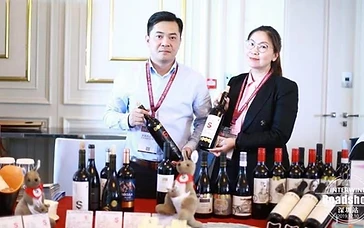
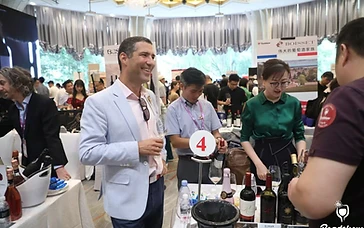
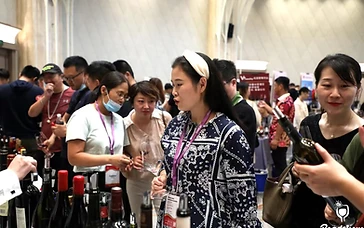
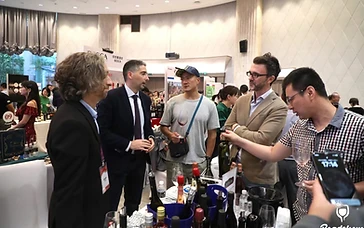
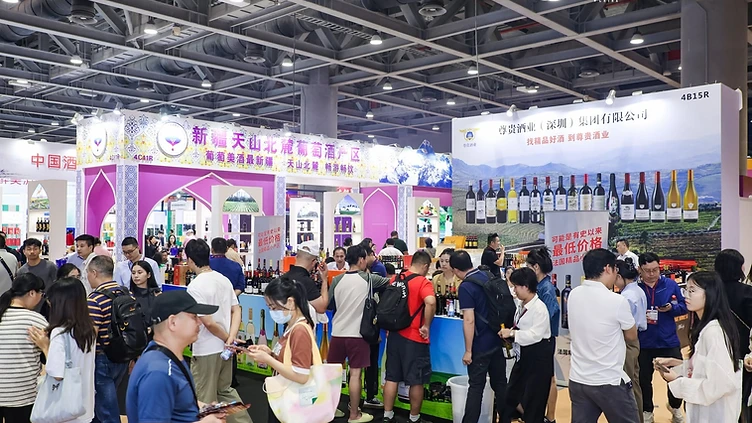
Field meetings at major Asian wine exhibitions provide immediate feedback on portfolio suitability. For producers targeting the southern China economic hub, preparing early for major events is vital. Producers can schedule their annual campaigns around primary trade gathering points:
- Guangzhou 2026: 16–18 November 2026.
- Hanoi 2026 Roadshow: 20 November 2026.
- Spring Guangzhou 2027: 7–9 May 2027 at China Import and Export Fair Complex / Pazhou, Guangzhou.
- Asia Roadshow 2027: Hanoi 11 May, Kuala Lumpur 13 May, Singapore 15 May, Bali 17 May.
- Vietnam 2027: 6–8 July 2027 at SECC, Ho Chi Minh City.
- Autumn Guangzhou 2027: 31 October–2 November 2027 at China Import and Export Fair Complex / Pazhou, Guangzhou.
Producers seeking qualified distributor introductions in southern China can initiate their exhibitor presence directly via our Become an Exhibitor portal.
Sources
- EU SME Centre: China's Wine Markets – Drivers, Technical Requirements and Opportunities for EU Producers (2023)
- General Administration of Customs of China (GACC): Decree 248 Facility Registration Rules
- EU SME Centre: Mandatory GACC Registration Guide for Food & Beverage Establishments
Key Takeaways
- —Streamline sample selections to a three-tier, six-bottle portfolio instead of presenting an entire estate catalog.
- —Verify CIFER / GACC Decree 248 overseas manufacturer registrations before engaging importers to prevent import rejections.
- —Register both French and Chinese phonetic trademarks with CNIPA prior to commercial exposure to mitigate trademark squatting.
- —Formulate Ex-Works (EXW) and Freight-on-Board (FOB) pricing around China's combined import duty, consumption tax, and VAT multipliers.
- —Tie regional exclusivity requests directly to binding minimum order volume (MOQ) milestones across specific delivery windows.
Frequently Asked Questions
Can French wineries use European organic logos on standard Chinese back-labels?
No. Under Chinese food safety regulations, foreign organic certifications and logos cannot be featured on general trade back-labels unless the winery has obtained formal organic certification directly from an accredited Chinese certification body. General guidance recommends removing or covering unauthorized organic claims to avoid customs rejection.
What is the difference between EXW and CIF pricing when pitching Chinese wine importers?
EXW (Ex-Works) covers only the cost of the wine at the cellar door, requiring the importer to handle all freight, insurance, and transit steps. CIF (Cost, Insurance, and Freight) includes shipping and transit insurance up to the destination port in China. Chinese importers calculate landed duty-paid costs based on the CIF price.
Why is a Chinese phonetic trademark registration necessary before presenting to buyers?
China enforces a first-to-file trademark system. If an exporter does not register both their European brand name and a clear Chinese transliteration with the China National Intellectual Property Administration (CNIPA), local entities can register it in bad faith, barring the producer from using the name in market.
How many wine samples should an estate bring to an initial importer meeting?
Bring a targeted selection of no more than four to six bottles structured into clear commercial tiers: one entry-level volume driver, two to three mid-tier margin generators, and one prestige flagship. Presenting broad catalogues overwhelms buyers and dilutes channel alignment.