Distribution Strategy in China for Armenian Wine Producers
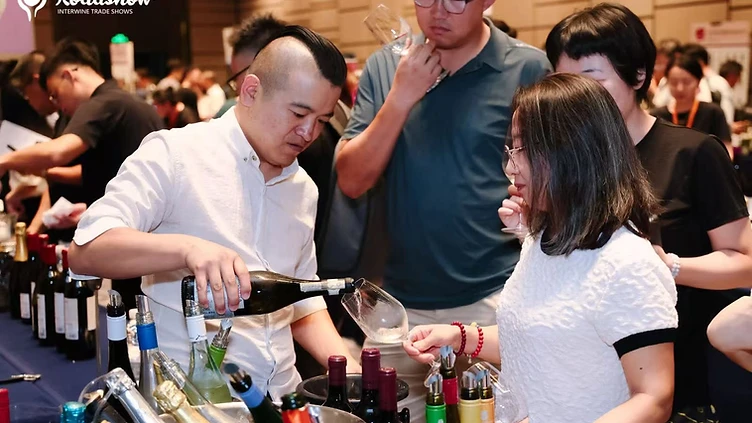
A commercial roadmap for Armenian wine producers and export bodies seeking distribution in China, covering regulatory compliance, partner selection, regional targeting, and trade fair execution.
Developing a profitable distribution strategy in China for Armenian wine producers requires moving beyond conventional commodity export thinking. While Armenia produces expressive wines rooted in deep historical tradition—exemplified by ancient varieties such as Areni Noir, Voskehat, and Sireni—the Chinese imported wine sector demands strict technical compliance, sharp regional targeting, and an intentional commercial network. Navigating China's dynamic alcoholic beverage landscape involves aligning production portfolios with the country's multi-tiered wholesale architecture, overcoming statutory hurdles under the General Administration of Customs of the People's Republic of China (GACC), and activating direct-to-trade channels.
Armenian vintners and export associations must structure their market-entry model deliberately: addressing import protocols first, qualifying downstream distributors by channel capability rather than geographic breadth, and leveraging dedicated industry platforms to anchor brand reputation among Tier 1, New Tier 1, and coastal wine buyers.
Market Opportunity and Positioning: The Armenian Narrative in China
China’s imported wine landscape has matured into a quality-oriented market where regional heritage, authenticity, and unique terroir attract sophisticated trade professionals and curious young urban consumers. According to the EU SME Centre's Market Report (2023), wine qualifies under customs classification as a manageable, low-risk import product under general trade, providing boutique exporting nations a clear path through standard customs clearance.
Furthermore, research on bilateral trade published in ResearchGate's Armenia-China Trade Analysis (2025) shows that alcoholic beverages—principally wine and brandy—remain a strategic pillar of Armenian exports to China. However, breaking into commercial volume requires distinct positioning against dominant legacy regions like Bordeaux, Rioja, or emerging Chinese domestic terroirs.
The Areni Noir and Volcanic Terroir Value Proposition
Armenian producers possess high-impact market narratives that resonate with educated sommeliers, fine dining venues, and boutique distributors in China:
- The Cradle of Winemaking: Leveraging archaeological legitimacy, such as the Areni-1 cave complex, directly establishes authenticity for high-end gifting and sommelier storytelling.
- Indigenous Cultivars: Indigenous grape varieties—primarily red Areni Noir and white Voskehat—offer wine lists an alternative to standard Cabernet Sauvignon and Merlot selections.
- Clay Amphora (Karas) Aging: Clay amphora fermentation and aging intersect perfectly with China’s growing appreciation for natural, low-intervention, and artisanal wines in metropolitan centers.
Regulatory Compliance and Customs Clearance
Before executing physical distribution, Armenian wineries must satisfy China’s dual regulatory baseline: administrative enterprise registration and technical packaging compliance.
Producer Registration (GACC CIFER)
       │
       ▼
National Standards Verification (GB 15037 & GB 2758)
       │
       ▼
Chinese Label Formulation & Trademark Filing
       │
       ▼
General Trade Clearance & Port Logistics
1. GACC Enterprise Registration (CIFER)
Under GACC Decree 248, all overseas food and beverage manufacturing establishments must secure an official registration code through China's Import Food Enterprise Registration (CIFER) system before dispatching consignments. The EU SME Centre (2023) confirms that wine is classified as an enterprise-registered category; once documentation regarding production licenses, site facilities, and raw ingredient sourcing is vetted, GACC issues an 18-digit registration code valid for five years. This code must be printed directly on both the primary container's Chinese back label and outer export cartons.
2. Adherence to National Standards (Guobiao)
Imported wine consignments are subject to testing at the port of entry. The baseline standards include GB 15037 (Wine specifications) and GB 2758 (Fermented alcoholic beverages). Consignments must conform to precise thresholds regarding:
- Alcoholic Strength: Minimum 7.0% ABV for still table wines.
- Total Sugar and Dry Extract: Clear categorization into dry (≤4.0 g/L), semi-dry, semi-sweet, or sweet.
- Preservatives & Heavy Metals: Limits for free and total sulfur dioxide ($SO_2$), sorbic acid, benzoic acid, and residual copper or iron.
3. Chinese Back Labeling and Trademark Protection
Every bottle imported through general trade must carry a compliant, physically affixed Chinese back label displaying the product name, ingredients, net volume, actual alcoholic strength, GACC enterprise number, production date, distributor name/address in China, and health warnings.
Crucially, Armenian exporters must register their brand trademarks—including transliterated and phonetic Chinese brand names—with China's National Intellectual Property Administration (CNIPA) under Nice Class 33 before sending commercial samples. China operates on a strict "first-to-file" system; failing to register local trademarks risks severe supply disruption.
Multi-Tiered Distribution Channels in China
Armenian wineries should avoid signing sweeping "national exclusivity" contracts with single entities unless the partner guarantees verified distribution branches across key economic clusters. The modern Chinese market demands a targeted multichannel distribution framework.
| Channel Type | Target Account Profile | Armenian Portfolio Fit | Commercial Margin Expectations | | :--- | :--- | :--- | :--- | | Regional Specialist Importers | Coastal Tier 1 & New Tier 1 wholesale operators | Single-vineyard Areni, premium Karas aged reds | Importer margin: 25%–35%; Wholesale margin: 15%–20% | | On-Premise / HoReCa Specialists | High-end hotels, wine bistros, Michelin-starred venues | Indigenous white varieties (Voskehat, Kangun), natural wines | Direct on-premise markup: 100%–200% over landed wholesale | | Direct-to-Consumer / E-Commerce | Tmall, JD.com, WeChat mini-programs, Douyin livestreaming | Mid-tier approachable blends, accessible fruit-forward styles | High direct customer acquisition cost (CAC); rapid cash-flow turnover | | Corporate & Gifting Networks | Private enterprise buyers, diplomatic and cultural clubs | Premium gift boxes, high-scoring reserves, vintage releases | Generous gross margins; highly seasonal (Q4 and Pre-Lunar New Year) |
Engaging Regional Importers vs. National Conglomerates
National state-owned or massive trading firms often prioritize established volume brands. For small-to-medium Armenian estates, the most productive distribution partners are regional fine-wine importers centered in the Greater Bay Area (Guangzhou, Shenzhen), the Yangtze River Delta (Shanghai, Hangzhou, Ningbo), and Chengdu-Chongqing. These specialized merchants maintain active networks among independent restaurants, private tasting clubs, and regional distributors who actively seek distinctive, non-commoditized origins.
The Direct-to-Consumer (D2C) & Digital Channel
As noted in China Briefing's Market Outlook (2025), wine e-commerce and social commerce represent an expanding sector of China's alcohol market, driven by digital storefronts and live masterclasses. However, Armenian producers should utilize online channels primarily as brand-building showcases rather than pure price-discount avenues. Establishing a curated WeChat Mini-Program or partnering with a boutique Douyin wine educator allows wineries to convey their 6,000-year historical narrative directly to curious professionals while supporting the price integrity of their physical distributors.
For a deeper look into changing consumer demographics, review our detailed guide on Market Insights.
Regional Geographic Strategy: Where to Start
Rather than diluting commercial budgets across the entire country, an Armenian wine distribution roadmap should concentrate on three specific regional hubs:
   [Yangtze River Delta]       [Greater Bay Area]        [Southwestern Hub]
      Shanghai / Hangzhou       Guangzhou / Shenzhen     Chengdu / Chongqing
               │                         │                        │
       Fine dining, sommelier    Thriving wholesale hubs,   Vibrant dining scene,
       influence, high per-      wealthy private client     fast-growing boutique
       capita spend              networks                   wine consumption
- The Greater Bay Area (Guangdong Province): Historically the largest imported wine consumption market in mainland China. The proximity to Hong Kong, combined with extensive private wealth and open culinary preferences, makes cities like Guangzhou, Shenzhen, and Dongguan prime targets for medium-to-high-end full-bodied reds.
- The Yangtze River Delta (Shanghai, Jiangsu, Zhejiang): Shanghai represents China’s sommelier capital. Wine bars, Italian/French dining concepts, and upscale local bistros routinely feature novel boutique regions. Armenian dry whites (Voskehat) and amphora-fermented orange wines fit this progressive market.
- Chengdu & Western Gateway: Chengdu boasts one of China's fastest-growing young hospitality scenes. The city's spicy Sichuan cuisine creates commercial opportunities for semi-dry whites, fruit-forward Areni, and expressive rosés that balance chili heat.
Trade Execution: Accelerating B2B Matching with Interwine
Export data confirms that theoretical distribution plans remain unfulfilled without qualified face-to-face buyer interactions. The EU SME Centre (2023) underlines that for foreign wine companies lacking permanent ground personnel, professional trade exhibitions in China remain the single most effective vehicle for discovering and contracting legitimate regional importers.
The Role of Dedicated Professional Exhibitions
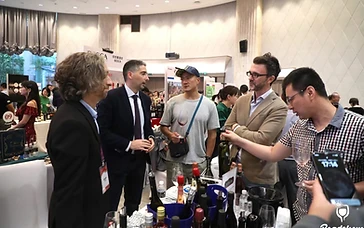
Broad multi-sector food fairs often submerge specialized wineries beneath commodity grains and frozen meats. To secure serious wine-trade distributors, Armenian estates must exhibit at dedicated industry platforms like Interwine China, which concentrate tens of thousands of verified wine wholesalers, provincial distributors, hotel food and beverage directors, and influential sommeliers.
Armenian export bodies and individual estates can establish traction by taking three concrete steps:
- National Pavilion Representation: Coordinated stands organized by industry bodies maximize visual impact and split logistics expenses, positioning Armenia as an ancient yet innovative winemaking nation.
- Curated Masterclasses and Sommelier Tastings: Staging an educational seminar during the fair led by a recognized Chinese educator (e.g., DipWSET or certified Master of Wine) creates instant category credibility.
- Pre-Scheduled Buyer Meetings: Utilizing structured Business Matching services allows wineries to pre-screen distributor profiles, verify regional licensing, and hold commercial discussions directly at their booth.
To lock in an exhibition stand and secure direct buyer exposure across Southern China and nationwide wholesale circuits, wineries can Become an Exhibitor.
Commercial Risk Mitigation and Long-Term Success
Sustained commercial performance requires protecting business interests while supporting local distributors through market fluctuations.
- Payment Terms: For new distribution accounts, adhere strictly to commercial international banking best practices: a minimum 30%–50% deposit upon order placement, with the remaining balance due against original Bill of Lading (B/L) copy prior to customs clearance. Avoid open-account terms until trading history is validated over multiple fiscal cycles.
- Support Local Marketing: Importers in China do not just buy wine; they buy commercial momentum. Producers must allocate a co-op marketing budget (typically 3%–5% of invoice value) reserved for local wine dinners, certified tasting materials, and Chinese-language sales collateral.
- Monitor Channel Cannibalization: Ensure that e-commerce promotions do not undercut offline wholesale pricing. Strict minimum advertised price (MAP) policies prevent distributor disengagement in regional markets.
Conclusion
Building an effective distribution strategy in China for Armenian wine producers is an attainable, profitable reality. By securing early GACC compliance, protecting intellectual property, selecting region-specific wholesale partners, and building face-to-face commercial relationships at major trade hubs, Armenian wineries can establish their historic terroirs permanently within the world's most dynamic wine market.
Sources
- EU SME Centre (2023): China's Wine Market(s) Report
- China Briefing (2025): China’s Wine Market Outlook: Trends and Opportunities
- ResearchGate (2025): Armenia-China Trade Relations: Trends and Prospects
- General Administration of Customs of the People's Republic of China (GACC): Decree 248 Guidelines
Key Takeaways
- —Armenian wines hold a distinct market niche in China by highlighting their 6,000-year history, indigenous grapes (Areni Noir, Voskehat), and amphora (Karas) aging.
- —Producers must complete GACC CIFER establishment registration (valid for 5 years) and comply with national food safety standards (GB 15037 and GB 2758) prior to shipping.
- —Trademark protection under Class 33 and the registration of an official Chinese phonetic/semantic brand name must precede commercial release to protect IP rights.
- —Targeting regional boutique and on-premise distributors in Tier 1 and New Tier 1 hubs (Shanghai, Guangdong, Chengdu) yields higher margins than broad, untested national contracts.
- —Professional trade fairs like Interwine China, supported by B2B business matching and educational masterclasses, remain the most efficient avenue to connect with qualified regional buyers.
Frequently Asked Questions
What mandatory customs registration is required to export Armenian wine to China?
Armenian wine producers must obtain an 18-digit enterprise registration number from the General Administration of Customs of the People's Republic of China (GACC) via the CIFER platform under Decree 248. The approved code is valid for five years and must be visibly displayed on the Chinese back label and outer cartons.
Which Armenian wine varietals have the strongest commercial appeal in China?
Areni Noir is the premier export variety due to its elegant red-fruit profile and storytelling appeal, alongside Voskehat for aromatic dry whites. In addition, amphora-aged (Karas) selections and native blends find strong interest within natural wine bars and fine-dining venues in Shanghai, Guangzhou, and Shenzhen.
Should Armenian producers grant nationwide exclusive distribution rights in China?
Generally, no. China is an expansive continental market with fragmented regional networks. Unless a partner demonstrates nationwide sub-distribution infrastructure and offers binding volume commitments, wineries achieve better control by appointing regional distributors in distinct geographic hubs such as Guangdong, the Yangtze River Delta, and Southwestern China.
What are the primary chemical and physical standards for wine under Chinese Guobiao (GB) regulations?
Still wines must adhere to GB 15037 standards, which specify a minimum 7.0% ABV, strict total sulfur dioxide limits (generally 250 mg/L for dry wines), trace heavy metal maximums, and zero tolerance for unapproved food additives. Samples are tested at the customs laboratory at the port of entry.
How can Armenian wineries efficiently meet certified Chinese importers?
Participating in specialized wine trade fairs such as Interwine China offers direct, face-to-face engagement with thousands of pre-qualified wine importers, regional wholesalers, and on-premise buyers, especially when supported by curated educational masterclasses and B2B matchmaking programs.