
Distribution Strategy in China for Brazilian Wine Producers
A commercial B2B guide for Brazilian wineries and export bodies on building an effective distribution strategy in China, covering regulatory compliance, partner selection, regional hubs, and omnichannel routes.
Building a successful distribution strategy in China for Brazilian wine producers requires moving past opportunistic container sales and establishing a disciplined, multi-channel route to market. For wineries based in the Serra Gaúcha, Campanha Gaúcha, or Vale do São Francisco, China offers compelling commercial upside, but navigating its complex commercial tiers, regional logistics hubs, and stringent customs standards demands precise operational planning.
According to an industry outlook published by Grand View Research in 2026, China's wine market generated USD 33,332.1 million in revenue in 2025 and is projected to reach USD 74,073.7 million by 2033, expanding at a compound annual growth rate (CAGR) of 10.7%. While traditional wine powerhouses like France, Chile, and Australia dominate market share, Brazilian producers can carve out profitable market niches. According to trade flow projections modeled by the Observatory of Economic Complexity (OEC), China represents one of the highest export growth potential destinations globally for Brazilian wine, second only to the United States. Achieving that upside, however, hinges on matching Brazil’s unique product profile—notably world-class sparkling wines and distinctive reds—with the correct Chinese commercial routes.
The Chinese Wine Landscape: Commercial Realities for Brazil
Historically, Chinese wine consumption was concentrated on status-driven red wines for corporate gifting and banqueting. However, recent commercial analysis highlights that Chinese consumers have grown increasingly selective, with younger, urban professionals seeking novel, approachable, and refreshing styles. Grand View Research (2026) identifies sparkling wine as the fastest-growing and most lucrative category in the Chinese market through 2033.
This trend directly aligns with Brazil’s competitive advantage. Brazilian sparkling wines produced via traditional and Charmat methods (especially Chardonnay, Pinot Noir, and aromatic Moscato blends) possess the freshness, vibrant acidity, and price-to-quality ratio to compete against Prosecco, Cava, and entry-level Champagne. Furthermore, Brazil’s historical ties and trade agreements within the Lusophone world—bolstered by bilateral initiatives highlighted by the Permanent Secretariat of Forum Macao—create unique entry points via the Greater Bay Area and specialized trading companies.
Core Routes to Market: Evaluating Distribution Models
Brazilian wineries evaluating China must choose an operating model that matches their export scale, production volume, and marketing budget. Relying solely on generalist traders rarely yields sustained re-orders; Brazilian producers must instead evaluate three primary models:
1. National Master Importers
Partnering with a large, nationwide importer provides immediate customs clearing capability, bonded warehousing, and access to an established network of regional sub-distributors.
- Pros: High initial volume commitments, broad geographic coverage, established logistical infrastructure.
- Risks: Brazilian brands risk becoming "catalog filler" behind high-volume Chilean or French portfolios. National importers often demand heavy promotional allowances and substantial pricing concessions.
2. Regional and Category-Focused Distributors
Rather than attempting nationwide coverage across a market spanning 1.4 billion people, targeted engagement with regional specialists in tier-1 and tier-2 economic clusters—such as the Yangtze River Delta (Shanghai, Hangzhou, Ningbo) and the Pearl River Delta / Greater Bay Area (Guangzhou, Shenzhen, Zhuhai)—yields higher brand engagement. Working through regional partners who specialize in Western on-premise dining, boutique retail, and high-end hospitality offers Brazilian sparkling and fine wines direct placement on curated wine lists.
3. Hybrid Omnichannel & Cross-Border E-Commerce (CBEC)
Consumer purchasing behavior in China is fundamentally digital. As highlighted in research by Market Research Future in 2026, the rapid proliferation of e-commerce channels has transformed wine purchasing into an everyday consumer activity. Combining an offline on-premise presence with digital storefronts (such as Tmall, JD.com, and Douyin livestreaming commerce) builds consumer pull. Cross-border e-commerce also allows export groups to test consumer response to niche SKUs under favorable customs conditions before committing to full container imports under standard General Trade clearance.
Regulatory and Compliance Readiness
China’s General Administration of Customs (GACC) enforces strict regulatory frameworks for imported food and beverages. Brazilian export directors must ensure full operational compliance prior to dispatching shipments from Santos or Rio Grande:
- GACC Decree 248 Registration: Every overseas wine production facility must be officially registered on the China Import Food Enterprise Registration platform (CIFER) and obtain a valid GACC establishment code. Shipping unverified cargo leads to immediate detention at Chinese ports.
- GB Food Safety Standards: Brazilian wines must comply with China’s National Food Safety Standards, notably GB 2758 (fermented alcoholic beverages) and GB 7718 (pre-packaged food labeling). Strict maximum residue limits (MRLs) apply to additives such as sulfur dioxide, as well as specific tolerances for sorbic acid, benzoic acid, and copper.
- Chinese Back Labels: Compliant Chinese back labels must be affixed prior to customs inspection, clearly indicating product category, origin (Brazil/巴西), alcohol content, grape variety, importer details, and net volume. Errors in Chinese translation or ingredient declaration frequently trigger customs delays.
Geographic Entry Points: Where Brazilian Wine Gains Traction
China is not a single, homogeneous market. Distribution strategies must differentiate between commercial regions:
- The Greater Bay Area (Guangdong, Hong Kong, Macao): South China remains the country's most mature imported wine market, accounting for a significant share of total national imports. Lingering cultural and commercial linkages via Macao give Portuguese-speaking trade delegations a distinct advantage. Macao frequently acts as a bridge for Lusophone products entering Guangdong province.
- Yangtze River Delta (Shanghai, Jiangsu, Zhejiang): As the epicenter of China’s sommelier community, specialty wine bars, and international bistro culture, this region is the premier testing ground for Brazilian sparkling wines and premium reds (such as Merlot, Cabernet Franc, and Tannat).
- Secondary and Interior Hubs (Chengdu, Wuhan): Fast-growing consumer hubs in southwestern and central China exhibit growing disposable income and high dining frequency, presenting expansion opportunities once coastal brand equity is solidified.
In-Person Partner Engagement and Trade Fairs
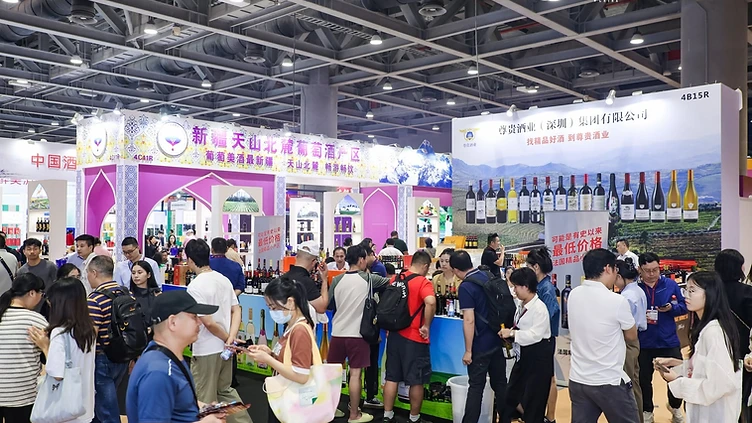
In the Chinese business environment, face-to-face trust building (guanxi) remains indispensable. Importers rarely commit to long-term distribution agreements based on digital correspondence or cold sample shipments. Wineries must present their portfolio at established, verified trade gatherings. Brazilian wineries have historically leveraged collective national showcases, including past Brazil Pavilions coordinated at major industry platforms like INTERWINE CHINA, to engage active Chinese buyers, regional distributors, and hospitality beverage directors.
To build a qualified network of vetted commercial buyers across South China and beyond, explore opportunities to Become an Exhibitor at upcoming trade editions. Furthermore, producers can review current macro shifts via Market Insights and engage in pre-scheduled buyer meetings using specialized Business Matching services to secure contracts with established regional importers.
Conclusion
A viable distribution strategy in China for Brazilian wine producers requires precise brand positioning, proactive regulatory compliance under GACC standards, and selective alignment with category-focused regional distributors. By prioritizing Brazil's internationally recognized sparkling wines, capitalizing on historical Lusophone trade pathways in South China, and maintaining consistent in-market engagement, Brazilian estates can turn China's projected market expansion into sustainable commercial growth.
Sources
- Grand View Research - China Wine Market Size & Outlook, 2026-2033
- Market Research Future - China Wine Market Size, Share Industry Analysis By 2035 (Published 2026)
- Observatory of Economic Complexity (OEC) - Wine in Brazil Trade
- Permanent Secretariat of Forum Macao - China Among Main Markets for Brazilian Wine Exports
- EU SME Centre - China's Wine Market: A Guide for Exporters (2026)
Key Takeaways
- —China's wine market is projected to reach USD 74.07 billion by 2033 (CAGR 10.7%), with sparkling wine showing the fastest growth rate according to Grand View Research (2026).
- —Brazil's most compelling export opportunity lies in high-quality sparkling wines (traditional and Charmat method) and accessible, fresh reds.
- —Targeted regional distribution in the Greater Bay Area and Yangtze River Delta yields better commercial outcomes than broad national catalog listings.
- —Producers must secure GACC Decree 248 facility registration via CIFER and ensure compliance with GB 2758 and GB 7718 standards before shipping.
- —Direct, in-person engagement at established industry platforms such as Interwine remains essential for vetting dependable Chinese distribution partners.
Frequently Asked Questions
Why does Brazilian wine have export potential in China's competitive market?
According to the Observatory of Economic Complexity (OEC), China ranks among the highest potential export growth destinations globally for Brazilian wine. Furthermore, Grand View Research (2026) projects sparkling wine as China's fastest-growing segment through 2033, matching Brazil's recognized production strength in vibrant, cost-competitive sparkling wines from regions like Serra Gaúcha.
What mandatory customs registrations are required to export Brazilian wine to China?
Brazilian wineries must be registered under GACC Decree 248 via China's CIFER system to receive an official overseas production establishment code. Shipments must also adhere to China's GB 2758 food safety limits for alcoholic beverages and feature compliant GB 7718 Chinese back labels.
Should Brazilian wineries target national importers or regional distributors in China?
For most mid-sized Brazilian estates, regional and category-specific distributors in economic hubs like the Greater Bay Area or the Yangtze River Delta offer superior focus and margins compared to massive national master importers, who often prioritize large French or Chilean brands.
How can Brazilian wine producers verify and meet Chinese buyers?
Wineries should avoid unverified online inquiries and instead meet commercial buyers at major specialized trade exhibitions like Interwine China, utilizing dedicated B2B business matching programs to connect with pre-screened importers.