Wine Market and Trade Opportunities in Hangzhou
Discover the wine market and trade opportunities in Hangzhou, Zhejiang's economic hub. Explore retail dynamics, buyer profiles, distribution channels, and actionable strategies for international wineries.
Hangzhou represents one of the most commercially lucrative regional wine markets in Eastern China. As the provincial capital of Zhejiang and the operational heart of China's digital economy, Hangzhou combines exceptional private wealth, high disposable income, and an increasingly sophisticated consumer demographic. For international wineries, export associations, and brand managers evaluating regional expansion beyond tier-one hubs like Shanghai and Beijing, the wine market and trade opportunities in Hangzhou offer high average selling prices (ASPs), strong demand for premiumization, and established multi-tier distribution networks.
To capture market share in this affluent Yangtze River Delta city, wine producers must look beyond generic export tactics. Successfully navigating Hangzhou requires an analytical understanding of local gastronomy pairings, digital trade dynamics, corporate gifting traditions, and regional distributor relationships.
Hangzhou’s Market Dynamics: Macroeconomics and Wealth Concentration
Zhejiang Province has long maintained one of China's highest per capita disposable incomes, with Hangzhou serving as its financial and technological capital. The presence of major technology conglomerates, vibrant venture capital ecosystems, and thousands of privately held small-and-medium enterprises (SMEs) has generated an expansive upper-middle class and high-net-worth individual (HNWI) population.
According to an analysis on the Wine Market in China by MS Advisory (2024), China's broader wine market was valued at $40.4 billion in 2024, supported by an expanding base of affluent urban consumers seeking lifestyle-driven beverages. Within this macro framework, Hangzhou stands out not by sheer bulk volume, but by value retention and consumer purchasing power. While traditional volume-driven markets often rely heavily on entry-level commercial wines, Hangzhou trade partners report higher resilience in the mid-to-high (RMB 200–600) and ultra-premium (RMB 800+) segments.
Unlike traditional municipal retail structures, Hangzhou’s consumer base is uniquely tech-savvy, digitally connected, and cosmopolitan. International travel, study abroad experiences among young professionals, and a thriving dining scene have fueled open-mindedness toward imported wines, moving beyond conventional red varieties into dry whites, sparkling selections, and low-intervention styles.
Key Trade and Distribution Channels in Hangzhou
Mapping local trade channels is crucial for foreign brands seeking scalable, compliant routes to market. Academic research on Chinese distribution systems published by Bouzdine-Chameeva et al. (2026) highlights that, in contrast to mature European markets anchored by hard discount retailers, China’s wine ecosystem leans heavily into relationship-driven on-trade, corporate sales, and specialized retail channels.
[International Winery / Exporter]
              │
       (Customs Clearance: Ningbo / Shanghai Port)
              │
              ▼
[Tier-1 Importer / Regional Master Distributor]
              │
   ┌──────────┼──────────┬───────────────────────┐
   │          │          │                       │
   ▼          ▼          ▼                       ▼
[Private    [HORECA:   [Boutique Retail /      [Digital Commerce:
 Corporate   High-End   Specialty Bottle         Livestream / O2O
 Clients]    Dining]    Shops & Wine Bars]       Omnichannel]
1. Private Corporate and Institutional Direct Sales
Corporate procurement remains the bedrock of wine profitability in Hangzhou. The regional economy is driven by tech enterprises, real estate firms, manufacturing exporters, and professional service agencies. These organizations purchase wines in volume for executive banquets, corporate hospitality, and seasonal gifting (notably Mid-Autumn Festival and Chinese New Year). Corporate buyers prioritize prestigious origins, credible ratings, authentic storytelling, and packaging that conveys prestige.
2. High-End Gastronomy and Specialized On-Trade (HORECA)
Hangzhou's dining landscape has evolved dramatically. Modern Zhejiang cuisine (Hangbang Cai), known for subtle sweetness, delicate seafood, and fresh river fish, creates distinct pairing demands. High-end restaurants and upscale hotel properties increasingly feature curated wine lists. Importers report strong growth in aromatic, crisp white wines (such as Burgundian Chardonnay, German and Alsatian Riesling, and Marlborough Sauvignon Blanc) to complement local culinary profiles. Furthermore, the city's burgeoning independent wine bar scene in districts such as Xihu and Gongshu caters to adventurous millennial consumers who favor organic, biodynamic, and pet-nat styles.
3. Digital Commerce and O2O Retail Integration
As the birthplace of modern Chinese e-commerce, Hangzhou acts as an operational testbed for digital and omnichannel retailing. As highlighted by China Briefing (2024), citing data from the International Wine and Spirits Research (IWSR), China's alcohol e-commerce market is projected to expand at a compound annual growth rate (CAGR) of 6% from 2022 to 2027, driven by direct-to-consumer models and on-demand delivery. In Hangzhou, traditional retail overlaps with instant-delivery platforms (such as Meituan and Ele.me) and localized livestream commerce via Douyin and Taobao Live. Regional distributors frequently use hybrid business models: stocking physical experience centers while managing active community groups via WeChat to execute rapid direct-to-consumer sales.
Consumer Profiles and Product Opportunities
To effectively align a portfolio with Hangzhou's commercial landscape, wineries should segment the consumer base into three primary archetypes:
| Buyer Archetype | Primary Product Preferences | Key Purchasing Motivation | Core Channels | | :--- | :--- | :--- | :--- | | Corporate Executives & Private Wealth | Classified Bordeaux, Grand Cru Burgundy, Super Tuscans, Iconic Australian Shiraz | Prestige, Gifting, Business Hospitality | B2B Private Allocation, Exclusive Importers | | Tech Professionals & Young Urbanites | Crisp Whites (Riesling, Chablis), Champagne, Natural / Biodynamic Wines | Self-indulgence, Social Gatherings, Exploration | Boutique Wine Bars, O2O Apps, Livestreaming | | Home Connoisseurs & Enthusiasts | Single-vineyard bottlings, Boutique New World, Regional Italian / Spanish DOs | Value-to-quality ratio, Terroir Authenticity, Education | Specialty Bottle Shops, Community Groups, Trade Salons |
According to an analysis on changing consumer habits published in the Journal of Wine Economics (Anderson & Puga, 2025), younger Chinese demographics are shifting away from rigid luxury banqueting and actively exploring value-driven, expressive categories. This transition represents an opening for mid-tier producers who can articulate their authenticity, climate credentials, and pairing versatility.
Regulatory Compliance and Logistics Pathways
Successfully shipping wine into Hangzhou involves established entry points along China's eastern seaboard. Most commercial consignments bound for Hangzhou enter through either the Port of Ningbo-Zhoushan (Zhejiang's primary deep-water hub) or the Port of Shanghai, both offering dedicated bonded warehousing facilities and refrigerated logistics chains.
Wineries must maintain strict compliance with General Administration of Customs of China (GACC) standards under Decrees 248 and 249. Every overseas manufacturing facility must possess a valid GACC registration number, and back labels must adhere to national food safety standards (GB 7718 and GB 2758), clearly stating ingredients, processing aids, allergen warnings, and Chinese brand designations in simplified Chinese. For trade professionals exploring practical logistical protocols, our overview of Arrival and Transportation provides logistical context for planning East China market entry.
Market Entry Challenges and Strategic Mitigation
Entering Hangzhou is not without hurdles. Exporters must navigate specific operational risks:
- Severe Brand Fragmentation: The Chinese market features thousands of competing labels. Unheralded estate wines often struggle for distributor mindshare against established brands without dedicated educational investment.
- Long Credit Cycles: Regional distributors frequently operate on consignment or extended credit terms. New-to-market producers must negotiate structured payment terms, using letters of credit or staged deposits.
- Intellectual Property Protection: Trademark squatting remains a persistent hazard in mainland trade. Wineries must register their Roman-alphabet name alongside an officially recognized Chinese trademark before entering distribution agreements.
To mitigate these barriers, producers should engage directly with vetted trade buyers who possess existing retail contracts and corporate distribution lists. Comprehensive Market Insights indicate that face-to-face commercial engagement remains the most reliable mechanism for building distributor trust in China’s commercial wine landscape.
Accelerating Regional Trade with Interwine
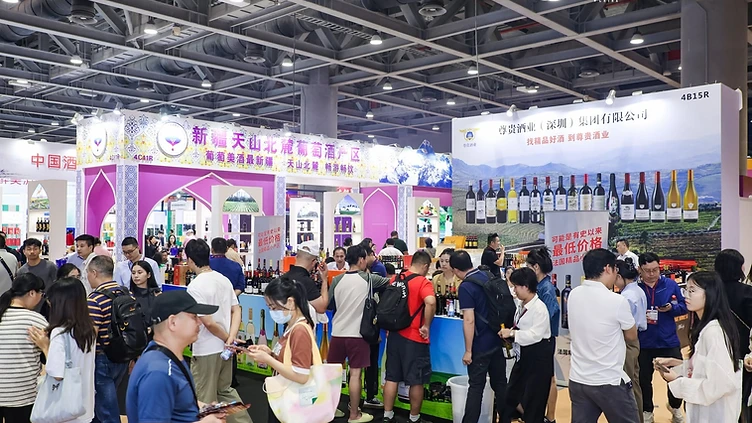
Establishing a commercial foothold in affluent Tier-2 and regional powerhouse markets like Hangzhou requires access to qualified distributors, importers, and retail category buyers. While digital marketing generates awareness, the final commercial contracting for volume distribution across Zhejiang relies on tangible product evaluation and in-person relationship building.
Interwine provides international producers with direct access to South and East China's leading wine buyers, regional wholesalers, and corporate procurement networks. By joining the platform, brands connect with vetted commercial partners seeking exclusive regional distribution rights.
Ready to expand your distribution pipeline across China's most affluent regional markets? Become an Exhibitor with Interwine and present your portfolio directly to pre-qualified Chinese importers, sommeliers, and commercial distributors.
Sources
- MS Advisory: Wine Market in China: Trends, Growth, and Consumer Behavior (2024)
- ResearchGate / Bouzdine-Chameeva et al.: Wine distribution channel systems in mature and newly growing markets (2026)
- China Briefing: China's Wine Market Outlook: Trends and Opportunities (2024)
- Cambridge Core / Journal of Wine Economics: China's Wine Market: Recent Shocks, Long-Term Prospects (2025)
Key Takeaways
- —Hangzhou represents an affluent, tech-driven regional market in Zhejiang with high purchasing power and resilient demand for premium and mid-range wines.
- —Corporate procurement and private enterprise client lists remain the primary volume and margin drivers for regional distributors in Hangzhou.
- —Changing gastronomy and an evolving dining culture have created surging interest in crisp white wines, Champagne, and low-intervention styles.
- —E-commerce integration, instant-delivery (O2O) channels, and localized WeChat community sales provide crucial complementary routes alongside traditional HORECA distribution.
- —Exporters must secure GACC facility registrations and registered Chinese trademarks before shipping commercial consignments through Ningbo or Shanghai ports.
Frequently Asked Questions
Why is Hangzhou an attractive market for imported wine compared to Tier-1 cities?
While Tier-1 cities like Shanghai and Beijing feature high competition and saturated retail shelves, Hangzhou offers immense private wealth, strong disposable income, and lower brand saturation, allowing boutique and regional producers to build profitable relationships with corporate buyers and specialized distributors.
Which wine styles are seeing the fastest growth among Hangzhou consumers?
While premium red wines continue to dominate corporate banqueting, dry white wines (such as Riesling, Sauvignon Blanc, and Chardonnay), Champagne, and organic/natural wines are experiencing rapid growth among younger professionals and upscale restaurants pairing wines with local Zhejiang cuisine.
What are the primary logistical ports for entering the Hangzhou wine market?
Most wine shipments destined for Hangzhou arrive through the Port of Ningbo-Zhoushan in Zhejiang or the Port of Shanghai. Both ports provide sophisticated temperature-controlled bonded warehousing and efficient multimodal road transport directly into Hangzhou.
What compliance steps are mandatory before exporting wine to Hangzhou?
Foreign producers must secure an overseas manufacturing registration via the General Administration of Customs of China (GACC), adhere to China's GB labeling standards (GB 7718 and GB 2758) with compliant Chinese back labels, and ensure brand trademarks are legally registered in China.
How can international wineries connect directly with buyers in Hangzhou and East China?
Participating in recognized industry trade fairs such as Interwine allows wineries to directly access pre-screened importers, regional distributors, and purchasing managers from Hangzhou and the broader Yangtze River Delta.