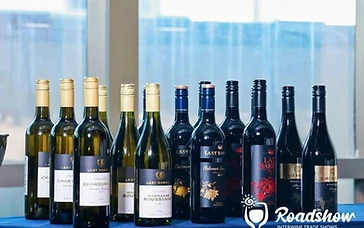
Wine Market and Trade Opportunities in Guangzhou
Guangzhou anchors South China's imported wine ecosystem, serving as the commercial engine for the Greater Bay Area. Explore market dynamics, tariff shifts, distribution routes, and actionable trade strategies for international wineries.
Guangzhou represents the operational core of South China's imported wine trade, functioning as the premier clearinghouse, financial hub, and logistics gateway for Guangdong Province and the wider Guangdong-Hong Kong-Macao Greater Bay Area (GBA). For international wineries and export consortia, understanding the wine market and trade opportunities in Guangzhou is vital: Guangdong historically accounts for over 60% of mainland China's imported wine consumption and distribution networks, making it the most commercial, volume-resilient entry point in the country.
While first-tier markets like Shanghai focus heavily on niche on-premise dining trends, Guangzhou commands vast wholesale, corporate gifting, high-end Cantonese banqueting, and cross-border e-commerce distribution channels that route inventory directly into high-net-worth Pearl River Delta manufacturing epicenters such as Foshan, Dongguan, Zhongshan, and Shenzhen. Navigating this market requires an analytical view of customs procedures, shifting tariffs, evolving regional buyer preferences, and face-to-face commercial channels.
The Strategic Primacy of Guangzhou in China's Wine Trade
Guangzhou has spent decades developing the physical, regulatory, and capital infrastructure necessary to support high-volume beverage alcohol importation. Positioned along the Pearl River, Guangzhou offers maritime access via Nansha Port—one of China’s most efficient customs clearance hubs for bottled wines under Harmonized System (HS) Code 2204.21.
Guangdong as the Epicenter of Demand
Guangdong Province stands as China's largest provincial economy by gross domestic product. Its business culture places a premium on business banqueting, hospitality, and gift-giving, where premium imported wine is a customary fixture. Importers headquartered in Guangzhou maintain extensive regional networks that feed sub-distributors across Tier-2 and Tier-3 cities in southern and central China, providing foreign producers with scalable route-to-market access.
Integration with the Greater Bay Area (GBA)
The GBA initiative links nine mainland cities with Hong Kong and Macao into an integrated economic zone of more than 86 million consumers. Guangzhou serves as the northern logistics and trading axis of this zone. While Hong Kong acts as a zero-tariff trading and fine-wine storage hub, Guangzhou provides direct mainland clearance, warehousing, and nationwide multi-tier distribution.
Regulatory Landscape: Tariffs, Customs, and Compliance
Entering Guangzhou requires navigating a rigorous regulatory framework overseen by the General Administration of Customs of the People's Republic of China (GACC). Maintaining strict compliance at entry avoids port delays, product confiscation, or re-export mandates.
Tariffs and the Shifting Origin Mix
Trade policy continues to shape brand competitiveness in Guangzhou:
- Australia: On March 29, 2024, China's Ministry of Commerce (MOFCOM) officially terminated anti-dumping and countervailing duties of up to 218.4% on Australian bottled wine imports, restoring zero-tariff access under the China-Australia Free Trade Agreement (ChAFTA) as reported by Reuters (2024). This decision spurred an immediate restocking cycle across Guangzhou trading firms.
- France, Chile, and Italy: French Bordeaux and Burgundy labels maintain an entrenched reputation for prestige gifting, while Chilean producers benefit from bilateral zero-tariff agreements. However, prospective exporters must track global trade shifts, including potential retaliatory scrutiny, as documented by MSA Advisory (2024).
Customs Clearance and GACC Decree 248
Every overseas food and beverage facility exporting to China must secure producer registration with the GACC Single Window platform under Decree 248. Importers in Guangzhou cannot process customs declarations without an active GACC registration code clearly printed on inner and outer packaging.
Labeling Standards (GB 7718 and GB 2758)
All bottled wines must feature a compliant Chinese back label applied before import inspection or within a designated bonded warehouse. Labels must explicitly detail:
- Product legal name (e.g., dry red wine)
- Country of origin, vintage, and grape varietal percentages
- Net alcohol content by volume (ABV)
- Name, address, and contact details of the registered Chinese mainland distributor
- Mandatory allergen statements (such as sulfur dioxide content)
Consumer Demographics and Demand Shifts in South China
Commercial purchasing patterns in Guangzhou are bifurcating between traditional corporate channels and dynamic direct-to-consumer digital channels.
Traditional Banqueting & B2B Channels          Emerging Retail & Digital Channels
-------------------------------------          ----------------------------------
- Dominance: Full-bodied Dry Reds              - Fast Growth: Aromatic Whites & Rosé
- Occasions: Business Banquets, Corporate      - Occasions: Casual Dining, Home Consumption
- Packaging: Prestigious, Classic Labels       - Packaging: Clean Aesthetics, Gift Packs
- Pricing: Mid-to-High Premium                 - Pricing: Accessible Value & Quality
Red Wine vs. White Wine Trajectories
Red wine—specifically Cabernet Sauvignon, Merlot, and Syrah blends—continues to account for the majority of volume due to traditional culinary pairings with Cantonese roast meats and formal banqueting etiquette. However, white wine consumption has surged across Guangzhou's urban centers. Lightly oaked Chardonnay, New Zealand Sauvignon Blanc, German Riesling, and crisp Italian whites match well with fresh seafood and delicate Cantonese dim sum. Sparkling wines and Champagne also experience strong sales across regional hospitality venues.
Generational Purchasing Patterns
Millennial and Gen-Z consumers in Guangzhou drink wine socially rather than strictly during business dinners. According to China Briefing (2024), citing IWSR projections, China's alcohol e-commerce segment is expanding at a 6% compound annual growth rate through 2027, driven by direct-to-consumer live-streaming platforms like Douyin, JD.com, and WeChat Mini-Programs. Guangzhou's position as an e-commerce hub provides direct access to these tech-enabled distribution agencies.
Guangzhou's Distribution Channels: How Trade Works
Foreign producers cannot rely solely on off-the-shelf export agreements; they need an explicit understanding of Guangzhou's tiering structure.
Tier-1 National Importers and Bonded Warehouses
Tier-1 importers based around Guangzhou’s Huangpu and Nansha free trade zones import container-load volumes (FCL). They absorb clearing costs and distribute stock down to secondary wholesalers or regional franchise liquor stores like 1919 and Jiuxianwang.
Specialized Regional Distributors
These regional distributors control local dealer networks throughout secondary South China cities like Jiangmen, Huizhou, and Zhaoqing. These merchants frequently purchase consolidated orders (LCL) and prioritize personal business relationships, requiring verified face-to-face introductions before committing to recurring contracts.
Hospitality, Banqueting, and On-Premise
Guangzhou hosts thousands of high-end Cantonese restaurants, private dining clubs (sifangcai), and international luxury hotels. Securing placement requires collaborating with importers holding specialized on-premise sales forces capable of staff training, wine-list curation, and sommelier engagement.
For additional analyses on regional purchasing habits and channel economics, review our industry analysis in Market Insights and current trade reporting via News and Magazine.
Commercial Obstacles and Risk Management
Expanding into South China presents commercial hurdles that demand structured risk mitigation.
- Trademark Preemption: China adheres to a strict "first-to-file" intellectual property framework. Wineries must register both their Romanized brand name and an official Chinese-character transliteration with the China National Intellectual Property Administration (CNIPA) prior to shipping commercial samples.
- Inventory Overhang and Cash Flow: Distributors remain selective regarding inventory holding. Overly aggressive sales quotas can lead to discounting that damages brand equity. Structured payment terms, such as verified Letters of Credit or staged milestone payments, remain standard risk controls.
- Climatic Logistics Risks: Guangzhou's humid, subtropical summers require temperature-controlled reefer containers and climate-controlled warehouse facilities. Exporters must mandate cold-chain preservation across the supply chain to prevent heat damage during transit.
Trade Shows and Business Matching: Accelerating South China Market Entry
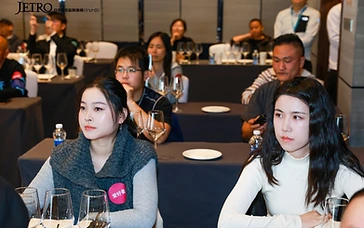
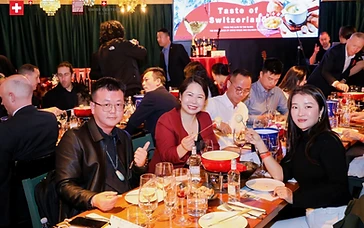
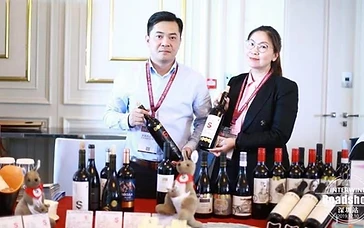
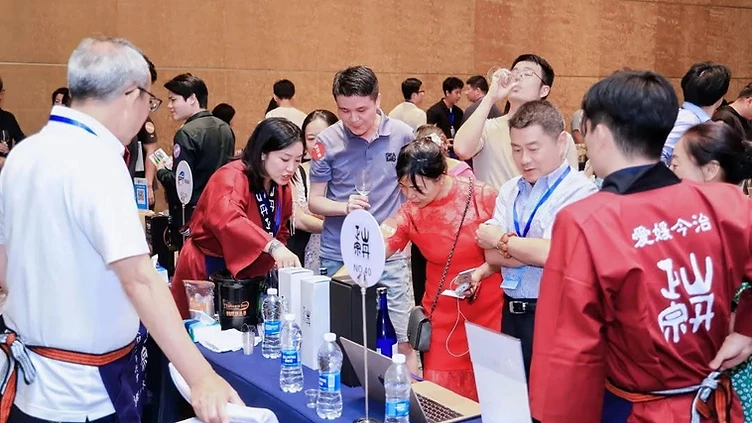
Given the relationship-driven character of southern Chinese commerce (guanxi), digital outreach alone rarely secures long-term distribution agreements. Face-to-face negotiations, guided tastings, and commercial vetting remain essential for closing container sales.
Guangzhou serves as the permanent home of Interwine China (China International Wine & Spirits Exhibition), South China's largest specialized B2B wine trade exhibition held at the China Import and Export Fair Complex (Pazhou). Exhibiting delivers tangible commercial advantages:
- Direct access to thousands of pre-screened Tier-1, Tier-2, and regional beverage importers.
- Structured commercial meetings via Business Matching sessions that align winery portfolios with buyer volume needs.
- Cross-regional exposure, connecting your brand to visiting buyers from across Guangdong, Fujian, Hunan, and Guangxi.
- Visibility alongside global peers highlighted within our Exhibitor Directory.
Foreign wine producers and regional trade associations evaluating entry or distribution expansion can secure booth availability and sponsorship packages by applying to Become an Exhibitor.
Conclusion: Executing Your Guangzhou Strategy
Guangzhou remains the commercial engine of China’s wine import industry. With its integration into the Greater Bay Area, the reopening of key trade lanes, and a wealthy consumer base, South China offers compelling trade opportunities for wineries with the right distribution partners.
Success requires a clear compliance blueprint: securing your Chinese trademark, ensuring GACC and back-label compliance, and engaging directly with verified distribution partners. Position your brand at the heart of South China's beverage supply chain by participating in the next session of Interwine China.
Sources
- Reuters (2024) - China lifts tariffs on Australian wine
- China Briefing / Dezan Shira & Associates (2024) - China's Wine Market Outlook: Trends and Opportunities
- MSA Advisory (2024) - Wine Market in China: Trends, Growth, and Consumer Preferences
- General Administration of Customs of the People's Republic of China (GACC) - Decree 248 Registration Guidelines
Key Takeaways
- —Guangdong Province accounts for over 60% of China's imported wine consumption, positioning Guangzhou as the commercial core of South China's trade.
- —The lifting of Chinese punitive tariffs on Australian wine on March 29, 2024, has reset import dynamics across Guangzhou's wholesale markets.
- —Compliance with GACC Decree 248 and Chinese national labeling standards (GB 7718/GB 2758) is mandatory before goods arrive at Nansha or Huangpu ports.
- —While full-bodied dry red wines dominate traditional banqueting, demand for aromatic whites, sparkling wines, and online direct sales is growing rapidly.
- —In-person trade events like Interwine Guangzhou provide verified B2B pathways to connect directly with regional Tier-1 and Tier-2 distributors.
Frequently Asked Questions
Why is Guangzhou considered the central hub for wine imports in South China?
Guangzhou acts as the commercial capital of Guangdong Province, an economic powerhouse that represents over 60% of China's imported wine distribution. With high-capacity deepwater facilities like Nansha Port, bonded warehouse zones, and access to the 86-million-consumer Greater Bay Area, Guangzhou offers an established logistics and commercial network for wine distribution.
What key customs regulations must wineries satisfy before shipping to Guangzhou?
Producers must secure overseas manufacturing facility registration under GACC Decree 248, design Chinese back labels complying with GB 7718 and GB 2758 standards, and submit commercial invoices, packing lists, certificates of origin, and sanitary/phytosanitary certificates through a licensed Chinese import agent.
How did the 2024 removal of tariffs on Australian wine impact Guangzhou importers?
Following China's official lifting of anti-dumping duties on March 29, 2024, Guangzhou-based importers quickly replenished stocks of Australian labels to satisfy demand across corporate banqueting and retail channels, altering market share distribution among competing origins like France and Chile.
What wine varietals and styles show the strongest growth in Guangzhou?
While full-bodied red wines (Cabernet Sauvignon, Shiraz, Merlot) dominate business gifting and traditional Cantonese banqueting, lighter aromatic whites (Sauvignon Blanc, Riesling, Chardonnay) and sparkling wines are seeing double-digit growth among younger professionals and modern dining venues.
How can international wineries connect with reliable distributors in Guangzhou?
Direct commercial interaction at accredited B2B trade fairs like Interwine China at the Pazhou Complex remains the most effective channel. This platform enables producers to meet vetted Tier-1 and Tier-2 importers, arrange targeted business matching sessions, and secure regional representation.