Business Etiquette for International Visitors to Interwine
Mastering Chinese business etiquette is vital for international wine buyers, importers, and brand owners at Interwine. Discover the core protocols of mianzi, guanxi, WeChat communications, booth introductions, and banquet culture to convert commercial conversations into lasting partnerships.
Professional cross-border trade in the Chinese beverage alcohol sector requires far more than competitive price lists and attractive tasting profiles. For international buyers, brand principals, export directors, and distributors visiting China’s premier B2B wine platform, navigating cultural protocol determines whether an introduction evolves into a distribution contract or stalls after initial pleasantries. Understanding business etiquette for international visitors to Interwine bridges cross-cultural divides, protects the commercial dignity of your partners, and significantly accelerates transaction timelines.
Guangdong Province stands as the engine of China's imported wine ecosystem. Historical trade documentation reported by Interwine Wikipedia indicates that over 60% of mainland China's imported wine trade has historically concentrated across Guangdong distribution networks, making Guangzhou the focal meeting point for national distributors, hospitality beverage managers, and regional wholesalers. Exhibitors and buyers meeting at the China Import and Export Fair Complex (Pazhou Complex) navigate an environment shaped by established business customs. Adhering to professional norms demonstrates respect, long-term commitment, and commercial maturity.
Core Cultural Tenets: Face (Mianzi) and Reciprocal Relations (Guanxi)
Commercial success across Chinese wine distribution networks rests upon two fundamental concepts: Mianzi (face or social standing) and Guanxi (networks of mutual obligation and trust).
Protecting and Giving Face (Mianzi)
According to trade advisory standards issued by the Canadian Trade Commissioner Service (2021/2026), safeguarding "face" governs interpersonal behavior in Chinese enterprise. Face represents dignity, prestige, and professional standing. In practical exhibition settings, you must avoid putting a counterpart in a position where they might lose face:
- Never publicly contradict a counterpart: Even if an importer misstates an appellation detail or a vintage regulation, never correct them openly in front of junior staff or commercial rivals. Soften clarifications privately or frame them around regulatory updates.
- Acknowledge hierarchy and status: Pay respect to the principal decision-maker. Compliment the scale of their business footprint, regional retail presence, or portfolio quality.
- Constructive negotiations: If contractual minimum orders or payment terms do not align, avoid direct, flat rejections like "No, that is impossible." Instead, reply with measured phrases such as "That presents practical challenges under our current export pricing structure, but let us explore alternative volume brackets."
The Nuance of Guanxi
Guanxi is not transactional patronage; it is sustained, reciprocal relationship building. Chinese wine buyers rarely commit significant capital on a first encounter solely because an FOB (Free on Board) quotation looks attractive. They seek reliable foreign partners who show reliability across regulatory adjustments, currency movements, and logistical shifts. Cultivating this rapport begins with mutual respect, consistent follow-ups, and genuine interest in the buyer's regional market dynamics.
Onsite Booth Protocol and Professional Introductions
Exhibition floors at major trade fairs are fast-paced, yet B2B interactions remain deeply protocol-driven. Understanding how to initiate contact at Interwine ensures initial impressions lead to high-level discussions.
The Name Card (Mingpian) Ritual
The exchange of business cards remains an indispensable professional courtesy across Chinese business conventions:
- Two-Handed Delivery and Receipt: Always present your card using both hands, with the text facing the recipient. Receive their card with both hands as well.
- Bilingual Production: Ensure your card is dual-sided, featuring English on one side and Simplified Chinese on the other. Include your verified corporate title, as Chinese companies rely on organizational hierarchy to designate negotiating counterparts.
- Visual Examination: Never slide a newly received card directly into a pocket, briefcase, or wallet. Spend 5 to 10 seconds carefully reading the name, title, and regional base. When sitting down for a structured meeting, place the cards neatly on the table in front of you in order of hierarchy.
Executive Hierarchy and Greetings
Greetings should follow seniority. Allow the most senior member of the visiting delegation to greet the highest-ranking host or buyer first. Begin with a polite nod or slight bow, followed by a gentle handshake. Formal introductions should feature surname and administrative title (e.g., "General Manager Chen" or "Director Wang"), rather than first names, until informal familiarity is explicitly invited.
To coordinate structured B2B meetings with vetted decision-makers ahead of the show floor opening, visitors frequently leverage dedicated Business Matching services. Aligning logistical movements early via Arrival and Transportation guarantees punctuality—a hallmark of executive respect.
Digital Communication: Navigating WeChat Etiquette
In China's business landscape, email is generally reserved for formal contracting, shipment documentation, and pro-forma invoicing. Daily commercial dialogue, sample dispatch coordination, and post-meeting follow-ups occur on WeChat (Weixin).
Traditional Western Flow:  Booth Meeting -> Exchange Business Card -> Follow-up Email (3-5 days later)
Chinese B2B Flow:          Booth Meeting -> Add WeChat QR Code -> Real-time Material Share -> Pro-forma Contract via Email
WeChat Best Practices for International Delegates
- Pre-download and Verify: Set up and authenticate your WeChat account prior to departing for Guangzhou to avoid registration or verification delays on-site.
- QR Code Sharing: Have your personal and corporate QR codes readily accessible on your mobile screen during booth tastings.
- Punctual Follow-up: Send a brief greeting message on WeChat within 24 hours of your booth discussion. Attach a compressed PDF product sheet or link to high-resolution product imagery for their quick reference.
- Tone and Formality: Maintain professional language. While WeChat operates like a messaging application, commercial discussions with distributors should remain courteous and concise, avoiding colloquial slang or ambiguous idioms.
Banquet and Hospitality Etiquette (Ganbei Culture)
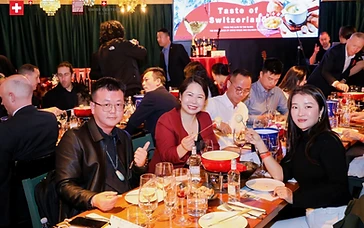
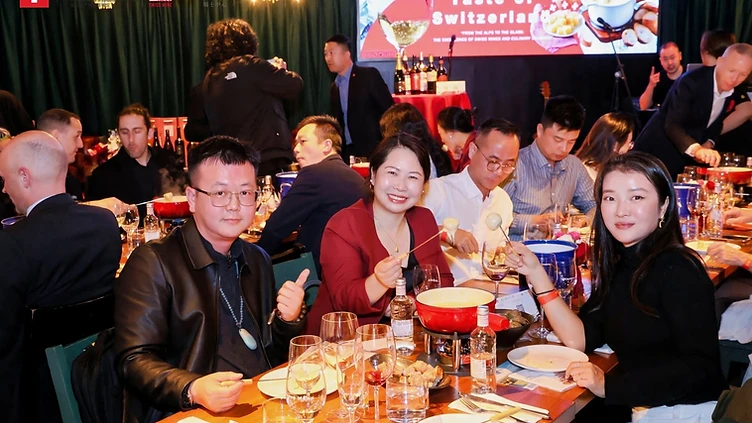
Substantive business agreements in South China are frequently solidified at dinner banquets following exhibition hours. These dinners serve as informal tests of character, reliability, and social chemistry.
Seating Protocol
Seating arrangements at a traditional round banquet table adhere to precise hierarchies. The principal host faces the entrance or room center. The most distinguished guest sits immediately to the host's right, while the second-ranking guest sits to the host's left. International visitors should wait to be directed to their seats rather than choosing a chair at random.
Toasting and the Ganbei Custom
While wine tastings on the show floor adhere strictly to spit-and-evaluate professional norms, banquet dining involves celebratory toasting:
- Eye Contact and Glass Height: When clinking glasses with someone senior or when showing humility, position the rim of your glass slightly lower than that of your counterpart.
- Understanding Ganbei: Ganbei literally translates to "dry cup." While it encourages drinking the glass in one go, international guests not wishing to drink spirits (such as Baijiu) or consume excessive alcohol can politely toast with wine, water, or tea by declaring "Banbei" (half cup) or offering a sincere health toast with their glass of choice.
- Reciprocal Toasting: If a Chinese distributor or host walks across the table to toast you, return the courtesy later in the evening before the meal concludes.
Payment Protocol
In Chinese dining culture, bills are never split (AA制) during formal business hospitality. The inviting host pays discreetly, often leaving the table momentarily to settle the account without drawing attention to the bill. Attempting to intervene or physically wrestle for the check causes unnecessary awkwardness. The correct protocol is to express warm gratitude to the host and commit to reciprocating hospitality during their next visit to your home market or production estate.
Strategic Pre-Trip Preparation and Administrative Diligence
Conducting business efficiently requires careful advance preparation. Navigating regulatory frameworks and travel logistics smoothly reflects your commitment to serious trade execution.
| Preparation Pillar | Operational Focus | Primary Business Etiquette Objective | | :--- | :--- | :--- | | Entry Documentation | Secure official documentation via Invitation Letter and Visa Support | Prevents last-minute border or entry disruptions. | | Accommodation Logistics | Reserve certified lodging through Hotel Accommodation | Secures dependable travel times and punctuality. | | Portfolio Translation | Translate key tech sheets, awards, and price sheets into Simplified Chinese | Removes language barriers and demonstrates respect for local trade needs. | | Trade Research | Cross-reference targeted importers against regional distributors | Directs commercial discussions to qualified partners. |
Delegates should coordinate their schedules around masterclasses and regional forums listed on Interwine Events. Doing so broadens market perspective and deepens professional engagement. Plan your travel calendar and reserve credentials early by choosing to Book Your Visit.
Cross-Border Negotiation Pitfalls to Avoid
International wine producers and merchants encountering Chinese buyers for the first time often encounter avoidable friction points. Avoiding these standard missteps helps maintain professional rapport:
- Impatience with Relationship Cycles: Expecting signed exclusivity contracts during a ten-minute booth tasting is unrealistic. Treat the initial dialogue as step one of mutual qualification.
- Inflexible MOQs: Chinese wine market consumption patterns require channel flexibility. Buyers valuing portfolio diversification appreciate suppliers who offer flexible pallet configurations during initial test runs.
- Underestimating WeChat Ecosystems: Demanding that domestic Chinese buyers communicate solely through corporate email channels often results in delayed replies and lost sales opportunities.
- Neglecting South China Trade Dynamics: Recognize that Guangdong buyers often distribute across extensive Tier-2 and Tier-3 wholesale networks. Inquire thoughtfully about their downstream logistics and regional consumption preferences rather than assuming Tier-1 consumer habits apply everywhere.
Conclusion
Thriving in China’s dynamic wine market demands technical product excellence supported by cross-cultural business etiquette. By respecting professional hierarchies, honoring the rituals of card exchanges and formal banquets, communicating smoothly via WeChat, and safeguarding the mianzi of every counterparty, international visitors unlock lasting commercial goodwill. Interwine provides the industry platform; mastering these behavioral conventions transforms presence into sustainable, high-volume trade partnerships.
Sources
- Interwine China Overview - Wikipedia
- Canadian Trade Commissioner Service - Business Etiquette in China
- Steinkellner China Search - China Business Etiquette Guide (2025)
Key Takeaways
- —Over 60% of mainland China's imported wine trade has historically concentrated in Guangdong Province, making Guangzhou a crucial venue for building professional buyer networks.
- —Preserving face (mianzi) and investing in sustained business networks (guanxi) are baseline requirements for converting trade inquiries into long-term distribution contracts.
- —Business card exchanges require both hands, bilingual print formatting, and deliberate visual review before being placed respectfully on the meeting table.
- —WeChat serves as the primary engine for B2B communications, quick follow-ups, and catalog distribution across the Chinese beverage alcohol sector.
- —Banquet etiquette and toasting protocols demand respect for seating hierarchies, subtle glass positioning during toasts, and graceful acknowledgment of host generosity.
Frequently Asked Questions
Why is business etiquette particularly critical when attending Interwine in Guangzhou?
Guangdong Province accounts for over 60% of China's imported wine trade. Trade buyers and regional distributors at Interwine prioritize long-term reliability and mutual respect. Demonstrating an understanding of cultural protocols like mianzi (face) and hierarchy signals that an international supplier is a serious, committed partner.
How should I format and present my business cards at Interwine?
Print double-sided business cards with English on one side and Simplified Chinese on the reverse, highlighting your accurate corporate title. Always present and receive cards with both hands, text facing the recipient, and take a moment to examine the details respectfully before placing the card on the table or into a cardholder.
Do Chinese wine buyers prefer WeChat or email for follow-up communications?
WeChat is the predominant channel for ongoing B2B communication, quick inquiries, and digital portfolio sharing in China. International visitors should establish an active account before traveling. Email is typically reserved for formal contracts, pro-forma invoices, and international shipping documentation.
How should I handle formal toasting if I do not wish to consume alcohol at business dinners?
You can participate in toasts without drinking spirits or excessive amounts of wine. Politely raise your glass filled with water, tea, or a modest pour of wine, offer a warm toast to your host's health and prosperity, and mention 'Banbei' (half cup) with a pleasant smile. Sincerity and presence matter far more than the volume consumed.
What is the proper way to handle bill payment at a Chinese business banquet?
The host who issues the invitation covers the entire bill. Splitting the check (AA制) is inappropriate for formal business dinners. If you are a guest, thank the host warmly at the end of the evening and state that you look forward to returning their hospitality when they visit your home country or winery.