Wine Market and Trade Opportunities in Beijing
A commercial analysis of the wine market and trade opportunities in Beijing for international wineries and regional distributors. Explore distribution channels, regulatory compliance under GACC, and strategies to secure qualified trade partners.
Entering the capital of China requires a strategic departure from high-volume, commodity-driven distribution. The wine market and trade opportunities in Beijing are shaped by institutional prestige, elite hospitality, corporate procurement, and a mature community of high-net-worth consumers. For international wineries and regional brand owners seeking resilient, value-accretive expansion, Beijing represents Northern China’s premier commercial anchor, demanding precise regulatory execution, specialized on-premise positioning, and structured engagement with pre-qualified regional buyers.
The Strategic Profile of Beijing’s Wine Market
Beijing occupies a unique commercial position within China's broader beverage market. While coastal commercial centers like Shanghai and Shenzhen often lead in casual, bistro-driven volume, Beijing operates as the center of national policy, state-owned enterprises (SOEs), multinational headquarters, diplomatic missions, and leading cultural institutions.
According to the EU SME Centre's comprehensive report on China’s Wine Market published in 2023, while national import volumes have undergone structural recalibration and market "self-adjustment" since the pandemic period, China remains a core strategic market where wine culture and consumer sophistication continue to mature. In Beijing, this maturity manifests in distinct buying behaviors. Consumers and institutional clients do not purchase merely on price; they demand provenance, brand heritage, and technical authenticity.
Commercial data highlights that while entry-level bulk wine faces stagnation across mainland ports, premium and niche categories—such as single-vineyard bottlings, organic viticulture, and certified Geographical Indication (GI) wines—retain pricing elasticity among northern distribution hubs. According to trade performance figures released by WinesInfo in March 2026, shifting import values reflect a more calculated, quality-first restocking approach among mainland importers following previous oversupply cycles. In Beijing, trade buyers are deliberately pruning underperforming volume labels to prioritize higher-margin estate allocations that appeal to the capital's affluent business gifting and upscale dining sectors.
Commercial Distribution Channels in Beijing
Navigating Beijing’s distribution landscape requires wineries to structure multi-channel routes to market rather than relying on a solitary importer.
1. High-End HoReCa and Private Dining
Beijing houses China’s most prestigious political and commercial banqueting circuits. The hospitality market is segmented between international five-star luxury hotels (concentrated in Chaoyang District and the Central Business District) and upscale private dining establishments (sifangcai). Wine lists in these venues emphasize prestigious Old World appellations (Bordeaux, Burgundy, Barolo), balanced by emerging high-end New World estates and classic styles that complement Northern Chinese cuisine. Importers supplying this sector look for exclusive distribution rights and direct support for sommelier education.
2. Corporate and Institutional Procurement
Corporate gifting and institutional entertaining represent an essential sales channel in northern China. Purchases are typically conducted through specialized regional distributors who hold long-term procurement agreements with state corporations, financial conglomerates, and private enterprises. Decisions in this channel prioritize packaging prestige, international accolades, and clear pricing hierarchies that protect brand value.
3. Boutique Retail and Independent Cellars
Unlike tier-2 and tier-3 markets dominated by mass retail supermarkets, Beijing features a high concentration of boutique bottle shops, fine-wine cellars, and lifestyle retail destinations (such as Sanlitun and Wangfujing). These outlets serve young professionals, returnee overseas students, and dedicated wine enthusiasts who are eager to explore less conventional profiles, including low-intervention natural wines, boutique sparkling wines, and rare varietals.
4. Direct-to-Consumer Digital Ecosystems and Instant Retail
While general trade e-commerce via JD.com and Tmall dominates national volume, Beijing’s premium sector increasingly leverages localized instant retail platforms (such as Meituan and Ele.me) coupled with WeChat Mini-Programs. Importers based in Beijing require fast fulfillment infrastructure to deliver temperature-controlled bottles within hours to consumers in residential hubs like Haidian and Shunyi.
Regulatory and Technical Compliance for Entry
Exporting wine into Beijing requires absolute adherence to mainland China's stringent customs framework. The EU SME Centre notes that regulatory compliance is non-negotiable, and administrative missteps result in costly border rejections.
GACC and CIFER Facility Registration
Under Decree 248 enforced by the General Administration of Customs of China (GACC), all overseas food and beverage manufacturing, processing, and storage facilities must be formally registered via the China Import Food Enterprise Registration (CIFER) system prior to dispatch. Exporters cannot ship inventory to Beijing ports (such as entry points cleared via Beijing Capital International Airport or maritime imports clearing via nearby Tianjin Xingang) without an active, validated GACC registration code clearly declared.
Customs Inspection, Standards, and Taxation
As detailed by the U.S. Alcohol and Tobacco Tax and Trade Bureau (TTB) in its international trade guidance, alcoholic beverages entering China undergo strict sanitary inspections and commodity evaluations by GACC. The import cost structure is comprised of three distinct fiscal layers: the Most-Favored-Nation (MFN) or preferential Import Tariff (dependent on bilateral free-trade pacts), a 10% Consumption Tax, and a 13% Value-Added Tax (VAT).
Furthermore, all consumer-facing bottles must carry fully compliant simplified Chinese back labels adhering to national food safety standards (GB 7718 and GB 15037). These labels must specify legal product name, ingredients, sulfur dioxide warnings, exact alcohol content, production date, importer contact details, and country of origin. Incorrect labeling remains the leading cause of administrative delays and quarantine hold-ups at customs.
Intellectual Property and Trademark Protection
China operates strictly under a "first-to-file" trademark regime. International wineries must secure their trademark—both their original international brand name and a carefully transliterated Chinese brand name (zhongwen ming)—with the China National Intellectual Property Administration (CNIPA) well before engaging local distributors. Failure to register early leaves producers vulnerable to trademark squatting, which completely severs commercial access to the market.
Overcoming Barriers to Trade: Due Diligence and Partner Selection
One of the most persistent operational risks for foreign brand owners in Beijing is partnering with intermediaries who lack dedicated cold-chain logistics or legitimate down-market distribution. In northern China’s continental climate, winter temperatures regularly dip below freezing, while summers exceed 35°C; uninsulated transport between Tianjin port and Beijing warehouses frequently damages wine viability.
Producers must conduct comprehensive due diligence on potential regional partners. Review our detailed analytical resources in Market Insights to understand how shifting consumer trends and macro factors influence regional purchasing power. Essential evaluation criteria for selecting an importer include:
- Verifiable sales licenses under the State Administration for Market Regulation (SAMR).
- Dedicated temperature-controlled warehousing within Beijing or the surrounding Jing-Jin-Ji perimeter.
- An existing footprint in on-premise accounts matching your target price band.
- Transparency regarding existing supplier portfolios to avoid conflicts of interest.
How to Build Sustainable Commercial Traction
Wineries cannot rely solely on remote representations or samples sent by courier. Establishing sustainable trade volume in Beijing requires sustained market engagement and targeted B2B networking.
Strategic Market Entry Sequence

[1. Brand & Legal Defense] -> [2. Technical Clearance] -> [3. B2B Trade Exposure] -> [4. Commercial Matchmaking]
  - Register CNIPA Marks      - Complete CIFER/GACC      - Showcase at Interwine    - Sign Binding Contracts
  - Finalize Chinese Naming   - Format GB Back-Labels    - Sommelier Masterclasses   - Implement Cold Logistics
To build long-term volume in Beijing, international wineries should prioritize:
- Regional Masterclasses and Guided Tastings: Direct education of Beijing's top sommeliers, retail buyers, and corporate beverage managers to foster brand prestige.
- Participation in Curated Trade Platforms: Direct interaction with verified distributors who handle supply chains across northern regional networks.
- Structured Commercial Matchmaking: Bypassing peripheral sub-distributors to contract directly with primary importers through structured Business Matching frameworks.
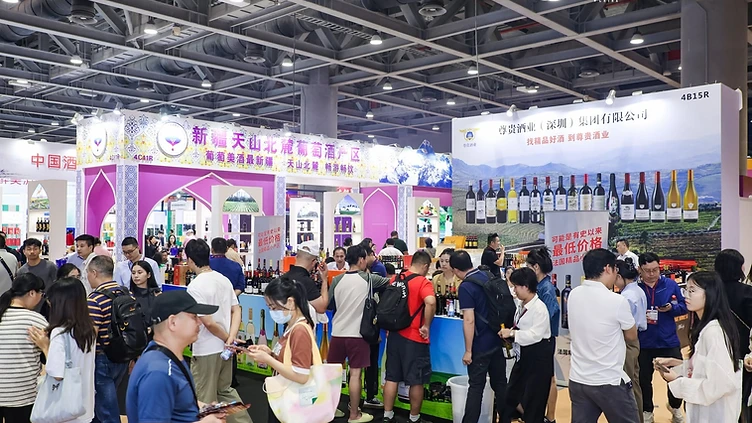
Foreign producers looking to establish their market footprint or appoint active regional distributors are invited to Become an Exhibitor at Interwine. As China’s premier professional wine and spirits exhibition platform, Interwine convenes licensed importers, regional distributors, and key procurement decision-makers from across northern China and beyond. Discover our broader calendar of nationwide roadshows and tastings across Interwine Events to strategically position your portfolio where capital and consumption meet.
Sources
- EU SME Centre: China's Wine Market(s): Drivers, Technical Requirements, and Opportunities for EU Producers (2023), https://www.eusmecentre.org.cn/publications/chinas-wine-markets-drivers-technical-requirements-and-opportunities-for-eu-producers
- General Administration of Customs of China (GACC) / U.S. Alcohol and Tobacco Tax and Trade Bureau (TTB): People's Republic of China Alcohol Trade Guidance, https://www.ttb.gov/itd/people-s-republic-of-china
- WinesInfo: China Wine Import Trade Market Performance Updates (2026), https://en.winesinfo.com/html/2026/3/189-88560.html
- Research and Markets: Wine Market Size, Share & Trends Analysis Report: Segment Forecasts (2025), https://www.researchandmarkets.com/reports/6062505/wine-market-size-share-and-trends-analysis-report
Key Takeaways
- —Beijing functions as Northern China’s premier commercial hub, dominated by institutional procurement, high-end hospitality, and high-net-worth consumers.
- —Producers must complete CIFER/GACC facility registration and ensure precise GB 7718/GB 15037 Chinese back-label compliance to clear customs.
- —China's first-to-file trademark system mandates immediate registration of both original Latin names and Chinese transliterations with the CNIPA.
- —Logistical resilience requires certified cold-chain transit to protect inventory against extreme continental seasonal temperature swings.
- —Direct face-to-face B2B matching and professional trade exhibitions remain the most efficient way to secure vetted, tier-1 regional distributors.
Frequently Asked Questions
What makes the Beijing wine market distinct from Shanghai or Guangzhou?
Beijing is the administrative and diplomatic capital of China, characterized by heavy concentration of state-owned enterprise headquarters, government institutions, and elite luxury hotels. Consumption is driven significantly by formal corporate entertainment, business gifting, and diplomatic functions, favoring brands with strong historical provenance, high international prestige, and premium price positioning.
What regulatory approvals are needed before shipping wine to Beijing?
Wineries must register their production and storage facilities through the GACC CIFER platform under Decree 248, ensure formulas comply with Chinese national food safety standards, draft and attach compliant simplified Chinese back labels under GB 7718 and GB 15037, and ensure shipments are cleared by a licensed Chinese importing enterprise.
How important is trademark registration before entering the Chinese market?
Trademark registration is critical. Because China adheres strictly to a first-to-file trademark principle, producers should register both their original Latin brand name and their official Chinese character trademark with CNIPA before shipping trade samples or meeting potential distributors to prevent bad-faith trademark registrations.
What are the common distribution models for wine brands in Beijing?
Producers commonly work with primary licensed general-trade importers who handle customs clearance, logistics, and warehousing in Northern China. These importers distribute inventory down through high-end hospitality venues (hotels and fine dining), corporate procurement supply chains, boutique independent bottle shops, and specialized localized instant e-commerce platforms.
How can international wineries connect with reliable Beijing wine distributors?
Participating in recognized, professional trade fairs such as Interwine and targeted business matching sessions provides direct access to qualified, pre-screened importers. In-person tastings and sommelier education remain the most effective methods to establish brand credibility in the Chinese market.