How Wine Brands Can Build Local Demand in Shenzhen
Discover how international wine brands can build sustainable local demand in Shenzhen by navigating tier-one consumer shifts, retail channels, and on-premise partnerships across the Greater Bay Area.
To successfully establish a presence in southern China's most affluent tech hub, wine producers must move beyond generic national marketing. Understanding how wine brands can build local demand in shenzhen requires a precise commercial playbook centered on high-income demographics, direct-sourcing retail models, on-premise dining trends, and localized digital trade engagement. While broad-brush import strategies often fail in tier-one environments, Shenzhen offers immediate liquidity for brands that understand its unique consumer profile, proximity to Hong Kong, and rapid adoption of modern consumption rituals.
According to the USDA Foreign Agricultural Service Wine Market Update 2025, China imported approximately $1.6 billion of wine and related products in 2024, with tier-one hubs such as Shenzhen, Shanghai, Beijing, and Guangzhou remaining the primary engines of demand. However, unlike traditional tier-one counterparts that rely heavily on heritage-driven corporate gifting, Shenzhen’s market operates on a distinctly youthful, tech-driven, and pragmatic commercial rhythm.
Understanding the Shenzhen Market Dynamics
Shenzhen is not merely a satellite of Guangzhou; it is China’s preeminent innovation hub, characterized by an average population age under 35 and one of the highest disposable income brackets in mainland China. Data compiled by the Shenzhen Alcohol Industry Association, highlighted by Vino Joy News (2026), confirms that Shenzhen residents consume significantly more wine per capita than the national average and demonstrate a pronounced preference for premium price tiers.
Several structural factors define this local demand:
- A Pragmatic, Tech-Centric Culture: Shenzhen’s corporate elite—drawn largely from telecommunications, finance, and cross-border hardware conglomerates—tend to value measurable product quality, authentic provenance, and freshness over formal institutional prestige. Traditional high-ABV banqueting wines are increasingly replaced by styles suitable for casual networking and personal relaxation.
- The Greater Bay Area (GBA) Integration: Shenzhen sits at the nexus of the Pearl River Delta. Free-flow business travel between Shenzhen and Hong Kong accelerates exposure to international gastronomy, natural wines, and emerging varietals, creating a consumer base that adopts global wine trends far faster than inland provinces.
- Growing Affinity for Whites, Rosés, and Sparkling: As reported in the USDA Foreign Agricultural Service 2025 Report, urban professionals, particularly white-collar women, are driving demand toward lower-ABV white and sparkling wines. In Shenzhen's sub-tropical climate, high-acid whites (such as Marlborough Sauvignon Blanc, German Riesling, and dry Italian whites) and sparkling options (such as Prosecco and Franciacorta) outperform heavy reds across casual dining settings.
To capture this commercial advantage, review our broader Market Insights to understand how regional consumption habits diverge across Chinese tier-one markets.
Targeted Channel Strategies: Where Shenzhen Buys Wine
Building local distribution in Shenzhen requires commercial teams to align their product specifications and pricing structures with the city's distinct retail and hospitality ecosystems.
+-------------------------------------------------------------+
|              Shenzhen Wine Distribution Matrix               |
+-------------------------------------------------------------+
|  Warehouse Retailers    | Direct sourcing (Sam's Club,      |
|  (Volume & Velocity)    | Costco); high turnover, value-led |
+-------------------------+-----------------------------------+
|  Specialty Bistro /     | Nanshan & Futian dining spots;    |
|  Boutique On-Premise    | natural, organic, premium whites   |
+-------------------------+-----------------------------------+
|  Social Commerce & O2O  | Douyin, RED (Xiaohongshu), Meituan|
|  (Instant Fulfillment)  | 30-min wine-delivery ecosystems   |
+-------------------------------------------------------------+
1. Warehouse Clubs and Direct-Sourced Modern Off-Premise
Warehouse retail operations have transformed volume sales across Shenzhen. The USDA Foreign Agricultural Service Wine Market Update 2025 notes that major retailers such as Sam’s Club and Costco China are actively self-sourcing wine selections, driving notable sales growth in tier-one hubs like Shenzhen. Sam's Club in Shenzhen—consistently ranked among the chain's top-performing global outlets by volume—favors approachable price points, dependable quality control, and recognizable stylistic typicities.
For mid-sized and large-scale producers, qualifying for direct retail sourcing requires demonstrated supply-chain compliance, private-label adaptability, and strong brand credibility. Connecting with buyers who supply these club stores requires dedicated networking through structured trade events.
2. The Nanshan and Futian Independent On-Premise Scene
For family-owned estates and boutique appellations, independent on-premise venues offer stronger brand equity and superior margin protection. The dining corridors of Futian (the financial core) and Nanshan (the technology park hub) feature an expanding ecosystem of Western-style bistros, contemporary Cantonese seafood houses, Japanese izakayas, and natural wine bars.
Shenzhen’s restaurant trade increasingly relies on focused, dynamic wine lists of 20 to 50 SKUs rather than encyclopedic cellar offerings. High-acid whites that pair seamlessly with delicate steamed seafood, alongside organic or biodynamic low-intervention reds, capture frequent re-orders. Wineries must collaborate with local fine-wine distributors who maintain climate-controlled warehousing in Shenzhen or neighboring Dongguan to support rapid on-demand restocking.
3. Immediate-Need Social Commerce and O2O Delivery
According to an analysis by Dezan Shira & Associates in China Briefing (2025), direct-to-consumer digital channels and e-commerce expansion remain dominant forces across Chinese tier-one markets. In Shenzhen, this trend is amplified by 30-minute instant retail platforms (such as Meituan and Ele.me) and localized social commerce. Tech-sector employees frequently purchase wine for evening consumption via mobile apps between 6:00 PM and 9:00 PM. Brands that succeed in this channel work with distributors who bundle fast-turnaround inventory into localized fulfillment networks linked to Douyin and Xiaohongshu (RED) livestreams.
Localized Marketing and Positioning in South China
A common error among foreign producers is relying on European wine vocabulary without cultural adaptation. To spark organic interest in Shenzhen, brand messaging must emphasize immediate lifestyle integration and sensory clarity.
Practical Cantonese and Teochew Gastronomy Pairing
Shenzhen’s food culture is anchored in Cantonese and Teochew culinary traditions, where ingredient freshness and delicate umami balances take precedence. Brand ambassadors should avoid generic recommendations such as "pairs well with beef" and instead demonstrate specific regional culinary compatibility:
- Aromatic, Dry Whites (e.g., Grüner Veltliner, Chablis, Albariño): Ideal for steamed spotted garoupa, poached chicken, and dim sum.
- Low-Tannin, Fruit-Forward Reds (e.g., Pinot Noir, Gamay, Grenache): Suited for roast goose (Siu Mei) and braised Teochew meats.
- Traditional Sparkling Wines: Versatile companions across multi-course celebratory banquets where heavy oak profiles clash with nuanced seafood sauces.
Digital Engagement via Professional Micro-Influencers
Mass-market celebrity endorsements rarely deliver strong returns on investment for niche wine portfolios in South China. Instead, wineries should partner with local sommelier-influencers, certified wine educators, and tech-sector professionals active on Xiaohongshu (RED). Digital storytelling should center on bottle transparency, vineyard practices, low-additive production, and visual unboxing appeal.
Navigating Commercial and Regulatory Risks
Expanding into Shenzhen requires strict operational vigilance:
- Trademark Protection Prior to Market Entry: As highlighted in China Briefing (2025), early trademark registration in both Roman script and authentic Chinese characters is crucial. Trademark squatting remains a persistent risk across fast-growing commercial centers.
- Customs and Traceability Compliance: Imported wine must strictly adhere to General Administration of Customs of China (GACC) labeling and documentation rules, including explicit reporting of food additives, sulfites, and exporter registration numbers.
- Climate Control Logistics: Shenzhen’s extended, humid summers present severe risks for delicate wines during transit. Contracts with local freight handlers must guarantee unbroken cold-chain logistics from the port through regional bonded facilities into local points of sale.
Accelerating Shenzhen Distribution Through Interwine
Direct commercial engagement remains the most reliable mechanism for securing qualified tier-one distribution. Attempting to build distribution remotely via cold outreach yields minimal conversions in South China's relationship-centric beverage trade.
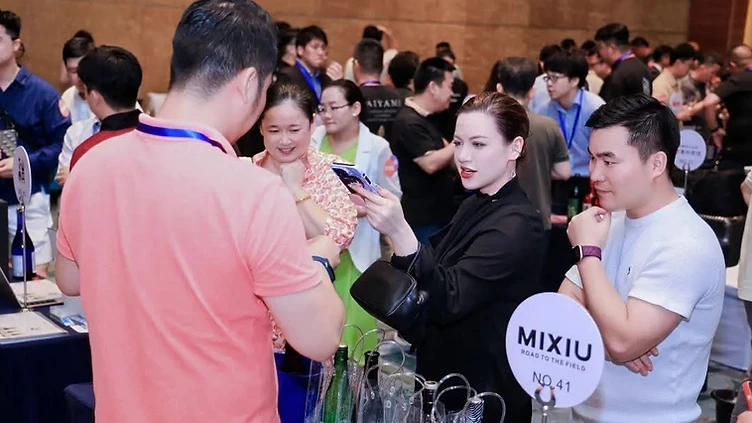
By taking direct action to Become an Exhibitor at INTERWINE, producers place their portfolios directly before pre-screened importers, retail category buyers, on-premise sommeliers, and corporate distribution leads covering Shenzhen and the broader GBA. Producers can review our structured Business Matching services, which coordinate targeted, pre-scheduled commercial meetings with buyers seeking new agency partnerships.
For international sales directors planning their market activation schedules, consulting the official Interwine Events calendar ensures alignment with regional buyer procurement cycles.
Conclusion: Strategic Steps for Wineries
Shenzhen represents one of the most commercially attractive wine markets in Asia, combining high purchasing power, a youthful consumer demographic, and an appetite for diverse international varietals. However, winning sustained market share demands a dedicated regional approach. Producers must align with local retail preferences, optimize for cold-chain delivery, pair product profiles with southern culinary habits, and build strong ties with qualified regional importers.
To establish your commercial presence across Shenzhen and the Greater Bay Area, apply to Become an Exhibitor and access qualified South China trade buyers.
Sources
- USDA Foreign Agricultural Service (2025): Wine Market Update 2025 (Report Number CH2025-0190). https://apps.fas.usda.gov/newgainapi/api/Report/DownloadReportByFileName?fileName=Wine+Market+Update+2025_Shanghai+ATO_China+-+People%27s+Republic+of_CH2025-0190.pdf
- Vino Joy News (2026): The Shenzhen Premium: What One Chinese City Reveals About the Future of Wine in China. https://vino-joy.com/2026/07/01/what-one-chinese-city-reveals-about-the-future-of-wine-in-china/
- Dezan Shira & Associates / China Briefing (2025): China's Wine Market Outlook: Trends and Opportunities. https://www.china-briefing.com/news/chinas-wine-market-outlook-trends-and-opportunities
- MSA Asia (2026): Wine Market in China: Trends, Growth, and Consumer Preferences. https://msadvisory.com/wine-market-in-china
Key Takeaways
- —Shenzhen has a high per-capita wine consumption rate and an average population age under 35, driving demand for premium, approachable wines over traditional gifting bottles.
- —White, sparkling, and low-ABV wines are growing rapidly in Shenzhen due to climate conditions, dining habits, and strong interest from white-collar female consumers.
- —Large-scale warehouse retail outlets like Sam's Club and Costco lead direct-sourcing models in Shenzhen, demanding competitive pricing and strict supply consistency.
- —Boutique wineries can capture high margins by targeting the dynamic bistro and restaurant trade in Shenzhen's Futian and Nanshan business districts.
- —Face-to-face commercial access via INTERWINE trade shows and targeted business matching remains the most effective pathway to secure reliable local importers in South China.
Frequently Asked Questions
Why is Shenzhen considered a unique wine market compared to Beijing or Shanghai?
Shenzhen features a younger demographic (average age under 35), rapid disposable income growth, and high per-capita wine consumption. Unlike the traditional institutional and gift-giving dynamics common in northern China, Shenzhen's tech-driven culture prioritizes personal consumption, lifestyle dining, natural wines, and fresh whites.
What wine styles are experiencing the fastest sales growth in Shenzhen?
According to the USDA FAS 2025 Wine Market Update, white wines, sparkling wines (such as Prosecco, Cava, and Franciacorta), and lower-ABV options are growing rapidly in tier-one southern cities. They match Shenzhen's warm subtropical climate and pair naturally with delicate Cantonese and Teochew seafood cuisines.
How do major warehouse clubs like Sam's Club impact wine sales in Shenzhen?
Warehouse clubs in Shenzhen actively direct-source wines, driving significant volume for brands offering reliable quality and approachable pricing. While margins are tighter than in boutique on-premise channels, securing warehouse club distribution provides immediate scale and high consumer visibility.
What are the common distribution risks for wine brands entering Shenzhen?
Key risks include inadequate heat protection during southern China's long summer transit, trademark registration disputes if brand names are not protected early in Chinese characters, and working with non-exclusive regional agents who fail to secure listings in target venues.
How can wineries find qualified local distributors in Shenzhen?
Wineries can establish connections by exhibiting at recognized South China trade fairs such as INTERWINE, participating in pre-screened B2B business matching sessions, and collaborating with local trade associations like the Shenzhen Alcohol Industry Association.