Wine Market and Trade Opportunities in Xi'an
A commercial roadmap for wineries and regional distributors assessing the wine market and trade opportunities in Xi'an, covering western China logistics, channel expansion, and B2B market entry.
For international wineries and regional distribution teams evaluating mainland China, coastal Tier-1 hubs such as Shanghai, Guangzhou, and Shenzhen present hyper-competitive retail shelves and elevated customer acquisition costs. By contrast, the wine market and trade opportunities in Xi'an offer exporters a direct foothold into the central and northwestern consumer base. As the capital of Shaanxi Province and the anchor of China's inland Belt and Road logistics corridor, Xi'an has transformed into a strategic commercial distribution gate.
Navigating this interior market requires an analytical view of consumer spending power, changing distributor models, bonded logistics, and specialized B2B trade platforms. To capture market share in Xi'an, producers must understand how western commercial networks operate differently from eastern seaboard channels.
Economic Profile and Purchasing Power in Inland China
Xi'an serves as the economic, educational, and transport center of Shaanxi Province, supporting a permanent population exceeding 13 million residents. While coastal markets led imported wine volumes over the past two decades, inland provincial capitals have emerged as sustained growth frontiers. According to Dezan Shira & Associates / China Briefing (2025), national alcohol e-commerce and specialized regional direct-to-consumer (D2C) channels are projected by IWSR to maintain a compound annual growth rate (CAGR) of 6 percent through 2027, driven largely by emerging urban consumer clusters outside Tier-1 cities.
In Xi'an, high-disposable-income demographics—driven by thriving technology parks, regional headquarters, universities, and government administrative bodies—are diversifying away from traditional baijiu consumption toward imported grape wines. Premium dining venues across the Yanta, Qujiang, and Gaoxin districts consistently list Old and New World labels to cater to corporate entertaining and an expanding younger middle class.
Supply Chain Hub: The Chang'an China-Europe Freight Train
One of the most concrete trade advantages Xi'an offers international producers is its dry port and bonded logistics infrastructure centered around the Xi'an International Port Station. The Chang'an China-Europe Railway Express links Xi'an directly with key logistics nodes in Germany, Poland, the Netherlands, and Central Asia.
For European wine exporters in France, Spain, and Italy, rail freight via the Eurasian land bridge shortens transit durations to approximately 14 to 18 days—roughly a third of standard ocean transit times to eastern coastal ports. Shorter transit reduces working capital cycles and protects product condition during seasonal trading windows. The Xi'an Comprehensive Bonded Zone provides temperature-controlled warehousing, customs clearance, and deferred duty mechanisms, allowing regional distribution teams to hold stock centrally in northwest China before re-shipping to secondary markets across Shaanxi, Gansu, Ningxia, and Qinghai.
Consumer Shifts and Channel Dynamics in Xi'an
According to an analysis published in the Journal of Wine Economics (Anderson, 2023), the broader Chinese wine sector underwent rationalization after peak import volumes in 2017, transitioning from speculative bulk buying toward value-driven, authentic consumer consumption. This structural shift is directly observable in Xi'an's wholesale and on-premise trade:
- Corporate Hospitality and Premium Red Wines: Robust demand persists for full-bodied red wines (Cabernet Sauvignon, Syrah, Tempranillo) within formal business banquets, private enterprise dining, and luxury hotel chains.
- Boutique On-Premise Venues: Independent wine bars, bistro dining, and lifestyle cafes in Qujiang and the South Gate cultural areas are actively driving sales of organic, biodynamic, and distinctive white varieties, including Riesling, Sauvignon Blanc, and sparkling categories.
- Omnichannel Retail Distribution: Regional supermarket chains and specialty alcohol retailers rely on localized distributors rather than national coastal traders. Securing direct relationships with local Shaanxi wholesalers avoids multiple tiers of intermediary markups.
Producers seeking deeper commercial context on regional consumption patterns can consult our updated Market Insights section.
Market Entry and Compliance Realities for Shaanxi
While Xi'an offers strong commercial upside, foreign producers must clear standard General Administration of Customs of China (GACC) regulatory requirements before dispatching shipments inland. Every overseas production facility must maintain valid GACC registration under Decree 248. Furthermore, Chinese back-labels must display mandatory health warnings, alcohol by volume (ABV), importer credentials, and lot numbers strictly aligned with GB 7718 food labeling standards.
Distribution teams should avoid attempting to service Xi'an through hands-off coastal sub-distributors. Coastal distributors frequently prioritize regional accounts within the Yangtze River Delta or Pearl River Delta, leaving Shaanxi under-serviced. Working directly with local tier-one provincial distributors or deploying localized sales teams into western distribution hubs ensures proper temperature-controlled domestic freight and proactive brand support.
Accelerating Distribution Through INTERWINE
Building viable distribution across Shaanxi and western China requires direct access to vetted regional buyers, tier-one importers, and provincial wholesaler networks. Entering interior cities cold carries logistical friction; producers need targeted B2B platforms where regional distributors gather to negotiate import contracts.
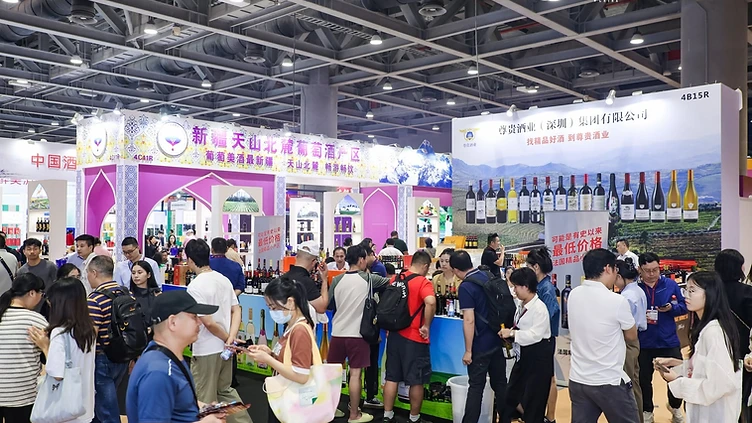
Through INTERWINE’s dedicated Business Matching services, global producers connect with active alcohol distributors servicing Shaanxi, Henan, Sichuan, and adjacent inland provinces. Exhibiting at national trade showcases allows brand owners to meet pre-qualified procurement heads, evaluate competitor pricing, and establish direct territorial distribution agreements.
Producers ready to expand their commercial footprint beyond saturated coastal regions can review booth packages and secure space via Become an Exhibitor. Buyers planning sourcing trips can register through Book Your Visit to connect directly with visiting estates.
Sources
- Dezan Shira & Associates / China Briefing (2025): https://www.china-briefing.com/news/chinas-wine-market-outlook-trends-and-opportunities/
- Journal of Wine Economics, Anderson, K. (2023): https://wine-economics.org/wp-content/uploads/2023/10/5-Vol-18-Issue-No-2-Whats-happened-to-the-wine-market-in-China-by-Kym-Anderson.pdf
- The Observatory of Economic Complexity (OEC) China Bilateral Product Trade: https://oec.world/en/profile/bilateral-product/wine/reporter/chn
Key Takeaways
- —Xi'an acts as the primary commercial distribution gateway for central and northwestern Chinese alcohol markets.
- —The Chang'an China-Europe Railway Express enables 14- to 18-day rail transit from Europe, drastically reducing logistics lead times compared to maritime routes.
- —Local demand is diversifying from heavy corporate red wine banqueting into boutique bistros and lifestyle retail driven by younger urban professionals.
- —Servicing Shaanxi via coastal intermediaries often creates margin leakage; direct partnerships with regional distributors yield superior market penetration.
- —Direct participation in trade exhibitions and structured business matching programs provides the fastest path to contract qualified inland buyers.
Frequently Asked Questions
Why should international wineries target Xi'an rather than focusing exclusively on Shanghai or Shenzhen?
Tier-1 coastal markets have high shelf competition, saturated distribution channels, and premium customer acquisition costs. Xi'an offers an expanding consumer base with strong disposable income, serving as the commercial and transport hub for millions of consumers across northwestern China.
How does the China-Europe freight train benefit European wine exporters shipping to Xi'an?
The Chang'an China-Europe Railway Express links European rail heads directly to the Xi'an International Port Station in approximately 14 to 18 days. This cuts ocean freight lead times by two-thirds, reducing transit volatility and improving cash-flow cycles for seasonal sales.
What wine styles are seeing the highest growth in Xi'an?
While structured red wines (Cabernet Sauvignon, Syrah) retain dominant market share in corporate banqueting and formal gifting, crisp aromatic whites, sparkling wines, and organic labels are accelerating rapidly across urban wine bistros and casual dining venues in Gaoxin and Qujiang.
What regulatory approvals are needed to import wine through Xi'an customs?
Foreign producers must be registered under GACC Decree 248, comply with national food safety standards (GB 2758 and GB 7718 for compliant Chinese back-labeling), and coordinate with a licensed Chinese import entity for customs declaration, duty assessment, and inspection clearance.