How to Prepare for Meetings With Chinese duty-free buyers
A commercial preparation guide for winery export directors pitching to Chinese duty-free buyers, detailing channel economics, SKU compliance, presentation frameworks, and negotiation dynamics.
To successfully prepare for meetings with Chinese duty-free buyers, export directors must pivot away from conventional generic distribution pitches and align directly with travel retail dynamics. Chinese travel retail operates under distinct commercial parameters, centralized state-licensed procurement models (such as China Duty Free Group / CDFG, CNSC, and regional airport concessionaires), and rigorous shelf-velocity requirements. A winning pitch requires precise CIF/FOB modeling, localized packaging, duty-free-exclusive SKU strategies, and clear marketing investment commitments.
According to trade reporting by BestWineImporters (2024), standard domestic bottled still wine imports entering mainland channels face a combined tax burden of roughly 48% to 50%—including a 14% customs tariff, 10% consumption tax, and 13% Value-Added Tax (VAT). In contrast, the duty-free channel circumvents these standard consumer-facing retail markups. However, buyers do not simply hand that 50% margin back to the producer; instead, duty-free category managers demand steep supplier discounts, listing fees, promotional allowances, and guaranteed gross margins to justify prime travel retail placement.
Here is how winery export directors can structure their commercial, operational, and presentation strategy to secure listings with Chinese travel retail operators.
Understanding the Duty-Free Ecosystem in China
Unlike decentralized regional on-trade networks, Chinese travel retail procurement is concentrated among major licensed operators. Understanding the institutional scale and retail footprint of these entities dictates how you approach negotiations:
- Offshore Island Duty-Free (Hainan Free Trade Port): Hainan represents one of the largest concentrations of domestic tourist duty-free spending in the world. Consumers buying in Hainan are domestic Chinese travelers with specific annual purchase allowances, seeking prestige, gift-readiness, and price advantages over mainland Tier-1 retail.
- International Airport & Border Hubs: Concessions in gateway hubs like Shanghai Pudong (PVG), Beijing Capital/Daxing (PEK/PKX), and Guangzhou Baiyun (CAN) target outbound and inbound international travelers, high-net-worth business commuters, and international tourists.
- Downtown Duty-Free Concessions: Expanding urban duty-free outlets targeting pre-travel shopping demand refined display presentation and high-touch merchandising.
As the USDA Foreign Agricultural Service observed in its Wine Market Update 2025, overall mainland wine consumption has experienced structural adjustments, prompting buyers across retail and institutional channels to scrutinize inventory turnover and favor brands with proven consumer recognition. Duty-free buyers will not take a bet on slow-moving inventory; your commercial presentation must prove immediate visual and brand pull.
1. Commercial Structuring: Duty-Free Unit Economics
One of the most common mistakes export managers make is submitting their standard mainland distributor price sheet. Duty-free buyers expect an entirely separate pricing architecture.
Margin Expectations and Supplier Pricing
Duty-free concessionaires operate expensive terminal leases and complex logistics nodes. Consequently, their retail gross margins often exceed 50% to 65%. When calculating your offer:
- FOB / CIF Commercial Transparency: Present quotes in both FOB (loading port) and CIF (major bonded hub, such as Haikou or Shanghai). State exact pallet configurations, cases per pallet, and lead times.
- Retail Price Indexing (MSRP): Duty-free buyers compare your proposed retail shelf price against both your domestic mainland Chinese retail price (e.g., Tmall, JD.com, Ole' Supermarkets) and global travel retail benchmarks (e.g., Singapore Changi, Hong Kong International). If your wine is sold on mainland cross-border e-commerce at deep discounts, the duty-free buyer will flag this margin cannibalization immediately.
- Listing & Marketing Funds (A&P): Chinese duty-free buyers routinely demand co-op advertising budgets, high-profile promotional space fees (gondola heads, tasting bars), and digital exposure on the operator's mini-programs. Budget 10% to 20% of your initial contract value for channel-specific marketing.
2. Portfolio Selection: Curating the Duty-Free SKU Matrix
Shelf space in airport transit zones and island duty-free malls is finite. Buyers are not looking to list an estate's complete vertical of six standard varietals; they want dedicated, commercial SKUs engineered for travelers.
| Product Archetype | Primary Buyer Motivation | Ideal Specification | | :--- | :--- | :--- | | Gifting & Prestige Sets | High average order value (AOV); social status gifting | Heavyweight bottles, wooden gift boxes, embossed Chinese brand narrative, multi-bottle luxury sets | | Travel Retail Exclusives (TRE) | Avoiding domestic price comparisons | Distinct blends, bespoke labels, alternative formats (e.g., twin-packs, 1-liter or 1.5-liter Magnums) | | Icon / Single-Vineyard Bottles | Connoisseurs, collectors, high-net-worth travellers | High critic ratings (95+ points), limited-production allocations, numbered bottles |
Chinese consumers frequently purchase wine in travel environments for business gifting or social occasions. Packaging aesthetics—capsule quality, gift-box sturdiness, and tamper-proof security seals—are vetted just as rigorously as the liquid inside.
3. Compliance, Logistics, and Bonded Clearance
While duty-free goods enjoy exemption from domestic retail duties, they are subject to strict regulatory supervision by the General Administration of Customs of China (GACC):
- GACC Producer Registration (Decree 248/249): Any winery exporting to mainland duty-free bonded zones must maintain active producer registration with GACC. Ensure your registration code is active and clearly documented in your presentation dossier.
- Labeling & Traceability: Depending on whether goods move through offshore duty-free bonded facilities or cross-border bonded zones, secondary back-labeling requirements vary. Ensure that technical sheets reflect net content, accurate alcohol by volume (ABV), and allergen disclosures that conform to national standards.
- Temperature-Controlled Logistics: Buyers will ask for proof of reefers (temperature-controlled shipping containers) and cold-chain integrity from cellar to China bonded warehouse. A single batch of spoiled, heat-struck wine inside a high-profile airport terminal represents substantial brand and commercial liability.
4. The In-Person Meeting: Pitch Deck and Negotiation Protocol
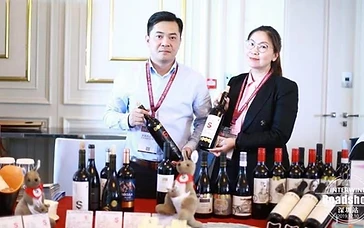
When meeting category heads from major Chinese duty-free companies—whether during structured procurement rounds or on-site at major industry exhibitions—your pitch must be concise, data-driven, and commercial.
Recommended 20-Minute Meeting Structure:
├── 00-03 min: Executive summary & winery origin (concise credentials)
├── 03-08 min: Duty-Free Exclusive portfolio & gift packaging showcase
├── 08-14 min: Commercial terms, pricing waterfall, and retail margin model
├── 14-17 min: Sell-through activation plan (staff incentives, digital mini-programs)
└── 17-20 min: Q&A, tasting assessment, and sampling timeline
Professional Protocol and Collateral
- Dual-Language Collateral: Never provide materials solely in English. Provide bilingual spec sheets printed on heavy stock, featuring simplified Chinese tasting notes that emphasize body, fruit purity, prestige awards, and aging potential.
- WeChat Enterprise Connectivity: Ensure your team's WeChat business cards and QR codes are ready for instant connection. Email is treated as a secondary documentation archive; day-to-day negotiation and preliminary document exchange move via WeChat.
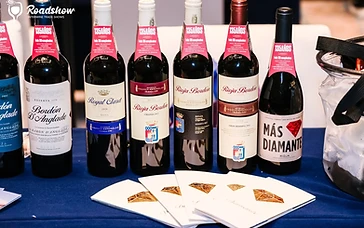
- Tasting Protocol: Bring pristine bottle samples packed in temperature-stabilized transit cases. Open the bottles ahead of time if aeration is required, and use premium glassware. If meeting at an exhibition booth, ensure your tasting counter reflects the luxury positioning of your estate.
Producers seeking direct engagement with mainland retail buyers and duty-free procurement managers can explore trade platforms and direct sourcing summits. To evaluate participation and stand space for key Chinese sourcing cycles, examine how to become an exhibitor at upcoming editions.
5. Post-Meeting Execution: From Tasting to Trial Order
Securing commercial agreement on a term sheet is only the initial step. Conversion into a binding Purchase Order (PO) requires deliberate post-meeting pipeline management:
- Immediate WeChat & Official Email Summary: Send a concise summary within 24 hours outlining agreed commercial terms, target retail price, proposed promotional support, and sample dispatch numbers.
- Compliance Dossier Hand-off: Deliver lab analysis reports, certificates of origin, and sanitary documentation to their customs clearance department promptly.
- Staff Training Commitment: Duty-free floor staff make or break wine sell-through. Commit in your contract to supplying brand ambassador training modules, scripted selling points in Mandarin, and floor-staff sales incentive schemes.
To better understand regional distribution networks, review our analysis on market insights, or coordinate targeted meetings in advance using structured business matching services.
Conclusion
Chinese duty-free channels present attractive volume and high-visibility prestige for wineries ready to invest in channel-specific execution. Success requires moving past generic import propositions to deliver clear travel retail margins, compliant bonded logistics, gift-focused packaging, and sustained promotional activation. Producers that prepare their compliance, pricing, and localized commercial narratives methodically will secure lasting positions on China’s premier travel retail shelves.
Sources
- BestWineImporters (2024), A Wine Exporter’s Guide to Finding Buyers in China and Working with Chinese Wine Importers: https://www.bestwineimporters.com/blog/resources/a-wine-exporters-guide-to-finding-buyers-in-china-and-working-with-chinese-wine-importers/
- USDA Foreign Agricultural Service (2025), Wine Market Update 2025 (People's Republic of China): https://apps.fas.usda.gov/newgainapi/api/Report/DownloadReportByFileName?fileName=Wine+Market+Update+2025_Shanghai+ATO_China+-+People%27s+Republic+of_CH2025-0190.pdf
- Decanter (2015), Chinese wine in duty-free shops worldwide: https://www.decanter.com/wine-news/chinese-wine-in-duty-free-shops-worldwide-94904/
Key Takeaways
- —Standard mainland wine imports incur nearly 50% in combined taxes (14% customs duty, 10% consumption tax, 13% VAT), whereas duty-free bypasses consumer retail duties but demands 50%+ gross margin structures from producers.
- —Duty-free category managers look for travel-exclusive SKUs, prestige gifting formats, and high-scoring bottles that prevent price comparison with domestic mainland e-commerce channels.
- —Wineries must ensure active GACC facility registration under Decrees 248/249 and demonstrate cold-chain integrity before entering mainland bonded clearance.
- —Presentations must include bilingual simplified Chinese collateral, clearly structured FOB/CIF pricing waterfalls, and concrete commitments to WeChat mini-program marketing and on-site staff training.
- —Follow-up must occur via enterprise WeChat alongside formal email, delivering compliance dossiers and trial sampling schedules within 24 hours.
Frequently Asked Questions
How do margin expectations differ between Chinese duty-free buyers and general mainland distributors?
General mainland distributors purchase at commercial prices and pass on an aggregate tax burden of approximately 48% to 50% (customs duty, consumption tax, and VAT) to the retail market. In contrast, duty-free concessionaires demand that tax savings be built into their own gross retail margins, which typically sit between 50% and 65%. Exporters must offer competitive FOB/CIF rates that preserve retail operator profitability.
What product packaging works best for Chinese travel retail?
Gifting packaging performs best, including dual-bottle gift boxes, embossed gift cartons, and magnum formats (1.5L). Travel retail exclusives (TRE)—unique blends, specific label variants, or collector editions—are preferred by buyers because they prevent instant online price-checking against mainland domestic e-commerce platforms.
What regulatory filings are required before shipping wine to Chinese duty-free bonded zones?
Wineries must possess an active production facility registration code issued by the General Administration of Customs of China (GACC) under Decrees 248 and 249. Shipments must also include official certificates of origin, sanitary/phytosanitary certificates, certified lab test reports, and compliant Chinese label data.
How important is digital marketing support when negotiating a duty-free listing?
Duty-free buyers rarely list unpromoted wines without guaranteed marketing support. Successful pitches include committed advertising and promotional (A&P) budgets (typically 10% to 20% of initial contract value) designated for operator WeChat mini-programs, in-store tasting bars, floor staff sales incentives, and holiday gifting campaigns.