How to Prepare for Meetings With Chinese hotel beverage directors
Master the commercial realities of pitching to luxury Chinese hotel beverage directors. Learn operational margins, on-premise procurement dynamics, and trade presentation strategies.
Securing wine list placements in luxury hotel groups and high-end dining destinations across China requires a sophisticated commercial posture. For international wineries and export managers, understanding how to prepare for meetings with Chinese hotel beverage directors means moving beyond romanticized terroir descriptions and aligning directly with the operational realities of five-star hospitality in Shanghai, Beijing, Shenzhen, and Chengdu.
Chinese hospitality procurement is rigorous, data-driven, and governed by strict cost metrics, inventory turns, and culinary compatibility. As reported in the Journal of Wine Economics (Anderson & Puga, 2024–2025 research on China's beverage market), the country’s wine market has undergone profound rationalization, shifting buyer behavior toward high-efficiency SKUs, accessible premiumization, and targeted dining experiences. To succeed, export directors must arrive at the tasting table fully versed in Chinese hotel procurement structures, margin requirements, logistics models, and staff training capabilities.
Deciphering the Hotel Hierarchy: Who Really Makes the Buying Decision?
In international-chain properties—such as Marriott International, Hyatt, Accor, or Shangri-La—as well as boutique domestic luxury hotels, purchasing authority is rarely held by a single individual. When preparing for meetings, export executives must tailor proposals to satisfy a three-tiered decision structure:
- The Beverage Director / Head Sommelier: Evaluates organoleptic quality, food-pairing versatility (particularly across regional Chinese cuisines such as Cantonese, Huaiyang, and Sichuan), brand narrative, and staff training support.
- The Food & Beverage (F&B) Director: Focuses on macro performance metrics, including beverage cost percentages (typically targeted between 22% and 30%), inventory turnover rates, banquet bundle viability, and overall gross operating profit (GOP).
- The Director of Procurement / Purchasing: Governs supplier qualification, tax invoicing (the mandatory Chinese fapiao), distributor stability, continuous supply guarantees, and credit payment terms (often ranging from 60 to 90 days).
If a winery pitches without a verified local importer or distributor who can provide cleared, duty-paid domestic stock with legal Chinese back labels and valid fapiao, a beverage director cannot list the wine—regardless of how exceptional the tasting score is.
Commercial Preparation: Costing, Margins, and Pricing Architecture
A common pitfall among foreign wineries is presenting Ex-Works (EXW) or Free on Board (FOB) price sheets to on-premise beverage buyers. Chinese hotel beverage directors calculate profitability backward from the final guest menu price.
The On-Premise Cost Breakdown
To command respect during commercial negotiations, you must present your commercial model in local Chinese Yuan (RMB) DDP (Delivered Duty Paid) terms through your designated domestic distributor:
- Import Costs & Duties: Account for import tariffs, consumption tax, and the standard 13% Value-Added Tax (VAT).
- Distributor Margin: Chinese on-premise fine-wine distributors usually require gross margins between 25% and 35% to service hotel accounts.
- Hotel Pouring & List Margins: Five-star hotels in tier-1 Chinese cities calculate target beverage margins between 65% and 78% on by-the-glass (BTG) programs, and 55% to 68% on by-the-bottle cellar lists.
- Listing & Listing Fee Realities: While explicit listing fees have declined in favor of commercial value-adds, properties expect wineries and distributors to provide promotional allowances, staff incentives, or volume-rebate arrangements.
If an export manager cannot show how a bottle costing RMB 120 DDP to the distributor lands on the hotel’s list at RMB 480 to RMB 650 with sustainable margins for all stakeholders, the meeting will end without a listing.
Curating the Presentation: Pitching to the Modern Chinese On-Premise Palate
Recent market intelligence, including findings published by The Drinks Business (2025) regarding Chinese on-premise drinking occasions, underlines that the era of relying solely on heavy, oak-dominated reds for formal banqueting has shifted. While classic prestige appellations (such as Bordeaux, Napa, and Super Tuscans) maintain status-driven positions, luxury hotel beverage directors now curate menus targeting younger, discerning diners who seek fresh gastronomic discoveries.
Strategic Portfolio Segmentation
Structure your portfolio presentation into distinct commercial pillars rather than presenting your entire estate range:
- The By-The-Glass (BTG) Engine: Accessible, fruit-forward, clean whites, structured dry rosés, or refreshing sparkling wines with stable price points and screwcap or high-integrity closures that minimize oxidation losses during multi-day service.
- The Signature Gastronomic Pairing: Wines tailored to the hotel's anchor restaurant. If pitching to a Cantonese dining room, focus on wines with crisp natural acidity, minimal new oak, and subtle minerality that complement delicate dim sum and seafood.
- The Coravin / Private Dining Room (PDR) Selection: High-scoring, story-driven single-vineyard bottlings aimed at corporate dinners and VIP guests where label prestige, unique allocation provenance, and presentation packaging (heavy bottles, gift boxes) matter.
Value-Add Commitments: Staff Training and Digital Enablement
Beverage directors in China operate under acute staffing pressures. High turnover among frontline service staff means sommelier teams constantly train new personnel. An international producer who offers concrete educational tools holds a decisive competitive edge over a competitor offering wine alone.
When meeting with beverage directors, provide a structured activation commitment:
- Bilingual Wine Collateral: Fully localized Chinese-language tasting notes with phonetically accessible Mandarin translations, food-pairing guides, and clear pronunciation guides for service teams.
- Digital Assets via WeChat: Mini-program assets, short educational videos, and digital masterclass recordings that staff can access on their personal smartphones.
- Staff Incentive & Training Programs: Commit to conducting annual on-site masterclasses for the front-of-house team, sommelier certifications support, or formal staff recognition programs.
- Winemaker Dinners: Schedule physical market visits during key trade windows. Beverage directors leverage direct winemaker involvement to sell out high-ticket wine dinners in their private dining rooms.
Practical Meeting Protocol and Negotiation Etiquette
Navigating face-to-face meetings with Chinese hospitality buyers requires professional punctuality, cultural respect, and technical exactitude:
- Sample Logistics & Preparation: Ship samples weeks in advance via temperature-controlled domestic channels. Ensure samples are rested; never pour bottles that arrived via international airfreight 48 hours prior. Verify that tasting samples are poured at precise service temperatures.
- Digital Contact Exchange: Professional communication in mainland China is conducted on WeChat. Have your professional WeChat QR code ready on your smartphone; business cards remain useful, but business discussions, sample tracking, and document exchanges happen inside WeChat threads.
- Respecting Time Limits: Hotel beverage directors oversee busy lunch and dinner operations. Limit your presentation to 30 focused minutes: 10 minutes on commercial positioning and distribution, 15 minutes of structured tasting, and 5 minutes on activation and staff training.
How Interwine Accelerates On-Premise Market Access
Direct cold calling on individual luxury hotels is inefficient and yields low conversion rates. Establishing connections requires an environment where verified buyers and top decision-makers actively source new inventory.
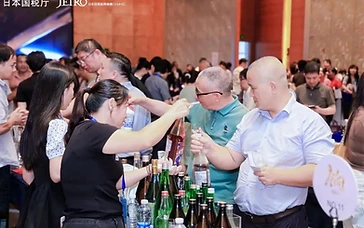
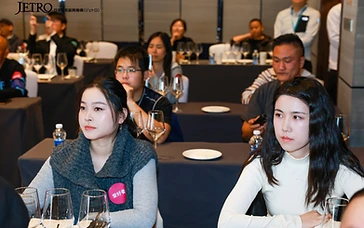
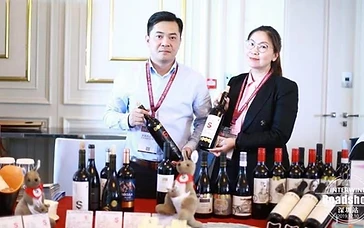
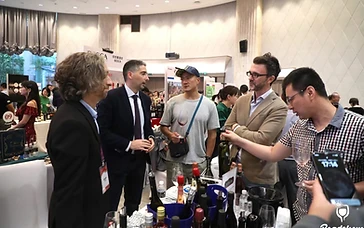
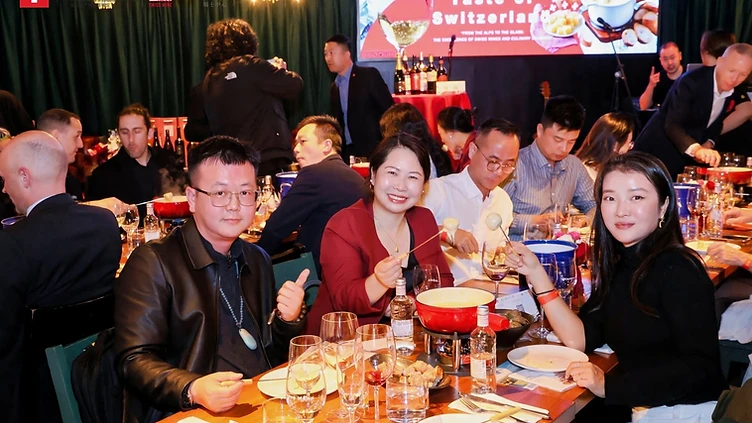
Exhibiting at major trade platforms bridges this gap. When brands decide to Become an Exhibitor at INTERWINE, they gain structured access to luxury hospitality buyers across mainland China. Interwine organizes targeted B2B roadshows, VIP sommelier delegations, and on-site Business Matching meetings specifically connecting international wineries with procurement leads, restaurant owners, and five-star beverage directors.
To discover how international brands establish high-margin hotel placements, review our comprehensive Market Insights and align your market entry strategy with certified trade dynamics.
Conclusion: Turning Tastings Into Long-Term Cellar Listings
Winning on-premise hotel accounts in China demands far more than great viticulture. It requires an actionable commercial framework that resolves the beverage director’s real-world operational challenges: guaranteed domestic fulfillment, balanced guest pricing, healthy beverage cost percentages, and turnkey staff training.
By arriving at meetings armed with DDP distributor figures, verified fapiao compliance, and tailored gastronomic pairings, export directors transform exploratory tastings into sustainable, multi-property cellar placements.
Sources
- Cambridge University Press: Journal of Wine Economics (Anderson & Puga, 2024–2025)
- The Drinks Business: ProWine China On-Premise Insights (2025)
- EU SME Centre: Selling Wine in China Market Report
- VVR International: Chinese Wine Market Trends (2026)
Key Takeaways
- —Present pricing exclusively in RMB DDP through a licensed domestic distributor equipped to issue official fapiao invoices.
- —Target hotel beverage cost targets of 22% to 30%, building in sufficient gross margin for distributors (25-35%) and hotel lists (55-78%).
- —Tailor wine selections to specific dining room formats, especially regional Chinese cuisines, rather than offering a generic European portfolio.
- —Equip front-of-house teams with localized, bilingual WeChat digital tools and committed staff masterclasses to overcome high service turnover.
- —Leverage structured trade exhibitions and business matching platforms to bypass gatekeepers and meet qualified hotel procurement directors directly.
Frequently Asked Questions
Can I pitch a Chinese hotel beverage director if I do not have a local Chinese importer?
Direct pitches without local import infrastructure rarely succeed. International luxury hotel chains in China require legal domestic delivery, Chinese back labeling, customs quarantine clearance, and official VAT invoices (fapiao). If you do not have an importer, focus your initial pitch on securing a distribution partner, or utilize platforms like Interwine to connect with distributors who already service hotel accounts.
What beverage cost percentage do five-star hotels in China typically require?
Most international five-star properties in tier-1 Chinese cities target an overall beverage cost percentage between 22% and 30%. On by-the-glass (BTG) programs, hotels frequently target pouring cost margins of 68% to 78%, meaning your domestic wholesale price must allow for a 4x to 5x markup on the guest menu.
How important is Chinese food pairing when pitching to hotel buyers?
Critical. While luxury hotels operate Western steakhouses and all-day dining outlets, their highest-volume banqueting and private dining revenue originates in Chinese restaurants (Cantonese, Huaiyang, Sichuan). Demonstrating that your wines complement Cantonese dim sum, seafood, or delicate poultry gives your brand a commercial edge over competitors presenting only Western pairings.
What communication platform should be used to follow up after the meeting?
WeChat is the universal standard for B2B communication in China. Export directors should have their personal and brand WeChat QR codes ready. Professional follow-ups, spec sheets, Chinese-language tasting decks, and logistics coordination are predominantly handled via WeChat rather than corporate email.