
Measuring China Wine Market Entry Results
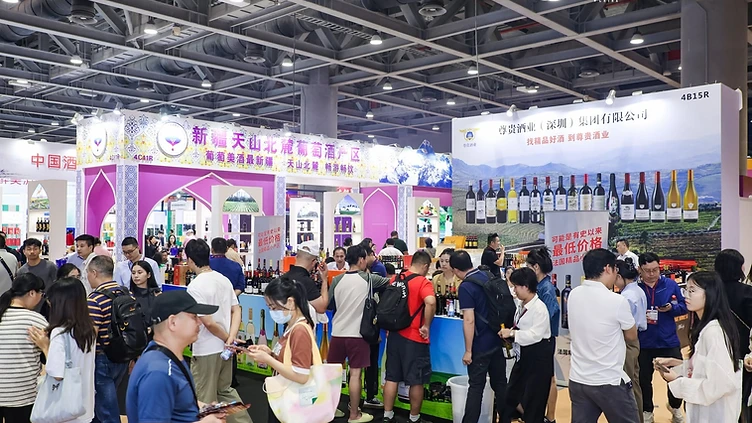
Discover how international wineries can accurately track, audit, and measure China wine market entry results, moving beyond shipment volumes to sustainable depletions and channel profitability.
For international wineries entering China, commercial success cannot be evaluated solely by the volume of cases cleared through customs. Measuring China wine market entry results requires a granular, audit-driven framework that tracks whether imported inventory converts into sustainable depletions, active secondary distribution, and profitable reorders.
Historically, brand owners celebrated initial container shipments as immediate market validation. However, as the Chinese wine market matured through structural consolidation, shifting consumption occasions, and tariff recalibrations—such as the lifting of punitive tariffs on Australian wine in March 2024 documented by the University of Adelaide’s Wine Economics Research Centre—many producers discovered that initial shipments merely sat idle in bonded warehouses. To achieve durable commercial viability, export directors must replace vanity metrics with rigorous operational indicators tailored to mainland China's dynamic trade landscape.
The Shift from Sell-In to Sell-Through Metrics
The fundamental error in early-stage market assessment is treating sell-in—the initial volume purchased by an importer—as proof of consumer demand. True market performance in China is dictated by sell-through and depletions across provincial and tier-based sub-distributors.
According to analysis from Best Wine Importers (2025), China's bottled wine import sector has experienced significant market polarization. While volume contracted across several traditional origin countries, premium offerings maintained elevated value, with Australian imports commanding average prices exceeding $17 per liter and Italian exports shifting toward higher-value shipments above $8 per liter. In an environment where the mid-market segment faces compression, tracking inventory velocity within secondary channels is essential. Key parameters include:
- Depletion Velocity by Tier: Auditing how rapidly stock transitions from the primary importer’s central warehouse into on-premise venues, specialist wine bars, and regional retail outlets across Tier 1 (Shanghai, Beijing, Shenzhen, Guangzhou) and high-growth New Tier 1 cities (Chengdu, Hangzhou, Wuhan).
- Reorder Cadence: Evaluating whether reorders follow a regular 60-to-90-day cycle rather than an erratic, one-off annual replenishment.
- Stock-to-Sales Ratio: Maintaining a healthy inventory ratio where distributor warehouse holdings do not exceed 3 to 4 months of verified sales.
Export managers can analyze broader macro-level trade flows across origin countries by consulting Market Insights.
Quantitative Commercial Metrics: Margins, Dwell Times, and Accounts
A rigorous measurement scorecard should track both commercial and operational efficiency. Measuring China wine market entry results requires tracking specific operational variables:
- Days Sales of Inventory (DSI) in Bonded Zones: Excessive dwell time inside Chinese customs bonded facilities signals pricing friction, labeling compliance bottlenecks, or speculative over-purchasing by importers.
- Channel Gross Margins: Monitoring whether your Recommended Retail Price (RRP) is protected across online platforms such as Tmall, JD.com, and Douyin, as well as offline dining accounts. Uncontrolled discounting by grey-market parallel traders erodes brand equity and paralyzes legitimate distributor margins.
- Active Account Penetration: The absolute number of unique commercial doors (bistros, corporate dining rooms, boutique bottle shops) consistently pouring or displaying your SKUs, rather than aggregate cases shipped to a single regional wholesaler.
Wineries seeking vetted commercial counterparties can optimize their trade relationships through curated Business Matching meetings.
Qualitative Indicators: Brand Equity, Digital Sentiment, and Palate Alignment
Quantitative trade metrics provide only half the diagnostic picture. Because Chinese consumer habits are heavily shaped by digital ecosystems and shifting dining occasions, qualitative indicators serve as leading signals for commercial longevity.
As reported by wine industry authorities Fongyee Walker MW and Edward Ragg MW in the World of Fine Wine (2025), mainland wine culture is transitioning away from institutional banquet consumption toward authentic personal enjoyment, dining pairings, and boutique appreciation. In parallel, market observations by Jane Anson (2025) highlight expanding consumer curiosity for varied varietals, white wines, and pairing-friendly profiles.
To gauge qualitative resonance, wineries should audit:
- Social Voice and User-Generated Content (UGC): Monitoring organic engagement and tasting notes across platforms like Xiaohongshu (RED) and WeChat Channels. Are young, affluent urban consumers discussing your tasting notes, vineyard heritage, and food pairing flexibility?
- Sommelier and Key Opinion Leader (KOL) Endorsements: Gaining presence on by-the-glass (BTG) programs in Michelin-starred and Black Pearl-rated restaurants in commercial hubs.
- Trade Loyalty and Feedback: Receiving actionable product feedback from regional wine merchants, club managers, and event organizers regarding bottle design, closure preferences, and alcohol perception.
Producers seeking to showcase their portfolios directly to certified industry decision-makers should consider applying to Become an Exhibitor at upcoming trade exhibitions.
The Post-Entry Audit: 6, 12, and 24-Month Review Framework
Systematic benchmarking prevents prolonged capital misallocation. Producers must divide their market entry review into three structured audit windows:
Month 6: Operational and Compliance Clearance
- Validate that Chinese back-label registration, customs documentation, and trademark registrations (in both Latin script and localized Chinese characters) are fully secured.
- Confirm clearance of the first commercial order without customs detention or regulatory penalties.
- Measure initial distributor placement across agreed priority accounts.
Month 12: Velocity, Price Integrity, and Channel Cohesion
- Audit secondary depletion rates from the importer to downstream retail and hospitality outlets.
- Inspect e-commerce price integrity across JD.com, Taobao, and social commerce livestreams to confirm minimum advertised price (MAP) compliance.
- Review the initial reorder rate: Did the importer execute a second container purchase within 9 to 12 months?
Month 24: Regional Expansion and Profitability
- Assess geographic diversification beyond the importer’s home city into secondary regional markets.
- Measure net brand profitability, deducting trade support, promotional discounts, and localized marketing co-investments.
- Determine whether to expand the SKU lineup (e.g., introducing single-vineyard reserves or white varietals) based on verified point-of-sale data.
Mitigating Underperformance: Adjusting Routes-to-Market
When entry metrics reveal stagnation—such as high DSI, declining reorder sizes, or collapsed digital price points—wineries must act swiftly rather than abandoning the market.
Underperformance often stems from partnering with an incompatible importer whose core distribution does not match your wine's price segment or narrative. For instance, placing a boutique organic estate with a volume-focused supermarket distributor frequently leads to stalled depletions. Conversely, partnering with a high-end specialist who lacks regional reach can restrict sales to a single city.
If trade velocity falters, wineries should restructure their contract terms, re-examine exclusive territorial rights, or partition distribution between on-premise specialists, corporate gifting agents, and regional sub-distributors. Wineries planning their on-the-ground visit to recalibrate distributor relationships can review the Arrival and Transportation guide to coordinate efficient itineraries across major Chinese commercial centers.
Conclusion: Moving from Market Entry to Market Presence
Measuring China wine market entry results requires shifting focus from the exit port to the end table. Brands that succeed in China do not measure progress solely by initial export documentation; they evaluate continuous cellar turnover, distributor margin health, digital brand equity, and sustained reorder rhythms. By implementing a systematic multi-tier measurement framework, international wineries can build a sustainable, commercially resilient presence across China’s evolving wine sector.
Sources
- Best Wine Importers (2025): China Wine Importers and Wine Import Trends 2025 Update, https://www.bestwineimporters.com/blog/news/china-wine-importers-and-wine-import-trends-2025-update/
- University of Adelaide Wine Economics Research Centre (2024): China's Wine Market: What Next?, https://economics.adelaide.edu.au/wine-economics/ua/media/418/wine_brief_52_china_wine_market_what_next.pdf
- World of Fine Wine (2025): China's Fine-Wine Markets: Failing or Changing?, https://worldoffinewine.com/news-features/chinas-fine-wine
- Jane Anson (2025): Market Insights: Chinese Wine Industry in 2025, https://janeanson.com/market-insights-chinese-wine-industry-in-2025?srsltid=AfmBOoqgBJwI3rQjKLUaNuiigWn-hK5AmMqDb0gJDm_6xZPok9zGqFFm
- OEC World: Wine in China Trade Overview, https://oec.world/en/profile/bilateral-product/wine/reporter/chn
Key Takeaways
- —Initial container sell-in volume is a vanity metric; true commercial viability in China requires auditing secondary depletions and distributor sell-through.
- —China's wine import landscape has polarized, with premium categories maintaining high value while mid-market wines face margin and stock pressure.
- —Quantitative benchmarks must track Days Sales of Inventory (DSI) in bonded warehouses, price integrity across digital channels, and active on-premise doors.
- —Qualitative signals such as authentic Xiaohongshu engagement, sommelier placements, and trade masterclass feedback serve as critical early indicators of demand.
- —A formal audit schedule at 6, 12, and 24 months enables wineries to protect brand margins and adjust distributor partnerships before capital is lost.
Frequently Asked Questions
Why is sell-in volume misleading when measuring China wine market entry results?
Sell-in simply tracks the volume purchased and cleared by an importer. In China's market, stock can remain unsold in bonded warehouses or distributor depots for months. Real commercial health must be measured by sell-through to sub-distributors, retail venues, and final consumers, paired with consistent 60-to-90-day reorder cadences.
What is an acceptable Days Sales of Inventory (DSI) benchmark for imported wine in China?
A healthy distributor benchmark typically maintains between 90 and 120 days (3 to 4 months) of forward inventory. DSI extending past 180 days frequently indicates pricing resistance, sluggish channel velocity, or downstream channel blockages.
How can an international winery protect price integrity across Chinese e-commerce platforms?
Wineries should establish legally binding distributor agreements with strict Minimum Advertised Price (MAP) stipulations, monitor platforms like Tmall and JD.com through digital monitoring software, and maintain IP control through trademark registrations in China to restrict unauthorized grey-market importers.
What role does Xiaohongshu (RED) play in evaluating qualitative entry performance?
Xiaohongshu is a premier lifestyle platform for China's young, affluent consumers. Organic user-generated reviews, bottle aesthetic mentions, and pairing notes provide unfiltered consumer sentiment that signals organic brand awareness and retail pull.
When should a winery consider restructuring its China distribution partner?
If an importer shows zero reorders after 12 months, accumulates excessive inventory, discounts below agreed price floors, or fails to place products outside a single municipal territory, wineries should evaluate contractual exit clauses and realign with specialized regional partners.