China Wine Launch Budget Guide
A commercial breakdown of a China wine launch budget for international producers, covering CIFER compliance, customs duties, cold-chain logistics, B2B matching, and localized marketing.
To launch a wine brand in China successfully, an international producer should plan for a realistic first-year capital outlay between $30,000 and $85,000 USD (excluding commercial production inventory). This budget must be allocated across five core cost pillars: regulatory compliance and registration, customs clearance and fiscal charges, cold-chain logistics, structured B2B commercial matching, and localized digital branding. Producers who attempt market entry relying solely on distributor margins without co-investing in trade engagement typically fail within 12 to 18 months.
According to MS Advisory (2025), China's wine market achieved an estimated valuation of $40.4 billion USD in 2024 and continues to expand at a compound annual growth rate exceeding 11%. However, the distribution landscape has bifurcated: volume-driven commercial wines face intense margin compression, whereas premium, terroir-driven, and story-backed boutique wines are capturing targeted demand. Navigating this landscape requires accurate financial planning, direct trade connections, and compliance discipline.
Year-One Budget Allocation Framework
+-------------------------------------------------------------+
| Total Initial Launch Budget: $30,000 - $85,000 USD          |
+-------------------------------------------------------------+
| 1. Regulatory & Compliance:           $2,500  - $5,500  (8%)|
| 2. Logistics, Cold-Chain & Warehousing: $6,000 - $14,000(17%)|
| 3. Customs, Duties & Fiscal Reserve:  $7,500  - $20,000(24%)|
| 4. Trade Access & B2B Matchmaking:   $8,000  - $25,000(30%)|
| 5. Localization & Digital Footprint:  $6,000  - $20,500(21%)|
+-------------------------------------------------------------+
Pillar 1: Regulatory Compliance and Port Registration
Entering China requires compliance with statutory standards administered by the General Administration of Customs of the People's Republic of China (GACC). Overlooking initial compliance documentation results in product rejections, demurrage penalties, or port returns.
GACC Decree 248 and CIFER Registration
Under GACC Decrees 248 and 249, all overseas manufacturing, processing, and storage facilities exporting wine to China must register on the China Import Food Enterprise Registration (CIFER) platform. As documented by the EU SME Centre (2023), wine is classified as a low-risk food category, allowing self-application by producers. Once vetted, GACC issues an 18-digit registration code valid for five years. While the government platform fee is nominal, using bilingual regulatory consultants to audit documents and verify HS code alignments costs between $1,500 and $3,500 USD per estate.
Label Compliance (GB 7718 and GB 15037)
China’s mandatory national food safety standards (GB 7718 for prepackaged food labeling and GB 15037 for wine) require Chinese back labels displaying:
- Product legal denomination and grape varieties
- Alcohol percentage by volume and net contents
- Importer and distributor commercial registrations in mainland China
- Mandatory health warnings and production lot identification
Pre-approving Chinese-compliant back labels and laboratory test certificates for sulfur dioxide, total acid, and dry extract before shipping costs roughly $1,000 to $2,000 USD for a core SKU portfolio.
Pillar 2: Customs, Taxes, and Landed Cost Formulas
Accurately calculating landed costs is critical for setting profitable distribution margins. As reported by BestWineImporters (2024), imported bottled still wine incurs a combined composite tax load of roughly 48% to 50% on top of the Cost, Insurance, and Freight (CIF) value.
Tariff Breakdown for Bottled Still Wine (Under 2L Containers)
- Most-Favored-Nation (MFN) Customs Duty: 14% of CIF port value (countries with Bilateral Free Trade Agreements, such as Chile, New Zealand, and Australia, may qualify for 0% preferential tariffs).
- Consumption Tax: 10% applied at customs clearance.
- Value-Added Tax (VAT): 13% statutory benchmark.
The Landed Cost Formula
Composite Tax Multiplier = (Duty + Consumption Tax + VAT) / (1 - Consumption Tax Rate)
For non-preferential tariff nations, the effective combined tax rate is calculated as:
$$\text{Total Import Tax} = \frac{14% + 10% + 13% + (14% \times 13%)}{1 - 0.10} \approx 48.2%$$
Budgeting a fiscal reserve of $7,500 to $20,000 USD guarantees coverage for sample pallets, customs clearance agency fees, bonded warehousing deposits, and inspection charges upon arrival at major entry ports like Shanghai, Shenzhen, or Guangzhou.
Pillar 3: Logistics and Bonded Storage
Wine quality is vulnerable to temperature swings along maritime shipping routes and inside regional Chinese warehouses during summer.
Temperature-Controlled Shipping (Reefer Containers)
Exporting premium wine requires temperature-controlled reefer containers holding cargo between 12°C and 16°C. While standard dry containers might save $1,200 to $2,000 USD per 20ft box, the thermal exposure during transshipment through equatorial corridors introduces high spoilage risks. Wineries should budget $4,000 to $8,000 USD for sea freight, insurance, and reefer plug-in fees at terminal yards.
Local Storage and Distribution Warehousing
Upon customs clearance, wines must remain in temperature-controlled domestic facilities. Storing an initial pilot inventory (200 to 500 cases) in bonded or licensed domestic cold-chain warehouses costs $300 to $700 USD per month ($3,600 to $8,400 USD annually), based on current municipal rates across the Yangtze River Delta and Greater Bay Area.
Pillar 4: B2B Commercial Matching and Buyer Acquisition
Direct commercial engagement represents the single largest determining factor for market viability. Generic trade advertising rarely leads to commercial contracts in China. Instead, high-margin brand traction relies on targeted buyer acquisition.
+--------------------------------------------------------------------------+
| Route-to-Market Comparison                                               |
+--------------------------------------------------------------------------+
| Metric              | Unassisted Agency Search | Direct B2B Matchmaking   |
+---------------------+--------------------------+--------------------------+
| Average Lead Time   | 9 - 14 Months            | 2 - 4 Months             |
| Qualification Rate  | Low (< 10% active buyers)| High (Pre-screened GACC) |
| Upfront Cash Risk   | High (Unchecked retainers| Predictable / Milestone  |
| Commercial Access   | Tier-1 Off-trade only    | Regional Tier-2/3 & HORECA|
+--------------------------------------------------------------------------+
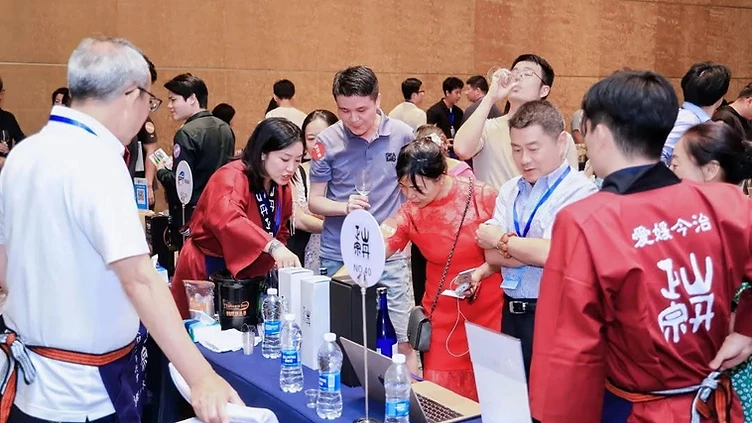
Securing wholesale accounts requires direct meetings with licensed national importers, regional sub-distributors, and hospitality procurement teams. International wineries can secure pre-vetted buyer introductions by scheduling targeted Business Matching meetings alongside dedicated offline showcases. Evaluating partners and reviewing the Exhibitor Directory helps identify where target distributors are already sourcing.
Producers seeking sustained wholesale volume should plan to Become an Exhibitor at established industry trade fairs. Direct participation at INTERWINE puts producers in front of thousands of mainland wine importers, duty-free buyers, and tier-2 and tier-3 beverage distributors. A realistic commercial matching budget ($8,000 to $25,000 USD) covers an exhibition stand, English-to-Mandarin trade interpreters, dedicated sample distribution, and structured meeting rooms.
For more perspective on buyer demographics across major provincial markets, read our comprehensive Market Insights.
Pillar 5: Localization and Digital Market Presence
Wineries cannot simply translate their English website and expect commercial traction. The local trade uses a distinct, domestic digital ecosystem.
Digital Collateral and Official WeChat Accounts
As highlighted in the EU SME Centre (2023) market report, WeChat functions as China's primary business communications and B2B qualification engine. Importers, sommeliers, and purchasing managers expect a winery to have an authenticated WeChat Official Account containing verified technical sheets, brand history, awards, and authorized distribution channels. Setting up an authenticated corporate profile, along with professional translation of tasting notes and brand assets, ranges from $2,500 to $6,500 USD.
Trade Masterclasses and Sommelier Engagement
Educational tastings, region-specific masterclasses, and targeted dinners for trade professionals build lasting brand awareness. A small, five-city tour or specialized masterclass held in commercial hubs like Chengdu, Guangzhou, or Hangzhou runs between $3,500 and $14,000 USD, covering venue buyouts, sommelier service fees, certified wine educators, and invitation management.
Summary Budget Breakdown
+-------------------------------------------------------------------------+
| Expense Item                            | Conservative | Aggressive     |
+-----------------------------------------+--------------+----------------+
| CIFER Setup & GB Label Vetting          | $2,500       | $5,500         |
| Freight (Reefer), Insurance & Handling  | $6,000       | $14,000        |
| Port Clearance, Sample Tax & Lab Tests  | $7,500       | $20,000        |
| B2B Business Matching & INTERWINE Expo  | $8,000       | $25,000        |
| WeChat Enterprise Setup & Localization  | $6,000       | $20,500        |
+-----------------------------------------+--------------+----------------+
| Estimated First-Year Commercial Budget  | $30,000      | $85,000 USD    |
+-----------------------------------------+--------------+----------------+
Note: Budgets exclude bulk production and inventory shipping costs, which vary by commercial volume.
Strategic Conclusion: Protecting Your Wine Launch Investment
Launching a wine brand in China's evolving alcoholic beverage market requires treating regulatory compliance, cold-chain integrity, and B2B engagement as core upfront capital investments. International wineries that avoid fragmented marketing spend and instead commit to verified trade routes reduce their sales cycle and achieve sustainable commercial distribution.
To connect with qualified distributors, schedule pre-vetted buyer meetings, and present your portfolio directly to mainland wine importers, book your place through INTERWINE's dedicated Business Matching service.
Sources
- EU SME Centre (2023) - China’s Wine Market(s) Report
- MS Advisory (2025) - Wine Market in China: Trends, Growth, and Consumer Preferences
- BestWineImporters (2024) - A Wine Exporter’s Guide to Finding Buyers in China
Key Takeaways
- —A realistic first-year launch budget for international wineries entering China ranges from $30,000 to $85,000 USD, excluding production inventory.
- —Imported still wine faces a cumulative tax burden of ~48% to 50% combining customs duty (14%), consumption tax (10%), and VAT (13%).
- —GACC Decree 248 mandates CIFER facility registration, issuing an 18-digit code required on packaging and customs documents.
- —B2B buyer matching and trade exhibitions (such as INTERWINE) represent the most capital-efficient path to securing verified importers.
- —Establishing an authenticated WeChat corporate presence is essential for distributor communications and technical verification.
Frequently Asked Questions
How much does it cost to launch a wine brand in China?
A realistic entry budget for an independent foreign winery ranges from $30,000 to $85,000 USD for the first year, excluding commercial inventory production. This covers GACC CIFER compliance, label vetting, reefer shipping, port handling, localized digital assets (such as an official WeChat account), and B2B matchmaking exhibitions.
What import duties and taxes apply to bottled wine in China?
Bottled still wine under 2 liters is subject to a 14% Most-Favored-Nation import duty, a 10% consumption tax, and a 13% value-added tax (VAT). Because these taxes compound, the effective combined tax burden is roughly 48.2% on top of the CIF value. Countries with bilateral FTAs (like Chile, New Zealand, or Australia) may qualify for 0% import duty.
What is CIFER registration, and how much does it cost?
Under GACC Decrees 248 and 249, every overseas wine producer must register their facility on the CIFER platform to receive an 18-digit customs registration code. Although the GACC application system itself is free of government application fees, working with bilingual regulatory compliance specialists typically costs between $1,500 and $3,500 USD.
Why should international wineries co-fund marketing with Chinese importers?
Chinese distributors manage thousands of SKUs and favor brands that actively generate demand. Investing in structured B2B trade matching, masterclasses, and verified digital profiles reassures distributors of brand longevity, speeding up inventory turnover and reducing account drop-off rates.
What logistics requirements are necessary for shipping wine to China?
Wineries should ship in temperature-controlled reefer containers (12°C–16°C) to prevent thermal degradation during transit through tropical waters. Budgeting for reefer shipping, temperature tracking, and licensed domestic bonded storage adds between $6,000 and $14,000 USD to initial launch costs.