How Italian Wineries Can Enter China
A commercial roadmap for Italian wineries and consortia entering China: navigating GACC Decree 248, GB 2760-2024 additive standards, brand localization, regional distribution channels, and high-conversion B2B trade platforms.
Navigating the Commercial Realities of China's Wine Trade
To succeed in China's wine market, Italian wineries and regional consortia (consorzi) must move beyond generic export models. Penetrating mainland China requires a structured, multi-stage commercial strategy tailored to distinct regulatory frameworks, localized distribution tiers, and shifting consumer demographics.
China's imported wine sector has undergone a systemic consolidation. According to industry reporting from Vino Joy News (2024), China’s wine import landscape experienced an importer contraction of more than 30% during its multi-year market shakeout, leaving behind capitalized, commercially discerning distributors who demand concrete brand commitment and proven margins over speculative container purchasing. Concurrently, data highlighted by Dezan Shira & Associates / China Briefing (2024) shows that wine e-commerce and digital channels continue to expand, with the International Wines and Spirits Record (IWSR) projecting China's alcohol e-commerce market to achieve a 6% compound annual growth rate (CAGR) through 2027, eventually capturing 40% of global alcohol e-commerce.
For Italian wine producers, whose portfolio spans prestigious DOC/DOCG denominations, indigenous varietals, and emerging sparkling wines like Prosecco and Franciacorta, this changing landscape presents a valuable commercial opening. As French labels face market saturation and Australian wine navigates its post-tariff commercial rebuild following China's tariff removal in March 2024, Italian wines offer the distinct advantage of high quality-to-price ratio, diverse gastronomic pairings, and strong lifestyle branding. Capturing this market requires executing a systematic go-to-market plan focused on statutory compliance, trademark security, regionalized distribution, and targeted B2B engagement.
Regulatory Compliance: Customs, Registration, and Additive Standards
Entering mainland China requires navigating strict import barriers administered by the General Administration of Customs of the People's Republic of China (GACC). Non-compliance at the documentary, packaging, or chemical formulation level results in catastrophic shipment rejections or prolonged port quarantines.
+--------------------------------------------------------------------------+
|                 CHINA IMPORT COMPLIANCE WORKFLOW                         |
+--------------------------------------------------------------------------+
| 1. GACC Enterprise Registration (Decree 248 / CIFER Platform)            |
|    --> Obtain registration number prior to manufacturing/dispatch        |
+--------------------------------------------------------------------------+
                                      |
                                      v
+--------------------------------------------------------------------------+
| 2. National Food Safety Standard Adherence (GB 2760-2024)                 |
|    --> Comply with permitted oenological additives, limits, and aids     |
+--------------------------------------------------------------------------+
                                      |
                                      v
+--------------------------------------------------------------------------+
| 3. Mandatory Labeling & Inspection (GB 7718 & GB 15037)                  |
|    --> Back-label in simplified Chinese, legal entity details, ABV, batch|
+--------------------------------------------------------------------------+
1. GACC Decree 248 & 249 Registrations
Under GACC Decrees 248 and 249, all overseas food and beverage manufacturing, processing, and storage facilities exporting to mainland China must complete registration through the China Import Food Enterprise Registration (CIFER) platform. Italian wineries must secure their unique CIFER registration code before product dispatch. This 18-digit code must be legibly printed on both inner packaging (the wine bottle label) and outer export cartons. Shipping goods before completing registration results in automatic border rejection at ports such as Shanghai, Shenzhen, or Ningbo.
2. The GB 2760-2024 Additive Standard
Compliance extends beyond physical customs documentation into oenological practices. As reported by the Unione Italiana Vini (UIV) Legal Service via Gambero Rosso (2025), China's updated National Food Safety Standard on the Use of Food Additives (GB 2760-2024) took full effect on February 8, 2025. This standard sets explicit thresholds and permitted categories for oenological additives, technological aids, and processing treatments. European wineries cannot assume that EU winemaking tolerances automatically align with Chinese standards. Total sulfur dioxide ($SO_2$) limits, sorbic acid treatments, acidity regulators, and clarification compounds must be verified via accredited laboratories before bottling lots bound for China to prevent customs border rejections.
3. Simplified Chinese Labeling Regulations
Labels must adhere to Chinese National Food Safety Standards GB 7718 (General Standard for the Labeling of Prepackaged Foods) and GB 15037 (Wine Standard). Each bottle entering commercial distribution must bear an approved simplified Chinese back-label detailing:
- The localized product name
- Wine ingredients and allergen declarations (including sulfites)
- Net volume and actual alcoholic strength by volume (ABV)
- Country of origin, region of production, and bottling date
- The name, address, and domestic contact details of the licensed Chinese importer/distributor
- Storage instructions and statutory health warnings
Protecting Brand Equity and Intellectual Property
Intellectual property protection remains a critical step for Italian wineries expanding into China. China operates strictly on a "first-to-file" trademark registration system under the China National Intellectual Property Administration (CNIPA). Overseas brand prestige provides no legal protection if a third party registers the brand name locally first.
+-----------------------------------------------------------------------+
|                   TRADEMARK PROTECTION PROTOCOL                       |
+-----------------------------------------------------------------------+
|  1. File Original Latin Brand Name (Class 33)                         |
|  2. Develop & Register Phono-Semantic Chinese Brand Name              |
|  3. Register Consorzio / Sub-Brand / Proprietary Bottle Designs       |
+-----------------------------------------------------------------------+
Bilingual Trademark Strategy
Italian wineries must register both their original Latin name and a carefully transliterated or translated Chinese brand name (Zhongwen Ming) across Nice Class 33. Leaving Chinese naming decisions to local importers or spontaneous consumer slang introduces substantial commercial risk:
- An importer who registers an unofficial Chinese translation can claim ownership of local trade equity, effectively locking the winery into an exclusive, unseverable distribution arrangement.
- Ineffective transliteration can generate unintentional negative connotations in Mandarin or major regional dialects (such as Cantonese or Shanghainese).
Case studies cited by Dezan Shira & Associates (2024) demonstrate that leading trade organizations, such as the Consorzio Franciacorta, establish sustainable market footprints by formally researching, selecting, and registering local-language brand names that communicate terroir, heritage, and distinction to Chinese consumers.
Commercial Route-to-Market: Port Cities vs. Interior Hubs
Navigating China requires looking beyond Tier-1 coastal centers. While cities like Shanghai, Guangzhou, Shenzhen, and Beijing remain high-volume consumption hubs with well-developed on-premise (HoReCa) markets, their import channels are competitive, and shelf-space costs are high.
| Region / Market Tier | Primary Channels | Target Italian Wine Profiles | Strategic Value | | :--- | :--- | :--- | :--- | | Tier 1 (Shanghai, Shenzhen, Guangzhou, Beijing) | Fine dining, boutique bistros, premium retail, corporate gifting | Barolo, Brunello di Montalcino, Amarone, Super Tuscans, Franciacorta | High-profile brand visibility, trend generation, international trade community access | | New Tier 1 / Tier 2 (Chengdu, Hangzhou, Wuhan, Chongqing) | Casual dining, high-energy bars, regional retail networks, e-commerce | Moscato d'Asti, Prosecco, Primitivo, Chianti Classico, Sicilian IGT | Rapidly rising disposable incomes, lower market saturation, higher distributor openness | | Southern China (Greater Bay Area) | Integrated supply chain hubs, duty-advantaged cross-border trade, Cantonese culinary pairings | Sparkling wines, crisp whites (Pinot Grigio, Soave), structured medium-bodied reds | Direct access to commercial networks across Guangdong, Hong Kong, and Macau |
The Regional Distributor Model
Rather than seeking a single "national master distributor"—a partner few mid-sized Italian estates can adequately service or monitor—producers should pursue non-exclusive regional agreements. Dividing mainland distribution among partners in Northern, Eastern, and Southern China reduces inventory risk, broadens regional retail reach, and ensures specialized local channel coverage.
For estates analyzing consumption patterns, regional sales variations, and buyer categories, reviewing verified Market Insights helps benchmark target pricing, supply routes, and inventory turn targets.
Bridging the Palate: Gastronomy and Education
Historically, Chinese wine consumers favored heavy oak profiles and dark, tannic red wines. Today's consumer landscape is driven by demographic shifts, dynamic e-commerce, and expanding casual dining occasions. Younger demographics, particularly female professionals and Gen-Z consumers, are reshaping consumption patterns toward refreshing, fruit-forward, and lower-alcohol wines.
Italian Trade Agency (ITA) President Matteo Zoppas highlighted this commercial opportunity in May 2026, stating that the Chinese market presents growth potential for Italian wine when producers discover the right pairing combinations with authentic Chinese culinary traditions.
+-----------------------+-----------------------------+-----------------------------+
| ITALIAN APPELLATION   | CHARACTERISTIC PROFILE      | CHINESE REGIONAL PAIRING    |
+-----------------------+-----------------------------+-----------------------------+
| Moscato d'Asti DOCG   | Low ABV, aromatic sweetness | Sichuan / Hunan spicy hotpot|
| Chianti Classico DOCG | High acidity, food-friendly | Cantonese roast duck/meats  |
| Amarone / Primitivo   | High alcohol, concentrated  | Northern braised red meats  |
| Prosecco / Soave DOC  | Crisp acidity, mineral, dry | Coastal seafood / Dim Sum   |
+-----------------------+-----------------------------+-----------------------------+
Educational trade workshops, masterclasses led by local wine masters, and localized digital narratives shared across WeChat and Xiaohongshu (RED) build authentic consumer engagement. When Italian producers show local buyers how specific profiles pair directly with domestic regional cuisines, buyer hesitation gives way to commercial interest.
Accelerating Commercial Entry Through Physical Trade Platforms
While digital marketing builds brand visibility, actual business in China's alcohol sector relies on personal relationships and verified commercial trust (guanxi). Distributors, supply chain operators, and licensed importers rarely sign procurement contracts without evaluating physical samples, inspecting credentials, and meeting winery leadership in person.
                    ACCELERATED MARKET ENTRY PIPELINE

  [ Step 1: Pre-Fair Screening & Matchmaking ]
                     │
                     ▼
  [ Step 2: In-Person Physical B2B Exhibition ]
                     │
                     ▼
  [ Step 3: Contract Verification & Custom Logistics ]
                     │
                     ▼
  [ Step 4: Multi-Channel Retail & Digital Expansion ]
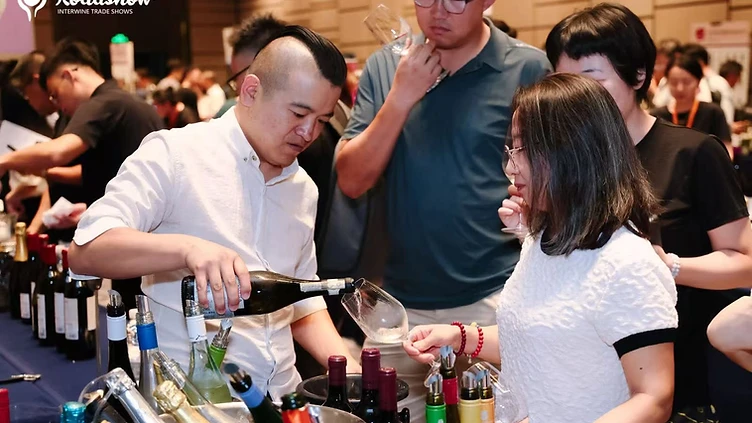
Participating in recognized, large-scale domestic professional exhibitions provides direct access to qualified procurement directors across regional retail, corporate, and e-commerce distribution. Establishing an on-site presence at trade events allows overseas producers to bypass intermediaries, assess competitive pricing, and secure vetted distributor agreements.
To build long-term commercial relationships with active domestic buyers, producers can Become an Exhibitor at INTERWINE, positioning their portfolios directly before pre-screened importers, regional buyers, and commercial trading entities.
To maximize returns during physical trade visits:
- Utilize focused Business Matching services to secure meetings with qualified importers prior to departure.
- Review the vetted Exhibitor Directory to evaluate peers, consortia groups, and current commercial positioning.
- Follow up rapidly with interested buyers via domestic platforms like WeChat, delivering FOB/CIF pricing, technical datasheets, and GACC customs documentation.
Conclusion: A Realistic Blueprint for Italian Wine Growth
Entering mainland China's wine market requires moving beyond romantic narratives of European terroir and adopting an operational focus on compliance, intellectual property protection, and targeted B2B networking. By aligning portfolios with the GB 2760-2024 additive standards, securing bilingual trademarks, adopting a decentralized regional distribution model, and engaging qualified procurement professionals on the exhibition floor, Italian estates can build sustainable, high-margin, and long-term commercial operations in China.
Sources
- Dezan Shira & Associates / China Briefing (2024). China’s Wine Market Outlook: Trends and Opportunities. https://www.china-briefing.com/news/chinas-wine-market-outlook-trends-and-opportunities/
- Unione Italiana Vini / Gambero Rosso International (2025). What changes for the export of Italian wines to China under the new regulations? https://www.gamberorossointernational.com/news/what-changes-for-the-export-of-italian-wines-to-china-under-the-new-regulations
- Xinhua News Agency / People's Daily (2026). Italy eager to help companies expand presence in China: ITA president. https://en.people.cn/n3/2026/0515/c90000-20456951.html
- Vino Joy News (2024). China’s Wine Importer Exodus Accelerates, With Numbers Down More Than 30%. https://vino-joy.com
Key Takeaways
- —Strict GACC Decree 248 compliance and the newly enforced GB 2760-2024 food additive standard require precise pre-shipment lab verification and documentation.
- —China's 'first-to-file' intellectual property framework demands immediate trademark registration of both original Latin names and phonetically balanced Chinese translations.
- —Decentralized distribution strategies targeting Tier-2 and regional culinary centers yield better commercial viability than over-relying on single, coastal master distributors.
- —Demographic trends show increasing demand for white wines, low-ABV sparkling wines (like Moscato d'Asti and Prosecco), and fruit-forward profiles suitable for modern dining occasions.
- —Direct, face-to-face commercial evaluation through specialized B2B trade exhibitions remains essential for closing distribution contracts with verified Chinese wine importers.
Frequently Asked Questions
What registration is required by GACC before Italian wineries export to China?
Under GACC Decrees 248 and 249, all overseas manufacturing, processing, and storage facilities for imported alcoholic beverages must be formally registered using China's CIFER (China Import Food Enterprise Registration) system. Italian wineries must obtain an 18-digit GACC registration code and display it on the inner bottle label and export packaging before shipments arrive at Chinese ports.
How does China's GB 2760-2024 standard affect Italian winemakers?
Enforced in February 2025, National Food Safety Standard GB 2760-2024 establishes updated restrictions and allowable tolerances for food and beverage additives, processing aids, and preservatives used in imported wine. European wineries must work with certified testing laboratories to verify that sulfur dioxide levels, stabilizing agents, and acidity regulators meet strict Chinese statutory thresholds before dispatch.
Why is registering a Chinese trademark critical before entering negotiations with local importers?
China enforces a strict 'first-to-file' intellectual property system. If an Italian brand fails to formally register both its Latin brand name and a phonetic or semantic Chinese equivalent under Nice Class 33, local opportunists or distributors can register it first. This can lock producers out of their own brand rights or create costly legal barriers when changing distribution partners.
Which Italian wine styles are currently gaining market share in China?
While established icons like Barolo, Brunello di Montalcino, and Amarone retain value in corporate gifting and high-end dining, younger urban consumers and female buyers are driving growth in aromatic, sweet, and low-ABV sparkling wines (such as Moscato d'Asti and Prosecco). In addition, approachable, fruit-driven, food-versatile reds from regions such as Puglia and Sicily are finding traction in modern casual dining channels.
What is the most effective commercial channel for Italian wine estates to find qualified Chinese buyers?
Because personal relationships and physical sample evaluation are foundational to closing wine import contracts in China, exhibiting at premier, dedicated international alcohol trade platforms like INTERWINE offers the most direct channel. Producers meet face-to-face with pre-screened importers, commercial trading houses, and regional wholesale networks across mainland China.