
How Emerging Wine Regions Can Build Distribution in China
A commercial roadmap for wine producers and regional export bodies evaluating how emerging wine regions can build distribution in China via targeted tier routes, regulatory compliance, and verified buyer platforms.
For wineries and regional generic bodies asking how emerging wine regions can build distribution in china, the answer requires pivoting away from legacy bulk volume playbooks toward disciplined, regionally segmented route-to-market strategies. Entering China as an emerging appellation or lesser-known origin requires understanding that the market is neither monolithic nor dominated purely by legacy heritage labels. Success demands targeted importer qualification, strict compliance with the General Administration of Customs China (GACC), precision tier-city allocation, and active trade matchmaking.
According to the United States Department of Agriculture (USDA) Foreign Agricultural Service 2025 Wine Market Update, China imported approximately $1.6 billion of wine and related products in 2024. While established producer nations like France and Australia hold substantial market share, structural shifts in consumption patterns have opened commercial opportunities for differentiated, story-led producers. As highlighted in research by China Briefing (Dezan Shira & Associates, 2025), consumer habits are evolving toward casual occasions, self-directed consumption, and diversified formats. For emerging regions—whether boutique European terroirs, South American innovators, or cool-climate regions from North America and Oceania—building distribution requires tactical execution across every link of the supply chain.
Understanding China's Evolving Wine Import Dynamics
The Chinese imported wine landscape has matured beyond the era of indiscriminate buying and prestige-driven gifting. The market is increasingly dictated by discerning, price-conscious consumers and professional procurement buyers looking for tangible value propositions.
Data compiled from GACC customs filings and published by the USDA Shanghai Agricultural Trade Office (ATO) in 2025 shows that while overall volume rationalized in 2024, demand in key urban clusters for white wines, sparkling categories, and authentic single-vineyard storytelling expanded. Furthermore, IWSR projections reported by China Briefing in 2025 project that China's digital and e-commerce alcohol channel will sustain an average compound annual growth rate of 6% from 2022 to 2027, eventually accounting for roughly 40% of the world's online beverage alcohol market.
For emerging wine associations and independent estates, this structural realignment reduces the historical advantage held by classic mega-brands. Chinese sommeliers, specialized retailers, and regional wholesalers are actively looking to differentiate their portfolios from hyper-competitive commercial labels. However, breaking through requires overcoming lower initial brand awareness and complex multi-layered channel margins.
Regulatory Setup: GACC Registration, Labeling, and Landed Cost Structures
Before initiating commercial discussions or shipping sample pallets, foreign wineries must resolve regulatory market entry parameters. Compliance failures at Chinese ports lead to costly delays, customs rejections, or cargo destruction.
1. Production Facility Registration (GACC Decree 248)
All overseas food and beverage manufacturing, processing, and storage facilities exporting to mainland China must maintain active enterprise registration with the General Administration of Customs China under Decree 248. Overseas wineries must obtain their GACC registration number and ensure that commercial invoices, bills of lading, and export health certificates correspond exactly with registered entity details.
2. Chinese Back-Label Standards (GB 7718 and National Rules)
Customs clearance requires affixing fully compliant Chinese-language back labels prior to inspection, or applying them under bonded supervision at qualified ports of entry. According to regulatory entry guidance by the EU SME Centre (2026), required label declarations in simplified Chinese include:
- Standard product identity (e.g., dry red wine, sparkling wine);
- Grape varieties and production year;
- Country and region of origin;
- Net volume and declared alcohol by volume (ABV);
- Contact details of the licensed domestic Chinese importer/distributor;
- Mandatory statutory warnings (such as risks regarding underage consumption and pregnancy);
- Storage conditions and batch numbers.
3. Landed Duty and Tax Calculations
Effective wholesale pricing modeling requires accounting for standard cumulative import taxes on bottled wine (HS Code 2204.21). Typical baseline charges comprise:
- Most Favored Nation (MFN) Import Tariff: ~14%
- Value-Added Tax (VAT): 13%
- Consumption Tax: 10%
Compounded against the CIF (Cost, Insurance, and Freight) value, these baseline duties total roughly 46% to 50% on top of landing costs, before port handling, domestic storage, and channel margins are calculated. Exporters must protect distributor unit economics while preventing retail shelf prices from exceeding their competitive segment.
Regional Segmentation: Tier-1 Hubs vs. High-Growth Regional Markets
A critical mistake made by new entrants is treating China as a uniform sales territory. Appointing a single exclusive distributor without defined territorial performance metrics often stalls distribution nationwide.
+-----------------------+-----------------------------+-----------------------------+
| Dimension             | Tier-1 Gateway Hubs        | Tier-2 & Regional Capitals  |
|                       | (Shanghai, Shenzhen, etc.)  | (Chengdu, Hangzhou, Wuhan)  |
+-----------------------+-----------------------------+-----------------------------+
| Buyer Profile         | Specialized wine bars,      | Sub-distributors, regional  |
|                       | boutique bistros, fine dining| retail chains, corporate banquets
| Portfolio Focus       | Organic, biodynamic, niche  | Accessible varietals, fruit-|
|                       | indigenous grapes, low-alc  | forward reds, gift packaging|
| Commercial Risk       | Margin compression, high    | Education requirements,     |
|                       | shelf turnover velocity     | slower inventory rotation   |
| Strategy for Regions  | On-premise sommelier push,  | Regional master distributor |
|                       | natural wine pop-ups        | with bonded warehouse access|
+-----------------------+-----------------------------+-----------------------------+
In mature first-tier markets such as Shanghai, Beijing, and Shenzhen—as corroborated by the USDA FAS 2025 Wine Market Update—educated consumers and leading hospitality accounts welcome emerging origins like the Republic of Georgia, regional Portugal, Greece, or boutique Pacific Northwest appellations. Conversely, high-growth provincial capitals like Chengdu, Wuhan, and Changsha depend heavily on accessible commercial palates, gift-ready presentation, and active distributor incentives.
Emerging wine export associations are advised to split rights regionally across South China, East China, and North/West corridors, or contract specialized category distributors dedicated to specific verticals (such as on-premise HoReCa vs. specialty wine retail).
Channel Strategy: Navigating Importers, Club Stores, and Digital Retail
Distribution routes in China have diversified significantly over the last three years. Foreign wineries should construct a blended distribution architecture based on brand scale and production capacity.
Specialty Importer-Distributors
For boutique wineries producing under 100,000 bottles annually, working with independent, sommelier-founded importers provides direct placement in curated wine bars, independent restaurants, and boutique bottle shops. While these buyers place smaller opening orders (often 1 to 3 pallets mixed across SKUs), they deliver active hand-selling and brand advocacy.
Club Stores and Warehouse Supermarkets
As noted in the USDA 2025 Wine Market Update, membership club formats such as Sam's Club and Costco China are reshaping high-volume retail by establishing direct self-sourcing relationships with foreign wineries. For mid-sized producers capable of scaling consistent production, landing a private-label or direct-sourced program with club stores guarantees rapid nationwide volume, though it requires strict margin concessions and rigorous supply-chain reliability.
Social Commerce and Live Commerce Integration
Traditional e-commerce platforms (Tmall, JD.com) remain vital for brand verification, but active inventory velocity increasingly occurs through social-first ecosystems. Importers leverage platforms such as Douyin and Xiaohongshu (RED) for educational livestreams and digital masterclasses. Rather than attempting direct-to-consumer cross-border sales from abroad, overseas wineries should empower their mainland distributor with digital assets, terroir video footage, and localized brand storytelling.
Trade Shows and B2B Matchmaking: Converting Face-to-Face Engagement
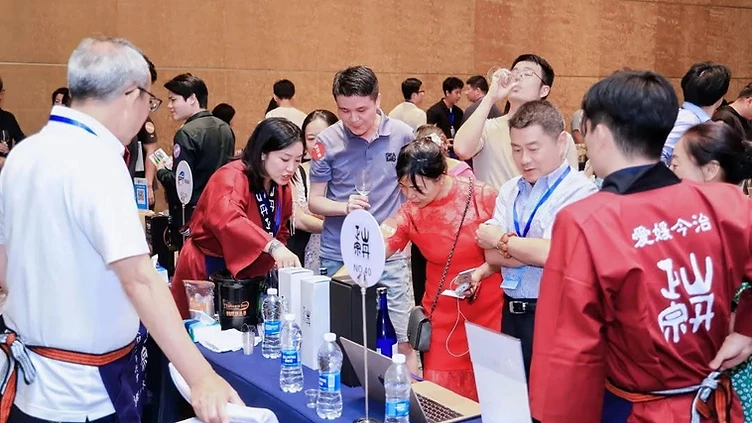
In Chinese commercial culture, sustained commercial contracts rarely materialize purely over remote video calls or cold emails. Personal relationships (guanxi), commercial alignment, and live product tastings are essential for qualifying commercial intent.
Participating in recognized industry events like Interwine Events and securing presence as an exhibitor provides direct access to pre-screened regional wholesalers, hotel beverage directors, and supermarket category buyers. Regional export associations that organize collective pavilions achieve stronger visual authority and allow prospective buyers to experience the regional portfolio comprehensively.
To maximize return on trade show investments, international producers should take concrete pre-fair actions:
- Pre-Schedule Qualified Meetings: Utilize professional Business Matching services before arriving at the venue to ensure meetings with category-specific buyers.
- Offer Ground Support: Arm booth personnel with WeChat corporate channels, Chinese-language one-page technical specification sheets, and clear FOB/CIF pricing frameworks.
- Coordinate Regional Seminars: Pair exhibition booths with sommelier-led masterclasses to train regional sub-distributors on the distinct soil, climate, and taste profile of the emerging region.
Producers ready to establish their physical footprint should evaluate opportunities to become an exhibitor and review current trade trends via Market Insights to plan their seasonal campaign.
Practical Market Entry Checklist for Regional Wine Exporters
Executing market entry smoothly requires following a phased operational roadmap:
- Trademark Protection: File brand trademarks in China under both the original Latin alphabet and transliterated Chinese characters through the China National Intellectual Property Administration (CNIPA) prior to market exposure.
- GACC Compliance Audit: Confirm the winery's facility registration number via the Single Window GACC portal.
- Price Architecture Modeling: Establish FOB baseline prices that accommodate domestic importer margins (30–40%), wholesaler cut (15–20%), and on-premise markup (100–200%).
- Sample Logistics and Bonded Testing: Ship test sample cases to domestic exhibition bonded zones to test customs clearance times and temperature-controlled integrity.
- In-Person Buyer Engagement: Finalize commercial agreements through vetted exhibition gatherings, on-site tastings, and distributor audit meetings.
Conclusion
Navigating distribution in China as an emerging wine region requires patience, legal diligence, and strategic commercial targeting. While established appellations maintain significant market awareness, the modern Chinese wine trade is eager to feature unheralded, distinctive terroirs that offer quality, authenticity, and clear commercial margins. By pairing regulatory compliance and tailored regional strategies with proven B2B platforms like Interwine, ambitious wineries can build lasting, profitable distribution channels in the world's most dynamic consumer market.
Sources
- USDA Foreign Agricultural Service - Wine Market Update 2025 (Shanghai ATO)
- China Briefing / Dezan Shira & Associates - China's Wine Market Outlook: Trends and Opportunities (2025)
- EU SME Centre - China's Wine Market: A Guide for Exporters (2026)
- BestWineImporters - A Wine Exporter’s Guide to Finding Buyers in China and Working with Chinese Wine Importers (2026)
Key Takeaways
- —China's imported wine sector reached $1.6 billion in 2024 according to USDA FAS customs data, with structural demand shifting toward white, sparkling, and differentiated niche wines.
- —Emerging appellations should avoid nationwide exclusive distributor agreements, opting instead for multi-region or channel-specific partner models.
- —Overseas wineries must secure GACC facility registration under Decree 248 and prepare Chinese back labels complying with GB 7718 standards before shipping.
- —Compounded import tariff, VAT, and consumption tax add roughly 46-50% to CIF landed costs, necessitating accurate wholesale margin modeling.
- —Physical trade platforms and structured business matching remain critical for building commercial trust with vetted Chinese importers and distributor networks.
Frequently Asked Questions
What registration is required by China Customs (GACC) before exporting wine?
Under GACC Decree 248, all overseas manufacturing, vinification, and storage facilities must be registered with the General Administration of Customs China through their official portal. Shipments lacking an approved GACC registration number on international documentation cannot clear Chinese customs.
What is the total import tax burden on foreign wine entering China?
Bottled wine imported under HS Code 2204.21 typically incurs a Most Favored Nation import tariff of approximately 14%, a Value-Added Tax (VAT) of 13%, and an alcohol consumption tax of 10%. Due to compound tax formulas, the total landed tax burden is approximately 46% to 50% above the CIF invoice value.
Why should emerging wine regions avoid single exclusive national distributor agreements?
China is geographically and economically diverse. Very few domestic distributors have comprehensive sales coverage across all provinces and tiers. Granting national exclusivity to a single partner often results in stock stalling in one city while leaving major commercial hubs in East, South, and North China untapped.
How can niche and emerging wine regions stand out against established origins like Bordeaux or Australia?
Emerging regions should highlight specific attributes that traditional commercial lines overlook: indigenous grape varieties, organic and sustainable certifications, lighter food-friendly flavor profiles, and clear visual storytelling. Sommelier masterclasses, trade fair tastings, and social commerce education on platforms like Xiaohongshu help build consumer trust.
What role do trade shows like Interwine play in securing Chinese wine distribution?
Trade shows offer a verified environment to engage qualified importers, HoReCa distributors, and club store buyers face-to-face. Combining an exhibition stand with pre-scheduled business matchmaking and on-site masterclasses significantly shortens the importer vetting cycle and builds commercial credibility.