How Greek Wineries Can Find Buyers in China
A commercial roadmap for Greek wine producers and export associations seeking qualified importers, distributors, and HoReCa buyers across mainland China.
Greek winemakers face a decisive commercial window in China. While traditional European markets like Germany remain mature, China represents an expanding landscape for distinctive, food-friendly, and heritage-rich wines. According to the Observatory of Economic Complexity (OEC), Greece exported $108 million worth of wine globally in 2024, ranking as the 22nd largest wine exporter worldwide. However, trade analysis by Enterprise Greece and ELSTAT cited by Xinhua revealed that China accounted for just 0.59% of Greece’s wine export volume in 2020, even as national export values rose from €72.05 million in 2020 to €84.83 million in 2021. For Greek producers seeking to diversify revenue away from saturated Western markets, understanding how Greek wineries can find buyers in China requires moving past generic export assumptions and deploying structured, on-the-ground B2B market entry strategies.
The Commercial Opportunity: Why Chinese Buyers Are Turning to Greek Terroirs
China's beverage market is undergoing a structural transition toward authenticity, variety, and gastronomic compatibility. According to market research by Deep Market Insights, the total Chinese wine market stood at $36.59 billion in 2025, with still wine accounting for $16.68 billion and off-trade retail driving $16.49 billion. The market is projected to reach $59.24 billion by 2034. As Chinese consumers mature beyond conventional Bordeaux labels, trade buyers actively seek high-margin, differentiated regional profiles to capture market share.
Greece possesses a compelling narrative: an unbroken 4,000-year winemaking heritage paired with modern viticultural precision. Greek official bodies list over 120 Protected Geographical Indications (PGIs) and more than 30 Protected Designations of Origin (PDOs). Among Chinese professional sommeliers, specialty bottle shops, and tier-one hospitality venues, four flagship Greek varietals stand out:
- Assyrtiko (Santorini & Northern Greece): With intense minerality, crystalline acidity, and volcanic provenance, Assyrtiko pairs seamlessly with Cantonese seafood and high-end coastal gastronomy. It operates as Greece’s spearhead white varietal in top-tier hotel wine programs.
- Xinomavro (Naoussa & Amynteo): Often compared by sommeliers to Nebbiolo or cool-climate Pinot Noir, Xinomavro appeals to seasoned fine-wine collectors looking for complex structure, ageability, and food-friendly tannins.
- Agiorgitiko (Nemea): A plush, aromatic red offering velvety red-fruit character that resonates with traditional Chinese palates accustomed to ripe, approachable reds for corporate banqueting and formal gift giving.
- Moschofilero & Malagousia (Peloponnese & Central Greece): Highly expressive, floral white varietals that cater directly to younger, Gen-Z, and female consumers demanding low-tannin, refreshing, and aromatically expressive dining wines.
To review broader consumption trends across China's major metropolitan hubs, producers can consult current Market Insights.
Identifying Qualified B2B Buyer Personas in Mainland China
To build a scalable commercial foothold, Greek export directors must stop treating "China" as a monolithic market. A Greek estate will fail if it targets mass-market supermarket distributors with a boutique €20 FOB Assyrtiko. Instead, suppliers must identify the exact buyer channel aligned with their production scale and price tier.
1. Regional Fine Wine Importers (First-Tier Cities)
- Target Metros: Shanghai, Beijing, Guangzhou, Shenzhen.
- Commercial Profile: These specialized importers manage temperature-controlled supply chains and supply independent fine-dining restaurants, five-star Western and fusion hospitality chains, and private members’ clubs. They seek estate-bottled PDO wines with authentic terroir narratives, press accolades, and distinctive packaging.
2. Regional Wholesale Distributors in Second-Tier Growth Hubs
- Target Metros: Chengdu, Wuhan, Hangzhou, Qingdao, Changsha.
- Commercial Profile: Rapid economic expansion in these interior hubs has cultivated an adventurous merchant class. These buyers seek reliable, medium-volume white and red wines that can yield sustainable margins across regional banquet circuits and private enterprise corporate gifting.
3. Cross-Border & Domestic Social E-Commerce Aggregators
- Channel Focus: WeChat Mini-Programs, Tmall Global, JD.com, Douyin, and Xiaohongshu (RED).
- Commercial Profile: Digital-first distributors look for eye-catching aesthetics, clear single-varietal branding, and competitive pricing. Storytelling around the Greek islands, Mediterranean lifestyle, and historical myths provides them with the visual and cultural assets necessary for viral live-streaming campaigns.
Producers seeking verified profiles of domestic trading companies can evaluate Interwine's registered network through the Exhibitor Directory.
Overcoming Regulatory, Logistics, and Administrative Hurdles
Finding interested buyers is only half the battle; closing transactions requires navigating China's stringent customs and administrative requirements. Exporting Greek wine to China demands rigorous compliance at every stage.
- GACC Manufacturer Registration (Decree 248): Any winery exporting to mainland China must register on the General Administration of Customs of China (GACC) single-window platform (China Import Food Enterprise Registration system) through the Hellenic competent authority. Your GACC approval number must be printed on both outer cartons and primary bottle labels prior to customs dispatch.
- GB Standards Compliance (GB 15037 & GB 7718): Chinese food safety regulations enforce strict limits on total sulfur dioxide ($SO_2$), sorbic acid, heavy metals, and specific processing additives. Lab analyses issued in Greece must be converted to compliant Chinese test formats. Chinese back labels must strictly adhere to statutory font size, alcohol declaration ($%\ vol$), importer name, shelf-life, and mandatory allergen statements in simplified Chinese characters.
- Intellectual Property Protection: China follows a strict "first-to-file" trademark framework. Greek estates must register their Latin brand names alongside carefully chosen phonetic and conceptual Chinese brand names with the China National Intellectual Property Administration (CNIPA) before sending commercial samples. Unprotected brands risk trademark squatting, which permanently halts customs clearance.
- Reefer Logistics and Temperature Integrity: Greek wines shipping out of Piraeus or Thessaloniki must transit the Suez or Cape routes into primary Chinese ports such as Huangpu (Guangzhou), Nansha, or Shanghai. Given the long transit times and intense tropical humidity across maritime routes, utilizing temperature-controlled reefer containers with digital thermal loggers is non-negotiable for preserving delicate whites like Assyrtiko and Moschofilero.
Strategic Routes to Finding and Closing Chinese Wine Buyers
Cold-calling Chinese wine distributors via email or general social media yields almost zero return. Commercial business culture in China rests heavily on verifiable relationships, face-to-face evaluation, sensory sampling, and localized commercial presence.
+-------------------------------------------------------------------------+
|               GREEK WINERY COMMERCIAL ROADMAP FOR CHINA                |
+-------------------------------------------------------------------------+
                                     |
                                     v
+-------------------------------------------------------------------------+
| 1. BRAND & REGULATORY FOUNDATION                                        |
|    • Register Chinese & Latin trademarks via CNIPA                      |
|    • Secure GACC Decree 248 registration through Greek authorities       |
|    • Standardize back-labels to GB 7718 & test for GB 15037 limits      |
+-------------------------------------------------------------------------+
                                     |
                                     v
+-------------------------------------------------------------------------+
| 2. TARGETED VALUE PROPOSITION                                           |
|    • Map varietals to channels (Assyrtiko/Xinomavro to Coastal HoReCa)   |
|    • Set FOB pricing structures leaving margin for multi-tier channel   |
|    • Create digital Chinese sell-sheets with WeChat-ready QR codes      |
+-------------------------------------------------------------------------+
                                     |
                                     v
+-------------------------------------------------------------------------+
| 3. IN-PERSON MARKET ENGAGEMENT                                          |
|    • Exhibit at premier mainland trade shows in South China             |
|    • Conduct structured B2B matchmaking with vetted provincial buyers   |
|    • Host educational masterclasses for sommeliers & regional merchants |
+-------------------------------------------------------------------------+
                                     |
                                     v
+-------------------------------------------------------------------------+
| 4. COMMERCIAL CLOSING & LOGISTICS                                       |
|    • Contract with bonded warehouse partners in Pearl River Delta       |
|    • Arrange reefer container shipments via Piraeus                     |
|    • Provide ongoing marketing collateral to support distributor sales  |
+-------------------------------------------------------------------------+
Direct B2B Trade Exhibitions in High-Consumption Regions
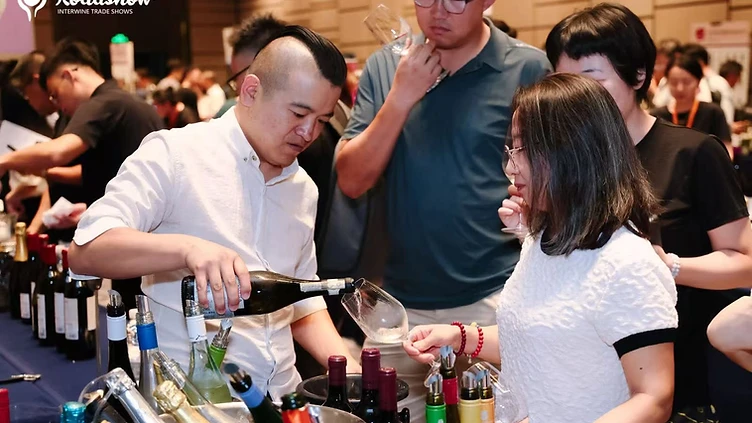
Southern China, particularly Guangdong Province and the Greater Bay Area, represents the country’s largest concentration of imported wine consumption and distribution networks. Exhibiting at established platforms like Interwine Guangzhou allows winemakers to place their portfolio directly in front of thousands of active distributors, regional wholesalers, and hotel purchasing managers. Wineries ready to engage serious trade partners can Become an Exhibitor to secure strategic exhibition space.
Targeted Matchmaking and Hosted Buyer Programs
Walking an exhibition floor casually rarely yields immediate distribution agreements. Greek estates must engage in curated commercial matchmaking that pairs their exact production capacity, organic certifications, and price tier with pre-qualified regional buyers. Producers can utilize specialized Business Matching services to pre-schedule qualified B2B discussions ahead of travel.
Educational Masterclasses and Sommelier Engagement
Because indigenous Greek varieties (such as Assyrtiko, Xinomavro, and Mavrodaphne) are unfamiliar to the broader public, consumer education driven by certified trade authorities is vital. Leading Greek wine bodies, such as the National Inter-Professional Organization of Vine and Wine (EDOAO), often co-host masterclasses led by Masters of Wine (MWs) and renowned Chinese wine educators during industry exhibitions. Combining an on-site masterclass with an exhibition booth gives regional distributors the cultural confidence and product knowledge needed to market the wines effectively within their local territories. Explore upcoming educational forums and industry schedules through Interwine Events.
The Strategic Role of Interwine China for Greek Wineries
For over two decades, Interwine has served as an essential commercial bridge connecting international wine-producing nations with mainland China's complex distribution ecosystem. Organized in Guangzhou—the commercial heart of the Pearl River Delta—Interwine gathers top-tier importers, regional distributors, and off-trade retail executives looking for high-quality alternative wine origins.
By exhibiting at Interwine, Greek wineries gain:
- Direct access to verified importers and distributors across Tier 1, Tier 2, and rapidly developing Tier 3 cities across southern and central China.
- Turnkey international exhibition pavilions, customs brokerage assistance, and vetted translation support that eliminate linguistic and operational friction.
- Specialized tasting stages and sommelier masterclass opportunities to educate influential Chinese industry key opinion leaders (KOLs) on Greek microclimates, indigenous cultivars, and gastronomy pairings.
- Dedicated pre-fair business matching sessions that ensure Greek winery principals meet decision-makers with allocated budgets and import licenses.
Greek winemakers cannot afford to wait for Chinese buyers to discover them remotely. Securing sustainable export growth requires proactive engagement in China's leading commercial wine trade hubs.
Sources
- Enterprise Greece & Xinhua News Agency (2022)
- Observatory of Economic Complexity: Wine in Greece Trade Data (2024)
- Deep Market Insights: China Wine Market Size, Trends & Forecast Analysis (2025-2033)
- Beverage Trade Network: Interwine China Gateway Analysis (2024)
Key Takeaways
- —Greece exported $108M in wine globally in 2024 according to the OEC, yet historical China penetration remains below 1%, leaving substantial room for commercial expansion.
- —China's wine market was valued at $36.59B in 2025 according to Deep Market Insights, with rapid growth in dining-oriented still wines and premium niche regions.
- —Key Greek varietals like Assyrtiko and Xinomavro align directly with China's evolving fine-dining and sommelier-driven coastal markets.
- —Exporting requires strict administrative compliance, including GACC Decree 248 manufacturer registration and GB label standards.
- —Face-to-face B2B matching and localized trade fair participation in South China offer the most direct, reliable route to closing contracts with qualified importers.
Frequently Asked Questions
Which Greek wine varietals have the strongest commercial demand in China?
Assyrtiko and Xinomavro show the strongest performance in tier-one cities like Shanghai, Guangzhou, and Beijing due to their high acidity, structural complexity, and pairing synergy with regional Chinese seafood. Agiorgitiko and fruit-forward Malagousia are gaining rapid traction in corporate banqueting and younger consumer retail channels.
What registrations are required before shipping wine from Greece to China?
Wineries must complete GACC manufacturer registration under Decree 248 via the Hellenic Ministry of Rural Development and Food before dispatch. Additionally, wines must comply with National Food Safety Standards GB 15037 and back-label standard GB 7718, and suppliers should protect their brand trademark with the China National Intellectual Property Administration (CNIPA).
Why is South China considered the best entry region for Greek wine producers?
Guangdong Province and the Greater Bay Area represent mainland China's highest concentration of wine importers, distributors, and affluent dining consumers. The regional Cantonese culinary culture pairs exceptionally well with mineral-driven white wines like Assyrtiko, making South China an ideal entry point.
How can Greek wineries evaluate whether a Chinese importer is qualified?
Producers should verify that the prospective partner possesses an active Chinese import and food business license, has an established cold-chain warehousing network, and maintains a diverse client base across on-trade (restaurants, hotels) or specialized off-trade channels rather than relying on one-off corporate gifts.
How does exhibiting at Interwine assist Greek wineries entering China?
Interwine provides direct access to thousands of pre-screened importers and distributors, tailored B2B matchmaking programs, professional sommelier masterclasses, and logistical guidance, drastically reducing the cost and time required to establish Chinese distribution.