
How Chilean Wineries Can Enter China
A commercial roadmap for Chilean wineries entering China: leveraging the zero-tariff FTA, navigating GACC Decree 248/249 compliance, transitioning to premiumization, and securing vetted regional distributors via Interwine.
Chilean wine producers hold a structural trade advantage in China, underpinned by the bilateral Free Trade Agreement that eliminated customs tariffs on bottled wine from the standard 14% down to zero. However, commercial success in the post-pandemic market requires far more than tariff savings. As the Chinese wine trade pivots toward regionalized distribution, functional drinking occasions, and strict regulatory compliance under General Administration of Customs of China (GACC) Decrees 248 and 249, Chilean exporters must execute a disciplined route-to-market plan.
For Chilean wineries and regional export associations, entering China demands three foundational pillars: absolute regulatory conformity, an intentional positioning strategy that balances volume entry lines with higher-margin premium terroirs, and direct commercial matchmaking with vetted Tier-1 to Tier-3 importers. Understanding these operational mechanics enables export directors to de-risk market entry and build sustainable margins across the mainland.
The Commercial Landscape: Chile’s Tariff Advantage and Market Realities
Chile has consistently ranked among China’s primary imported wine sources by volume and value. According to China Briefing (2025), bilateral goods trade between China and Chile reached US$45.67 billion in the first nine months of 2024 alone, reflecting strong institutional and economic ties. Bilateral data highlighted by the China International Import Expo (2025) indicates that in the decade following the China-Chile Free Trade Agreement, zero-tariff treatment spurred a 13-fold increase in Chilean wine shipments to China.
While the 0% import duty provides a critical pricing advantage over non-FTA competitors, exporters face distinct market shifts:
- The Move Toward Premiumization: For decades, Chilean bulk and entry-level red wine captured private-label and lower-tier dining consumption. However, as noted in exporter analyses by Gilbert & Gaillard (2023), major producers like Concha y Toro have strategically accelerated a premium portfolio mix, redirecting brand equity toward recognized appellations (such as Maipo, Colchagua, and Casablanca) and iconic single-vineyard labels.
- Category Compression and Inventory Realignment: Following domestic consumption corrections and broader economic recalibration across China, importers have dramatically reduced speculative inventory. Modern Chinese distributors demand disciplined minimum order quantities (MOQs), rapid cellar-door turnaround, and collaborative point-of-sale marketing.
- Changing Varietal Preferences: While Cabernet Sauvignon and Carmenère remain the flagship volume drivers, urban young professionals and modern bistros in Shanghai, Guangzhou, Shenzhen, and Chengdu increasingly seek cool-climate whites (Sauvignon Blanc and Chardonnay), biodynamic labels, and lighter-extraction coastal reds.
To identify targeted buyer demands before committing container shipments, producers should evaluate real-time purchasing shifts through Market Insights.
Regulatory Gateways: GACC Compliance, Standards, and Labelling
Shipments arriving at mainland ports without rigorous pre-clearance documentation face costly quarantine delays or rejection. China’s customs framework requires total operational alignment across production and logistics.
1. GACC Enterprise Registration (Decree 248)
Effective since January 1, 2022, GACC Decree 248 dictates that all overseas manufacturing, processing, and storage facilities of imported food and beverages must be officially registered on the China Import Food Enterprise Registration platform (CIFER) before dispatching cargo. As reported by Vino Joy News (2022), failure to obtain and print the CIFER registration number directly on inner and outer packaging renders the consignment inadmissible at customs clearance.
2. National Food Safety Standards (GB Standards)
Chilean wines must conform to China’s mandatory National Food Safety Standards, notably:
- GB 2758: Hygienic standard for fermented alcoholic beverages.
- GB 2760: Standards for food additives, including precise maximum residue limits for sulfur dioxide ($SO_2$) and preservative levels.
- GB 7718: General standard for pre-packaged food labelling.
3. Chinese Back Labels
Every commercial bottle must feature a fully compliant Chinese back label before entering bonded or customs-cleared channels. The back label must disclose:
- Mandatory legal product designation (e.g., "干红葡萄酒" / Dry Red Wine)
- Exact alcohol by volume (ABV)
- Country of origin, vintage, and grape varietals (if highlighted on the front label)
- Shelf-life/storage terms, health warnings, and net volume
- Complete Chinese domestic importer/agent contact details (company name, address, verified mainland telephone)
- CIFER registration code
4. Consolidated Clearance Documentation
Export managers must furnish their mainland logistics partners with standard multi-use clearance documents, including Certificates of Origin confirming Chilean nationality (to secure 0% duty treatment), sanitary certificates, laboratory analysis sheets, commercial invoices, and packing manifests.
Commercial Routes to Market: Navigating China’s Evolving Distribution Channels
Successful entry requires selecting distribution partners matched to a winery's production scale, price tier, and volume goals. Chilean wineries cannot rely solely on generic nationwide distributors; regional nuance dictates commercial strategy.
| Channel Type | Target Pricing Strategy | Best Suited For | Operational Realities | | :--- | :--- | :--- | :--- | | Tier-1 Coastal Importers | Premium to Ultra-Premium ($15+ FOB) | Established estate brands, single-vineyard Carmenère/Cabernet | High brand scrutiny; demands promotional budget support and brand ambassadorship. | | Regional & Secondary City Wholesalers | Mid-Tier ($3–$8 FOB) | Mid-volume producers with flexible labelling capabilities | Fast-growing off-premise consumption; requires localized relationship management. | | Direct-to-Consumer / Cross-Border E-Commerce | Entry-Level to Mid-Tier ($2–$6 FOB) | Bulk bottlers, agile volume exporters | Driven by live-streaming, Douyin, and JD.com; operates on razor-thin commercial margins. | | On-Premise & Modern Bistro Specialist | Premium Whites & Niche Reds ($8–$20 FOB) | Coastal terroirs (Leyda, Casablanca, Biobío), organic/sustainable labels | Concentrated in Shanghai, Guangzhou, Shenzhen, and Chengdu; driven by sommelier education. |
For most family-owned and medium-sized Chilean estates, regional distribution partnerships in affluent consumer hubs (Guangdong, Zhejiang, Jiangsu, and Sichuan) provide more sustainable margins and brand equity than national monoliths whose portfolios are saturated with legacy brands.
Strategic Execution: A 4-Step Route-to-Market Blueprint
To establish an enduring commercial footprint, Chilean wineries should execute a sequential roadmap:
Step 1: Protect Intellectual Property and Register Trademarks First
China enforces a strict "first-to-file" trademark regime. Before sharing technical data sheets or commercial pricing with prospective partners, register your brand name, English logo, and an officially coined Chinese transliteration (中文商标) with the China National Intellectual Property Administration (CNIPA). Unregistered brands risk preemptive bad-faith filings by unauthorized intermediaries.
Step 2: Establish Direct B2B Importer Connections
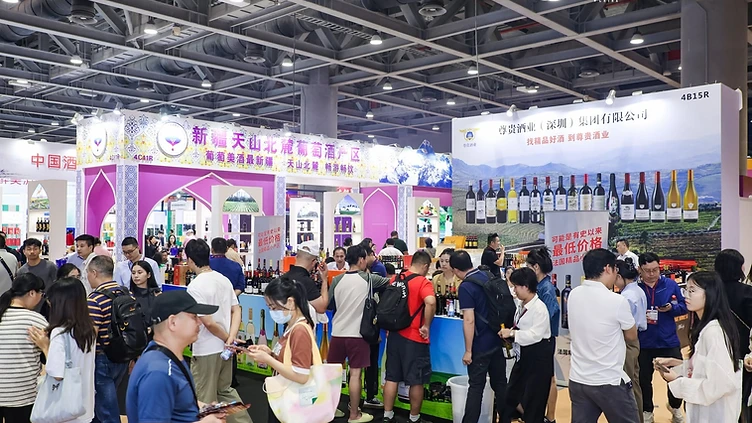
Cold outreach rarely closes wine contracts in China; long-term agreements rest on personal vetting, face-to-face tastings, and verified commercial trust. Chilean exporters should engage directly with professional wine importers via dedicated trade exhibitions. Participating as an exhibitor at premier international trade fairs provides immediate access to qualified mainland buyers. Producers can review booth solutions to Become an Exhibitor and connect with pre-screened distributors via tailored Business Matching services.
Step 3: Localize the Brand Story and Digital Infrastructure
Chinese trade buyers and sommeliers need easy access to brand collateral within the domestic digital ecosystem. Relying on Western platforms (e.g., Instagram, X, or corporate websites hosted outside China) hinders distributor communication. Chilean wineries should invest in:
- A dedicated official WeChat corporate account containing tasting notes, technical awards, and harvest reports.
- Chinese-language sales decks emphasizing vineyard elevation, coastal cooling influences, old-vine heritage, and pairing compatibility with regional Chinese cuisines.
- Targeted coverage across industry trade outlets to build domestic reputation; explore targeted opportunities in News and Magazine.
Step 4: Support the Distributor with On-the-Ground Activation
Contracts are maintained through active sell-through support rather than warehouse drop-offs. Export directors should plan structured China market visits, masterclasses for regional sales forces, and consumer tasting dinners in key provincial cities. Ongoing physical engagement signals corporate commitment, protecting the brand against partner turnover.
Conclusion: Capitalizing on the Chilean Opportunity
Chile's zero-tariff status remains one of the most formidable commercial advantages in China's imported wine sector. However, capturing profitable, repeat container orders requires moving beyond generic price competition. By locking in GACC Decree 248 compliance, securing domestic intellectual property, aligning portfolio tiers with modern regional consumer preferences, and building face-to-face trade partnerships, Chilean wineries can establish a resilient, highly lucrative distribution base in the world's most dynamic wine market.
Sources
- China Briefing (Dezan Shira & Associates): China-Chile Economic Ties: Trade, Investment, and Future Prospects (2025). https://www.china-briefing.com/news/china-chile-economic-ties-trade-investment-and-future-prospects/
- China International Import Expo (CIIE): Bilateral Economic & Free Trade Progress: China and Chile (2025). https://www.ciie.org/digital/release/news/detail?id=48194
- Gilbert & Gaillard Magazine: Chile, the World for a Market: Export Dynamics and Commercial Strategies (2023). https://www.gilbertgaillard.com/en/magazine/discovery/chile-the-world-for-a-market
- Vino Joy News: Here’s All You Need to Know About China’s New Wine Import Rules (2022). https://vino-joy.com/2021/12/30/heres-all-you-need-to-know-about-chinas-new-wine-import-rules/
- Research and Markets: Research Report on China's Wine Import 2023-2032 (2023). https://www.researchandmarkets.com/reports/5696486/research-report-on-chinas-wine-import-2023-2032
Key Takeaways
- —Under the China-Chile Free Trade Agreement, Chilean wine enters mainland China at 0% import duty, providing an immediate 14% tariff advantage over non-FTA origins.
- —Bilateral trade between China and Chile reached US$45.67 billion between January and September 2024 (China Briefing, 2025), reflecting deep institutional and commercial trade ties.
- —Exporters must secure facility registration under GACC Decree 248 via the CIFER portal before shipping; unregistered facilities will have shipments blocked at Chinese customs.
- —Winning commercial strategies are moving away from undifferentiated entry-level red wine toward premium, single-vineyard terroirs and cool-climate white varietals.
- —Face-to-face commercial vetting and on-site business matching at established wine fairs like Interwine remain critical for securing reliable Tier-1 to Tier-3 regional distributors.
Frequently Asked Questions
What import tariffs apply to Chilean wine in China?
Thanks to the China-Chile Free Trade Agreement, Chilean bottled wines enter China with a 0% customs import duty (compared to the standard 14% most favored nation rate). However, shipments remain subject to the standard Value-Added Tax (VAT) of 13% and Consumption Tax of 10% applied at customs clearance.
What is GACC Decree 248, and how does it affect Chilean wine exporters?
GACC Decree 248 requires all overseas production, processing, and storage facilities exporting food and beverages to China to register through the China Import Food Enterprise Registration (CIFER) system. Chilean wineries must complete this registration and have their official registration number printed on both inner and outer packaging before shipping.
What information must be included on a Chinese wine back label?
Under National Food Safety Standards GB 7718 and GB 2758, the Chinese back label must detail the product designation (e.g., dry red wine), alcohol by volume (ABV), grape varietals, vintage, net content, storage conditions, health warnings, production date, GACC facility registration number, and the full legal contact information of the registered Chinese mainland importer.
Which Chilean wine varietals are currently in demand in China?
While Cabernet Sauvignon and Carmenère remain the highest-volume red varietals, Chinese trade buyers in coastal Tier-1 and Tier-2 cities are increasingly purchasing cool-climate whites (Sauvignon Blanc and Chardonnay from Leyda and Casablanca), organic/sustainable labels, and premium single-vineyard red blends.
How can Chilean wine producers meet vetted Chinese wine importers?
The most effective method is participating directly in major mainland trade exhibitions like Interwine China, which host curated Business Matching sessions, allowing winery export managers to meet face-to-face with pre-screened importers, distributors, and HoReCa buyers from across China's provinces.