How South African Wineries Can Enter China
A commercial roadmap for South African wineries and export associations entering mainland China under zero-tariff conditions, covering import compliance, portfolio pricing, and importer distribution channels.
For South African wine producers and regional export bodies, the commercial landscape in mainland China has reached a decisive turning point. On May 1, 2026, China officially enacted a bilateral zero-tariff trade regime on qualifying South African imports, eliminating the historical 14% to 20% most-favored-nation import duties on bottled wine, as confirmed by both Xinhua (2026) and The Drinks Business (2026). With an initial two-year window established through May 1, 2028, South African wineries now operate on the exact same tariff footing as longstanding market leaders like Chile, Australia, and New Zealand.
However, tariff relief is an operational entry pass, not an automatic distribution guarantee. China's wine market underwent structural contractions between 2019 and 2025, shrinking total import volumes by nearly 70% according to trade analyses reported by The Drinks Business (2026). South African wine currently represents roughly 1% of total Chinese import volume. Capturing profitable, sustainable shelf space demands navigating General Administration of Customs of China (GACC) compliance, structuring landed costs around mandatory internal taxes, targeting high-conversion consumer segments, and securing vetted regional distributors.
The Commercial Framework: Navigating China's Zero-Tariff Window
Tariffs vs. Landed Cost Structures
While the baseline import tariff has dropped to 0%, landed customs clearance still incurs China's statutory consumption tax (10%) and value-added tax (13%). Wineries budgeting their distributor margins must understand the statutory landed compound tax calculation applied by China Customs:
- Customs Value (CIF): Cost, Insurance, and Freight to the Chinese discharge port.
- Import Duty: 0% (down from 14%–20% prior to May 2026).
- Consumption Tax (CT): Calculated as
[(CIF + Duty) / (1 - Consumption Tax Rate)] × Consumption Tax Rate=(CIF / 0.90) × 10%≈ 11.11% of CIF. - Value-Added Tax (VAT): Calculated as
[(CIF + Duty + Consumption Tax)] × 13%≈ 14.44% of CIF.
Combined, the effective statutory tax burden on zero-tariff CIF shipments hovers at roughly 25.55%. For South African producers accustomed to European free ports, managing this margin difference is essential when setting distributor FOB (Free on Board) Cape Town pricing. To benchmark trade profitability against other southern hemisphere origins, producers should evaluate real-time industry data through our Market Insights.
Rules of Origin and GACC Compliance
Duty-free treatment requires rigorous adherence to administrative trade protocols:
- GACC Decree 248 Registration: Every foreign wine production, processing, and storage facility must hold an active registration number issued by China's General Administration of Customs before shipping. This number must be stated on all export bills of lading, customs declaration forms, and inner/outer shipping cartons.
- Certificate of Origin (COO): Wineries must file specialized bilateral Certificates of Origin issued by authorized South African authorities (such as SARS and the Department of Trade, Industry and Competition) affirming that the wine is 100% harvested and vinified in South Africa, meeting specific rules of origin criteria.
- Mandatory Chinese Back-Labels: All bottled wines cleared through ports such as Shenzhen, Shanghai, or Guangzhou must display compliant Chinese back-labels detailing the Chinese product name, grape variety, vintage, net volume, alcoholic strength by volume (ABV), country of origin, storage conditions, and the GACC-registered Chinese importer's legal business name and contact information.
Strategic Portfolio Positioning for Chinese Buyers
Redefining South African Varietals for Local Palates
Chinese buyers categorize imported wine based on distinct commercial parameters: brand prestige, gifting presentation, gastronomic pairing, and accessible fruit profiles.
- Chenin Blanc: Historically treated as an everyday white in Europe, South African Chenin Blanc is finding exceptional momentum in tier-one and tier-two Chinese retail. High-profile case studies highlighted by Wine-Intelligence (2025) show producers like KWV establishing Chenin Blanc as a volume retail driver in warehouse retailers such as Sam's Club China and on instant on-demand platforms. Chenin's balance of crisp acidity and stone-fruit aromatics makes it a premier pairing for regional cuisines, from Cantonese seafood to Sichuan spiced dishes.
- Pinotage and Premium Blends: South Africa's signature red variety must be positioned away from entry-level smoke profiles and curated around refined, oak-integrated, fruit-forward expressions. Rich Pinotage, Syrah, and Cabernet-dominated Cape Blends satisfy the persistent domestic demand for structural reds across business banqueting and wedding sectors.
- Méthode Cap Classique (MCC): China's younger, urban demographic is driving significant double-digit growth in sparkling wine consumption. Positioned as an artisanal, high-value alternative to Champagne, South African MCC provides importers with attractive margins and fresh storytelling around Western Cape biodiversity and sustainability.
Route-to-Market Channels: Tiered Distribution and Digital Commerce
Mainland China is not a monolithic market. A successful export model relies on selecting the appropriate route-to-market across China's distinct regional hubs:
South African Winery (FOB Cape Town)
   │
   ├─► Tier-1 First-Line Importer (National Wholesaler / State-Owned Trading House)
   │     └─► Regional Sub-Distributors ──► Tier-2/3 Banquet & HORECA
   │
   ├─► Specialized Fine Wine Importer ────► Tier-1 Boutiques, Private Clubs, Michelin Dining
   │
   └─► Cross-Border E-Commerce / Direct ──► Tmall, JD.com, Douyin Livestream Ecosystems
Traditional Wholesaling vs. Regional Specialists
While tier-one metropolitan areas (Shanghai, Beijing, Shenzhen, Guangzhou) have historically consumed over 50% of imported wine, competition in these cities is intense. Increasing demand is emerging in emerging tier-one and tier-two provincial capitals across the Greater Bay Area, Zhejiang, Jiangsu, and Sichuan. Exporters should target medium-sized regional distributors who do not have an overcrowded portfolio of Old World châteaux and are hungry for an exclusive, competitively priced, zero-tariff New World hero brand.
The Social Commerce Ecosystem
Livestream commerce through platforms like Douyin, alongside community-group buying, has compressed the traditional multi-tier distribution chain. As noted during the Wine Tourism Conference reported by People's Daily Online (2026), Chinese consumers increasingly prioritize authenticity, environmental certifications, and engaging origin stories. Digitally agile wineries should supply Chinese importers with localized, short-form video assets, high-resolution lifestyle photography, and WeChat Mini-Program brand guides.
Commercial Execution: Meeting Qualified Importers Face-to-Face
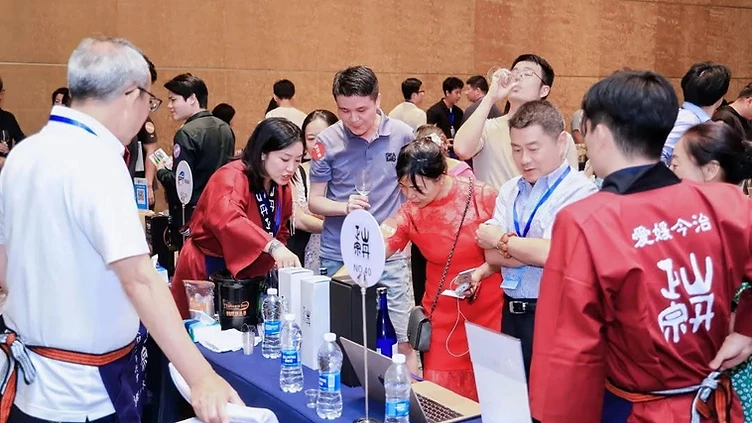
Appointing an import partner without rigorous in-person vetting presents immense commercial risk. Chinese wine buyers rarely sign distribution agreements based solely on email samples or digital correspondence; trade trust (guanxi) is forged during face-to-face tastings, structured negotiations, and shared commercial milestones.
Participating directly in verified mainland wine trade fairs provides the most cost-effective platform to evaluate multiple buyers simultaneously. South African cellars and collective regional pavilions looking to contract serious regional distributors should Become an Exhibitor at INTERWINE, China's established international wine trade exhibition platform.
Exhibitors leverage INTERWINE's dedicated Business Matching services to pre-schedule direct roundtables with licensed importers, major retail category managers, and VIP hospitality buyers from across the Greater Bay Area and inland distribution corridors. Producers can also preview peers and market competitors by reviewing the active Exhibitor Directory to evaluate how competing Southern Hemisphere origins structure their physical trade presentations.
Operational Next Steps for South African Export Managers
- Confirm Regulatory Status: Verify that your cellar's GACC registration profile is active and that your local export agency is prepared to issue compliant bilateral Certificates of Origin.
- Audit Commercial Pricing: Recalculate your price structures from FOB Cape Town through to CIF Chinese port, benchmarking your net landed retail price against equivalent zero-tariff Chilean and Australian wines.
- Design Localized Assets: Create Mandarin tasting cards, WeChat-compatible technical sheets, and compliant label mockups emphasizing your region (Stellenbosch, Swartland, Franschhoek, Robertson, or Hemel-en-Aarde).
- Secure In-Market Presence: Lock in your physical booth, schedule in-person buyer appointments, and arrange trade samples well ahead of shipping cut-off deadlines. Apply for required commercial documentation and logistics credentials through Interwine's Invitation Letter and Visa Support.
Sources
- General Administration of Customs of the People's Republic of China (GACC): Import Regulations & Decree 248 Registration Standards (2024–2026). http://english.customs.gov.cn
- People's Daily Online: "Zero tariffs and new opportunities: How China's policy could reshape South Africa's wine industry" (May 2026). https://en.people.cn/n3/2026/0526/c98649-20460510.html
- The Drinks Business: "China axes tariffs for African imports, but what does this mean for South African wine?" (May 2026). https://www.thedrinksbusiness.com/2026/05/china-axes-tariffs-for-african-imports-but-what-does-this-mean-for-south-african-wine/
- Xinhua News Agency: "South Africa wine industry welcomes China's zero-tariff policy" (April 2026). https://english.news.cn/africa/20260430/a02f1fc2a4154d25b6a3d3c63b4cdbdd/c.html
- Wine-Intelligence / Vino Joy: "South African Wine Poised for Growth in China Under Zero-Tariff Trade Policy" (2025–2026). https://wine-intelligence.com/blogs/wine-news-insights-wine-intelligence-trends-data-reports/south-african-wine-poised-for-growth-in-china-under-potential-zero-tariff-trade-policy-vinovistara
Key Takeaways
- —China enacted a bilateral zero-tariff policy on South African wine imports on May 1, 2026, leveling duty rates with Chile, Australia, and New Zealand for an initial two-year window.
- —Despite 0% import tariffs, landed costs in China remain subject to a 10% statutory consumption tax and a 13% value-added tax, yielding an effective compound tax burden of roughly 25.55% on CIF value.
- —Wineries must maintain active GACC Decree 248 facility registrations and issue compliant bilateral Certificates of Origin to qualify for zero-tariff customs clearance.
- —South African Chenin Blanc and Méthode Cap Classique (MCC) represent major untapped growth categories among China's modern urban and premium warehouse retail channels.
- —Bypassing saturated tier-one coastal markets to partner with regional distributors across the Greater Bay Area and interior provincial capitals offers South African brands higher portfolio focus.
- —Securing dependable Chinese importers requires face-to-face commercial vetting, direct trade exhibition presence, and structured business matching.
Frequently Asked Questions
Does the zero-tariff policy mean South African wine enters China completely tax-free?
No. While the historical 14% to 20% customs duty has been eliminated under the bilateral agreement effective May 1, 2026, imported bottled wine remains subject to China's internal taxes: a 10% consumption tax and a 13% value-added tax (VAT). Compounded on the CIF value, the effective import tax rate is approximately 25.55%.
What documentation is mandatory for South African wineries to clear China Customs?
Exporters must provide an active GACC Decree 248 registration code, an official bilateral Certificate of Origin (COO) verifying South African provenance, commercial invoices, packing lists, a Certificate of Analysis/Health Certificate, and compliant Chinese-language back-labels adhering to national food safety standards (GB standards).
Which South African wine styles hold the highest commercial potential in China?
South African Chenin Blanc is expanding rapidly within major retail chains and on-demand delivery platforms due to its versatile food-pairing profile and competitive price-to-quality ratio. Additionally, fruit-forward Pinotage and Cabernet-driven Cape Blends perform well in corporate dining and banqueting, while Méthode Cap Classique (MCC) appeals strongly to younger sparkling wine consumers in tier-one and tier-two cities.
How long is the current zero-tariff window for South African wine exports?
As reported by industry bodies including South Africa Wine and international trade media, the zero-tariff regime came into force on May 1, 2026, for an initial two-year period running through May 1, 2028. This provides a crucial window for South African producers to secure long-term commercial agreements and establish retail distribution before subsequent multilateral trade modules are finalized.
What is the most effective way for South African producers to find verified Chinese wine importers?
The most reliable strategy is direct participation in established mainland B2B trade exhibitions such as INTERWINE. In-person tasting events and structured business-matching sessions allow winery principals to vet importer credentials, verify distribution licenses, negotiate payment terms, and understand regional consumer preferences across China's commercial hubs.