China HoReCa Wine Market Guide
A commercial B2B guide for winery export directors on cracking China's HoReCa wine channel, covering hotel procurement, regional restaurant chains, sommelier gatekeepers, and distribution models.
To build durable brand equity in mainland China, wine exporters must understand the on-premise trade. Unlike retail hypermarkets or direct-to-consumer e-commerce, the Chinese HoReCa (Hotel, Restaurant, and Catering/Café) channel serves as the ultimate engine for brand positioning, prestige recognition, and sustainable depletions. The total China wine market reached an estimated valuation of $18.85 billion in 2024 and is projected to expand toward $20.25 billion in 2025, according to a market analysis published by Market Research Future. Concurrently, academic research on emerging wine channels published in ResearchGate underscores that emerging wine markets like China rely heavily on on-trade venues for experiential consumption and cultural acclimation.
Navigating China's HoReCa channel requires export directors to move beyond generic import strategies. Hotel groups, Michelin-starred bistros, luxury private banquet venues (sifangcai), and regional dining concepts operate under strict procurement guidelines, listing fee structures, and fragmented regional logistics. Understanding how to align your portfolio with regional distributor gatekeepers and high-profile sommeliers is critical for long-term commercial success.
Structure of China's HoReCa Wine Landscape
China's on-premise market is split into distinct tiers, each with divergent purchasing behavior, margin expectations, and volume capacity.
[International / Domestic Winery]
                │
                ▼
   [Tier-1 National Importer]
     (e.g., Summergate, Torres China, Jebsen)
                │
    ┌───────────┴───────────┐
    ▼                       ▼
[Direct Key Accounts]   [Regional Sub-Distributors]
 - 5-Star Hotel Groups   - Tier-2/3 City Operators
 - National Dining Chains - Independent Bistros
    │                       │
    └───────────┬───────────┘
                ▼
      [HoReCa End Venues]
  (Sommelier / F&B Director Gatekeepers)
1. Luxury & Five-Star Hotel Groups
International hospitality groups operating in China—such as Marriott International, Hyatt, Accor, and Shangri-La—balance corporate-mandated beverage listings with local property autonomy. While brand-standard "by-the-glass" (BTG) programs are often negotiated centrally at regional headquarters (typically Shanghai), individual Food & Beverage (F&B) Directors and Head Sommeliers retain significant purchasing power for property-specific fine dining outlets, executive club lounges, and corporate banquet operations.
2. Independent Fine Dining, Western Bistros, and Wine Bars
Concentrated primarily in Tier-1 metropolises (Shanghai, Beijing, Shenzhen, Guangzhou) and affluent "New Tier-1" cities (Chengdu, Hangzhou, Wuhan), modern wine bars and Western-style bistros are driving on-premise volume. According to insights on China's wine market dynamics documented by China Briefing in 2024, specialized education, brand storytelling, and certified sommelier training programs have elevated the sophistication of Chinese wine professionals. These venues prioritize small-batch production, organic/biodynamic certifications, indigenous varietals, and expressive food pairings over generic commercial bulk labels.
3. Upscale Chinese Dining and Private Kitchens (Sifangcai)
High-end Chinese regional cuisine (Chaozhou, Cantonese, Huaiyang, and elevated Sichuan) accounts for high-ticket wine consumption. Banquets held in private dining rooms (baoxiang) emphasize prestige, vintage reliability, and gifting appeal. In this sub-segment, classic appellations (Bordeaux Grand Cru Classé, Burgundy, high-end Australian Shiraz, and premium Napa Cabernet) dominate, though aromatic whites such as German and Alsatian Rieslings are gaining traction alongside delicate regional Chinese flavor profiles.
The On-Trade Route-to-Market: Distribution and Listing Economics
Foreign wineries cannot legally sell directly to on-premise venues without holding an in-country licensed import entity. Consequently, cracking the HoReCa channel requires partnering with established specialized on-trade distributors.
Distribution Models
- National Key-Account Importers: Companies with established logistics across multiple hubs maintain dedicated on-trade sales divisions servicing luxury hotels and national restaurant chains.
- Regional Fine Wine Merchants: In Tier-2 and Tier-3 provincial capitals, regional wine wholesalers control relationships with local private clubs, state-owned enterprise (SOE) dining venues, and premier regional hotels.
- Sommelier-Driven Boutique Agents: In culinary hubs like Shanghai and Chengdu, boutique distributors focus exclusively on modern bistros, natural wine bars, and high-concept dining spaces.
To identify and negotiate with these distributors, winery leaders can leverage on-the-ground platforms like Interwine Events and utilize targeted Business Matching to pre-vet distribution partners who hold active accounts with regional hotel groups.
Commercial Realities: Listing Fees, Credit Terms, and Pouring Rights
- Listing Fees (Kaipai Fei): While top-tier international hotel chains have curtailed outright listing fees due to corporate compliance mandates, independent restaurants and regional hospitality venues frequently demand listing fees, free-stock promotional allowances, or glassware sponsorships to grant menu placement.
- Pouring / BTG Contracts: Securing a "House Pour" or By-The-Glass placement delivers sustained case volume. In exchange, venues require deep volume rebates, staff incentive programs (wine spiffs), and continuous staff training support.
- Extended Credit Terms: Standard payment terms in China HoReCa range from 60 to 90 days, and can stretch to 120 days for large hotel chains. Exporters must ensure their importing partners maintain sufficient working capital to carry these receivables without defaulting on winery settlement terms.
+----------------------------+-----------------------------+------------------------------+
| Channel Segment            | Primary Purchasing Drivers  | Typical Commercial Terms     |
+----------------------------+-----------------------------+------------------------------+
| 5-Star Hotel Chains        | Brand prestige, consistency,| Central contracts, 60-90 day |
|                            | training support, compliance| payment terms, BTG rebates   |
+----------------------------+-----------------------------+------------------------------+
| Fine Dining & Wine Bars    | Storytelling, terroir,      | Sommelier-led, weekly/monthly|
|                            | unique varietals, low sulfur| re-orders, COD or 30 days    |
+----------------------------+-----------------------------+------------------------------+
| Upscale Chinese Banqueting | Gifting prestige, ratings,  | Distributor-driven, seasonal |
|                            | brand equity, status labels | volume bursts (Q4/CNY)       |
+----------------------------+-----------------------------+------------------------------+
Regulatory, Tariff, and Compliance Considerations
Exporting wine for China's on-premise trade involves managing evolving customs regulations, labeling standards, and bilateral tariff policies.
- Tariff Landscapes: According to tariff tracking published by MS Advisory in 2024, China officially lifted punitive anti-dumping tariffs on Australian wine imports in early 2024, restoring a major competitive player to the restaurant market. Importers handling wines from jurisdictions without bilateral free trade agreements (such as the EU or the US) face Most-Favored-Nation (MFN) import tariff rates ranging between 14% and 30%, in addition to a 10% consumption tax and 13% Value-Added Tax (VAT).
- GACC Decree 248 Registration: Every overseas wine production facility must be formally registered with the General Administration of Customs of China (GACC) under Decree 248 before dispatching shipments. Missing or expired registrations lead to immediate customs impoundment at Chinese ports.
- Mandatory Chinese Back-Labels: Chinese food safety standards (GB 7718 and GB 2758) require permanent, legally compliant Chinese back labels affixed to the bottle prior to customs clearance. The label must specify the Chinese product name, ingredients, net content, alcohol percentage, producer and importer information, and mandatory health warnings.
To keep track of changing compliance measures and regulatory frameworks impacting import pipelines, export managers frequently consult Market Insights.
Winning the Gatekeeper: Sommeliers and Beverage Directors
In China's modern dining hubs, the head sommelier is the ultimate gatekeeper. Many hold international accreditations (Court of Master Sommeliers, WSET Level 3/4) and possess refined palates and strong commercial instincts.
[Winery Brand Strategy]
          │
          ▼
[Local In-Market Importer / Brand Ambassador]
          │
          ├─► Masterclasses & Technical Tastings
          ├─► Staff Training & Incentives (Spiffs)
          └─► Pairing Dinners with Local Cuisine
          │
          ▼
[Sommelier / Beverage Director]
          │
          ▼
[Curated Wine List / BTG Placement]
          │
          ▼
[Chinese Consumer Adoption & Depletion]
To build lasting partnerships with Chinese on-trade gatekeepers, brands should implement three core practices:
- Provide Technical Education, Not Just Marketing: Deliver detailed technical sheets (soil composition, rootstock, fermentation details, aging vessels). Chinese sommeliers reject hollow marketing claims in favor of viticultural substance.
- Support Front-of-House Staff Training: The greatest bottleneck in Chinese restaurants is floor staff confidence. Brands that fund or provide professional Mandarin-language service training materials and menu-pairing cheat sheets secure higher recommendation rates from serving staff.
- Tailor Pairings to Local Regional Cuisines: Replace generic European cheese-and-steak pairing recommendations with specific matches for Chinese regional flavor profiles—such as matching off-dry whites with spicy Hunan dishes or structured reds with slow-braised pork dishes.
Action Plan: Executing an On-Trade Market Entry Strategy
For winery export directors evaluating market entry or brand expansion across China's HoReCa sector, success requires structured execution:
- Audit Channel-Specific SKUs: Avoid putting your flagship retail-distributed wine into on-premise venues. Create channel-exclusive labels or preserve specific reserve vintages solely for HoReCa to protect restaurant wine margins from instant price comparisons on retail smartphone apps.
- Establish Strategic Physical Presence: Personal relationships (guanxi) and face-to-face trust building remain paramount in Chinese commercial culture. Plan regular market visits to engage directly with hospitality clients alongside your importing distributor.
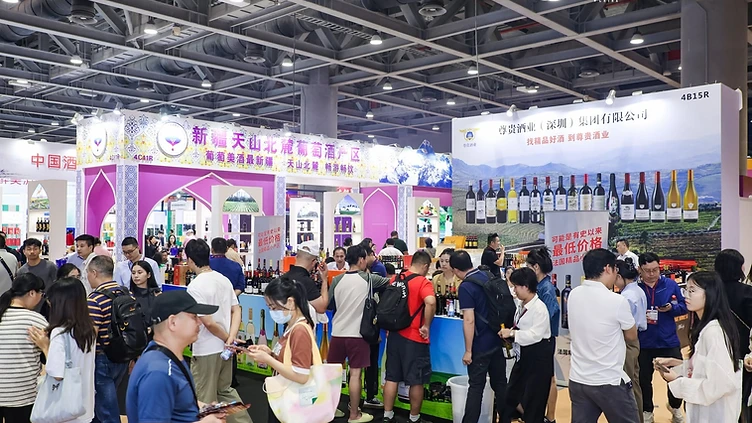
- Meet Qualified Commercial Buyers Directly: Meet face-to-face with active national importers, luxury hotel beverage purchasers, and specialized provincial dining wholesalers by choosing to Become an Exhibitor at major national wine industry trade gatherings.
Sources
- Market Research Future: China Wine Market Analysis
- ResearchGate: Wine Distribution Channel Systems: Germany vs. China
- China Briefing: China's Wine Market Outlook and Trends
- MS Advisory: Wine Market in China: Tariffs and Regulations
Key Takeaways
- —China's wine market reached $18.85 billion in 2024 and is projected to expand toward $20.25 billion in 2025 according to Market Research Future.
- —On-premise dining venues serve as the primary brand-building channel in China, requiring tailored distribution, dedicated SKUs, and margin protection against e-commerce discounting.
- —Sommeliers and F&B directors act as key gatekeepers who require technical vinous education, staff training materials in Mandarin, and contextual Chinese culinary pairing strategies.
- —GACC Decree 248 facility registration and strict Chinese back-labeling compliance (GB 7718/GB 2758) are mandatory prerequisites for legal customs clearance.
- —Exporters must partner with specialized regional importers who have working capital capable of supporting standard 60- to 90-day HoReCa credit cycles.
Frequently Asked Questions
What is the typical payment term for wine sales in China's HoReCa channel?
Payment terms in the Chinese on-premise trade typically range between 60 and 90 days for established 5-star hotel groups and premier restaurant operations, though they can extend to 120 days for large corporate hospitality groups. Exporters must partner with financially sound importers capable of managing this receivables cycle.
Why do wineries need separate SKUs for China HoReCa compared to retail or e-commerce?
Price transparency is exceptionally high in China due to scanning apps on platforms like WeChat and Taobao. If restaurant patrons can look up a bottle on an e-commerce platform and find it deeply discounted, on-trade venues lose margin and willingness to feature the wine. Offering exclusive labels or reserve vintages protects restaurant markups.
What regulatory barriers must wineries overcome to sell into China's on-premise sector?
Wineries must maintain a valid production facility registration with the General Administration of Customs of China (GACC) under Decree 248, affix compliant Chinese-language back labels meeting national GB standards, and pay relevant import duties (ranging between 14% and 30% MFN if not under a free trade agreement), 10% consumption tax, and 13% VAT.
How can foreign wineries effectively reach Chinese sommeliers and F&B managers?
Wineries can reach gatekeepers by organizing technical educational masterclasses, providing staff training programs translated into Mandarin, participating in sommelier-attended trade fairs, and leveraging structured business matchmaking sessions with specialized on-trade importers.