Guangzhou Exhibition or Hanoi Roadshow: Which Format Fits Your Brand?
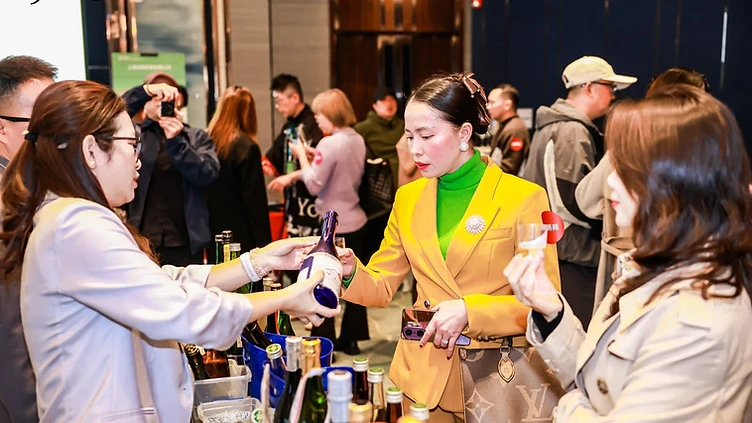
Choosing between a mega-fair like Interwine Guangzhou and an intimate regional tour like the Hanoi Roadshow depends on export capacity, market maturity, and target margins. This commercial guide compares cost structures, buyer profiles, and ROI models to help wine and spirits producers choose the right Asia route.
To choose between a flagship exhibition in Guangzhou and a focused roadshow in Hanoi, your export team must assess market scale versus transaction velocity. If your objective is national distribution across mainland China, engaging massive wholesale networks, and building broad brand presence, the large-scale multi-day trade fair at Interwine Guangzhou is the correct commercial route. Conversely, if your winery or spirits brand seeks lower overheads, direct access to emerging hospitality channels, and an entry point into Southeast Asia's rapidly expanding imported beverage scene, the 1-day Hanoi Roadshow provides a lean, direct route. For international wine estates, regional trade boards, and craft distillers, navigating the Asian trade calendar requires choosing the format that reflects production volume, commercial maturity, and supply-chain readiness.
International commercial teams planning their route across Asia can explore upcoming trade stops through Interwine Events and review relevant travel logistics in our Event Guides.
Understanding the Two Trade Formats
Commercial success in Asia depends on aligning export capability with event infrastructure. A flagship trade fair and a regional single-city roadshow serve fundamentally different commercial functions.
The Flagship Exhibition Model: Scale and National Reach
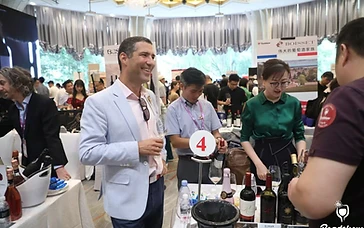
A major exhibition—such as Interwine Guangzhou staged at the China Import and Export Fair Complex (Pazhou)—functions as a central procurement hub. According to industry analysis from MS Advisory (2026), China's wine market was valued at $40.4 billion in 2024 with a compound annual growth rate (CAGR) exceeding 11%, supported by a Guangdong provincial consumer base of roughly 110 million people. Flagship trade fairs gather national importers, regional sub-distributors, retail chains, and corporate buyers over a three-day period.
- Commercial Scope: Multi-regional and cross-border distribution agreements, national container-load commitments, and category-level brand launches.
- Operational Demands: High preparation overhead, custom booth fabrication, multi-pallet sample shipments, localized Chinese sales collateral, and dedicated on-stand bilingual sales teams.
- Strategic Value: Establishes major brand credentials across Tier-1 and Tier-2 Chinese distribution hubs.
The Focused Roadshow Model: Precision and Market Testing
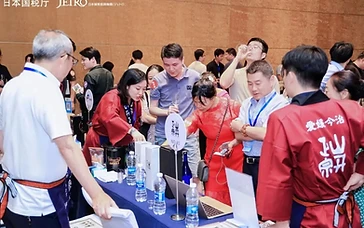
A focused roadshow—such as the Interwine Hanoi edition—is an agile, single-day B2B showcase. Market trade studies from StrategyHelix (2026) and IndexBox (2026) identify Vietnam among the fastest-growing import markets for wine in Southeast Asia. A roadshow gathers local importers, specialized HoReCa (Hotel, Restaurant, and Catering) beverage directors, and boutique distributors in a compact, table-top setting.
- Commercial Scope: Immediate tasting-table feedback, on-premise listings, boutique importer representation, and initial market validation.
- Operational Demands: Lean investment, standardized table-top displays, carry-on or localized air-freight sample volumes, and rapid follow-up cycles.
- Strategic Value: Cost-effective exploration of emerging Southeast Asian buying power without substantial capital allocation.
Guangzhou vs. Hanoi: Strategic Comparison
When evaluating marketing budgets, export managers must balance cost against market depth. Below is a structural comparison of both routes:
| Commercial Dimension | Guangzhou Exhibition (Pazhou) | Hanoi Roadshow (Vietnam) | | :--- | :--- | :--- | | Market Scale & Focus | Massive mainland China market; multi-tier provincial wholesale networks | Fast-growing Southeast Asian consumer market; HoReCa & boutique retail | | Format & Duration | 3-Day comprehensive B2B trade exhibition | 1-Day focused executive tasting and B2B table-top showcase | | Buyer Profile | National beverage importers, volume wholesalers, corporate gift buyers | Local fine-wine importers, luxury hotel sommeliers, on-premise buyers | | Sample Logistics | Multi-case sea freight; GACC customs clearance and Chinese back-labels | Air-freight courier or targeted localized customs import samples | | Resource Demands | Substantial booth investment, multi-member staffing, bilingual collateral | Streamlined investment, single representative or localized brand ambassador | | Primary Commercial Metric | Container-load annual volume contracts | Mixed-pallet trial shipments, menu listings, agency agreements |
Interwine Asia Calendar: 2026–2027 Schedule
Producers coordinating their export tours should note the confirmed schedules for Interwine's China and Southeast Asia trade corridors:
2026 Tour Route
- Guangzhou Flagship 2026: 16–18 November 2026 at the China Import and Export Fair Complex (Pazhou), Guangzhou.
- Hanoi Roadshow 2026: 20 November 2026, Hanoi, Vietnam.
2027 Tour Route
- Spring Guangzhou 2027: 7–9 May 2027 at China Import and Export Fair Complex / Pazhou, Guangzhou.
- Asia Roadshow 2027 Series:
- Hanoi: 11 May 2027
- Kuala Lumpur: 13 May 2027
- Singapore: 15 May 2027
- Bali: 17 May 2027
- Vietnam 2027 Exhibition: 6–8 July 2027 at SECC, Ho Chi Minh City.
- Autumn Guangzhou 2027: 31 October–2 November 2027 at China Import and Export Fair Complex / Pazhou, Guangzhou.
Wine producers who plan back-to-back participation during the November 2026 corridor can engage mainland Chinese volume buyers in Guangzhou before flying to Hanoi for immediate Southeast Asian market activation.
Hypothetical ROI Model: Assessing Cost vs. Contribution Margin
To understand expected commercial returns, wine producers must calculate financial viability using total landed event costs against gross product contribution margin rather than simple top-line sales turnover.
Note: The following calculations represent a clearly labelled hypothetical scenario for analytical planning purposes only. Actual costs, volumes, and margins vary based on producer pricing and logistics contracts.
Hypothetical Model Assumptions
- Standard Export Case: 9-liter case (12 bottles × 750ml), FOB export price = $60.00.
- Gross Contribution Margin: 40% ($24.00 gross margin per case sold).
Scenario A: Guangzhou Flagship Exhibition (Hypothetical)
- Hypothetical Total Costs: $18,000 (standard booth space, design fabrication, shipping of 25 sample cases, marketing collateral, flights, and 5 nights hotel for 2 representatives).
- Breakeven Volume Required: $$\text{Breakeven Cases} = \frac{\text{Total Costs}}{\text{Margin per Case}} = \frac{$18,000}{$24.00} = 750 \text{ cases}$$
- Commercial Realization: Securing one regional distributor purchasing two 20-foot container loads (~1,600 cases total) generates $38,400 in gross contribution margin, yielding a net positive return of $20,400 above event investment.
Scenario B: Hanoi 1-Day Roadshow (Hypothetical)
- Hypothetical Total Costs: $4,800 (roadshow participation package, sample air freight of 4 cases, flight, and 2 nights hotel for 1 representative).
- Breakeven Volume Required: $$\text{Breakeven Cases} = \frac{\text{Total Costs}}{\text{Margin per Case}} = \frac{$4,800}{$24.00} = 200 \text{ cases}$$
- Commercial Realization: Securing two boutique on-premise distributors ordering a combined 350 cases across an annual rotation delivers $8,400 in gross contribution margin, generating $3,600 in net commercial margin.
Strategic Takeaway: The roadshow requires less capital upfront and lowers break-even barriers, making it an effective option for testing market dynamics. Conversely, the flagship exhibition requires larger upfront capital but offers substantial volume scale for export-ready estates.
Brand Decision Framework: Which Format Fits Your Profile?
To determine the best fit for your commercial roadmap, review this operational evaluation checklist:
1. Production Capacity and Inventory Allocation
- Select Guangzhou if: Your winery produces more than 100,000 bottles annually and can reliably allocate 1,000 to 5,000 cases to a single export market without straining global supply.
- Select Hanoi if: Your production is focused (boutique estate, single-vineyard, or artisanal spirits under 40,000 bottles annually) and best suited to targeted restaurant placements and niche retail allocations.
2. Regulatory and Customs Readiness
- China Regulatory Demands: Importing commercial wine into mainland China requires General Administration of Customs of China (GACC) facility registration under Decree 248/249, certified laboratory analysis reports, Chinese back-label pre-clearance, and national customs tariffs. A multi-day exhibition provides the platform scale necessary to justify these statutory processes.
- Vietnam Regulatory Demands: Vietnam requires import licensing for alcoholic beverages, food safety product declarations, and special consumption tax compliance. Engaging a local importer through a roadshow enables producers to evaluate local partner capabilities before finalizing long-term regulatory compliance.
3. Commercial Maturity in Asia
- Established Brands: Brands with existing distribution in Hong Kong, Singapore, or Shanghai should leverage Guangzhou to penetrate inland Chinese Tier-2 and Tier-3 urban markets.
- New Entrants: Wineries without current Asian distribution can use Hanoi as a lower-risk test bed to refine Asian pitch materials, measure consumer taste preferences, and establish regional reference accounts.
Actionable Pre-Event Preparation Checklist
Regardless of your chosen format, success depends on thorough commercial preparation:
- Target Account Profiling: 30 days prior to the event, review existing trade databases or utilize Business Matching to request pre-arranged discussions with vetted commercial buyers.
- Directory Research: Review the current Exhibitor Directory to benchmark competitor positioning, regional representation, and pricing structures in your category.
- Localized Marketing Assets: Translate tasting sheets, estate sheets, and technical wine specifications into simplified Chinese (for Guangzhou) or Vietnamese/English (for Hanoi). Clearly list FOB departure ports, incoterms, and pallet packing dimensions.
- Sample Management: Ensure tasting samples arrive at the host venue at least 48 to 72 hours before the doors open to allow the wine to recover from transit shock.
- Post-Event Deal Structuring: Establish standard terms of sale, sample shipment pricing policies, and minimum order quantities (MOQs) before entering negotiations with prospective distributors.
Whether your brand demands the wholesale scale of Guangzhou or the focused networking of Hanoi, setting clear transaction targets is vital to achieving measurable commercial growth in Asia.
Producers evaluating their international marketing presence are invited to Become an Exhibitor to discuss space options, or review regional travel logistics through our Event Guides.
Sources
- MS Advisory: Wine Market in China Trends and Preferences (2026)
- Beverage Trade Network: Interwine China Partnership and Market Overview (2026)
- StrategyHelix: Vietnam Wine Market Report and Forecast (2026)
- IndexBox: Vietnam Wine Market Analysis, Forecast, Size, and Trends (2026)
- Interwine Official Event Portal: Interwine China and Asia Roadshow Calendars
Key Takeaways
- —Guangzhou serves as a large-scale commercial exhibition platform suited for high-volume producers targeting multi-provincial Chinese distribution networks.
- —The Hanoi Roadshow offers an agile, single-day format ideal for boutique estates and brands targeting Southeast Asia's growing hospitality and on-premise sectors.
- —Break-even ROI analysis demonstrates that roadshows require fewer initial cases to cover costs, whereas major exhibitions unlock container-scale margins.
- —China requires GACC registration and dedicated back-label compliance, making Guangzhou ideal once a brand commits to statutory market entry.
- —The 2026 schedule allows producers to exhibit in Guangzhou from 16–18 November and transition directly to the Hanoi Roadshow on 20 November 2026.
Frequently Asked Questions
Can our brand participate in both the Guangzhou exhibition and Hanoi roadshow in 2026?
Yes. The 37th Interwine Guangzhou takes place on 16–18 November 2026, followed immediately by the Hanoi Roadshow on 20 November 2026. This sequential schedule allows international export managers to cover both South China and Vietnam within a single business trip.
What is the primary difference in buyer types between Guangzhou and Hanoi?
Guangzhou attracts national-level Chinese importers, provincial distributors, major e-commerce platforms, and corporate volume buyers looking for container-load agreements. Hanoi focuses on local Vietnamese fine-wine importers, luxury hotel beverage managers, independent sommeliers, and specialized on-premise retailers.
What regulatory preparation is required before exhibiting in mainland China versus Vietnam?
Entering mainland China through Guangzhou requires winery registration with the General Administration of Customs of China (GACC) under Decrees 248/249, certified lab analysis, and compliant Chinese back labels. Vietnam requires import licensing for local distribution and food hygiene declarations, which local Vietnamese importers typically handle for samples and commercial shipments.
How should an export manager calculate trade show ROI?
Rather than calculating ROI on top-line invoice revenue, calculate gross contribution margin (FOB price minus unit cost of production) across closed case sales, divided by total landed event expenses including booth fees, sample freight, travel, and promotional materials.