From Trade-Fair Tasting to Supplier Approval: A Wine Buyer’s Checklist

A commercial wine buyer's step-by-step checklist to bridge the gap between trade-fair tasting notes and formal supplier approval, compliance, and PO issuance.
A successful trade-fair tasting is only the initial filter in professional wine procurement. For commercial importers, beverage directors, and regional distributors, transitioning an exciting sensory discovery into an approved, revenue-generating SKU demands rigorous technical, operational, and commercial validation. Relying solely on palatal appeal at an exhibition stand risks customs rejections, unexpected margin erosion, supply disruptions, and inventory write-downs.
Executing formal supplier approval requires a structured due diligence framework. Sourcing teams must audit producer certifications, run lab-based sensory benchmarks, confirm target market regulatory registrations, and stress-test landed margin economics before issuing a commercial Purchase Order (PO).
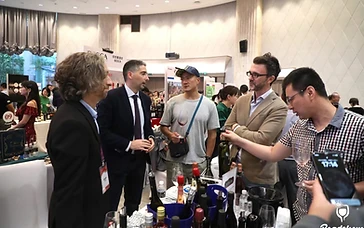
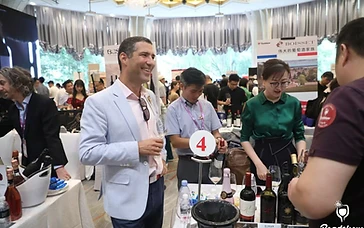
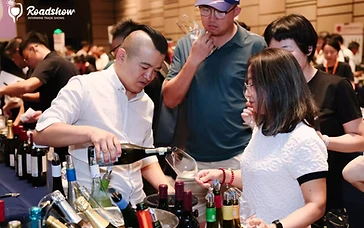
Phase 1: On-Site Stand Auditing and Triage
Trade exhibitions present hundreds of labels within hours. Without a structured intake process, tasting notes become disorganized, making subsequent supplier follow-ups inefficient.
1. Rapid Commercial Qualification
During the initial conversation at an exhibition stand, immediately evaluate commercial viability before spending extended time on deep technical tastings:
- Export Scale & Capacity: What is the winery’s total annual production versus unallocated volume for your territory?
- Territorial Exclusivity: Does the producer already have active distribution agreements in your target country or sub-regions?
- Incoterms & Pricing Baseline: Request EXW (Ex Works) or FOB (Free On Board) price indications in writing. Note the shipping port (e.g., Bordeaux, Valparaíso, Melbourne) to model preliminary logistics overheads.
- Minimum Order Quantities (MOQ): Verify whether minimum thresholds are defined by pallet (typically 56 to 112 standard 9-liter cases depending on stacking), mixed pallet, or full container load (FCL).
2. Standardization of On-Site Data Intake
Avoid collecting loose business cards with unlinked handwritten tasting notes. Sourcing teams should record critical data points directly into a mobile sheet or standardized intake card:
- Producer legal name and commercial brand name
- Specific bottling sampled (exact vintage, grape variety breakdown, alcohol by volume)
- Stand representative's direct operational role (owner, commercial director, or intermediary broker)
- Immediate benchmark score across: typicity, balance, packaging appeal, and price-to-quality ratio
Buyers attending regional exhibitions such as Interwine Guangzhou (scheduled for 16–18 November 2026, with the Spring session running 7–9 May 2027 at the China Import and Export Fair Complex) or visiting multi-city showcases across Southeast Asia can optimize their scheduling by using dedicated tools like Business Matching to pre-vet producer availability and arrange formal meetings before arriving on the show floor.
Phase 2: Technical, Laboratory, and Sensory Due Diligence
Wines sampled from an open bottle at an ambient trade show stand can diverge significantly from the eventual shipped product. Once a wine passes the initial tasting hurdle, procurement teams must request formal benchmarking samples sent under controlled conditions to the company’s tasting laboratory.
Lab Certificate of Analysis (CoA)
Every reputable international winery must supply an up-to-date Certificate of Analysis issued by an accredited oenological laboratory. Importers must cross-examine this document against destination market legal limits:
- Free and Total Sulfur Dioxide ($SO_2$): Verify that total sulfite levels comply with importing country limits (e.g., European Union, US TTB, or China GB standards).
- Volatile Acidity (VA): High acetic acid suggests micro-bacterial instability during barrel aging or bottling, which will deteriorate rapidly during ocean transit.
- Residual Sugar (RS) vs. Perceived Dryness: Lab-confirmed sugar levels dictate accurate tariff classifications and tax brackets in specific jurisdictions.
- Alcohol by Volume (ABV): Ensure the lab-measured alcohol matches the label declaration within the legally allowed tolerance margin (often $\pm 0.5%$ or $\pm 0.8%$ depending on territorial rules).
Production & Bottling Integrity
Verify production parameters with the winery’s technical director:
- Closure Specifications: Confirm closure type (cork specification, TCA guarantee limits, or screw cap liner type such as Saranex vs. tin-PVDC).
- Filtration Protocol: Establish whether the wine is sterile filtered, cross-flow filtered, or unfiltered. Unfiltered red wines with fermentable sugars demand strict refrigerated reefer transport to prevent secondary fermentation inside the container.
Phase 3: Regulatory, Compliance, and Facility Vetting
Cross-border alcohol trade is strictly regulated. Regulatory missteps can cause port-of-entry customs holds, administrative fines, or mandatory re-exportation. According to the TTB Wine Certification Requirements (2026), imported wines entering the United States must meet federal cellar treatment verifications and obtain an approved Certificate of Label Approval (COLA). Similarly, international logistics specialists Hillebrand Gori (2026) emphasize that cross-border import compliance hinges on strict origin labeling, phytosanitary pallet certification (ISPM 15), and destination facility registration.
| Compliance Pillar | Required Document / Standard | Verification Mechanism | | :--- | :--- | :--- | | Facility Registration | China GACC Decree 248 Registration / US FDA Facility Number | Confirm valid registration code directly in the destination customs database before dispatch. | | Label Compliance | Mandatory destination-language back label (ABV, allergens, net volume, legal warnings) | Draft label proof reviewed against local health and trade agency guidelines. | | Origin & Cellar Standards | Certificate of Origin (COO), Enological Practices Certificate | Issued by authorized national Chambers of Commerce, export councils, or certified laboratories. | | Wood Packaging | ISPM 15 heat-treated or fumigated wood stamps | Forwarder visual inspection of pallets before container stuffing. |
Buyers developing portfolios in the Asia-Pacific region can cross-reference registered suppliers through the Exhibitor Directory and align category expansion through the Wine Import & Distribution portal.
Phase 4: Commercial Modeling, Landed Costs, and Contract Finalization
A competitive FOB price does not guarantee profitability. Importers must build comprehensive landed-cost unit models that incorporate all variables between the cellar door and the regional warehouse.
Hypothetical ROI & Landed Cost Unit Model
Disclaimer: The following calculation is a clearly labelled hypothetical example for an importer purchasing a consolidated shipment of 560 standard 9-liter cases (approx. 3,360 bottles) from Europe into an Asian container port.
- Ex-Cellar / FOB Cost per Bottle: €4.50 ($4.85 USD equivalent)
- Ocean Freight, Insurance, & Thermal Liner: $0.55 per bottle
- Import Customs Tariffs, Port Clearances, & Handling: $0.60 per bottle
- Domestic Excise, Warehouse In-Handling, & Lab Labeling: $0.80 per bottle
- Total Landed Cost ($C_{\text{landed}}$): $6.80 per bottle
- Wholesale Selling Price to Trade ($P_{\text{sale}}$): $11.00 per bottle
$$\text{Unit Contribution Margin} = P_{\text{sale}} - C_{\text{landed}} = $11.00 - $6.80 = $4.20$$ $$\text{Contribution Margin Ratio} = \frac{$4.20}{$11.00} \times 100 = 38.18%$$
If the importer incurs territory marketing allowances or sample allowances of $500 across the lot, this cost must be deducted from the aggregate contribution margin ($3,360 \times $4.20 = $14,112 - $500 = $13,612$) to derive the final net operational profit.
Commercial Contract Clauses
Before finalizing the formal master supply agreement, ensure the contract covers:
- Vintage Rollovers: Clear notice periods (e.g., 60 days) and explicit approval rights before transitioning to a new vintage, including sample verification.
- Breakage & Transit Claims: Clear delineation of risk transfer under Incoterms 2020 rules, specifying temperature logging requirements during ocean shipping.
- Payment Milestones: Structured terms (e.g., 30% deposit upon PO confirmation, 70% against Bill of Lading copy) moving to open credit only after established transaction history.
Summary Supplier Approval Checklist
Use this consolidated checklist before authorizing any opening purchase order:
- [ ] Commercial Fit: Confirmed exclusive sales territory and realistic initial MOQ.
- [ ] Benchmarking: Independent sample tasted blind alongside competing market benchmarks.
- [ ] Analytical Check: Valid CoA received and verified for sulfur, acidity, and alcohol compliance.
- [ ] Regulatory Approval: Producer facility actively registered with destination authorities (e.g., GACC / FDA).
- [ ] Packaging Proofs: Front and destination back labels verified against consumer protection laws.
- [ ] Landed Cost Model: Total landed cost calculated, confirming acceptable contribution margin.
- [ ] Contract Signed: Master supply agreement executed with clear vintage transition terms.
Maximize Your Sourcing Efficiency
Connecting with established producers who meet strict export compliance saves months of administrative delays. Importers and beverage buyers planning their next product cycles can pre-qualify certified producers, streamline technical audits, and arrange structured one-on-one trade meetings via Business Matching.
Sources
- Alcohol and Tobacco Tax and Trade Bureau (TTB) (2026). Certification Requirements for Imported Wine. https://www.ttb.gov/regulated-commodities/beverage-alcohol/wine/certification-requirements-for-imported-wine
- Hillebrand Gori (2026). How to get compliance and regulations right when importing wine. https://www.hillebrandgori.com/media/publication/wine-shipping-compliance-regulations
- Luni Trading (2026). Effective B2B Wine Procurement Strategies for Your Business. https://www.lunitrading.com/post/effective-b2b-wine-procurement-strategies-for-your-business
Key Takeaways
- —A positive trade-fair tasting must be followed by independent bench testing and analytical lab validation before ordering.
- —Importers must audit Certificates of Analysis for regional compliance regarding sulfur, volatile acidity, and declared ABV.
- —Regulatory facility registrations (such as China GACC Decree 248 or US FDA/TTB) must be confirmed prior to shipment dispatch.
- —Landed cost calculations must incorporate ocean freight, temperature protection, customs duties, and local warehousing to verify the true contribution margin.
- —Master supply agreements must include explicit vintage-rollover notifications and packaging specification commitments.
Frequently Asked Questions
Why is a trade-fair tasting alone insufficient for adding a wine to an import portfolio?
Exhibition conditions often differ from commercial shipments. Wines may have been decanted, aerated, or served at non-standard temperatures. Additionally, an on-site tasting provides no proof of cellar consistency, analytical legal compliance, customs clearance eligibility, or realistic landed margin profitability.
What parameters should a commercial wine buyer look for on a Certificate of Analysis (CoA)?
Key parameters include total and free sulfur dioxide (SO2), volatile acidity (VA), residual sugar (RS), total acidity (TA), and actual alcohol by volume (ABV). These metrics ensure the wine falls within destination market legal limits and remains stable during shipping.
How do international facility registrations impact wine import clearance?
Many major importing markets mandate foreign production facility registration before wine reaches customs. For example, China requires overseas food and beverage producers to be registered under GACC Decree 248, while the US requires FDA facility registration. Failure to secure this registration results in port impoundment or rejection.
What is the best way to handle vintage transitions in a supplier contract?
Contracts should stipulate a minimum notice period (such as 60 days) before a vintage is phased out. Importers should retain the legal right to inspect pre-bottling technical data or sample the new vintage prior to approving subsequent purchase orders.