How Wine Brands Can Build Local Demand in Beijing
Discover how international wine brands can build sustainable local demand in Beijing by navigating municipal on-trade dining, corporate gifting networks, retail club sourcing, and localized consumer storytelling.
To build sustainable local demand in Beijing, international wine brands must pivot away from generic national distribution strategies and address the distinct commercial realities of China’s political and cultural capital. Unlike Shanghai's experimental, bistro-centric wine scene or Guangzhou's merchant-led trading culture, Beijing represents a concentrated ecosystem dominated by institutional banqueting, corporate gifting, elite private dining (Baojian culture), and a rapidly expanding demographic of high-earning professionals seeking approachable lifestyle consumption.
According to the USDA Foreign Agricultural Service Wine Market Update 2025, China imported approximately $1.6 billion of wine and related products in 2024, with Tier-1 metropolitan hubs like Beijing, Shanghai, and Shenzhen remaining the primary growth engines. Concurrently, General Administration of Customs China (GACC) tracking highlighted that while total import volumes have recalibrated toward value-conscious purchasing, consumer interest in white wines, sparkling varieties, and well-positioned regional wines has steadily climbed. For wineries and regional distribution teams, unlocking Beijing requires an integrated approach that connects institutional prestige with dynamic on-premise activation.
Beijing’s Wine Market: Key Structural Realities
Beijing’s wine market is defined by clear socio-economic segmentation. Winemakers must align their portfolios with the specific commercial venues driving local sales volume.
1. The Corporate Banqueting and "Baojian" Private Dining Ecosystem
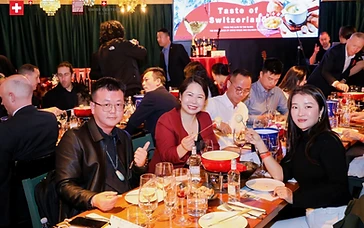
Beijing remains the headquarters for state-owned enterprises (SOEs), multinational regional headquarters, regulatory bodies, and major tech conglomerates based in Haidian and Chaoyang districts. Commercial entertainment heavily revolves around high-end private dining rooms (Baojian). Within these venues, wine serves as social currency—a dynamic documented in academic studies by ResearchGate on Chinese wine consumer behavior, where purchase decisions in professional environments are driven by prestige, reputation, and face (mianzi).
For premium red wines (Bordeaux classified growths, Penfolds, Barolo, or Napa Valley Cabernet), securing placement inside distributor networks that supply corporate procurement channels and private dining rooms guarantees consistent re-orders. Pricing in these environments must account for distributor margin requirements and institutional compliance.
2. High-Density Modern On-Trade: Sanlitun, Liangmaqiao, and CBD
Outside of official dining, Beijing's contemporary on-trade is concentrated in lifestyle corridors such as Chaoyang District (Sanlitun, Guomao CBD, and Liangmaqiao). These neighborhoods host luxury hotels, contemporary Western bistros, Japanese omakase counters, and modern Chinese regional restaurants. Consumers in these venues are younger, internationally educated, and open to alternative varietals, natural wines, crisp whites, and low-ABV options. To explore broader consumer patterns and macro movements across metropolitan hubs, distributors can review our Market Insights.
3. Retail Club Stores and Direct Sourcing
As identified in the USDA 2025 Report, warehouse club formats such as Sam’s Club and Costco have expanded aggressively across Tier-1 cities, including Beijing. These platforms directly import and curate selections, capturing middle-class family consumption. Wineries capable of handling volume at competitive commercial price points must actively target direct retail buyers who supply Beijing’s suburban residential belts.
Step-by-Step Commercial Blueprint: Activating Local Demand in Beijing
Target Tier-1 Regional Importers & Sub-Distributors
                     │
                     ▼
Localize Brand Narrative & Regional Food Pairings
                     │
                     ▼
Equip Sales Reps with Practical Trade Toolkits
                     │
                     ▼
Activate In-Person B2B Matching at Major Trade Platforms
Step 1: Secure Regional Importers with Municipal Route-to-Market Access
National importers based in southern coastal provinces frequently fail to secure deep shelf space or wine list dominance in northern China. Regional distribution in Beijing requires partnering with second-tier distributors, specialized beverage trading houses, or hospitality wholesalers that hold direct contracts with Beijing hotel groups, embassies, and private club accounts.
Wineries should evaluate distribution partners not simply on aggregate national turnover, but on their specific channel penetration across Chaoyang, Dongcheng, and Haidian districts. Engaging through curated Business Matching channels allows producers to vet distributors possessing verifiable accounts inside the capital.
Step 2: Adapt Storytelling to Northern Palates and Local Cuisines
Generic tasting notes detailing limestone subsoils and French oak barrel toast levels fail to resonate with regional trade buyers. As industry educator Xiao Pi observed regarding market developments highlighted by Jane Anson's 2025 China Market Analysis, Chinese trade professionals and consumers prioritize localized flavor connections and authentic dining context over rigid academic theory.
In Beijing, winemakers should position their portfolios alongside northern Chinese gastronomy:
- Full-bodied, fruit-forward reds: Positioned to accompany traditional Beijing roast duck, Mongolian lamb hotpot (Shuan Yangrou), and braised northern dishes.
- Aromatic whites and off-dry styles: Riesling, Gewürztraminer, and Chenin Blanc pitched directly to upscale Hunan, Sichuan, or modern fusion venues operating across urban commercial hubs.
Step 3: Localize Digital Footprints via Xiaohongshu and Douyin
Even B2B trade buyers in Beijing perform extensive due diligence on consumer platforms before committing inventory. Brands without a footprint on Xiaohongshu (RED) or WeChat Channels risk being perceived as unverified stock.
Brands must establish verified WeChat official accounts and deploy targeted Xiaohongshu seeding. Digital content should highlight provenance, credible international awards, clear food-pairing visuals, and guidance on serving temperatures. This digital collateral equips local sommeliers and retail sales teams with immediate, shareable selling points on their mobile devices.
Step 4: Face-to-Face Trade Engagement and Masterclasses
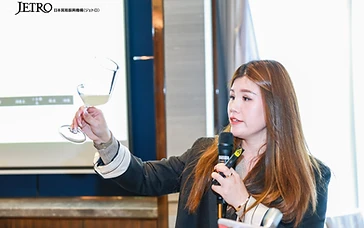
Northern Chinese commercial culture relies heavily on direct personal engagement, mutual trust (guanxi), and physical validation of product quality. Distant email campaigns yield negligible conversion. Conducting focused masterclasses for Beijing-based sommeliers, independent bottle shop proprietors, and regional corporate gifting managers allows brand ambassadors to establish enduring trade goodwill.
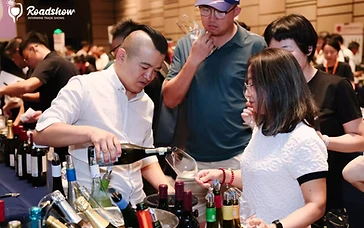
To build these regional networks at scale, wineries should exhibit at recognized national trade exhibitions. By participating as an exhibitor via Become an Exhibitor, wine producers gain direct, structured access to qualified northern Chinese buyers, municipal distributors, and retail procurement directors who travel specifically to secure agency contracts.
Strategic Comparison: Channel Execution in Beijing
| Channel | Target Consumer / Account Type | Key Decision Maker | Recommended Wine Profile | Margin Expectation | | :--- | :--- | :--- | :--- | :--- | | Corporate Banqueting & Private Rooms | Business executives, government contractors, SOE events | Corporate procurement, private club F&B managers | Recognizable AOC/DO reds, prestige packaging, robust oak | High (35%–50% margin required by distributor) | | Independent Bistros & Wine Bars | Urban white-collar professionals, Gen Z, lifestyle consumers | Head Sommelier, independent bar owners | Low-intervention, single-vineyard, crisp whites, pet-nats | Moderate (Strict pour-cost targets: 28%–33%) | | Warehouse Club Stores | Middle-class urban families, suburban households | Category Buyer, central procurement | Value-driven varietal wines, multipacks, organic-certified | Low unit margin, high volume replenishment | | Boutique Bottle Shops & WeChat Stores | Wine enthusiasts, regional collectors | Owner-operator, specialist retail manager | Niche regions, high-scoring boutique labels, gift sets | Flexible (Keystone retail markup 40%–50%) |
Navigating Compliance and Supply Chain Logistics
Wineries entering Beijing must comply with national customs frameworks governed by GACC. This includes mandatory food producer registration (Decree 248/249), precise Chinese-language back labels disclosing sulfur dioxide contents, importer registration records, and rigorous testing for chemical residues. Consignments imported via northern sea ports (such as Tianjin Port) or cleared via Beijing Capital International Airport must have clean customs documentation to avoid costly demurrage. Exporters can monitor trade policy updates, port logistics, and commercial developments through our News and Magazine.
Furthermore, the competitive landscape has evolved significantly following the removal of punitive anti-dumping tariffs on Australian wine in March 2024, as documented by MSA Asia's 2026 Wine Market Analysis. Australian brands have quickly re-established footholds in northern banquet and retail channels, increasing competitive pressure on Chilean, French, Spanish, and Italian producers. Standing out requires sharp positioning, clear channel protection policies, and proactive support for regional distributors.
Conclusion: Accelerating Your Beijing Distribution Strategy
Building local demand in Beijing is a strategic marathon that rewards brands capable of bridging international heritage with local channel requirements. Commercial success requires moving beyond fragmented digital ads or single-container spot sales. Producers must establish durable relationships with accredited regional distributors, tailor wine styles to corporate banqueting and modern dining corridors, and maintain consistent visibility across specialized trade channels.
For international wineries and regional generic bodies seeking to secure trusted distribution partners in Beijing and across broader Chinese commercial centers, partnering with an established industry platform is vital. Apply to Become an Exhibitor at INTERWINE to showcase your wines directly to pre-screened importers, regional buyers, and hospitality decision-makers actively sourcing for the northern China market.
Sources
- USDA Foreign Agricultural Service, Wine Market Update 2025 (Report CH2025-0190): https://apps.fas.usda.gov/newgainapi/api/Report/DownloadReportByFileName?fileName=Wine+Market+Update+2025_Shanghai+ATO_China+-+People%27s+Republic+of_CH2025-0190.pdf
- Jane Anson, Market Insights: Chinese wine industry in 2025: https://janeanson.com/market-insights-chinese-wine-industry-in-2025
- MSA Asia, Wine Market in China: Trends, Growth, and Consumer Preferences (2026): https://msadvisory.com/wine-market-in-china
- Daxue Consulting, Chinese wine market: How consumers are drinking differently (2026): https://daxueconsulting.com/chinese-wine-market/
- ResearchGate, The underlying motivations of Chinese wine consumer behaviour: https://www.researchgate.net/publication/239781493_The_underlying_motivations_of_Chinese_wine_consumer_behaviour
Key Takeaways
- —Beijing's wine market is split between institutional corporate banqueting (Baojian culture) in Chaoyang/Haidian and lifestyle bistro consumption in modern retail districts.
- —Data from the USDA FAS 2025 report confirms China imported ~$1.6 billion in wine in 2024, with Tier-1 cities driving demand for white, sparkling, and direct-sourced wines.
- —The lifting of Chinese anti-dumping tariffs on Australian wine in March 2024 has reshaped import dynamics, making channel differentiation essential for European and American brands.
- —Storytelling in Beijing must connect to local gastronomy (e.g., roast duck and northern lamb dishes) rather than relying exclusively on technical Western tasting notes.
- —Establishing direct relationships with regional distributors and qualified trade buyers via structured platforms like INTERWINE provides the most reliable route to market.
Frequently Asked Questions
What styles of wine are currently trending in Beijing?
While traditional, full-bodied reds remain dominant in corporate banqueting and gifting, there is rising demand among younger urban professionals for aromatic whites (such as Riesling and Sauvignon Blanc), sparkling wines, and lower-ABV options suited for casual dining.
How do business dinners influence wine sales in Beijing?
In Beijing, corporate banqueting within private dining rooms (Baojian) is an essential commercial sales channel. Buyers look for recognizable pedigree, prestigious packaging, and proven brand heritage that confer status (mianzi) to hosts and guests.
What regulatory hurdles must wine exporters clear to sell in Beijing?
Exporters must register through China's General Administration of Customs (GACC) under Decrees 248/249, ensure accurate Chinese back labeling disclosing allergens and chemical additives, and work with licensed import entities capable of clearing northern customs points like Tianjin or Beijing Capital Airport.
How can an international winery find vetted distributors in Beijing?
Direct engagement at specialized trade shows such as INTERWINE and participation in pre-scheduled business matching sessions offer direct access to pre-qualified regional distributors, retail buyers, and hospitality beverage managers operating across northern China.