How Distributors Can Organize Supplier Meetings at Interwine
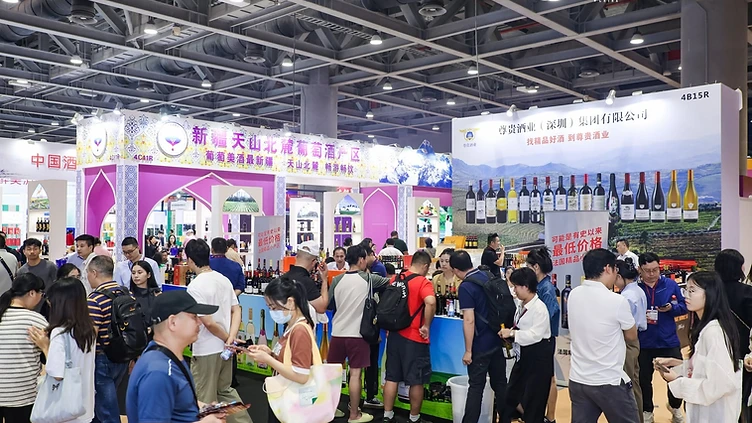
A commercial roadmap for wine and spirits distributors to pre-qualify international producers, schedule high-yield supplier meetings, negotiate landing margins, and leverage Interwine's matching infrastructure.
For wine and spirits distributors, visiting an international trade exhibition without a pre-calibrated schedule creates significant commercial drag. Interwine—held at the China Import and Export Fair Pazhou Complex in Guangzhou—serves as the primary commercial bridgehead for mainland China and broader Asian distribution networks, where Guangdong province alone handles over 60% of mainland China's imported wine volume according to industry data recorded by Wikipedia's Interwine Profile.
Navigating hundreds of global wineries, spirit distilleries, and brand principals across several exhibition halls requires operational discipline. The distributors who convert floor time into profitable territorial exclusivity do not browse aisles casually; they engineer structured, 30-minute commercial supplier meetings well before arrival. Here is the operational framework distributors should use to organize high-impact supplier meetings at Interwine.
Pre-Show Curation: Segmenting Sourcing Needs Before Arrival
High-performing distribution procurement starts with portfolio gap analysis rather than producer marketing decks. Prior to logging into event scheduling portals, distributors must establish clear sourcing parameters across three criteria: SKU price-tier gaps (entry-level volume vs. mid-tier on-premise vs. fine wine allocation), geographical appellation deficits, and required route-to-market margins.
Distributors should review the published Exhibitor Directory four to six weeks prior to the show dates. Sort targets into three distinct tiers:
- Tier 1: Core Targets (Pre-booked Confirmed): 6 to 8 established producers or brand owners whose commercial profiles precisely match an existing demand pipeline. These appointments should be booked and confirmed in advance.
- Tier 2: Pipeline Expansion (Secondary Slots): 4 to 6 emerging wineries, boutique organic estates, or spirits brands that offer differentiation or competitive private-label capabilities.
- Tier 3: Discovery Margin: Preserved schedule blocks (90 minutes daily) reserved for ad-hoc discoveries, national pavilion tastings, and corridor referrals.
Experienced trade show operators consistently emphasize structured agendas. In professional wine trade guidance published by WSET Global, veteran buyers and trade organizers note that unstructured visits frequently lead to fatigue and wasted meetings; structuring days around clear schedules and specific objectives is what enables buyers to capture tangible business opportunities.
Leveraging Interwine’s Business Matching Infrastructure
Interwine provides structured business matchmaking services designed to connect verified importers, regional distributors, and retail buyers with export-ready overseas wineries and brand owners. Instead of cold outreach, distributors can utilize formal matching tools to review verified commercial criteria including minimum order quantities (MOQ), current customs clearance capabilities, ex-cellar/FOB pricing, and existing territorial commitments.
To maximize the utility of the Business Matching platform:
- Define Strict Sourcing Parameters: Clearly document your distribution footprint (e.g., Tier-1 city on-premise, national e-commerce, regional retail distribution in South China) and required shipping terms.
- Request Bilateral Confirmations: Ensure that meeting invitations are accompanied by an exchange of price lists and technical sheets at least 10 business days prior to the show floor opening.
- Coordinate On-Site Matchmaking Areas: Schedule high-stakes negotiations either at the exhibitor's stand or within Interwine's dedicated buyer lounges, which provide quieter environments for contract discussions.
Distributors who are finalizing their travel schedule should immediately Book Your Visit to activate buyer privileges, pre-register their sourcing requirements, and obtain direct liaison access with international trade delegations.
Structuring the 30-Minute Commercial Supplier Meeting
Standard booth walk-ups often devolve into generic tastings with junior booth staff, consuming valuable time without revealing critical pricing mechanics. Modern procurement methodology emphasizes that professional supplier meetings are structured commercial instruments designed to establish parameters, assess partner reliability, and review technical requirements, as outlined by procurement intelligence platform Tacto.
Distributors should implement a strict 30-minute meeting cadence:
Minutes 0–5: Commercial Profiling & Capability Screen
Confirm the attendee's decision-making mandate immediately. Are you speaking with an authorized export director, winery principal, or a hired third-party agency rep? State your company’s distribution footprint, primary regional channels, and annual container clearance velocity.
Minutes 5–15: Targeted Portfolio Evaluation
Limit sampling to a maximum of 3 to 4 predetermined SKUs that correspond directly to your target price points. Evaluate wine quality against landed cost structures rather than theoretical scoring alone. Focus on sensory stability, packaging compliance for local labeling requirements, and supply continuity.
Minutes 15–25: Commercial Terms and Landed Cost Modeling
Transition rapidly from product attributes to trade mechanics. Critical questions must be addressed directly:
- Incoterms: What are the ex-cellar, FOB, or CIF pricing baselines?
- Volume Tiers: What are the pallet-level versus full container load (FCL) price breaks?
- Marketing Subsidies (A&P): Does the producer offer marketing development funds (MDF), sample allowances, or support for localized brand ambassador programs?
- Territorial Exclusivity: What annual purchase volumes (deplenishments) are demanded to secure exclusive regional or national distribution agreements?
Minutes 25–30: Action Items and Mutual Documentation
Summarize clear follow-up requirements: delivery of CIF quotation models, sample dispatch dates for secondary lab tasting, and registration dossier checklists for import clearance.
Navigating Commercial, Regulatory, and Contractual Risks
Distributors importing into China or wider Asian corridors face shifting regulatory and cost environments. In the procurement sector, failing to document agreements and monitor strategic supplier dependencies can expose distributors to severe supply and compliance vulnerabilities (Tacto).
When meeting international producers at Interwine, distributors must evaluate suppliers against three primary risk vectors:
- Regulatory & Customs Compliance: Ensure the producer holds valid registration through China's General Administration of Customs (GACC) under Decrees 248 and 249. Meeting a supplier that lacks active export registration can stall supply chains for months.
- Brand Trademark Security: Verify that the producer owns or has uncontested rights to the Chinese trademark (transliterated brand name). Trademark squatting remains a persistent vulnerability for foreign labels entering Asian distribution.
- Exclusivity Enforcement: Clarify how parallel imports and cross-border e-commerce leakages are policed. A distributor investing in brand-building cannot afford margin erosion caused by grey-market parallel consignments hitting online marketplaces.
For distributors coordinating complex international itineraries, exploring relevant Market Insights and securing logistics planning via Arrival and Transportation guarantees timely presence across multi-day negotiation tracks.
Post-Show Execution: Converting Booth Handshakes into Binding Contracts
The actual margin in wine distribution is secured during the 14 days following the exhibition. Trade show veterans recognize that momentum diminishes rapidly once exhibitors return to their home estates and cellars.
- Day 1–3 (Log Collection): Consolidate all digital business cards, stamped spec sheets, and meeting summary notes into your CRM or procurement database. Re-verify the agreed FOB/CIF figures against raw production forecasts.
- Day 4–7 (The Commercial Follow-Up): Send an itemized follow-up email to every Tier-1 supplier. Reference specific bottles tasted, reiterate agreed FOB target volumes, outline exact sample bottle requests for technical import clearance testing, and define next-step delivery dates.
- Day 8–14 (Contractual Frameworks): Request standard draft distribution contracts. Have legal counsel verify clause mechanics on minimum sales targets, termination triggers, force majeure, dispute jurisdiction, and currency fluctuation risk-sharing.
Conclusion: Maximize Your Sourcing ROI at Interwine
Organizing effective supplier meetings at Interwine transforms a standard trade show visit into a high-yielding procurement campaign. By establishing portfolio gaps early, scheduling appointments through Interwine’s dedicated business-matching infrastructure, and adhering to strict commercial agendas, distributors secure competitive landed margins and safeguard exclusive regional rights.
Take control of your portfolio expansion. Book Your Visit to Interwine today to reserve your buyer credentials, gain access to overseas supplier profiles, and schedule one-on-one trade meetings.
Sources
- Interwine China Overview: Wikipedia
- Wine Trade Show Strategy Guide: WSET Global
- Supplier Meeting Methodology & Procurement Frameworks: Tacto
Key Takeaways
- —Conduct portfolio gap analysis 4-6 weeks in advance to target specific SKU price-tier and appellation deficits.
- —Utilize Interwine's business matching tools to pre-screen overseas producers for GACC registration, pricing baselines, and MOQ.
- —Run meetings on a structured 30-minute cadence, prioritizing decision-maker status, landed margins, and exclusivity thresholds.
- —Protect operational margins by clarifying CIF/FOB pricing, trademark ownership, and anti-parallel import protections.
- —Execute a disciplined 14-day post-show follow-up cycle to convert tasting table conversations into binding distribution contracts.
Frequently Asked Questions
How far in advance should distributors start scheduling meetings for Interwine?
Distributors should begin reviewing the official exhibitor directory and requesting meetings 4 to 6 weeks before the exhibition. This provides sufficient lead time for overseas producers to ship relevant samples, prepare detailed export price lists, and ensure top commercial decision-makers are available.
How does Interwine's business matching program assist distributors?
Interwine's business matching program connects qualified distributors and buyers with international producers based on matching product categories, volume capacities, target price segments, and distribution channels, eliminating unqualified walk-ups and cold prospecting.
What documentation should distributors request during initial supplier meetings?
Distributors should request an export price list with FOB/CIF break points, GACC facility registration details, complete technical wine specification sheets, available A&P marketing support allowances, and proof of brand trademark registrations.
How many supplier meetings should a distributor organize per day at Interwine?
A realistic and productive daily schedule includes 5 to 7 pre-booked meetings lasting 30 minutes each, interspersed with 15-minute buffers for transit and notes, leaving a 90-minute block for spontaneous discovery across national pavilions.
What is the best way to handle language barriers during commercial discussions at Interwine?
While international winery export directors typically conduct negotiations in English, domestic distribution nuances in China often require precision. Interwine's organizer services, professional business matching translators, or bilingual agency staff can be arranged to assist during formal contractual discussions.