How to Find Wine Importers and Distributors in Shenzhen
Discover how international wineries can identify, vet, and partner with qualified wine importers and distributors in Shenzhen and the Greater Bay Area.
To find reliable wine importers and distributors in Shenzhen, overseas wineries must move beyond unsolicited cold emails and leverage targeted regional trade platforms, specialized B2B matching sessions, and direct industry networks across Guangdong Province. As southern China's technology and commercial engine, Shenzhen offers unmatched logistical proximity to Hong Kong, a young, high-income demographic, and rapid clearance channels for premium bottled wines.
However, securing commercial distribution in Shenzhen requires understanding a regional landscape defined by tiered distributor networks, rigorous customs compliance under the General Administration of Customs of China (GACC), and distinct trade-matching practices. Exporting producers must approach Shenzhen not as a standalone city, but as the primary gateway to the 86-million-consumer Guangdong-Hong Kong-Macao Greater Bay Area (GBA).
Why Shenzhen Is a Primary Gateway for Wine Imports
Guangdong Province stands as China’s most economically powerful administrative division, generating a regional GDP exceeding 6.5 trillion RMB in the first half of 2024 alone, according to regional trade and economic reporting documented by Vino Joy News (2024). Within Guangdong, Shenzhen and Guangzhou drive the highest concentration of premium wine consumption, on-premise dining venues, and private collector networks in southern China.
Several structural advantages make Shenzhen uniquely attractive for international wine brands:
- Hong Kong Proximity: Shenzhen sits directly across the border from Hong Kong, a free port with zero import tariffs on wine. This geographic adjacency allows Shenzhen-based importers to access bonded warehousing, temperature-controlled consolidation hubs, and commercial financing across the border while managing mainland distribution.
- Wealth and Demographics: Shenzhen has one of mainland China’s youngest, most affluent urban populations. Unlike traditional Tier-1 markets that remain saturated with legacy Bordeaux classifications, Shenzhen consumers show measurable interest in boutique estates, organic certifications, single-vineyard labels, and emerging wine regions.
- Modern Port and Logistics Infrastructure: With specialized customs facilities at Yantian and Shekou ports, Shenzhen provides established cold-chain clearance channels, preventing the thermal degradation that often damages high-end wines during transit.
To navigate these regional dynamics effectively, producers can review broader macro perspectives through Market Insights to align their commercial offerings with southern Chinese consumption trends.
4 Core Methods to Identify Qualified Shenzhen Wine Importers
Identifying qualified partners in Shenzhen requires systematic screening across proven B2B channels rather than relying on generic web directories.
[Overseas Winery / Regional Body]
       │
       ├─► 1. Specialized Trade Exhibitions & Regional Hubs (Interwine South China)
       ├─► 2. Curated B2B Matchmaking & Pre-Screened Buyer Summits
       ├─► 3. Targeted Commercial In-Market Due Diligence (Futian/Nanshan/Luohu)
       └─► 4. Cross-Border Importer Networks & Chambers of Commerce
       │
       ▼
[Contracted Shenzhen Importer / GBA Tier-1 Distributor]
1. In-Person Participation at Regional Wine Trade Exhibitions
Exhibiting at dedicated regional trade shows remains the primary mechanism for meeting licensed Chinese wine importers. Because Chinese wine distribution relies heavily on physical sensory evaluation and trust-building (guanxi), face-to-face engagements shorten sales cycles by months.
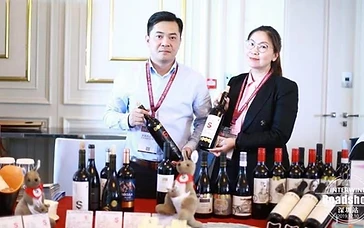
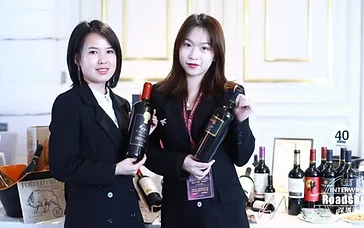
Shenzhen distributors, sub-distributors, and regional retail buyers regularly attend major South China beverage platforms to benchmark portfolios. Wineries looking to secure direct commercial access should plan strategic attendance and secure their booth through Become an Exhibitor to showcase their portfolios directly in front of GBA trade purchasers.
2. Curated B2B Matchmaking Programs
Open floor traffic is valuable, but high-volume commercial agreements typically stem from closed-door, prescheduled business meetings. Dedicated programs filter prospective partners by import license status, sales volume, and target distribution channels (such as luxury hospitality, regional retail chains, or private client corporate gifting).
Wineries can streamline their commercial outreach by utilizing targeted Business Matching services, ensuring meetings are pre-qualified based on price points and grape varieties before sample bottles are opened.
3. Commercial District Mapping in Shenzhen
Shenzhen’s trade ecosystem is geographically clustered across specific districts, each hosting different types of wine business models:
- Futian District: The central business district, hosting corporate headquarters, fine-wine trading firms (such as historical specialists and national importers like Interprocom), and high-end hospitality accounts.
- Nanshan District: The tech innovation hub, home to corporate tech buyers, specialized private cellars, and innovative modern retail concepts catering to younger professionals.
- Luohu District & Yantian District: Traditional logistics, trade wholesale centers, and bonded storage operations handling cross-border customs declarations.
Visiting these districts and mapping local distributor portfolios allows winery export managers to understand the competitive pricing landscape firsthand.
4. Bilateral Trade Chambers and Official Wine Promotion Bodies
Wineries should actively coordinate with their national agricultural export agencies (e.g., Business France, ICEX, Italian Trade Agency, Wines of Portugal). These bodies frequently organize regional masterclasses and trade delegations in Shenzhen, pairing export-ready cellars with local members of the Shenzhen Alcoholic Drinks Association.
Evaluating and Vetting Potential Shenzhen Partners
Not every company holding an import license possesses effective distribution channels. In mainland China, the difference between an active brand-builder and a passive transactional clearing agent can determine an exporter's market survival.
| Evaluation Criteria | High-Performing Importer | Passive / Trading Agent | | :--- | :--- | :--- | | Customs Registration | Active GACC filing, in-house customs declaration team | Outsourced declaration, infrequent import shipments | | Storage Facilities | Constant temperature (14–18°C) warehouse in Shenzhen/Dongguan | Ambient standard warehouse without cooling infrastructure | | Sales Reach | Direct sub-distributors across Guangdong, on-premise hotel/bistro reach | Relies solely on ad-hoc corporate gifting or single-channel wholesale | | Brand Support | Masterclass organization, regional roadshows, Chinese sales collateral | Demands high marketing allowances without promotional commitments | | Payment Terms | Documented letter of credit (L/C) or structured standard deposits | Unrealistic credit terms requested prior to testing market demand |
Essential Due Diligence Questions
Before granting territorial exclusivity for Shenzhen or Guangdong Province, winery representatives must ask prospective partners:
- Which specific sales channels do you directly control in Shenzhen (HORECA, specialized retail, corporate procurement, or e-commerce)?
- What is your registered warehouse address, and can we inspect your temperature-control documentation during peak summer months?
- Which competing or complementary regions are currently in your portfolio?
- How do you handle simplified Chinese back-label compliance and provincial customs clearance?
Navigating Regulatory and Commercial Realities
According to global market entry guidelines outlined by BestWineImporters (2026), imported bottled wine entering mainland China faces a cumulative tax burden of approximately 50% on top of CIF (Cost, Insurance, and Freight) value. This tax structure comprises:
- Import Tariff (MFN): Typically 14% for bottled still wine (unless governed by specific bilateral Free Trade Agreements);
- Value-Added Tax (VAT): 13%;
- Consumption Tax: 10%.
Because tax markups and channel margins stack rapidly, a wine quoted at €4.00 FOB may easily retail between 130 RMB and 180 RMB on Shenzhen retail shelves or on-trade lists. Wineries must protect their pricing structure so distributors have sufficient margin to invest in local promotion.
Furthermore, all overseas production facilities must maintain valid registration with the General Administration of Customs of China under Decree 248. Importers in Shenzhen will require verified GACC registration codes before standard customs declarations can be submitted at southern ports.
Summary: Executing Your Shenzhen Market Entry
Securing sustainable distribution in Shenzhen requires commercial clarity, patience, and direct personal engagement. Rather than granting broad national exclusivity to unverified brokers, wineries achieve superior results by partnering with specialized regional operators who possess verifiable cold-chain storage and active accounts throughout the Greater Bay Area.
To build these connections efficiently, international producers should leverage established regional industry platforms, combine pre-screened commercial meetings, and establish in-person relationships that turn portfolio samples into consistent container shipments.
Sources
- Vino Joy News (2024). China’s Top 10 Wine Importers in H1 2024. https://vino-joy.com/2024/08/05/chinas-top-10-wine-importers-in-h1-2024/2/
- BestWineImporters (2026). A Wine Exporter’s Guide to Finding Buyers in China and Working with Chinese Wine Importers. https://www.bestwineimporters.com/blog/resources/a-wine-exporters-guide-to-finding-buyers-in-china-and-working-with-chinese-wine-importers/
- Beverage Trade Network (BTN Academy). 6 Common Wine Distribution Channels and Strategies. https://beveragetradenetwork.com/en/btn-academy/articles/6-common-wine-distribution-channels-and-strategies-310.htm
Key Takeaways
- —Shenzhen acts as the primary economic hub for wine imports into Guangdong Province and the Greater Bay Area, backed by high consumer purchasing power and proximity to Hong Kong.
- —Participation in dedicated regional trade shows and prescheduled B2B matchmaking remains the most effective, verified route to connect with licensed Shenzhen wine importers.
- —Evaluating potential distributors requires rigorous verification of temperature-controlled storage, active GACC compliance, and clear channel-specific sales reach.
- —Taxes and duties (MFN tariff, VAT, and consumption tax) compound to roughly 50% over CIF value, requiring carefully calculated export pricing structures.
- —Wineries should avoid granting sweeping national exclusivity prematurely, favoring proven regional performance within Shenzhen and southern China.
Frequently Asked Questions
Why target Shenzhen instead of Shanghai or Beijing for wine distribution?
Shenzhen is the economic powerhouse of Guangdong Province, featuring high disposable income, a young demographic open to international wine categories, and immediate access to the 86-million-person Greater Bay Area. Its border proximity to Hong Kong simplifies bonded logistics, consolidation, and fine wine movements.
What licenses must a Shenzhen wine importer hold?
A Shenzhen wine importer must possess a valid business license with food and beverage import authorization, customs registration (CR code), an active filing with the General Administration of Customs of China (GACC), and an established food operation license for warehousing and domestic distribution.
Should overseas wineries grant exclusive distribution rights for Shenzhen?
Wineries should exercise caution when offering broad exclusivity. It is standard practice to grant exclusivity only for a specific sales channel (e.g., on-premise HORECA or regional corporate sales) or for a defined trial period contingent on agreed minimum order volumes (MOVs) within Shenzhen or Guangdong.
How are wine import duties and taxes calculated for China?
For bottled still wine, standard imports incur a 14% Most-Favored-Nation (MFN) tariff, a 13% Value-Added Tax (VAT), and a 10% Consumption Tax. Compounded together, these taxes typically add approximately 50% to the product's CIF (Cost, Insurance, and Freight) value upon entering Shenzhen customs.
What is the best way to verify an importer's warehousing capability in Shenzhen?
Because southern China experiences high heat and humidity during extended summer periods, exporters must require evidence of constant-temperature (14–18°C) bonded or domestic warehousing in Shenzhen or surrounding Guangdong hubs, either via third-party logistics audits or in-person facility inspections.