Wine Consumer and Channel Trends in Hong Kong
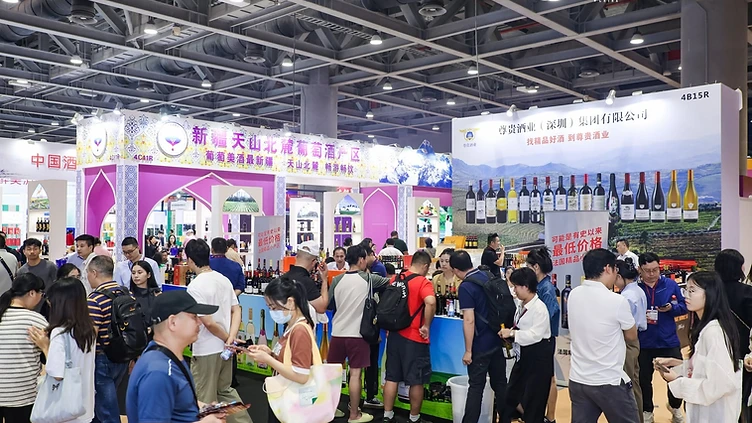
A commercial analysis of wine consumer and channel trends in Hong Kong for international brands, examining tariff-free advantages, retail polarization, on-trade dynamics, and regional re-export channels.
Succeeding in the Hong Kong wine market requires international producers to understand its structural polarization: the territory functions simultaneously as a hyper-mature domestic consumption market and as Asia's premier duty-free trading, storage, and re-export crossroads. With zero import duty on wine, zero excise tax, and sophisticated temperature-controlled infrastructure, Hong Kong offers a frictionless customs environment, yet it remains intensely competitive. Brands that treat Hong Kong as a generic export destination often falter. To capture market share, wineries must navigate retail barbell consumption, evolving restaurant supply chains, and structured business matching that bridges local accounts with wider Greater Bay Area distribution networks.
The Dual Identity of the Hong Kong Wine Ecosystem
For international wine brands planning Asian expansion, evaluating Hong Kong requires separating local absorption from regional transit. According to the Hong Kong Trade Development Council (HKTDC) in its industry review citing the Census and Statistics Department, the number of establishments engaged in the import wholesale of alcoholic drinks reached 770 in 2024 (up from 310 in 2008), while specialized retail wine stores increased to 550 over the same period.
Because Hong Kong produces virtually no wine domestically due to its sub-tropical climate and dense land use, all outbound shipments are re-exports. Per HKTDC research trade statistics, Asia absorbed 80.7% of Hong Kong’s wine exports by value in 2024, with Macao accounting for 41.0% and the Chinese Mainland representing 26.4%. Under the Closer Economic Partnership Arrangement (CEPA) and enhanced customs facilitation measures, Hong Kong serves as a compliant, duty-free transshipment hub for mainland-bound wine stocks.
+------------------------------------------------------------------------+
|           HONG KONG WINE MARKET: STRATEGIC IMPORT STRUCTURE             |
+------------------------------------------------------------------------+
| 1. DOMESTIC ABSORPTION CHANNELS                                        |
|    ├── Premium On-Trade (Hotels, Cantonese fine dining, Private clubs) |
|    ├── Specialized Bottle Shops & Independent Merchants (550+ stores)  |
|    └── Modern Off-Trade Retail (Supermarkets, E-Commerce, Delivery)   |
+------------------------------------------------------------------------+
| 2. REGIONAL RE-EXPORT & CONSOLIDATION GATEWAY                          |
|    ├── Macao Hospitality Hub (Integrated resorts & dining, 41% share)  |
|    ├── Chinese Mainland via CEPA Facilitation (26.4% share in 2024)   |
|    └── Regional Asian Re-Exports (Singapore, Taiwan, GBA Logistics)    |
+------------------------------------------------------------------------+
For foreign estates, this dual framework means local listing agreements must be calibrated based on whether a local importer focuses exclusively on domestic restaurants and corporate accounts or also acts as a regional consolidator shipping across the Pearl River Delta.
Consumer Shifts: Barbell Spending and Evolving Palates
Consumer behavior in Hong Kong is undergoing a profound structural transition. Reports from the USDA Foreign Agricultural Service (FAS) published in 2026 highlighting Hong Kong wine trends describe a pronounced polarization: market demand has increasingly split between everyday value-driven wines and investment-grade or blue-chip labels, exerting margin pressure on undifferentiated mid-tier bottles.
1. Flight to Authenticity and Terroir Literacy
Hong Kong consumers possess some of the highest per-capita wine expenditures and brand literacy rates globally. The USDA FAS GAIN report on Hong Kong emphasizes that mid-sized international estates must pivot toward brand storytelling, varietal education, and terroir distinctiveness rather than relying on standard commercial tiering. While classical Old World wine regions—specifically France, which generated 64.7% of Hong Kong's total wine import value in 2024 according to Census and Statistics Department data—continue to dominate institutional wine lists, consumers are actively exploring boutique Italian estates, organic selections, and lower-intervention practices.
2. Diversification into Alternative Formats and Sustainable Viticulture
Health-conscious choices and changes in lifestyle patterns have driven retail interest in organic, low-sulfite, and biodynamic certified wines. HKTDC sector findings document growing curiosity in organic labels alongside smaller format packaging, such as half-bottles (375ml) and tasting-room-style sets. These allow urban apartment dwellers and solitary drinkers to explore premium wines without committing to full 750ml bottles. Aligning with these specific consumption formats gives boutique labels an entry point into residential retail.
Channel Dynamics: Navigating Hong Kong's Multi-Tier Routes to Market
To build volume and margin, international exporters must tailor their distribution strategies to Hong Kong’s distinct commercial channels.
| Distribution Channel | Target Demographic / Accounts | Commercial Advantage | Structural Bottleneck / Risk | | :--- | :--- | :--- | :--- | | Specialized Wine Retailers | Discerning collectors, corporate gift buyers, daily connoisseurs | Premium shelf placement, knowledgeable staff recommendations | High retail listing allowances, fierce competition for floor space | | Modern Off-Trade (Supermarkets) | Mainstream households, everyday dining | High turnover, widespread physical footprint across districts | Heavy retail discounting; average bottle spends often skew under HK$100 | | Premium On-Trade (HoReCa) | Michelin-starred venues, private clubs, hotel dining | High brand halo, substantial sommelier-driven margin | Sluggish inventory rotation, delayed payment credit terms (60–90 days) | | Digital Direct & App Platforms | Younger professionals, residential buyers | Lower overhead, rapid home-delivery fulfillment | Escalating customer acquisition costs and algorithmic margin dilution |
The Specialized Independent Retail Channel
Unlike Western markets dominated by large supermarket chains, specialized retail plays a central role in Hong Kong's wine culture. With over 550 dedicated wine shops across districts like Central, Wan Chai, Tsim Sha Tsui, and Quarry Bay, independent bottle shops provide the primary discovery engine for emerging appellations. These stores depend heavily on owner-curated selections and private customer clienteling. International wineries can leverage specialized retailers to test small container consignments before committing to mass volume.
The On-Trade Landscape: Pairing with Regional Asian Gastronomy
Hong Kong remains one of the world's dense culinary hubs, renowned for Michelin-rated dining, international hotels, and luxury Cantonese restaurants. Sommelier programs are sophisticated, prioritizing pairings that match European and New World acidities with complex Cantonese seafood and roasted meats. As outlined in the HKTDC Wine Report, institutional hospitality venues frequently organize curated wine pairing sessions and Asian food competitions to highlight balanced, food-friendly wines. Entering this channel requires brand owners to provide educational support, staff training modules, and sommelier-friendly allocations.
Supermarket Off-Trade: Managing Price Compression
Mainstream grocery chains, such as ParknShop and Wellcome, serve broader retail consumers. However, commercial reports from Beverage Trade Network on supermarket wine consumption demonstrate that off-trade supermarket buyers are price-sensitive: average per-bottle spending in conventional supermarket venues frequently converges around entry-level price points (approx. HK$60 to HK$100). International estates positioning premium products ($20+ FOB) must be cautious; placing luxury allocations into discount-heavy retail chains can erode prestige pricing across the regional on-trade.
Strategic Re-Export and Mainland Gateway Synergy
Hong Kong's fundamental strength for global producers is its zero-tax environment and seamless re-export infrastructure. According to HKTDC customs data, Europe represented 74.4% of total import value in 2024, followed by Australia at 18.9%. Importers routinely utilize Hong Kong’s world-class temperature-controlled warehouses to consolidate Asian regional inventory without incurring upfront tariff burdens.
To turn this geographical advantage into revenue, brand founders must establish direct relationships with commercial partners who operate on both sides of the border. Rather than relying on cold outreach or passive distributor pitches, forward-thinking wineries use verified industry forums and targeted Business Matching to sit down with vetted regional distributors, cross-border e-commerce licensees, and hotel purchasing directors. Navigating regional expansion alongside actionable industry analysis on Market Insights allows brand executives to identify partners who actively move volume rather than let inventory sit idle.
+-------------------------------------------------------------------------+
|               BRAND ENTRY & EXPANSION: STRATEGIC ROADMAP                |
+-------------------------------------------------------------------------+
| STEP 1: PORTFOLIO SEGMENTATION                                          |
|         Separate investment-grade/on-trade cuvées from commercial retail|
|                                                                         |
| STEP 2: VERIFIED PARTNER SELECTION                                      |
|         Target importers holding bonded regional warehousing & cross-   |
|         border re-export licenses into mainland China/Macao             |
|                                                                         |
| STEP 3: SOMMELIER & TRADE EDUCATION                                     |
|         Equip hospitality staff with targeted Cantonese food-pairing    |
|         narratives and low-intervention/sustainability credentials      |
|                                                                         |
| STEP 4: CROSS-BORDER CHANNEL EXTENSION                                  |
|         Leverage Hong Kong bonded inventory to fulfill Greater Bay Area |
|         demand via direct-to-consumer and B2B trade channels           |
+-------------------------------------------------------------------------+
Commercial Decisions, Risks, and Execution Playbook
Expanding into Hong Kong presents tangible pitfalls if not managed with operational discipline:
- The Trapped Inventory Trap: Because there are no wine import tariffs, many regional traders over-order containers on consignment, leaving inventory stranded in high-cost commercial storage. Producers should require minimum purchase guarantees and demand clear promotional calendars.
- The Squeezed Middle Pricing Risk: As documented by the USDA FAS 2026 report, middle-tier commercial labels lacking both low-cost supermarket volume and luxury collectibility suffer the steepest sales declines. Producers must position their wines either around accessible, premium-entry house pours or focus strictly on artisanal, low-yield allocations supported by strong brand literacy.
- Diversified Channel Mix: Relying solely on on-trade venues leaves brands vulnerable to macroeconomic fluctuations in tourism and business entertaining. A balanced distributor should maintain active distribution across specialized retailers, corporate gifting programs, and private client sales.
To review upcoming physical exhibition schedules and meet key commercial buyers face-to-face across Southern China and Hong Kong, visit Interwine Events and consult the latest reports in our News and Magazine section.
Conclusion
Navigating the Hong Kong wine market requires viewing the territory through a strategic lens: as a discerning domestic consumer base that prioritizes quality and authenticity, and as the duty-free springboard to the Asian wine trade. Success depends on aligning product positioning with polarized retail reality, partnering with distributors who maintain verified re-export networks, and proactively educating the territory’s influential sommelier and merchant community.
Sources
- Hong Kong Trade Development Council (HKTDC) Research, Wine Industry in Hong Kong (2025/2026): https://research.hktdc.com/en/article/MzEzOTc5OTQ3
- USDA Foreign Agricultural Service (FAS), The Shifting Wine Landscape in Hong Kong (GAIN Report HK2026-0015, May 2026): https://apps.fas.usda.gov/newgainapi/api/Report/DownloadReportByFileName?fileName=The+Shifting+Wine+Landscape+in+Hong+Kong_Hong+Kong_Hong+Kong_HK2026-0015.pdf
- Statista Market Forecast, Wine - Hong Kong Market Insights and Consumption Data (2024): https://www.statista.com/outlook/cmo/alcoholic-drinks/wine/hong-kong
- Beverage Trade Network (BTN), Hong Kong Wine Market - Wine Industry Analysis and Distribution Channels: https://beveragetradenetwork.com/en/btn-academy/articles/hong-kong-wine-market-wine-industry-in-hong-kong--308.htm
Key Takeaways
- —Hong Kong functions as a dual wine market: a high-spend domestic retail ecosystem and an untaxed transshipment gateway serving Macao and mainland China.
- —Consumer purchasing has polarized into a barbell structure, demanding either everyday high-value table wines or authentic, collectible premium labels.
- —Over 770 licensed alcohol import-wholesalers and 550 specialized wine retailers operate in Hong Kong as of 2024, intensifying shelf competition.
- —France and Australia maintain dominant import market shares, but demand is growing for organic, sustainable, and smaller-format bottlings.
- —Brand owners can avoid margin erosion by steering clear of generic mid-tier pricing and utilizing curated business matching to secure regional distributors.
Frequently Asked Questions
What import duties and taxes apply to wine entering Hong Kong?
Hong Kong has had zero excise duty and zero customs tariffs on wine imports since 2008. There is also no value-added tax (VAT) or goods and services tax (GST), making it an exceptionally cost-effective consolidation hub for international brands.
Why is the Hong Kong wine market experiencing spending polarization?
According to the USDA FAS GAIN report HK2026-0015, domestic purchasing has split between everyday value-driven wines and high-end collectible or blue-chip labels. This retail barbell effect puts margin pressure on undifferentiated, mid-priced commercial wines.
What share of Hong Kong wine imports are re-exported to regional markets?
Virtually all outbound wine from Hong Kong is re-exported. As reported by the Hong Kong Trade Development Council (HKTDC) using official Census and Statistics Department figures, Asia accounted for over 80% of Hong Kong's total wine export value in 2024, with Macao (41.0%) and the Chinese Mainland (26.4%) representing the largest destinations.
How can foreign wine producers access specialized wine retail channels in Hong Kong?
Specialized wine shops in Hong Kong rely on curated selections and direct relationships. Foreign producers should partner with dedicated local importers, present tailored smaller-run allocations, highlight sustainable or organic viticulture credentials, and leverage pre-screened business matching platforms to meet qualified buyers.