How to Prepare for Meetings With Chinese corporate gifting buyers
Learn how to prepare for meetings with Chinese corporate gifting buyers, covering custom packaging, GACC import compliance, negotiation etiquette, and seasonal procurement cycles.
To successfully prepare for meetings with Chinese corporate gifting buyers, wine export directors must align packaging aesthetics, pricing structures, regulatory documentation, and business etiquette with the specific operational demands of China's B2B procurement calendar. Corporate gifting in China is not merely transactional; it is deeply tied to mianzi (face), relationship maintenance (guanxi), and seasonal cultural milestones like the Mid-Autumn Festival and Chinese New Year. Brands that arrive with generic wholesale pitch decks, unlocalized product specifications, or opaque logistics terms will struggle to close deals. Winemakers who present bespoke gift packaging, verified General Administration of Customs of China (GACC) compliance, clear landed-cost models, and bilingual technical collateral position themselves as reliable, long-term trade partners.
According to market research published by MS Advisory in 2024, China's wine market was valued at $40.4 billion and is projected to expand at a compound annual growth rate (CAGR) of over 11%. Corporate gifting represents one of the most lucrative and resilient segments within this market. However, capturing this demand requires an understanding of procurement lead times, technical import barriers, and cross-cultural corporate governance.
Understanding the Chinese Corporate Gifting Landscape
Corporate gifting in Mainland China serves distinct corporate functions: rewarding key clients, acknowledging government-adjacent institutional partnerships, expressing employee gratitude during statutory festivals, and commemorating executive achievements. The products chosen directly reflect the status and respect of both the giver and the recipient.
The Cultural Mechanics of Face (Mianzi)
In corporate gifting, perceived value frequently outweighs pure sensory critique. While international sommelier accolades and 90+ point scores add prestige, the physical presence of the bottle, the quality of its secondary packaging, and brand recognition carry significant weight in the buyer’s selection process. A wine perceived as too cheap or presented in flimsy cartons damages the giver’s mianzi. Conversely, elegant, culturally considerate visual presentation signals respect and substance.
Key Purchasing Windows: The B2B Calendar
Timing is critical when pitching to corporate procurement teams. Institutional gift procurement operates months ahead of actual holidays:
- Mid-Autumn Festival (Zhongqiu Jie): Celebrated between September and October. Corporate buyers initiate sampling and volume allocations between May and July, finalizing orders by early August.
- Chinese New Year (Spring Festival): Occurring in January or February. RFPs (Requests for Proposals) and sample evaluations take place from September to November, with delivery completed prior to the national shutdown.
- Annual Corporate Galas & Conventions: Concentrated in December and January, demanding premium gift sets and banquet-ready pairings.
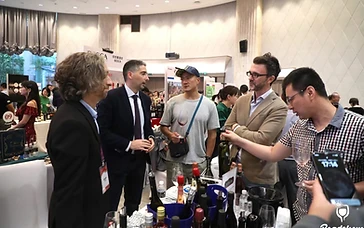
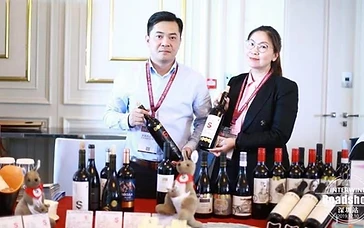
Winemakers looking to tap these seasonal peaks must engage buyers well before the holiday cycles. Strategic trade platforms such as Interwine Events and targeted Business Matching meetings provide direct access to verified procurement heads ahead of these buying windows.
Essential Meeting Collateral and Product Customization
When meeting Chinese corporate procurement managers, generic English sales sheets are ineffective. Corporate gifting buyers manage large budgets and face tight scrutiny from internal accounting and compliance departments; they expect comprehensive, localized collateral ready for immediate executive review.
Localized Pitch Materials
- Dual-Language Specification Decks: Provide one-page sheets in Simplified Chinese and English. Emphasize origin prestige, heritage narrative, terroir exclusivity, and food pairing with regional Chinese banquet dishes.
- Digital Collateral via WeChat: Traditional business files should be duplicated as clean, mobile-optimized PDFs or hosted within a WeChat Mini-Program or corporate account. Chinese executives review proposals and consult team members via WeChat.
- Clear Tiering Structures: Outline tiered SKUs clearly: entry-level (mass staff gifting), mid-tier (client appreciation), and ultra-premium/collector (C-suite executive gifts).
Packaging, Gift Boxes, and Aesthetic Cues
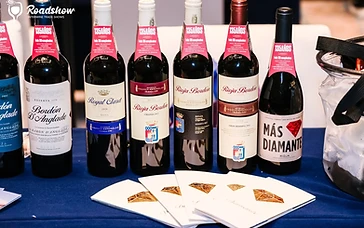
Secondary packaging often determines whether a corporate gift pitch succeeds. Buyers routinely require bundled sets containing dual bottles (even numbers signify double happiness and harmony in Chinese culture) housed in solid gift boxes, wooden cases, or embossed cartons.
- Color Symbolism: Leverage rich reds, royal blues, and gold accents. As noted in the Trade Commissioner Service of Canada's 2021 guide on Chinese business etiquette, dark red and gold are traditional colors symbolizing fortune and celebration, whereas excessive white or black wrapping should be avoided due to associations with mourning.
- Customization and Co-Branding: Be prepared to answer whether your winery can accommodate client logo embossing, personalized neck tags, or custom wax seals. Buyers handling thousands of corporate units demand flexibility in co-branded presentation.
Technical, Regulatory, and Commercial Readiness
Corporate buyers will not risk entering supply contracts with wineries that cannot demonstrate regulatory viability. A single customs clearance hold-up can miss a festival window entirely, leading to catastrophic corporate embarrassment and financial penalties.
[Winery Producer]
       │ (GACC Decree 248 Registration)
       ▼
[CIF / EXW Pricing & Bilingual Tech Sheets]
       │ (Chinese Back-Label Compliance)
       ▼
[Licensed Chinese Importer / Distributor]
       │ (CIQ Clearance & Sanitary Inspection)
       ▼
[Corporate Gifting Procurement / Enterprise End-User]
Chinese Labeling and GACC Decree 248 Compliance
According to import guidelines detailed by the Beverage Trade Network, all food and beverage products imported into China must strictly comply with mandatory Chinese labeling standards and overseas manufacturer registration mandates. Corporate buyers will ask for:
- Overseas Facility Registration: Proof that your production facility is registered under China's General Administration of Customs (GACC) Decree 248 via the Single Window platform.
- Compliant Chinese Back-Labels: Mandatory specifications including Chinese product name, net volume (proper font sizing based on bottle capacity), alcoholic strength by volume, production/bottling date (YY/MM/DD), country of origin, importer of record details, and statutory health warning statements ("Excessive drinking is harmful to health").
- Sanitary & Origin Documentation: Readiness to supply official Certificates of Origin, Certificate of Health/Free Sale, and third-party laboratory analysis reports.
Commercial Pricing Mechanics: CIF, DDP, and VAT
Corporate buyers rarely buy on Ex-Works (EXW) terms unless working through a contracted freight partner. During meetings, present transparent pricing breakdowns that account for logistics:
- Incoterms Flexibility: Provide CIF (Cost, Insurance, and Freight) port rates (e.g., Shanghai, Shenzhen, Guangzhou) alongside EXW.
- Tariff and Tax Calculations: Buyers evaluate net landed costs. Be conversant with China's import tariff structures, Consumption Tax (typically 10%), and Value Added Tax (VAT at 13%).
- Flexible Minimum Order Quantities (MOQs): Corporate orders fluctuate based on departmental headcounts. Offering scalable MOQs across split pallet configurations facilitates initial trial orders.
Wineries looking to test market pricing and connect with licensed import partners who facilitate these distribution pipelines should explore our Market Insights to monitor shifting duty structures and regulatory updates.
Cultural Etiquette and Negotiation Protocols
Navigating business meetings in China requires professional decorum, respect for hierarchy, and acute social awareness. Establishing rapport precedes commercial negotiation.
Hierarchy, Titles, and Introductions
As highlighted in business protocol analyses by CIBTvisas in 2024 and Lanson Place in 2024, Chinese business culture places high importance on hierarchy, punctuality, and formal titles:
- Addressing Counterparts: Address buyers using their formal professional title followed by their surname (e.g., General Manager Chen, Director Wang). If the title is unknown, use formal honorifics.
- Business Card Exchange: Present and receive bilingual business cards using both hands, with the Chinese translation facing upward toward the recipient. Take a moment to study the card before placing it respectfully on the conference table; never write on it or shove it directly into a back pocket.
- Punctuality: Arrive 10 minutes before the scheduled meeting. Tardiness is interpreted as a direct slight and a lack of organizational reliability.
Banquet Protocols and Building Trust (Guanxi)
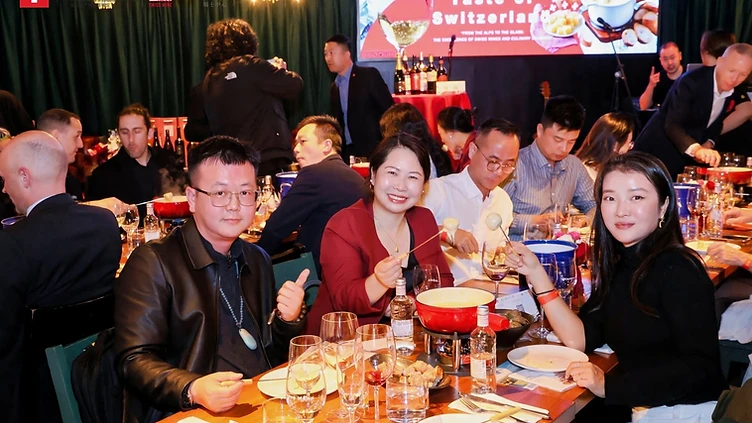
Substantial business transactions in China are rarely finalized in a standard boardroom. Instead, terms and personal alignment are confirmed over corporate lunches or evening banquets. Follow your host’s lead regarding seating hierarchy, sample shared dishes respectfully, and practice proper toasting etiquette: when toasting senior counterparts, clink your glass slightly lower than theirs to convey professional deference.
Converting Meetings into Binding Supply Contracts
Closing sales with corporate gifting buyers requires diligent, highly structured post-meeting execution. Corporate buyers frequently evaluate multiple international wineries simultaneously and favor partners who deliver operational certainty.
| Phase | Critical Action Items | Operational Checkpoints | | :--- | :--- | :--- | | Immediate (24–48 Hours) | Digital follow-up via WeChat & Email | Send bilingual PDF summary, high-res bottle and gift box renders, and price sheets. | | Week 1–2 | Sample Dispatch & Verification | Ship air-freight tasting samples with legitimate custom-cleared documentation directly to client offices. | | Week 3–4 | Commercial Term Clarification | Finalize co-branding options, packaging production lead times, and sea-freight schedules. | | Contract Phase | Production & Quality Assurance | Establish clear production milestones to guarantee pre-festival port arrival. |
For export directors seeking to bypass unverified middlemen and engage directly with enterprise gifting executives, regional distributors, and licensed import managers, participating as a trade exhibitor provides immediate institutional access. To secure dedicated exhibition space and direct buyer introductions, apply to Become an Exhibitor at the upcoming Interwine fair.
Sources
- Beverage Trade Network: China Wine Label and Import Requirements
- Trade Commissioner Service of Canada: Business Etiquette in China (Updated 2021)
- CIBTvisas: A Guide to Chinese Business Etiquette (2024)
- Lanson Place: A Guide to China's Business Culture & Etiquette (2024)
- MS Advisory: Wine Market in China: Trends, Growth, and Consumer Dynamics (2024)
Key Takeaways
- —Corporate gifting procurement follows rigid festival deadlines, requiring wineries to pitch 3 to 5 months ahead of Mid-Autumn Festival and Chinese New Year.
- —Secondary packaging aesthetics (dual-bottle gift sets, premium boxes, red/gold accents) and mianzi (face) drive corporate buyer selection as much as wine quality.
- —Wineries must have administrative compliance verified, including GACC Decree 248 overseas manufacturer registration and Chinese back-label requirements.
- —Commercial proposals must present transparent landed costs, including CIF shipping terms, Chinese VAT (13%), and Consumption Tax considerations.
- —Business meetings require formal etiquette, including two-handed business card exchanges, hierarchical recognition, and prompt WeChat communications.
Frequently Asked Questions
When should wineries pitch Chinese buyers for holiday corporate gifting?
Pitching must occur 3 to 5 months ahead of key cultural festivals. For Mid-Autumn Festival (September/October), begin meetings between May and July. For Chinese New Year (January/February), conduct presentations between September and November to allow sufficient time for sea shipping, CIQ inspection, and inland distribution.
What packaging styles do Chinese corporate gifting buyers prefer?
Chinese corporate buyers heavily favor dual-bottle gift boxes, premium wooden crates, or embossed rigid paper boxes featuring auspicious colors like royal red and gold. Co-branding options that allow company logo embossing or personalized greeting inserts are also in high demand.
What regulatory documentation is required before corporate buyers can import wine?
Wineries must be registered with the General Administration of Customs of China (GACC) under Decree 248, provide Certificates of Origin, Certificate of Health/Free Sale, lab test analyses, and produce compliant Chinese back-labels detailing net volume, alcohol percentage, and mandatory warning statements.
Why is WeChat important during negotiations with Chinese buyers?
WeChat is the primary platform for business communication in China. Buyers expect rapid follow-ups, mobile-friendly digital catalogs, and ongoing correspondence through WeChat rather than formal email chains, which are checked far less frequently.