How to Identify Wine e-commerce buyers in China

Discover how winery export directors can identify, verify, and close commercial partnerships with wine e-commerce buyers and digital distributors across China's evolving digital landscape.
To identify genuine wine e-commerce buyers in China, winery export directors must stop treating Chinese digital retail as a single monolithic marketplace and start profiling buyers according to distinct digital operating archetypes. According to official data from the General Administration of Customs of China (GACC) reported by the USDA Foreign Agricultural Service in 2025, China imported approximately $1.6 billion of wine and related products in 2024, with Australia and France commanding the largest market shares. Following China's official lifting of punitive tariffs on Australian wine in March 2024 (as documented by Reuters), competition across digital shelves has intensified. Winning shelf space requires identifying which digital procurement teams have actual customs clearance authorization, capital stability, and active digital distribution networks.
The Anatomy of China's Wine E-Commerce Ecosystem
China's digital wine landscape has evolved far beyond basic brand stores on traditional platforms. To target the right procurement heads, wine brands must map out three primary buyer categories operating across domestic digital channels.
1. Traditional Marketplace Direct-Procurement Teams
Platforms such as JD.com (JD Super/JD Worldwide) and Alibaba's Tmall / Tmall Global operate hybrid models. Their Category Managers (CMs) procure wine via direct wholesale (1P - First Party) where the platform takes inventory ownership, as well as managed platform models (3P) run by licensed domestic distributors. For wineries, dealing directly with 1P procurement requires massive volume and substantial marketing co-op funds, whereas 3P-certified Trade Partners (TPs) offer flexible importation agreements.
2. Social Commerce MCN Aggregators and Livestream Merchants
According to the USDA Foreign Agricultural Service 2025 Market Update, social commerce and livestreaming on platforms like Douyin (TikTok's Chinese sister app) and Xiaohongshu (RED) have emerged as primary growth engines for wine discovery. However, individual Key Opinion Leaders (KOLs) rarely import wine directly. Instead, export managers must interface with the Multi-Channel Network (MCN) supply chain aggregators behind the influencers—procurement entities that source, clear customs, store in bonded warehouses, and fulfill flash orders generated during livestream sales events.
3. Vertical Specialized Wine Apps and O2O Platforms
Dedicated specialist retailers such as Wine World, 1919 Food & Wine, and Jiuxian represent another critical buyer group. As reported by Vino Joy News in August 2025, China's only publicly listed wine e-commerce platform, Wine World, generated RMB 21.1 million ($2.93 million) in wine sales during the first half of 2025 while operating omnichannel flagships across JD.com, Tmall, Douyin, and Xiaohongshu alongside cross-border retail. Simultaneously, Instant Retail / On-Demand O2O (Online-to-Offline) delivery networks integrated with Meituan Shangou and JD Daojia partner with national chain importers to deliver chilled white, red, and sparkling wines within 30 to 60 minutes in Tier-1 and Tier-2 hubs.
Step-by-Step Methodology: How to Locate and Screen E-Commerce Buyers
Evaluating prospective Chinese wine e-commerce buyers demands commercial rigor to avoid middleman brokers who lack import qualifications.
[1. Channel Audit: Identify Flagship Store Operators on Tmall/JD/Douyin]
                           ↓
[2. Corporate Verification: Check Unified Social Credit Code via Qichacha / Tianyancha]
                           ↓
[3. Customs Compliance Check: Validate GACC Importer & Cold-Chain Registration]
                           ↓
[4. Commercial Alignment: Match SKU Price Points, Margins & Minimum Run Commitment]
                           ↓
[5. Direct Negotiation: On-the-Ground Trade Matchmaking at Interwine]
Step 1: Digital Footprint and Virtual Storefront Reverse-Engineering
Begin by auditing the exact corporate entity operating flagship stores on major platforms. In China, every officially certified flagship store on Tmall, JD.com, or Douyin displays its business license (营业执照) in the platform's vendor registry footer. Export managers can capture the registered Chinese corporate name of the entity managing the supply chain for international labels.
Step 2: Corporate Due Diligence via National Registries
Use Chinese corporate enterprise registries such as Tianyancha (天眼查) or Qichacha (企查查) to assess the business scope. Verify:
- Registered Capital (
注册资本): Ensure paid-in capital matches their stated operational footprint (ideally above RMB 2 million for nationwide alcohol distributors). - Business Scope (
经营范围): Must explicitly list "Wholesale of Food/Beverages" (食品销售) and "Import & Export of Goods" (货物进出口). - Legal Disputes and Administrative Penalties: Check for customs irregularities or trademark infringement lawsuits.
Step 3: Customs & Regulatory Verification (GACC & TTB Alignment)
Ensure the prospective buyer holds an active customs registration code with the General Administration of Customs of China (GACC). If exporting from the United States, ensure the importer is prepared to execute documentation compliant with the single-page Wine Export Certificate standard established by the U.S. Alcohol and Tobacco Tax and Trade Bureau (TTB). Buyers experienced in Cross-Border E-Commerce (CBEC) can leverage bonded warehouses in pilot trade zones (e.g., Ningbo, Hangzhou, Shenzhen), allowing duty exemptions under personal import quotas, whereas General Trade importers must pay full consumption, value-added, and customs taxes up front.
To discover in-depth regulatory updates and channel data, read our dedicated Market Insights report.
Commercial Evaluation: Separating Scalable Buyers from Speculators
Not all digital merchants are built equal. When negotiating distribution rights, export directors should probe three operational parameters:
| Evaluation Metric | High-Quality Digital Buyer | High-Risk Speculative Buyer | | :--- | :--- | :--- | | Procurement Model | Formal wholesale buy-out; structured marketing allowance | Consignment only; requests producer fund 100% of traffic acquisition | | Channel Rights | Requests specific digital exclusivity (e.g., Douyin channel or CBEC store) | Demands blanket nationwide territorial exclusivity without MOQ commitments | | Logistics Infrastructure | Temperature-controlled bonded and domestic warehousing | 3PL standard non-temperature-controlled standard courier forwarding | | Digital Content Capability| In-house livestream studios, localized video editors, wine educators | Relies on generic producer-provided marketing PDFs translated via machine software |
Export managers seeking verified commercial contracts must establish rigorous Key Performance Indicators (KPIs) in trade contracts, including quarterly volume minimums, defined platform sales channels, and mutually audited consumer pricing bands.
Turning Data into Deals: The Offline-to-Online Trade Advantage
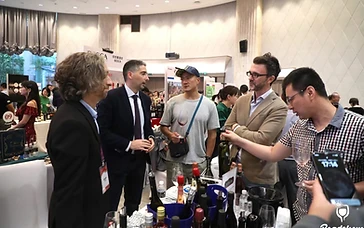
While digital tools enable desk research, multi-million dollar import contracts in China are finalized face-to-face. Face-to-face trust remains the cornerstone of sustainable trade relationships in the Chinese commercial landscape. Buyers managing high-volume accounts on Douyin, JD.com, and regional O2O delivery networks routinely visit professional trade fairs to evaluate product condition, assess winery authenticity, and negotiate direct winery terms.
Wineries planning market expansion should explore our pre-scheduled Business Matching services to secure dedicated roundtables with vetted Chinese commercial wine buyers. To place your portfolio directly before the purchasing directors of China's top digital marketplaces and regional import groups, explore how to Become an Exhibitor at INTERWINE China.
Sources
- USDA Foreign Agricultural Service, Wine Market Update 2025: https://apps.fas.usda.gov/newgainapi/api/Report/DownloadReportByFileName?fileName=Wine+Market+Update+2025_Shanghai+ATO_China+-+People%27s+Republic+of_CH2025-0190.pdf
- U.S. Alcohol and Tobacco Tax and Trade Bureau (TTB), Wine Export to China: https://www.ttb.gov/import-export/itd/wine-export-china
- Vino Joy News, China’s Only Listed Wine E-Commerce Firm Faces Profitability Struggles (2025): https://vino-joy.com/2025/08/28/chinas-only-listed-wine-e-commerce-firm-faces-profitability-struggles
- Reuters, China Lifts Tariffs on Australian Wine (2024): https://www.reuters.com/markets/commodities/china-lifts-tariffs-australian-wine-ends-three-year-freeze-trade-2024-04-02/
Key Takeaways
- —China imported $1.6 billion in wine in 2024, led by Australia and France according to GACC and USDA reports, with digital retail representing a primary consumer acquisition channel.
- —China's wine e-commerce procurement ecosystem comprises three distinct buyer categories: 1P/3P marketplace managers (JD/Tmall), social commerce MCN aggregators (Douyin/Xiaohongshu), and vertical specialist/O2O apps (Wine World, 1919).
- —Export directors can reverse-engineer digital buyers by inspecting the registered business licenses on verified Chinese flagship stores and vetting credentials via corporate enterprise registries like Tianyancha or Qichacha.
- —Vetting requires confirming valid GACC customs registration, food distribution permits, temperature-controlled warehouse capacity, and distinct Cross-Border E-Commerce (CBEC) versus General Trade compliance.
- —Physical trade engagement remains essential to convert digital discovery into signed import contracts, connecting overseas producers with verified digital wine purchasing directors.
Frequently Asked Questions
What is the difference between General Trade and Cross-Border E-Commerce (CBEC) wine buyers in China?
General Trade buyers import wine in bulk through standard customs procedures, paying full customs duty, VAT, and consumption tax before distributing goods anywhere across offline and online channels. CBEC buyers leverage designated free-trade bonded warehouses; individual consumer purchases enjoy preferential import tax rates and exempt standard Chinese back-label requirements, though sales are restricted to personal consumption quotas through registered e-commerce platforms.
How do social commerce buyers on Douyin and Xiaohongshu procure imported wine?
Individual livestreamers and Key Opinion Leaders (KOLs) rarely import inventory directly. Instead, they partner with Multi-Channel Network (MCN) supply chain companies or domestic licensed wine importers who maintain bonded stock, handle customs clearance, manage packaging, and handle direct-to-consumer order fulfillment.
How can an export manager verify if a Chinese online buyer is legally permitted to import alcohol?
Request the entity's 18-digit Unified Social Credit Code and cross-reference it on national enterprise verification platforms like Tianyancha or Qichacha. Ensure their business scope includes food sales and import/export licenses, and verify their active importer registration record with China's General Administration of Customs (GACC).
Why is temperature-controlled logistics critical when vetting Chinese e-commerce partners?
China experiences extreme seasonal temperature swings across major fulfillment corridors. Professional wine e-commerce buyers must operate temperature-controlled domestic and bonded warehouses and use insulated cold-chain parcel shipping during summer months to protect wine quality and prevent customer chargebacks.