How to Adapt Wine Positioning for Chinese Trade Buyers
Adapting wine positioning for Chinese trade buyers requires moving beyond generic terroir narratives to address portfolio velocity, margin protection, regulatory compliance, and digital B2B integration.
Adapting wine positioning for Chinese trade buyers requires a fundamental shift: pitch your wine not merely as an artisanal product, but as a low-risk, high-velocity commercial asset for domestic distributors. Chinese importers, tier-1 regional wholesalers, and HoReCa procurement directors face intense inventory pressure, shifting tariff regimes, and a bifurcated domestic consumer landscape. To secure sustainable distribution, international wineries must reposition their offerings around structured trade margins, channel-specific tiering, culturally calibrated brand naming, and proactive digital enablement.
The Shift from Terroir Storytelling to Commercial Viability
Many Western producers make the mistake of presenting Chinese B2B buyers with lengthy historical narratives and technical soil analyses. While authenticity and geographical indicators matter, a prospective importer assesses a label through commercial filters: inventory turns, landed cost economics, distributor channel protection, and consumer giftability.
According to analysis from the International Wine & Spirit Competition (IWSC), China’s imported wine market has reorganized into a distinct "barbell pattern." Demand has coalesced around established, ultra-premium icons at the top end and price-competitive, high-turnover everyday wines at the bottom, sharply compressing generic, mid-market labels. To capture a buyer’s attention, your brand architecture must occupy an unambiguous position on this spectrum. Regional importers across Guangdong, Zhejiang, and Sichuan will not allocate working capital to mid-priced wines that lack either recognized consumer pull or clear wholesale margin buffers.
Tariffs, Regulatory Realities, and Landed Cost Discipline
Commercial positioning begins with landed pricing mechanics. Chinese wine importers operate with thin buffers due to compounded duties, customs logistics, and warehousing costs. As documented by MS Advisory in 2024, China’s Most-Favoured-Nation (MFN) tariff rates for wine range from 14% to 30%, layered beneath a 13% Value Added Tax (VAT) and a 10% consumption tax. While the removal of anti-dumping tariffs on Australian wine in March 2024 altered market share dynamics, ongoing trade investigations and shifting bilateral agreements keep domestic buyers exceptionally cautious about inventory exposure.
When pitching to Chinese trade partners, presenting an Ex-Works (EXW) or Free on Board (FOB) price sheet without localized commercial context signals inexperience. Sophisticated wineries provide detailed landed-cost modeling that demonstrates:
- Projected Free Carrier (FCA) or Cost, Insurance, and Freight (CIF) economics calculated against standard customs clearance brackets.
- Built-in distributor gross margins—typically requiring 35% to 50% for regional distributors and 20% to 30% for high-volume importers.
- Guaranteed channel price protection to prevent gray-market discounting across e-commerce channels like JD.com, Tmall, or Douyin, which can disrupt a regional wholesaler's offline retail clients.
For international producers exploring current trade dynamics, reviewing localized data via Market Insights helps benchmark commercial pricing structures against current import volumes.
Cultural Localization: Transliteration, Packaging, and Status Signifiers
Trade buyers evaluate whether your product will encounter friction at the retail shelf or during corporate banqueting. Brand localization in mainland China is not merely about translating a back label to comply with General Administration of Customs of China (GACC) regulations; it requires intentional visual and phonetic positioning.
1. Strategic Chinese Naming (Zhongwen Ming)
As highlighted by trade analyses in Harpers Wine & Spirit, brands entering China without an official Chinese trademark face structural handicaps and vulnerability to trademark squatting. A successful Chinese brand name should be easy to pronounce while delivering positive aspirational associations. Australia’s Penfolds achieved immense commercial resonance with its phonetic and symbolic identity Ben Fu (奔富), translating directly to "striving toward wealth." When positioning your brand for B2B buyers, present your registered Chinese trademark alongside its semiotic meaning, demonstrating that your product is ready for corporate gifting and social toasts (ganbei).
2. Labeling and Tactile Elements
Chinese buyers look for visual cues that immediately communicate status and reliability:
- Weight and Closure: Heavy-gauge glass bottles and embossed foils still hold perceived value in traditional business entertainment channels.
- Clarity of Origin: Clear typography highlighting internationally recognized regions (such as Bordeaux, Barossa, Napa, or Rioja) reassures enterprise clients purchasing for formal gifts.
- Secondary Gift Packaging: Providing export packaging with optional premium single- or double-bottle gift boxes (lihe) saves domestic distributors the expense of producing bespoke packaging locally.
Aligning with B2B Channel Segmentation
China cannot be approached as a single homogeneous market. Importer profiles vary significantly across geographic regions and sales channels. Aligning your positioning with the buyer's dominant distribution channel is essential for closing import contracts.
| Channel | Primary Buyer Priorities | Ideal Product Positioning | | :--- | :--- | :--- | | Corporate Direct / Gifting | Reputable origin, prestigious brand story, luxury packaging, high perceived value | Heritage estate, single-vineyard, gift-box enabled, strong vintage scores | | Regional Tier-2/Tier-3 Wholesalers | Stable supply, aggressive profit margin, exclusivity, localized brand support | High price-to-quality ratio, exclusive territory distribution, marketing subsidies | | HoReCa (Hotels, Restaurants, Bars) | Food pairing flexibility, sommelier engagement, glass-pour pricing viability | Fresh whites, approachable reds, low-intervention or organic certifications | | Social Commerce / Livestreaming | Immediate narrative hook, rapid order turnaround, strict minimum advertised price | Modern packaging, engaging visual storytelling, tight MAP enforcement |
Distributors supplying China’s corporate entertainment sector demand pricing defensibility so that gift recipients cannot easily search and discount the retail price on open e-commerce platforms. Conversely, HoReCa distributors require diverse, food-friendly profiles—such as crisp white wines, which have surged in popularity across eastern coastal hubs like Shanghai and Shenzhen.
Equipping the Importer: The B2B Digital Marketing Toolkit
In China's business ecosystem, professional relationships are cultivated on integrated mobile platforms. If an international brand relies exclusively on PDF sell-sheets in English and Western web portals, it creates friction for domestic sales reps.
Forward-thinking producers provide trade buyers with turn-key sales assets built for WeChat (微信). As analyzed by The Way We Wine Now in 2024, the boundary between consumer lifestyle apps and commercial communication in China is virtually seamless. Equipping your importer’s commercial team means preparing:
- WeChat-Optimized Sell-Sheets: Mobile-first, visual PDF or H5 presentations in simplified Chinese, detailing technical notes, international awards, and food-pairing recommendations.
- Localized Brand Storytelling Assets: Short, high-definition videos showcasing the estate, the winemaking process, and the winery leadership, formatted for mobile playback and WeChat Moments.
- Key Opinion Leader (KOL) and Educator Endorsements: Highlighting coverage from recognized Chinese educators (such as Fongyee Walker MW or Edward Ragg MW) or credentials from the Wine & Spirit Education Trust (WSET), which carries substantial authority among mainland trade buyers.
Engaging Qualified Buyers Face-to-Face
Digital materials support the sales process, but long-term import relationships (guanxi) depend on in-person commercial meetings. Chinese trade buyers rarely sign cross-border supply agreements without tasting products in person and assessing the winery leadership's commitment to the Asian market.
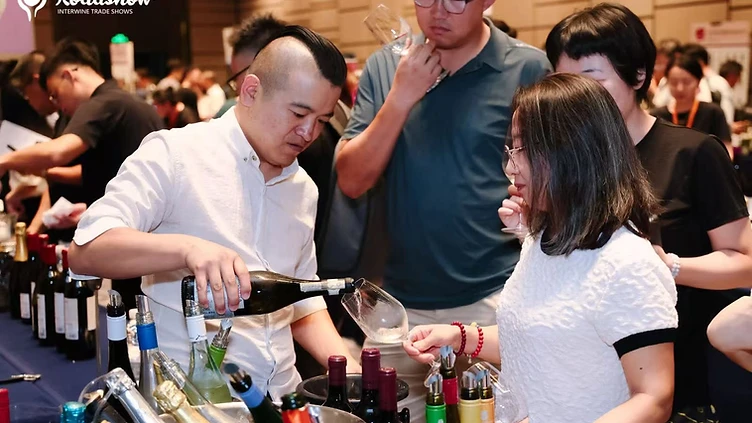
Participating in specialized domestic trade exhibitions offers the fastest route to testing your adapted positioning with qualified importers. International wineries can accelerate their distributor search by participating in curated Business Matching meetings, which connect producers directly with verified regional buyers. For companies preparing their market entry, exploring how to Become an Exhibitor at Interwine provides targeted access to thousands of vetted distributors across southern and central China.
Execution Checklist: Adapting Your Portfolio for Chinese Trade
- Secure Trademarks Early: Register both your original Latin-alphabet name and your chosen Chinese phonetic/semantic name in mainland China under Class 33 before entering commercial talks.
- Audit Packaging for Channel Viability: Ensure front labels clearly display origin and vintage, and evaluate the availability of premium gifting options for corporate accounts.
- Prepare a Landed Cost Model: Build clear pricing schedules demonstrating realistic FCA/CIF structures and distributor profit margins, factoring in current customs duties and consumption taxes.
- Produce WeChat-Ready Collateral: Convert all sales materials, tasting sheets, and video assets into mobile-optimized, simplified Chinese formats.
- Schedule Direct Trade Meetings: Use dedicated commercial platforms and exhibitions to validate your adapted pitch directly with regional buyers.
Positioning your winery for Chinese trade buyers is not about altering your winemaking integrity. It is about translating your brand's strengths into the operational, financial, and cultural language of the distributors who build the market.
Sources
- IWSC: China's Wine Market Recalibration
- MS Advisory: Wine Market in China: Trends, Growth, and Consumer Behavior
- The Way We Wine Now: Adapting to the Chinese Market: Wine Industry's New Frontier
- Harpers Wine & Spirit: Wine must adapt its branding for China or face failure
Key Takeaways
- —Move away from generic terroir-heavy pitches to focus on commercial margin structures, inventory velocity, and risk management for the importer.
- —China's imported wine sector displays a 'barbell pattern,' concentrating growth in high-end prestige brands and agile, value-driven daily wines while squeezing unbranded mid-tier lines.
- —Landed cost clarity (incorporating China's 14-30% MFN tariffs, 13% VAT, and 10% consumption tax) is vital to securing distributor buy-in.
- —Official Chinese brand naming and dual-language digital sales assets formatted for WeChat are foundational operational requirements, not optional extras.
- —Territorial price protection is critical for domestic distributors facing fierce price competition from open online marketplaces.
- —In-person business matching remains the most effective bridge to establish long-term commercial trust with regional buyers.
Frequently Asked Questions
Why do traditional Western wine pitches fail with Chinese trade buyers?
Traditional Western pitches rely heavily on technical viticultural data, estate heritage, and terroir nuances. While quality matters, Chinese trade buyers primarily evaluate an import label through commercial risk parameters: distribution margins, inventory turns, landed tax structures, and whether the product has visual status appeal for corporate gifting or dining channels.
What is the 'barbell market' effect in China's imported wine industry?
As observed by industry analysts including the IWSC, China's wine sector is heavily polarized. Demand is concentrated on recognizable ultra-premium icon brands at the top and cost-competitive, everyday value wines at the base. Generic, mid-tier wines lacking clear consumer pull or aggressive distributor margins are increasingly difficult for importers to sell.
How important is creating an official Chinese name for a wine brand?
Registering a Chinese trademark is essential. An evocative, phonetically appealing Chinese name ensures memorability among trade sales reps and end-consumers, facilitates word-of-mouth in business banqueting, and prevents trademark squatting, which can block commercial distribution across Chinese customs.
What sales materials do Chinese wine distributors expect from overseas wineries?
Importers require mobile-optimized digital materials tailored for WeChat, including simplified Chinese product sheets, estate overview videos, award sheets, and clear pricing matrices with territorial price protection guarantees.
How can international wineries connect directly with vetted Chinese buyers?
Wineries can participate in targeted trade fairs and structured business matching events such as Interwine, which curate direct, one-on-one commercial meetings between overseas producers and pre-screened regional distributors.