How Wine Brands Can Approach China’s Corporate Gifting Market
Discover how international wine brands can capture China's booming corporate gifting segment. Learn B2B channel strategies, packaging etiquette, compliance, and buyer matchmaking to win high-margin procurement contracts.
To succeed in China's commercial beverage landscape, international wine producers must look beyond conventional mass-retail off-premise sales. Corporate gifting represents one of the highest-margin, volume-resilient channels in the market, serving as an engine for professional networking, holiday appreciation, and formal business protocol.
According to market research published by Deep Market Insights (2026), China's corporate gift market was valued at USD 34.83 billion in 2025 and is projected to reach USD 61.69 billion by 2034, registering a compound annual growth rate (CAGR) of 6.59%. Furthermore, corporate clients accounted for USD 18.31 billion of total procurement demand in 2025 alone. For global wineries seeking sustainable margins, penetrating this procurement pipeline offers predictable bulk volume and insulation from consumer retail volatility.
However, corporate gifting in China operates under distinct cultural, legal, and operational rules. Success requires wineries to tailor product positioning, meet strict compliance demands, and connect directly with enterprise procurement directors through verified B2B pathways.
Understanding the Mechanics of China's Corporate Gifting Culture
Corporate gifting in China is not an informal gesture; it is an established pillar of corporate relationship management (guanxi), expressing mutual respect, trust, and business reciprocity. As highlighted by OLN Law, fine imported wines, along with cognac and scotch whisky, remain premier gifts because they carry tangible commercial value and symbolize prestige, cultural refinement, and face (mianzi).
Unlike individual consumer purchases, enterprise gift purchases are driven by specific internal schedules and stakeholder profiles:
- Spring Festival (Chinese New Year): The dominant procurement peak of the calendar year, accounting for significant portions of annual wine gifting budgets. Purchases are contracted months ahead for staff packages, client banquets, and vendor relationship preservation.
- Mid-Autumn Festival: The second major gifting cycle, traditionally pairing fine wine alongside luxury mooncake gift boxes for corporate accounts and strategic partners.
- Contract Milestones and Banquets: As noted in corporate networking research by the Natchez Democrat (2026), businesses frequently mark newly signed joint ventures or major business wins with curated wine sets, where wine signifies celebration, luxury, and ongoing partnership.
To appeal to enterprise buyers, wines must instantly project reliability, high standing, and visual elegance.
Product Selection and Packaging Expectations for Enterprise Buyers
Corporate gift buyers do not evaluate wine solely by tasting notes; packaging and brand narrative dictate whether a bottle is fit for executive presentation.
1. Formats: Why Two-Bottle Sets Dominate
In Chinese gift etiquette, odd numbers are traditionally avoided in formal business settings. Consequently, single-bottle gifts often appear insubstantial unless the bottle is an ultra-rare vintage. Enterprise gift buyers overwhelmingly prefer structured two-bottle gift boxes (shuangzhi lihe) or curated hampers containing complementary corporate materials. Wineries preparing offerings for China must provide turn-key outer gift packaging, heavy cartons, or premium presentation cases.
2. Varietals and Regional Prestige
Full-bodied red wines—principally Cabernet Sauvignon, Merlot, and Syrah blends—remain dominant in enterprise procurement. The deep red color symbolizes luck, celebration, and prosperity. Bordeaux classified growths, Penfolds, and iconic Napa or Rioja producers have set strong benchmarks, but enterprise buyers are increasingly seeking estate-bottled boutique imports that deliver authentic heritage without inflated retail pricing.
3. Clear, Intuitive Labeling
According to trade insights from the EU SME Centre (2026), European producers often struggle when labels require excessive technical knowledge. Enterprise buyers want immediate clarity: recognizable appellations, medals, clear vintage displays, and professional Chinese back-label execution that allows corporate receivers to verify the wine's lineage effortlessly.
Overcoming Regulatory and Compliance Gateways
Selling into China's corporate supply chain requires absolute regulatory precision. Corporate procurement departments are bound by rigorous auditing, requiring standard tax invoices (fapiao) and fully traceable customs clearing documentation.
- GACC Decree 248 Registration: All overseas food and beverage manufacturing and storage facilities must be registered with the General Administration of Customs of China (GACC) under Decree 248. Without this active registration code printed on inner and outer packaging, shipments cannot enter mainland China.
- Compliant Chinese Back Labels: Labels must comply with GB 7718 and GB 15037 standards, detailing the producer, Chinese importer of record, alcoholic strength, shelf life (if applicable), batch numbers, and health warnings in simplified Chinese characters.
- Commercial Integrity & Anti-Corruption Sensitivity: Under China's strict anti-corruption regulations, corporate gifting within state-owned enterprises (SOEs) and public bodies is heavily restricted. International wine brands must target their offerings toward private-sector enterprises, multinational corporations (MNCs), small and medium-sized enterprises (SMEs), and technology firms where legitimate relationship-building gifts are budgeted and legally deductible under business promotion expenses.
To master these compliance requirements, producers can review specialized analysis in the Interwine Market Insights hub.
Strategic Channel Routes to Corporate Buyers
Enterprise decision-makers rarely source corporate gifts directly from foreign wineries; they operate through certified domestic channels:
Dedicated Corporate Gift Distributors (Li Pin Shang)
China has a mature network of specialized corporate gifting firms that supply enterprise procurement lists across industries such as automotive, financial services, logistics, and tech. These distributors demand high profit margins, consistent localized inventory, and prompt customized packaging services (such as corporate co-branding on outer wooden cases).
High-End Private Wine Importers
Importers operating private client and enterprise divisions curate fine wine portfolios specifically for private clubs, enterprise annual meetings, and VIP gifting. As highlighted by BestWineImporters (2026), connecting with specialized wine distributors who possess strong institutional sales networks is critical for foreign brands looking to establish stable offline trade pipelines.
Structured In-Person Trade Platforms
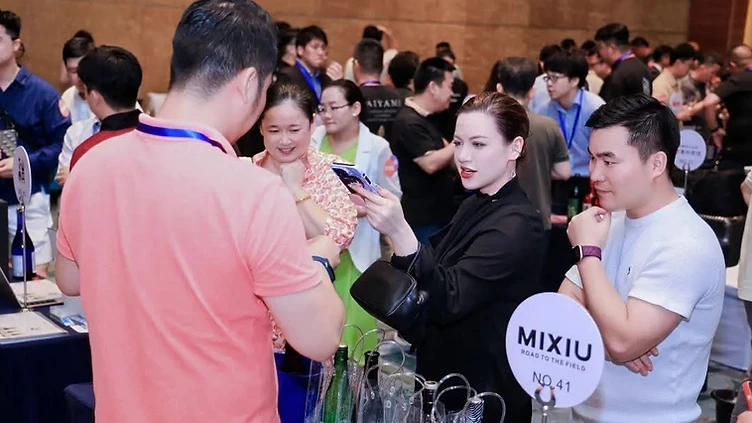
Connecting directly with institutional buyers requires face-to-face evaluation. Through the curated Interwine Business Matching service, international producers are matched directly with vetted regional distributors and corporate buyers actively seeking gift-ready portfolios. For brands planning their global exhibition calendar, exploring opportunities to Become an Exhibitor at Interwine provides direct access to thousands of verified distributors across Southern and Eastern China.
Tactical Steps for Wineries Entering China's Gifting Sector
- Develop Dedicated Gifting SKUs: Prepare two-bottle gift box sets with robust, luxurious exterior packaging (featuring rich red, gold, or deep blue designs) rather than shipping loose individual bottles.
- Provide Customizable Co-Branding: Offer corporate clients custom seal ribbons, bespoke bilingual tasting cards, or laser-engraved wooden boxes incorporating their company crest.
- Coordinate Timelines with Chinese Procurement Cycles: Finalize corporate gifting catalogues at least four to five months before Spring Festival and Mid-Autumn Festival to accommodate maritime logistics and distributor pitching schedules.
- Secure Vetted Local Partners: Leverage dedicated industry trade fairs and matchmaking programs to contract distributors who hold existing supplier agreements with corporate procurement portals.
By matching enterprise aesthetic expectations, complying with national import standards, and partnering with experienced distributors, international wineries can build an enduring, profitable presence in China’s high-value corporate gifting market.
Sources
- Deep Market Insights (2026): China Corporate Gift Market Size & Share Report By 2034. https://deepmarketinsights.com/vista/insights/corporate-gift-market/china
- EU SME Centre (2026): China's Wine Market: A Guide for Exporters. https://www.eusmecentre.org.cn/events/chinas-wine-market-guide-for-exporters/
- BestWineImporters (2026): China Wine Importers and Wine Import Trends 2025/2026 Update. https://www.bestwineimporters.com/blog/news/china-wine-importers-and-wine-import-trends-2025-update
- OLN Law: Business Gift-giving Etiquette in China. https://oln-law.com/business-gift-giving-etiquette-in-china/
Key Takeaways
- —China's corporate gift market reached USD 34.83 billion in 2025 and is projected to expand to USD 61.69 billion by 2034 at a 6.59% CAGR (Deep Market Insights, 2026).
- —Corporate procurement centers on major cultural festivals, particularly Spring Festival and Mid-Autumn Festival, where fine wine symbolizes respect and prestige.
- —Two-bottle presentation sets (shuangzhi lihe) in red or gold premium packaging are standard for enterprise gifting to align with Chinese cultural etiquette.
- —Regulatory compliance with GACC Decree 248 and GB 7718 labeling standards is mandatory for all corporate procurement channels.
- —Producers can bypass standard consumer retail competition by connecting directly with licensed corporate gift distributors through curated trade platforms.
Frequently Asked Questions
Why is wine a favored choice for corporate gifting in China?
Wine is widely perceived in Chinese business culture as a sophisticated, health-conscious, and international luxury item. It conveys prestige (mianzi) and respect between commercial partners, avoiding the negative associations often linked to high-proof spirits during moderate business banquets.
What packaging format is most effective for corporate wine gifts in China?
Two-bottle presentation sets (shuangzhi lihe) packaged in rigid, premium gift boxes or wooden cases are the industry standard. Chinese cultural etiquette traditionally favors even numbers for celebratory occasions, making paired bottles far more appealing to enterprise procurement buyers than single bottles.
When do corporate wine buying decisions happen in China?
Procurement peaks twice a year: four to eight weeks ahead of the Spring Festival (January/February) and four to six weeks before the Mid-Autumn Festival (September/October). Wineries must establish importer agreements and regional stock availability months in advance to catch these procurement windows.
Do anti-corruption policies restrict all corporate wine gifting in China?
Anti-corruption rules heavily restrict gift-giving to government officials and state-owned enterprise (SOE) personnel. However, corporate gifting remains active and legal across private-sector enterprises, multinational companies, technology firms, and SMEs for client appreciation, employee bonuses, and supplier relations.
How can an international winery connect with Chinese corporate gift distributors?
Wineries can connect with specialized corporate gifting distributors (li pin shang) and regional importers by participating in established international trade exhibitions like Interwine and utilizing structured B2B business matching programs that pre-qualify procurement buyers.