How to Approach Chinese Wine Buyers
Discover how winery export directors can successfully approach Chinese wine buyers. Learn crucial CIFER compliance rules, landed cost modeling, regional segmentation, WeChat B2B outreach, and face-to-face negotiation strategies.
To successfully approach Chinese wine buyers, export directors must abandon generic global pitch decks and align with China's restructured wine landscape: target regional distribution hubs, comply strictly with China Inspection and Quarantine (GACC) CIFER establishment registration, calculate realistic landed-cost pricing that factors in ~50% in cumulative taxes, and build direct personal trust through WeChat and industry-specific trade exhibitions.
China's wine market is no longer driven by speculative bulk inventory or indiscriminate gifting. A report by Wine Australia (2026) highlights that mainland China’s wine scene is undergoing a structural reset, moving away from formal banquets and government dining toward intentional, casual, and personal lifestyle consumption. While traditional red wine remains dominant, lighter styles are gaining traction: Australian still white wine exports rose from a 4% share to a 14% share in 2025 as female consumers and younger urban demographics embraced aromatic whites paired with regional cuisines. Concurrently, data compiled by BestWineImporters (2025) showed that although import volumes contracted by 33% year-on-year between January and July 2025, average import values rose by 38%, underscoring a market pivoting toward quality, authenticity, and premiumization. For international wineries seeking sustainable commercial distribution, navigating this specialized market demands a disciplined, step-by-step approach.
Step 1: Pre-Approach Regulatory Compliance and Export Readiness
Before initiating commercial discussions with a prospective importer, your production and regulatory groundwork must be complete. Sophisticated Chinese importers do not engage with producers who treat compliance as an afterthought.
CIFER Registration via GACC
As detailed by the EU SME Centre, overseas alcoholic beverage manufacturing and processing facilities must secure establishment registration with the General Administration of Customs of China (GACC) via the China Import Food Enterprise Registration (CIFER) system prior to shipping. Operating without a valid CIFER registration number prevents your distributor from generating import declaration customs forms, rendering shipment clearance impossible. Verify your facility category, ensure renewal cycles are maintained, and have your establishment number ready on your preliminary trade fact sheets.
Label Compliance and Chinese Back Labels
Customs regulations mandate that every commercial bottle entering mainland China carries a compliant simplified Chinese back label prior to customs clearance. The label must include the standardized product description, grape varieties (if claimed), alcohol percentage by volume, net fluid content, full legal name and address of the importer/distributor, production date, lot number, and mandatory statutory health warnings. Provide your importers with high-resolution digital files, laboratory analysis certificates (COA), and standardized Chinese nomenclature to avoid delays at maritime ports.
Landed-Cost Pricing Architecture
One of the most frequent errors made by export managers is quoting standard Ex-Works (EXW) or Free on Board (FOB) prices without understanding the ultimate shelf price in China. As detailed by BestWineImporters (2026), imported bottled still wine is subject to an approximate 14% customs tariff, a 13% Value-Added Tax (VAT), and a 10% consumption tax, compounding to an effective cumulative tax burden of approximately 50% on top of Cost, Insurance, and Freight (CIF) value. After factoring in domestic warehousing, regional logistics, importer markups (20%–35%), sub-distributor margins, and on-premise or retail margins, a wine priced at $5.00 FOB will frequently retail at 3 to 4 times that figure. Present your pricing in structured spreadsheets showing CIF Shanghai, Shenzhen, or Guangzhou alongside suggested retail prices (SRP) tailored for specific trade channels.
Step 2: Regional Market Selection and Channel Mapping
China cannot be addressed as a single monolithic market. Commercial dynamics, purchasing power, dietary pairings, and supply chains differ radically between economic zones. Trying to appoint a single master distributor with exclusive nationwide rights frequently leads to stalled inventory unless the partner possesses verifiable multi-branch infrastructure.
+-----------------------------------------------------------------------------------------+
|                        CHINA REGIONAL WINE TARGETING MATRIX                             |
+---------------------+-------------------------------+-----------------------------------+
| REGION              | KEY HUBS                      | TRADE CHARACTERISTICS             |
+---------------------+-------------------------------+-----------------------------------+
| South China         | Guangzhou, Shenzhen, Dongguan | High commercial wealth; Cantonese |
| (Greater Bay Area)  | (Guangdong Province)          | seafood pairing; light reds/whites|
+---------------------+-------------------------------+-----------------------------------+
| East China          | Shanghai, Hangzhou, Ningbo    | Trendsetting on-premise trade;     |
| (Yangtze Delta)     | (Zhejiang / Jiangsu)          | natural/organic; high e-commerce  |
+---------------------+-------------------------------+-----------------------------------+
| North & Central     | Beijing, Tianjin, Chengdu,    | Classical dining; prestige reds;  |
| China               | Wuhan                         | corporate gifting; baijiu cross   |
+---------------------+-------------------------------+-----------------------------------+
Southern Coastal Corridors
Guangdong Province and the Greater Bay Area represent the commercial heart of China's wine trade. With vibrant cross-border logistics networks and deep business ties, buyers in Guangzhou and Shenzhen demonstrate high wine literacy and year-round volume absorption. Review regional insights on Interwine's Market Insights section to align your varietals with regional dining profiles.
Specialized Channel Tiers
Classify your target accounts accurately:
- Tier-1 National Importers: Legacy distributors like ASC Fine Wines manage extensive multi-country portfolios with deep on-premise luxury footprints, but their portfolios are competitive, making cut-through challenging for emerging brands.
- Regional Specialist Importers: Agile regional players based in key commercial hubs specialize in boutique on-trade, premium retail, or specialized corporate gifting.
- Direct-to-Consumer / Social Commerce Importers: Modern distributors focused on Douyin livestreams, WeChat Mini-Programs, and JD.com require aggressive promotional margins, robust visual content, and quick fulfillment capabilities.
Step 3: B2B Communication Protocols and WeChat Etiquette
Email is largely treated in China as a formal documentation archive rather than a dynamic sales medium. The overwhelming majority of B2B correspondence, initial pitches, and day-to-day contract clarifications take place over WeChat.
Establishing a Professional WeChat Presence
Export directors must maintain an active WeChat account with a professional headshot, clear winery title, and corporate credentials. When connecting with buyers:
- Bilingual One-Pagers: Prepare concise digital PDF pitch sheets (under 10MB) formatted for mobile reading. Avoid heavy multi-page attachments.
- Product Story and Provenance: Clearly communicate vineyard elevation, family heritage, international medals, and commercial price tiers.
- Chinese-Language Collateral: Even if purchasing directors speak fluent English, their downstream sales teams and sub-distributor networks operate entirely in Mandarin. Providing simplified Chinese product notes, tasting sheets, and high-resolution packshots demonstrates respect and speeds up buyer evaluations.
Cultural Fluency: Guanxi, Mianzi, and Negotiation
Commercial agreements in China are rooted in mutual trust (guanxi) and respect for commercial reputation (mianzi). Aggressive closing tactics, hard deadlines, or public disagreements cause partners to lose face and undermine negotiations. Building lasting distributor relationships requires patient communication, responsive message turnaround, and face-to-face dining etiquette where business discussions flow naturally after rapport is established.
Step 4: Converting Contacts at Trade Exhibitions and In-Person Meetings
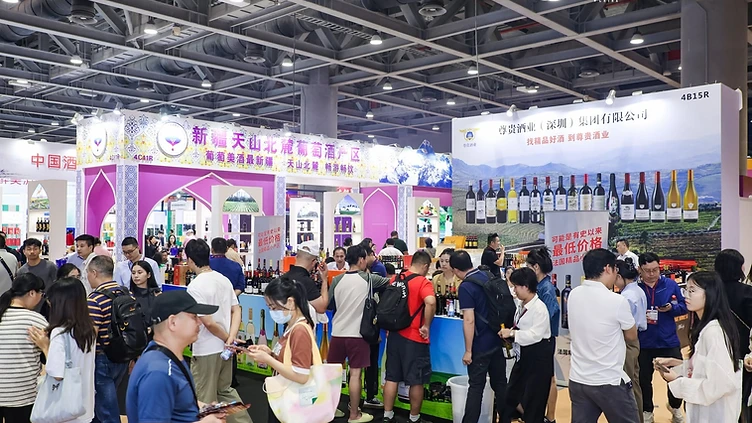
While digital communication initiates contact, Chinese wine buyers rarely commit capital or sign distribution contracts without tasting samples and meeting brand owners face-to-face. Industry trade fairs remain the primary venue for in-person evaluations.
Participating as an exhibitor at dedicated international trade fairs such as Interwine gives brands immediate access to verified Chinese importers, provincial wholesalers, and hospitality procurement directors. Qualified suppliers can Become an Exhibitor to secure dedicated booth space, showcase their portfolio, and gain direct access to customized Business Matching sessions that pair overseas wineries with vetted regional buyers.
To maximize your return on investment during trade fairs:
- Ship Samples Early: Plan sample shipments well ahead of time through specialized bonded freight forwarders to ensure samples arrive cleared through customs and rested from bottle shock.
- Bring Mandarin-Speaking Technical Support: If you do not speak Mandarin, ensure your booth is staffed by a qualified professional translator who understands wine terminology, residual sugars, and acidity profiles.
- Prepare WeChat QR Codes: Prominently display individual and corporate WeChat QR codes on your stand banners, tasting tables, and printed collateral to capture buyer contacts instantly.
Step 5: Structuring Contracts, MOQs, and Market Support
Securing an initial sample order is only the start of the commercial partnership. Retaining an importer requires a sustainable commercial framework that protects both parties.
Minimum Order Quantities (MOQs) and Incoterms
Avoid demanding full container loads (FCL) on first-time orders unless dealing with an established national importer. Many reliable regional distributors prefer starting with a consolidated mixed pallet order (200–500 cases) to test local retail acceptance. Using CIF Incoterms to primary container ports such as Guangzhou, Yantian, or Shanghai ensures transparency over insurance and ocean freight costs.
Trademark Protection
Register your English brand name, logo, and phonetic simplified Chinese trademark directly with the China National Intellectual Property Administration (CNIPA) before sending samples or initiating discussions. China operates under a strict first-to-file trademark legal system; failing to register your Chinese trademark risks brand hijacking and expensive trademark recovery actions.
Marketing and Depletion Allowances
Do not expect an importer to shoulder total market development costs alone. The most successful brand-distributor partnerships include dedicated marketing funds (typically 5%–10% of FOB invoice value) ear-marked for localized consumer masterclasses, wine menu placements, bilingual POS marketing assets, and seasonal promotional support.
Conclusion: Long-Term Commitment Yields Commercial Dividends
Approaching Chinese wine buyers successfully requires moving beyond transaction-focused sales pitches toward strategic, compliant, and culturally attuned partnerships. By completing your CIFER registrations, calculating accurate landed-cost structures, respecting local communication channels, and committing to face-to-face engagement at premier industry platforms, your winery can secure sustainable distribution across China's evolving wine landscape.
Ready to present your portfolio directly to pre-screened importers and procurement directors across China? Apply today to Become an Exhibitor at Interwine.
Sources
- Wine Australia (2026): Rebooting the Chinese wine market: identifying key trends for Australian wine exporters
- BestWineImporters (2026): A Wine Exporter’s Guide to Finding Buyers in China and Working with Chinese Wine Importers
- BestWineImporters (2025): China Wine Importers and Wine Import Trends 2025 Update
- EU SME Centre: How can I export wine to China? Guidance on CIFER and Labeling
Key Takeaways
- —Secure facility registration through China's CIFER system (GACC) before initiating buyer outreach or shipping commercial samples.
- —Model your pricing on a landed-cost framework that incorporates ~50% in cumulative tariffs, VAT, and consumption taxes on CIF value.
- —Segment your entry by economic region, focusing on dynamic consumer hubs such as Guangdong, Shanghai, and Zhejiang.
- —Adopt WeChat as your primary communication tool, supported by simplified Chinese one-pagers and quick response times.
- —Engage buyers through in-person trade exhibitions and dedicated business matching sessions to establish trust and close distribution agreements.
Frequently Asked Questions
What regulatory approvals are mandatory before approaching Chinese wine buyers?
Producers must register their wine production facility through the China Import Food Enterprise Registration (CIFER) platform under the General Administration of Customs of China (GACC). Furthermore, every commercial bottle must carry a compliant simplified Chinese back label listing wine category, alcohol content, importer information, and required health warnings before clearing customs.
How are wine import taxes calculated when setting retail prices in China?
Imported bottled still wine incurs an import tariff (~14%), Value-Added Tax (13%), and alcohol consumption tax (10%). Cumulatively, these add approximately 50% on top of the CIF value. Importers and distributors then apply their respective operational and retail margins, meaning FOB prices typically multiply by 3 to 4 times to determine final consumer retail pricing.
Why is WeChat preferred over email when pitching Chinese wine importers?
WeChat is the foundational platform for business in China. Chinese buyers expect instant, mobile-optimized communication, digital PDF specification sheets, and fast response times. Email is often viewed merely as an archival system for official contracts and bills of lading rather than a relationship-building tool.
Should a winery appoint an exclusive nationwide distributor in China?
For most boutique and medium-sized wineries, nationwide exclusivity is risky because few distributors maintain active sales networks across all Chinese provinces. Many brands achieve superior market penetration by appointing specialized regional distributors across targeted hubs such as Guangdong, East China, or specific Tier-2 consumer cities.
How does exhibiting at Interwine facilitate meetings with verified Chinese buyers?
Exhibiting at Interwine places winery export directors directly in front of pre-screened importers, distributors, and procurement managers from major commercial centers across China. Exhibitors benefit from curated business matching sessions, bilingual on-site promotional opportunities, and direct face-to-face tasting interactions.