How Wine Brands Can Find Distributors in South Korea
A commercial roadmap for international wineries targeting South Korea. Discover how to identify, evaluate, and secure reliable wine importers and distributors amidst market inventory resets and evolving retail channels.
To find a reliable wine distributor in South Korea, international wine brands must move beyond speculative outreach and align directly with the country's multi-tiered commercial realities. South Korea's imported wine landscape has transitioned from the explosive, stay-at-home buying spikes of 2020–2021 into a mature, highly discerning market. According to IWSR Drinks Market Analysis (2024), South Korean wine distributors spent much of 2024 navigating elevated inventory levels and consumer downtrading, making importers far more selective about taking on new representations. Securing sustainable distribution now demands granular pricing architectures, clear channel fit across convenience or on-premise networks, and rigorous partner vetting through structured Business Matching.
The South Korean Wine Landscape: Market Reset and Commercial Dynamics
South Korea represents one of East Asia’s most sophisticated consumer wine markets, centered heavily within the Seoul Capital Area. However, brand owners must understand the operational conditions shaping distributor behavior. Following the COVID-era volume surge, imported wine volumes encountered a distinct correction. As reported by Vino Joy News (2025), total wine imports dropped by 9.63% from January to November 2024 compared to the previous year, causing financial pressure among established players like Nara Cellar and Lotte Chilsung Beverage.
Yet, this correction has not eliminated commercial opportunity; rather, it has re-engineered category demand. White wines, sparkling varietals, and distinctive value-driven regions continue to outperform. For instance, Vino Joy News (2025) highlighted that New Zealand wine imports to South Korea bucked the broader downturn, growing 62.43% in volume and 44.78% in value over the same period. Understanding which categories are expanding—and which are overstocked—is essential for positioning a portfolio before approaching Korean buyers.
The Shift in Retail: The Smart Order Revolution
One of the most consequential structural shifts in South Korean wine distribution is the rise of the "Smart Order" model. In South Korea, direct door-to-door delivery of alcohol remains prohibited under domestic liquor statutes. However, regulatory changes enacted in 2020 allow consumers to order alcoholic beverages via smartphone applications for click-and-collect pickup at designated retail sites.
According to the USDA Foreign Agricultural Service (2024), convenience store chains such as GS25 experienced a 148 percent jump in liquor orders through their Smart Order app in 2022, following a staggering 1,300 percent growth rate in 2021. Today, major retail networks like GS25, CU, and 7-Eleven, alongside retail conglomerates like Shinsegae (E-Mart) and Lotte, represent dominant gatekeepers. Distributors with direct supply agreements into these retail logistics chains command massive off-premise sales velocity.
Categorizing South Korean Wine Distributors: Matching Your Brand Strategy
South Korean wine importers generally fall into three operational categories. Choosing the right partner depends on brand volume capacity, price positioning, and marketing resources:
-
Conglomerate-Backed Importers (Chaebol Retail Arms)
Entities such as Shinsegae L&B and Lotte Chilsung Beverage possess expansive retail infrastructure, encompassing nationwide hypermarkets, department stores, and convenience chains. While these distributors offer unmatched volume potential, they focus heavily on high-turnover SKUs, aggressive price points, or globally recognized luxury estates. Wineries must be prepared for rigorous margin negotiations. -
Established Mid-Tier National Importers
Importers like Nara Cellar, Cave de Vin, and Keumyang International balance broad distribution across on-premise venues, independent wine shops, and organized retail. These partners possess dedicated sales forces and sommelier networks capable of brand building, though they are currently cautious regarding inventory carrying costs. -
Boutique and Specialist Importers
Specialist distributors focus on natural, biodynamic, organic, or niche regional wines, targeting upscale bistros, natural wine bars, and specialty bottle shops in trendy Seoul neighborhoods like Seongsu-dong, Hannam-dong, and Gangnam. While order volumes are smaller, these distributors provide deep brand loyalty and active storytelling.
To align your brand with suitable importers across these tiers, consult our comprehensive regional Market Insights before engaging in commercial discussions.
A Step-by-Step Methodology to Find and Secure Korean Distributors
Entering the market requires an analytical, verified roadmap rather than unsolicited email outreach, which rarely yields commercial traction.
[1. Regulatory & Price Modeling]
             ↓
[2. Partner Sourcing via Structured Trade Platforms]
             ↓
[3. Partner Due Diligence & Portfolio Audit]
             ↓
[4. Commercial Negotiation & Distribution Agreement]
Step 1: Build an Accurate Landed Cost and Pricing Model
Distributors reject foreign pitches primarily due to unviable pricing structures. Under the Wine Australia Export Market Guide (2024), imported wine in South Korea is subject to multiple cumulative taxes applied upon customs clearance:
- Import Customs Duty: Dependent on country-of-origin Free Trade Agreements (e.g., 0% under the KORU-US FTA, Korea-EU FTA, or KAFTA for compliant certificates of origin; otherwise a baseline standard tariff of 15%).
- Liquor Tax: 30% applied ad valorem to the CIF value plus customs duty.
- Education Tax: 10% applied to the Liquor Tax amount (effectively 3% of taxable base).
- Value Added Tax (VAT): 10% applied to the combined total of CIF, customs duty, liquor tax, and education tax.
Because these cascading taxes typically double the initial landed cost before distributor margins and retail markups, wine brands must present clear Ex-Works (EXW) or Free on Board (FOB) price tiers that preserve healthy margins for their prospective Korean partner.
Step 2: Source Qualified Importers via Commercial Trade Platforms
Cold messaging rarely succeeds in East Asia, where business transactions rely on verified introductions and real-world evaluation. Trade platforms and dedicated events provide the most efficient route:
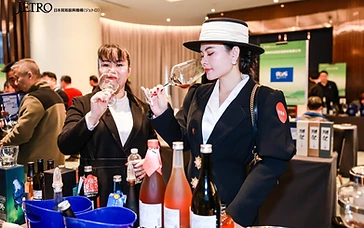
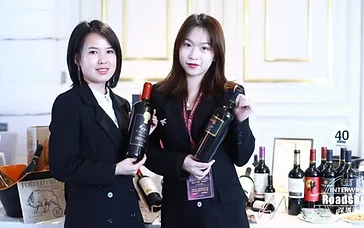
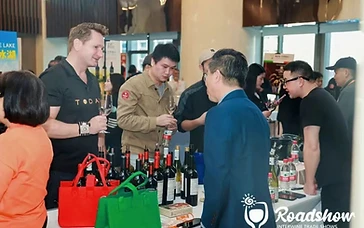
- Direct Trade Exhibitions: As highlighted by the USDA Foreign Agricultural Service (2024), attending dedicated trade fairs is an essential strategy for showcasing wine samples and establishing contacts with verified importers. Engaging through platforms like Interwine allows producers to meet buyers actively seeking new allocations.
- Pre-Screened B2B Programs: Rather than relying solely on open-floor meetings, producers can maximize efficiency through pre-arranged Business Matching meetings, which pair wineries with vetted import directors based on portfolio synergy and volume capacity.
- Industry Directories & Trade Promotion Agencies: Utilize state export agencies (such as WUSATA or Food Export for American producers) or consult regional resources like the Wine Australia Export Dashboard (2024) for transactional benchmark data.
Step 3: Conduct Due Diligence on Prospective Importers
Before signing commercial contracts, audit candidate partners against the following operational criteria:
- Storage and Cold-Chain Logistics: South Korea experiences hot, humid summers and freezing winters. IWSR (2024) observes that complicated storage requirements frequently limit wine sales in traditional hospitality. Confirm whether the importer maintains temperature-controlled warehouse facilities and climate-managed transport.
- Channel Penetration: Determine where their existing distribution lies. An importer serving department stores cannot necessarily build your presence in independent fine dining.
- Portfolio Gaps: Evaluate their current book. If they already carry three benchmark producers from your specific appellation, your brand risks becoming an idle secondary listing.
Regulatory Compliance and MFDS Clearance
Navigating regulatory standards is essential when finalizing distribution terms. Korea’s Ministry of Food and Drug Safety (MFDS) enforces strict food sanitation and import clearance protocols:
- First-Time Import Inspection: Under MFDS guidelines, the first shipment of any new wine SKU undergoes rigorous laboratory testing covering chemical composition, sulfur dioxide levels, sorbic acid, and heavy metal limits. Subsequent shipments of the exact same SKU qualify for faster document-based clearance.
- Korean-Language Mandatory Labeling: Over-stickers or integrated labels must be affixed prior to customs clearance. Mandatory declarations include product name, alcohol by volume (ABV), country of origin, importer name and business address, bottle capacity, designated warning statements regarding alcohol consumption during pregnancy and driving, and recycling symbols.
Ensuring compliance prior to port arrival prevents demurrage fees and protects your distribution partner from commercial friction.
Strategic Conclusions and Next Steps
South Korea remains a compelling, high-value destination for wine exporters capable of matching product quality with commercial realism. As inventory levels normalize post-reset, South Korean importers seek dependable winery partners who bring differentiated value, transparent FOB pricing, and an understanding of modern retail channels like Smart Order.
To fast-track your route to market, prioritize direct engagement with verified commercial buyers. Explore upcoming industry conventions, review our Exhibitor Directory to evaluate peer networks, and utilize tailored Business Matching services to secure meetings with qualified regional importers.
Sources
- USDA Foreign Agricultural Service (2024). South Korea Wine Market Report (Report KS2024-0021). https://apps.fas.usda.gov/newgainapi/api/Report/DownloadReportByFileName?fileName=South+Korea+Wine+Market+Report_Seoul+ATO_Korea+-+Republic+of_KS2024-0021
- IWSR Drinks Market Analysis (2024). Will South Korea's wine market bounce back?. https://www.theiwsr.com/insight/will-south-koreas-wine-market-bounce-back/
- Vino Joy News (2025). South Korea’s Wine Imports Drop 9.63% Amid Market Slowdown. https://vino-joy.com/2025/01/13/south-koreas-wine-imports-drop-9-63-amid-market-slowdown/
- Wine Australia (2024). Export Market Guide - Korea. https://www.wineaustralia.com/selling/export-market-guide-korea
Key Takeaways
- —South Korea's wine market experienced an inventory reset in 2024, shifting importer demand toward proven value, white wine, and sparkling categories.
- —Smart Order click-and-collect regulations introduced via convenience chains (GS25, CU) are reshaping retail alcohol distribution channels.
- —Landed import pricing must account for compounding customs duties, a 30% liquor tax, 10% education tax, and 10% VAT.
- —Pre-screened business matching platforms and verified trade expos offer the most cost-effective routes to vetted Korean distributors.
- —First-time wine shipments are subject to mandatory MFDS laboratory testing before cleared for local sale.
Frequently Asked Questions
What taxes apply to imported wine entering South Korea?
Imported wine is subject to customs duty (often 0% under bilateral FTAs such as the US-Korea or EU-Korea FTA), followed by a compounding 30% Liquor Tax, a 10% Education Tax on the liquor tax amount, and a 10% Value Added Tax (VAT) on the aggregated sum.
How does the 'Smart Order' system impact wine distribution in Korea?
Because direct-to-consumer alcohol delivery is illegal in South Korea, the Smart Order model permits consumers to order wine via mobile applications and pick it up at local convenience stores or hypermarkets, making distributors with strong convenience chain logistics highly advantageous.
What is the role of MFDS in wine importation?
The Ministry of Food and Drug Safety (MFDS) regulates food and beverage imports into South Korea. Every new-to-market wine SKU must pass an initial laboratory analysis verifying chemical components, preservatives, and contaminants before clearance.
How can wineries meet pre-qualified South Korean wine importers?
Wineries can participate in structured industry events and trade business matching services, such as Interwine's business matching programs, which pair international brands directly with verified Asian importers and purchasing managers.