Industry Interview: A Wine importer on Market selection priorities
In this B2B trade interview, an experienced international wine importer reveals the rigorous criteria behind portfolio selection, regulatory hurdles, margin mechanics, and commercial risk mitigation in today's shifting global markets.
To succeed in the contemporary global wine trade, producers and distributors must understand how buyers evaluate risk and value before signing a single bill of lading. In an era marked by shifting consumer demographics, tariff adjustments, and changing inventory models, an importer’s playbook is no longer governed by romance or prestige alone. It is anchored in strict commercial discipline.
In this industry interview, we sit down with Marcus Vance, Managing Director of Apex Beverage Partners—a mid-sized import and distribution specialist operating across North America and select Asian logistics hubs—to dissect the strategic calculus behind modern portfolio selection. This interview outlines the operational filters, economic hurdles, and supply-chain criteria driving importer decisions, offering actionable intelligence for wine trade buyers, brand owners, and exhibitors planning their next commercial moves.
The Importer's Lens: Shifting from Prestige to Portfolio Velocity
Interwine: Marcus, global trade figures illustrate a polarized landscape. According to the Observatory of Economic Complexity (OEC), while primary wine export engines like France ($12.8B) and Italy ($8.69B) demonstrated sustained dollar value in 2024, volume movements have tightened globally. When evaluating new producer regions or expanding into new sales territories, what is your primary commercial filter?
Marcus Vance: "The first rule of survival in wholesale today is portfolio velocity over prestige. Five years ago, an importer might take on a boutique estate simply because the wine scored 95 points or carried historical appellation cachet. In 2025 and beyond, working capital is too expensive to sit on dead inventory.
According to research published by Rafael del Rey and Simone Mueller Loose (2025), stability in international wine trade values has persisted alongside underlying contractions in total consumption volume. Because total volume per capita is contracting in mature Western markets, my selection criteria must target clear category pockets: either high-rotation, commercially priced entries or defensible, premium terroir-driven wines retailing at sustainable margins. When I examine a new market or origin, I first assess whether the stock will clear our warehouses within 90 days. If the margin does not justify the inventory holding cost at current interest rates, the brand does not enter the book."
Regulatory Gatekeeping: Tariffs, Compliance, and HS Code Realities
Interwine: Exporters often overlook the sheer regulatory burden that happens before a pallet hits the dock. How do trade friction, customs classifications, and documentation dictate which origins you prioritize?
Marcus Vance: "Compliance is our gatekeeper. Every single SKU must navigate specific customs codes and national labeling mandates. Most of our commercial transactions fall under HS Code 2204.21 (bottled wine under 2 liters), where trade compliance, residual sugar declarations, heavy metal testing, and regional labeling mandates must be flawless. A comprehensive study by the International Trade Council (2025) highlighted that navigating non-tariff barriers and standardizing logistics filings are the greatest administrative friction points for international wine logistics.
When we evaluate whether to enter a new emerging supply market—say, expanding into regional South American or Eastern European lines—we assess the bilateral free trade agreements (FTAs), tariff schedules, and port-clearance efficiency. An unexpected 10-day delay at customs due to an improperly formatted certificate of origin or an unapproved packaging additive eliminates our retail margins entirely. We prioritize suppliers who come with complete technical documentation, pre-cleared lab certifications, and turnkey compliance capabilities. Importers are logistics navigators as much as they are tasters."
Supply Chain Predictability and Port Congestion
Interwine: Global ocean freight has experienced extreme pricing spikes and transit-time disruptions. How do infrastructure and route viability factor into choosing which producers to contract?
Marcus Vance: "A winery could have the most compelling narrative and exceptional liquid, but if their consolidation center is stranded by recurring chassis shortages or port chokepoints, they represent a commercial liability. We analyze freight corridors closely. Data from the International Trade Council (2025) examining U.S. and regional maritime hubs—such as container dwell times at major hubs like Savannah or Asian terminal networks—demonstrates how quickly port congestion ripples across supply chains.
If we are importing into Asia-Pacific distribution networks or North American secondary markets, we favor producers aligned with reliable freight forwarders capable of providing temperature-controlled multi-modal transport. If a supplier requires full container load (FCL) purchases on unproven SKUs without providing pallet consolidation support or flexible EXW/FOB terms, we have to walk away. Our market selection priorities demand that supply chain velocity matches wholesale cash flow cycles."
Ground Execution: Why the 'Boots-on-the-Ground' Paradigm Has Returned
Interwine: During the pandemic, virtual tastings and remote distributor pitching became standard. What does market activation look like now?
Marcus Vance: "Virtual selling for wholesale beverage alcohol is fundamentally over. As highlighted by SevenFifty Daily (2026), successful importers are rediscovering that boots-on-the-ground presence is mandatory. Wholesaler sales reps handle thousands of items; if you are not in the field educating the trade, pouring for sommeliers, and meeting chain buyers face-to-face, your wines die on the catalog page.
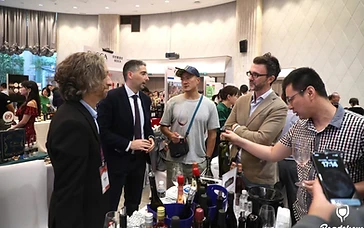
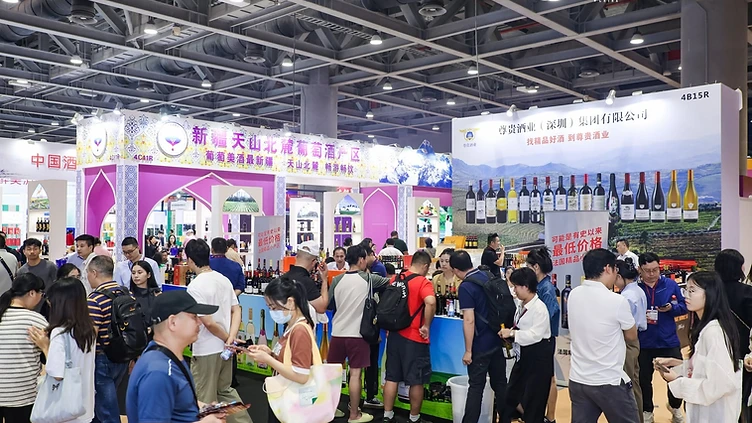
When I decide whether to open a new market, I ask: Can this supplier support co-op marketing and field events? Are they willing to attend strategic trade exhibitions, engage directly with distribution partners, and conduct retail staff trainings? In-person trade interactions provide the commercial trust that digital decks cannot replicate. This is precisely why we rely on dedicated trade forums to assess partners. Meeting vetted producers at trade shows lets us review commercial terms in minutes rather than over months of email ping-pong."
Commercial Takeaways: How Exporters Can Secure Importer Buy-In
For wine brands, regional consortia, and producers looking to secure importer agreements, Marcus Vance outlines four baseline prerequisites for pitch success:
- Lead with Landed Unit Economics, Not Winery Scores: Importers must see the clear landed-cost matrix (including freight, insurance, duties, local excise, and distributor margin tiers). If the suggested retail price (SRP) does not leave a 35% margin for the wholesaler and 40% for the retailer while remaining consumer-competitive, it is unviable.
- Offer Flexible In-Market Testing: Importers hedge risk by ordering mixed pallets rather than full single-SKU containers. Wineries that establish consolidated freight hubs make partner onboarding friction-free.
- Prepare Immediate Technical and Compliance Portfolios: Prioritize upfront lab analyses, accurate HS classification filings, and pre-formatted retail labels tailored to destination import statutes.
- Commit to Tangible In-Market Support: Importers favor producers who invest in educational collateral, sample allowances, and dedicated presence at premier sourcing expos.
Connecting with Market-Ready Wine Importers
Navigating international market selection requires verified trade intelligence and direct buyer-supplier matching. For producers aiming to expand distribution and trade buyers looking to optimize their import portfolios, Interwine serves as a premier international business platform.
Explore current consumer and commercial movements via our Market Insights hub, or consult our Exhibitor Directory to benchmark leading regional portfolios. To streamline your operational sourcing and participate in pre-scheduled B2B negotiation rounds, plan your attendance directly: Book Your Visit today to meet qualified importers, distributors, and commercial decision-makers.
Sources
- Observatory of Economic Complexity (OEC): Wine (HS 2204) Product Trade and Importers (2024–2026)
- Rafael del Rey & Simone Mueller Loose: State of the International Wine Markets in 2024 (Wine Economics and Policy, 2025)
- International Trade Council: Global Wine Trade and Import Analysis (2025)
- SevenFifty Daily: The New Rules of Wine Importing (2026)
Key Takeaways
- —Modern wine importers prioritize inventory turnover velocity and working capital liquidity over brand heritage and critical scores alone.
- —Comprehensive customs compliance (HS Code 2204.21), pre-certified laboratory documents, and regulatory agility determine market entry viability.
- —Landed unit economics must account for tiered 35-40% channel margins, ocean logistics shifts, and excise duties to ensure retail shelf competitiveness.
- —In-person trade presence and 'boots-on-the-ground' wholesale support have overtaken remote pitching as the key drivers of portfolio success.
Frequently Asked Questions
What is the single most important factor for an importer when evaluating a new wine producer?
While wine quality and distinctiveness are fundamental baselines, commercial viability is the decisive factor. Importers evaluate whether the wine's landed cost structure permits competitive pricing across distributor and retail tiers while supporting an inventory velocity that ensures stock turnover within 90 to 120 days.
How do trade tariffs and non-tariff barriers impact wine market selection?
Tariffs directly elevate the final retail shelf price, while non-tariff barriers—such as divergent labeling standards, mandatory additive tests, and customs clearance procedures—introduce operational overhead. Importers favor source countries with stable trade agreements, clear tariff categories, and streamlined documentation to avoid costly border delays.
Why is 'boots-on-the-ground' field execution returning to the wine import trade?
Distributor portfolios are crowded with thousands of competing SKUs. Without dedicated brand ambassadors, local tastings, distributor sales meetings, and in-person retail education, products struggle to gain distributor focus and retail re-orders. In-person engagement builds the commercial momentum that digital decks cannot sustain.
What documentation should a winery prepare before approaching an international importer?
Wineries should prepare technical spec sheets, complete certificate of analysis (COA) documents covering alcohol, residual sugar, and chemical safety metrics, export-ready bilingual label proofs, and clear Ex-Works (EXW) and Free On Board (FOB) price tiers.