How to Prepare Your Winery for a Chinese Trade Exhibition
A commercial roadmap for wineries preparing for Chinese trade exhibitions. Master GACC registration, sample customs clearance, WeChat B2B sales workflows, bilingual pricing, and post-fair contract negotiations.
To prepare your winery for a Chinese trade exhibition, you must align regulatory compliance, commercial pricing structures, localized digital collateral, and on-site buyer negotiation into a synchronized 6-to-9-month roadmap. Success in mainland China requires moving past Western trade show assumptions: you need General Administration of Customs of China (GACC) facility registration, temporary sample clearance, Chinese-language back labels, WeChat QR-driven digital sell sheets, and clear CIF/FOB pricing models tailored to regional distributors.
Participating in premier exhibitions across Tier-1 and Tier-2 trade hubs like Guangzhou, Shanghai, and Chengdu allows international brands to interface directly with nationwide distributors, hospitality procurement managers, and specialized private-client merchants. However, navigating the modern Chinese marketplace demands rigorous commercial discipline. Following market updates from the USDA Foreign Agricultural Service (FAS) (2025), while aggregate wine sales have seen contractions in volume across mid-tier segments, professional wine trade events consistently deliver high-quality, targeted commercial visitors seeking differentiated estates, authentic regional identities, and reliable international partners.
Before taking your estate to the show floor, this operational guide outlines how to prepare your winery for a Chinese trade exhibition and convert distributor meetings into sustainable container orders.
1. Compliance, Regulatory Filings, and GACC Registration
Regulatory compliance is the first milestone of any China trade show strategy. Failure to complete administrative filings will result in customs confiscation or prohibitive clearance delays for your trade samples.
General Administration of Customs of China (GACC) Registration
Under GACC Decrees 248 and 249, every foreign manufacturing, processing, and storage facility exporting alcoholic beverages to China must hold a valid GACC establishment registration. As highlighted by Wine Australia (2026), international exhibitors must secure this registration before dispatching exhibition stock. For grape wine, wineries must apply through the China Import Food Enterprise Registration platform (Single Window). Processing times can vary from several weeks to months, making this an essential early step.
Temporary Exhibition Imports vs. General Commercial Clearance
When sending wine samples for a trade exhibition, wineries must choose between two logistical avenues:
- Temporary ATA Carnet / Exhibition Bond: Consolidators clear goods under a temporary customs bond designated exclusively for display and tasting at the exhibition hall. Any unconsumed, opened bottles must be destroyed or re-exported under customs supervision.
- General Customs Clearance: Wines are fully imported with duties and taxes paid (customs tariff, consumption tax, and value-added tax). This permits commercial sampling, post-event client gifts, and domestic stock transfers to interested distributors right after the fair closes.
Mandatory Chinese Back-Labeling Requirements
Even display and tasting samples intended for trade shows must feature compliant Chinese back-label stickers if required by local port authorities during customs clearance. Under Beverage Trade Network (2017) and national food safety standards (GB 7718 and GB 15037), back labels must clearly state in simplified Chinese characters:
- Legal product name (e.g., "Dry Red Wine" / 干红葡萄酒)
- Ingredients (e.g., grape juice, sulfur dioxide / 葡萄汁,二氧化硫)
- Alcoholic strength (% ABV)
- Country of origin and production region
- Sugar content (g/L)
- Shelf life or minimum durability (mandatory if ABV is below 10%)
- Mandatory health warning statements: "Excessive drinking is harmful to health" (过量饮酒有害健康) and "Pregnant women and children shall not drink" (孕妇和儿童不宜饮酒)
- Name, address, and contact information of the domestic importer/distributor (or the licensed exhibition logistics agent in the case of exhibition-only samples).
If you need visa documentation support during this process, review our guide to obtaining an Invitation Letter and Visa Support.
2. Commercial Pricing Strategy: Ex-Cellar, FOB, and CIF China
A common mistake foreign wineries make at Chinese exhibitions is presenting domestic retail price lists or generic ex-cellar figures without context. Chinese importers and distributors evaluate commercial viabilities based on localized margin cascades.
[Ex-Cellar / FOB Origin]
        │
        ▼ (+ Freight & Maritime Insurance)
[CIF Main Chinese Port (Guangzhou / Shanghai / Shenzhen)]
        │
        ▼ (+ Customs Tariff + Consumption Tax + VAT)
[Landed DDP / Importer Cost Basis]
        │
        ▼ (+ Importer Margin: 25% - 40%)
[Wholesale / Sub-Distributor Tier (Tier-2/3 Cities)]
        │
        ▼ (+ Retail / On-Premise Margin: 40% - 100%+)
[Consumer Retail Price (RMB ¥)]
Establishing Your Price Sheets
- Quote in Key Global Currencies (EUR / USD / AUD): Provide clean Ex-Works (EXW), Free On Board (FOB origin port), and Cost, Insurance, and Freight (CIF) to major Chinese ports (e.g., Guangzhou, Shenzhen, Shanghai, Ningbo).
- Prepare a Landed Cost Calculator: Importers will ask for your estimated landed price. Understanding how China’s compound tax calculation impacts your final wholesale price allows you to demonstrate mutual commercial feasibility during booth meetings.
- Establish Clear Minimum Order Quantities (MOQs): Differentiate your order tiers between mixed-pallet introductory orders (1–3 pallets) and full container loads (FCL: ~14,000 bottles). Distributors frequently use low initial MOQs to test market absorption through regional dining clubs and regional wholesalers.
To discover how other established brands present their commercial ranges, browse the Exhibitor Directory.
3. Localization and Digital Ecosystem Integration
Exhibition marketing in China differs fundamentally from Western trade fairs. Traditional physical paper brochures are quickly discarded by trade buyers; commercial transactions and communication rely on local digital infrastructure.
The Mandatory WeChat Business Infrastructure
As emphasized by the EU SME Centre (2023), WeChat serves as the primary tool for conducting business in China. Prior to setting foot on the exhibition floor, every member of your booth team must install, configure, and verify WeChat:
- Individual QR Codes: Print staff personal WeChat QR codes prominently on your business cards, table stands, and tasting sheets.
- Corporate Mini-Programs & Official Accounts: High-performing estates deploy WeChat Official Accounts or bilingual mini-program catalogs, enabling buyers to scan an on-bottle QR code to view technical tasting notes, terroir videos, scoring certificates, and retail price references.
Social Proof and Brand Localisation
Chinese wine buyers actively value third-party prestige markers. Ensure that ratings from respected institutions (such as Decanter World Wine Awards, Robert Parker Wine Advocate, and regional wine competitions) are translated and visible on bottle talkers. Furthermore, having assets formatted for lifestyle platforms like Xiaohongshu (RED) and Douyin provides Chinese commercial buyers with confidence that your brand can support sell-through to younger demographics.
For additional analyses on changing Chinese consumer habits and distributor channel economics, check our Market Insights.
4. Booth Operations and On-Site Buyer Qualification
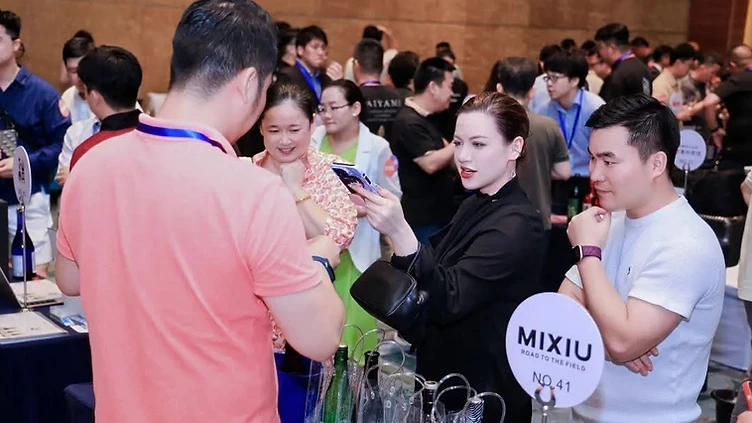
Foot traffic at major Chinese wine expos is fast-paced. Your commercial success depends on identifying decision-makers and focusing your resources effectively.
| Buyer Category | Profile & Commercial Focus | Primary Negotiation Driver | | :--- | :--- | :--- | | National First-Tier Importers | Manage bonded warehouses, port clearance, and national logistics networks. | Long-term exclusive brand agency rights, volume pricing, international marketing support. | | Regional Distributors (Tier 2/3) | Supply local restaurant groups, corporate gifting networks, and boutique shops. | Low initial MOQs, flexible landed pricing, protected regional distribution exclusivity. | | Private Client Merchants / Corporate Buyers | Supply corporate banqueting, luxury private cellars, and gifting. | High visual packaging appeal, award prestige, authentic origin storytelling. | | E-Commerce / Livestream Operators | High-velocity online retailers (Douyin, Tmall, JD.com). | Aggressive price-to-quality ratios, certified brand authenticity, stable fulfillment. |
Stand Layout and Protocol
- Professional Bilingual Interpretation: If your estate team does not speak fluent Mandarin, hire a vetted, industry-specialized interpreter. General trade show interpreters often lack familiarity with enological terminology (e.g., malolactic fermentation, residual sugar, phenolic ripeness).
- Sampling Logistics: Maintain controlled tasting temperatures. Trade halls in southern China during warm seasons demand dedicated ice buckets and commercial refrigeration. Provide separate spittoons and rinse water stations to maintain clean evaluation conditions.
- Pre-Scheduled Meetings: Maximize your trade show presence by scheduling one-on-one distributor discussions in advance using tailored platforms like Business Matching.
5. Post-Exhibition Follow-Up and Contract Negotiations
The real work begins after the exhibition hall lights turn off. Buyer responsiveness drops sharply after 72 hours, making structured post-show follow-up critical.
- Categorize Your Leads within 24 Hours: Tag leads in your CRM and WeChat into A-Leads (immediate purchase intention/sample requests), B-Leads (interested in regional distribution pending commercial terms), and C-Leads (general trade network contacts).
- Send Bilingual WeChat Commercial Summaries: Follow up on WeChat with a tailored message containing a PDF of your CIF pricing sheet, your GACC registration number, technical product data sheets, and high-resolution bottle photography.
- Address Exclusivity Requests with Care: Chinese distributors frequently request national or provincial exclusivity during early discussions. Avoid granting unconditional national exclusivity to an unproven partner. Instead, offer time-delimited or milestone-based regional agreements (e.g., a specific province or municipal cluster) tied to clear container purchasing volume commitments within an initial 6-to-12-month window.
- Formalize Contracts with Bilingual Sales Agreements: Work with international trade counsel to ensure that sales contracts clearly specify payment terms (e.g., 30% advance deposit via T/T, 70% balance before bill of lading release), Incoterms (2020), port of discharge, and agreed arbitration jurisdictions.
Strategic Next Steps for International Producers
Successfully preparing your winery for a Chinese trade exhibition requires bridging regulatory compliance with disciplined commercial execution. By securing your GACC registration early, establishing structured pricing models, and integrating into China's WeChat-driven trade workflows, you position your winery to secure reliable importing partners.
Are you ready to showcase your portfolio to premier importers, retail buyers, and distribution networks across South China and beyond? Reserve your stand and register today to Become an Exhibitor at INTERWINE.
Sources
- Wine Australia (2026): ProWine Shanghai 2026 Exhibitor Prospectus and Participation Guide. https://www.wineaustralia.com/whats-happening/events/prowine-shanghai-2026
- USDA Foreign Agricultural Service (2025): China: Wine Market Update 2025 (GAIN Report CH2025-0190). https://apps.fas.usda.gov/newgainapi/api/Report/DownloadReportByFileName?fileName=Wine+Market+Update+2025_Shanghai+ATO_China+-+People%27s+Republic+of_CH2025-0190.pdf
- EU SME Centre (2023): China’s Wine Market(s): Drivers, Technical Requirements and Opportunities for EU Producers. https://agora.mfa.gr/infofiles/2023-Report-Chinas-Wine-Markets-EU-SME-Centre%20cn.pdf
- Beverage Trade Network (2017): China Wine Label and Import Requirements: Your Quick Guide Compliance on Preparing for China Wine Market. https://beveragetradenetwork.com/en/article-base/articles/china-wine-label-and-import-requirements-your-quick-guide-compliance-on-preparing-for-china-wine-market-530.htm
Key Takeaways
- —Secure your winery facility GACC registration under Decrees 248/249 well ahead of shipment deadlines to avoid customs detention.
- —Formulate transparent commercial pricing structures that clearly detail Ex-Works, FOB, and CIF China figures, accounting for import taxes and local distribution margins.
- —Comply strictly with Chinese back-labeling standards (GB 7718/GB 15037), ensuring all mandatory health statements and product classifications are accurately translated.
- —Transition marketing materials entirely to the WeChat ecosystem using mobile-friendly digital sell sheets and individual QR codes instead of paper brochures.
- —Qualify on-site trade buyers across four distinct categories (national importers, regional distributors, corporate buyers, e-commerce sellers) to protect margin structures.
- —Structure distributor exclusivity agreements around milestone-driven regional sales volumes rather than immediate national rights.
Frequently Asked Questions
What registrations does our winery need before shipping samples to a trade show in China?
Every international wine producer must obtain a GACC facility registration number (Decree 248/249) through China's Single Window platform. In addition, sample shipments require commercial invoices, certificates of origin, chemical analysis certificates, and clearance via a licensed Chinese customs broker or the exhibition's appointed logistics partner.
Should we quote prices in Ex-Cellar, FOB, or CIF when meeting Chinese wine buyers?
While Ex-Works and FOB origin give your baseline costs, experienced Chinese importers expect CIF pricing to major Chinese ports (such as Guangzhou, Shenzhen, or Shanghai) in EUR or USD. Providing CIF figures allows importers to calculate their landed taxes and distribution margins quickly without converting ocean freight variables.
Can we bring wine samples directly in our personal luggage to the trade fair?
Carrying commercial quantities of wine samples in personal checked baggage is not recommended and often violates Chinese customs regulations. Mainland China customs officials may confiscate un-declared commercial goods. Official exhibition samples should always be shipped through the exhibition's authorized freight forwarder to guarantee compliant customs clearance.
Why is WeChat essential for exhibiting at a Chinese wine expo?
In China, professional communication, contact exchange, and digital product evaluation occur almost exclusively via WeChat. Chinese trade buyers rarely rely on email or printed brochures. Having individual WeChat QR codes and digital PDF or mini-program sell sheets allows immediate follow-up and verification while still on the show floor.
How should a winery handle requests for exclusive national distribution?
Exercise caution when offered immediate nationwide exclusivity. China's market is fragmented geographically across distinct provincial trading networks. Offer regional exclusivity (e.g., Guangdong province or East China) conditional upon agreed container volume targets over a 6-to-12-month period before considering broader territory exclusivity.